
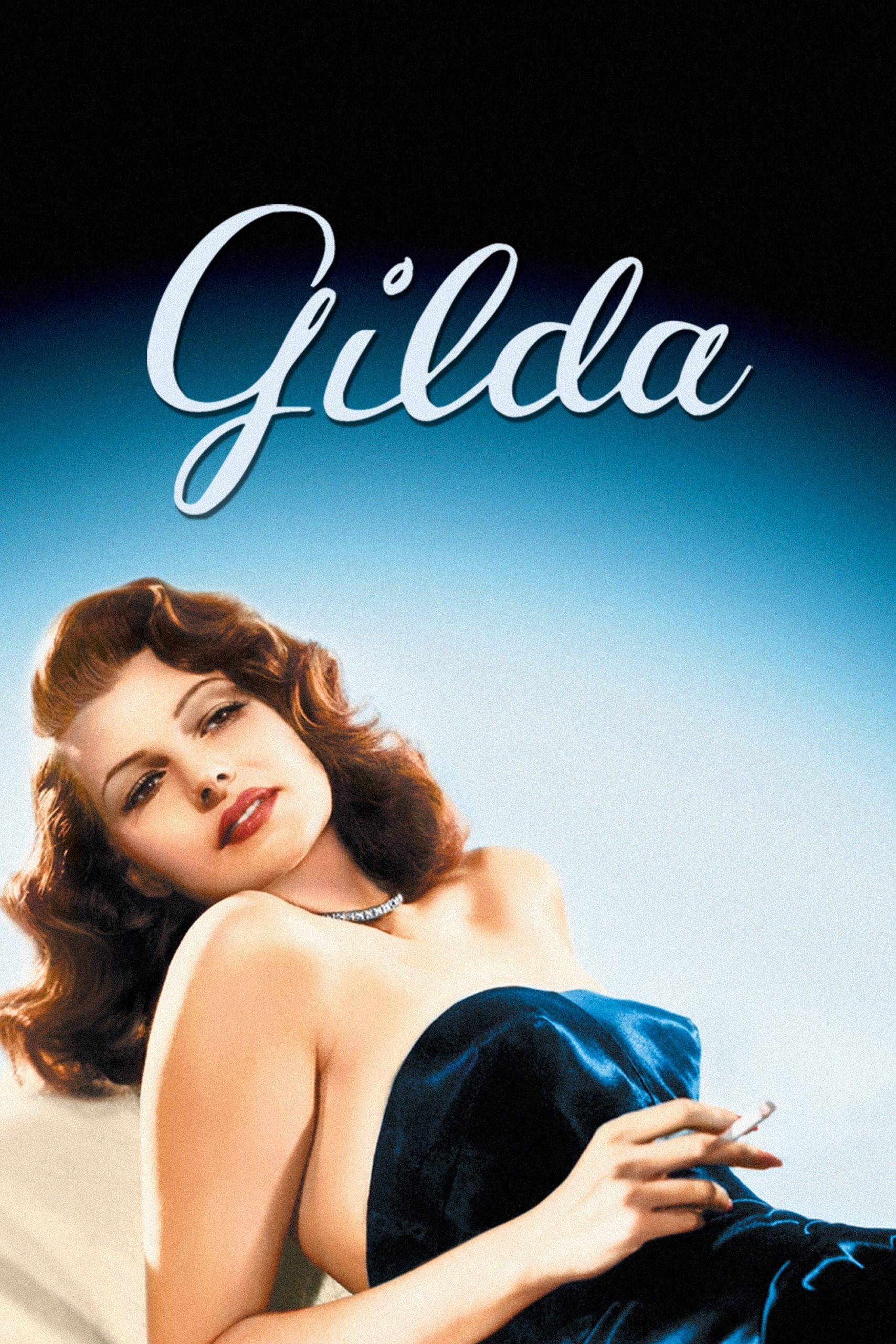
The Question of Truth Behind the Film
From the moment I first watched “Gilda,” I couldn’t shake the persistent question at the back of my mind: Did any of this actually happen? For me, the yearning to know whether a film springs from truth or fiction isn’t just idle curiosity—it’s an urge to anchor the swirling emotions and symbols of cinema in something stable, something accountable. Whenever I sit down to experience a classic like “Gilda,” I instinctively weigh its events against what I imagine might have really occurred to humans living through the era it portrays. I’ve noticed that when a movie carries the weight of being ‘based on a true story,’ audiences—including myself—seem to grant it a curious kind of gravity. The label implies responsibility to the factual world. It also shapes the way I view character motivations, ethical dilemmas, and visual choices, as if knowing what is ‘real’ will unlock the ultimate meaning or reveal how much liberty the filmmakers have taken with the past.
With “Gilda,” the question of truth hovers just outside the shimmering frame—a black-and-white Argentina, casinos pulsing with intrigue, seductive danger at every turn. I find myself parsing every reference and mannerism, searching for clues. Am I watching a relic of actual cultural and political tensions, or am I drifting deeper into a pure Hollywood invention? The impulse to separate fact from fiction comes not only from a hunger for historical knowledge, but from the desire to better locate myself as a participant in the world of the film. For me, the boundary between what really happened and what’s invented is not just about intellectual satisfaction; it stirs up a particular tension that fundamentally colors my experience, as if the truth might either deepen or diminish the emotional resonance onscreen.
Historical Facts and Cinematic Interpretation
As I dove into the layers behind “Gilda,” I quickly found that its relationship to documented history is elusive, almost defiant. While the film is set in Buenos Aires during the tail end of World War II—an Argentina grappling with shadowy politics and foreign intrigue—I couldn’t locate a singular true story or direct inspiration for its iconic characters. Still, I can’t ignore that the film draws on a climate of mid-1940s uncertainty: rumors of Nazi fugitives, economic back-deals, and the sort of smoky, cosmopolitan criminality that feels plausible for the time and place. My understanding is that the creators of “Gilda” took scattered historical moods—fears of fascist infiltration, the code of conduct in postwar South American gambling dens—and reshaped them into a charged, tightly wound melodrama.
When I observe the film’s narrative choices, I sense a careful distillation rather than strict reporting. The events in “Gilda” are not recreations of individual headlines but rather a collage of what might have been possible, had all the most sensational elements converged in one glittering, feverish night. Take the character of Ballin Mundson and his connection to tungsten cartels: I see fragments of historical anxieties about black markets and resource shortages, but these real-world facts are pruned, their connections sharpened for the sake of thematic coherence. Instead of chronicling an event, the film invents an alluring framework in which genuine fears and rumors spiral into personal, operatic conflict. I find myself compelled by how the film makes historical residue its raw material, reshaping it not for the purposes of historical documentation, but to serve ambiguity, desire, and moral uncertainty. It is through this process that “Gilda” becomes less an artifact of the past and more an atmospheric meditation on postwar instability.
What Changes When Reality Is Shaped for Cinema
Whenever history is filtered through the lens of cinema, I can almost see the gears shift. The need for narrative clarity, emotional engagement, and visual economy transforms scattered historical detail into something streamlined—even mythic. For me, one of the most striking phenomena is how the film peels away at reality’s ambiguity, sometimes simplifying tangled social issues into archetypal relationships, dramatic rivalries, or potent symbols. Watching “Gilda,” I notice how nuanced political realities—like the international turf wars for South American resources—are reduced to the interpersonal, distilled through longing glances and cryptic dialogue. The complexities of Argentina’s wartime neutrality or the nuances of postwar justice are not the central concern; instead, these elements form a shimmering backdrop against which emotions play out, heightening rather than clarifying historical fact.
As I reflect on the practical consequences of this process, I’m constantly reminded that there’s a necessary selectivity in storytelling: timelines consolidate, obscure details become vivid shorthand, composite characters absorb dozens of potential historical actors. The resulting narrative can present itself as a concentrated emotional truth, even when it steps away from documentary accuracy. I find that the allure of Rita Hayworth’s performance as Gilda, the crackling chemistry, and the labyrinthine betrayals are all amplified precisely because the filmmakers chose to compress and reorganize reality for dramatic effect. Sometimes, an entire chapter of political intrigue is expressed in a single gesture or enigmatic phrase, trading meticulousness for impact. This is not a failing to me but a deliberate shaping that enables films like “Gilda” to say something more universal or archetypal. Yet I am always aware that in translating history into cinematic form, some texture and contradiction must inevitably be left behind.
Audience Expectations and the “True Story” Label
In my experience, how a film frames its relationship to reality colors nearly every aspect of audience engagement. The words ‘inspired by real events’ or ‘based on a true story’ are almost magical—instantly encouraging viewers (myself emphatically included) to measure what unfolds against what they believe is possible outside the theater. There is a unique suspension of disbelief that I reserve for fictional stories, allowing me to freely savor implausible twists or hyperbolic emotions. Yet when I sit before a film that is claimed to depict the real—or even borrow its mood from reality—I become a more skeptical, analytic observer. I scrutinize design choices, accents, and narrative leaps, wondering where the line was drawn between artistic arrangement and historical fidelity.
For “Gilda,” which eschews overt claims to authenticity, I approach it with a certain latitude: I don’t demand precise accuracy, but I do feel the pull to investigate which aspects reflect the genuine anxieties and aspirations of the 1940s world. The notoriety of the film’s style, its razor-sharp dialogue, and especially the tension between its American noir sensibilities and Argentinian setting, all prompt me to wonder how much was imagined and how much rooted in common fears of the era. When a movie makes no promises of factual adherence, I find I can luxuriate in its contradictions and heightened emotions without feeling obligated to check its credentials. Yet I am conscious of a subtle double standard: the moment a work asks to be taken as ‘the real story,’ my interpretive lens tightens, and I start to see the omissions, compressions, and analogies not just as dramatic tools, but as arguments about how history should be remembered.
There is, in my case, a distinct pleasure in dissecting these boundaries. When I learn that “Gilda” is not adapted directly from documented episodes but is instead a hybrid—a canvas painted with borrowed fears and social currents—my relationship shifts. I’m less interested in treating it as a lesson or a record, and more inclined to see its dramatic flourishes as imaginative responses to the anxieties that no newspaper ever quite captured. The ‘true story’ label can act as a straightjacket or as an invitation, depending on how explicitly the film relies on or resists historical verifiability. In watching “Gilda,” aware that its foundation is at best oblique, I give myself over to the privilege of interpretation, rather than fact-checking. The conversation between fact and fiction thus becomes, for me, part of the pleasure of engaging with the film, rather than a hurdle to be cleared.
Final Perspective on Fact vs Fiction
If I have learned anything from returning to “Gilda” with this question in mind, it is that my awareness of what is ‘real’ and what is ‘invention’ transforms the way I peer into the film’s shadows. Knowing that “Gilda” lacks a direct historical prototype frees me to focus on the emotional and psychological logic of its world, rather than on its responsibilities as a document. Instead of tallying historical lapses, I find myself considering what the film expresses about secrecy, resentment, and liberation during a complex postwar time. The ambiguity of fact versus fiction does not diminish the impact of the narrative—it redirects my curiosity toward the ideas the film is wrestling with, and away from whether any Gilda, Johnny, or Ballin truly walked the streets of Buenos Aires.
My experience tells me that films like “Gilda” rely on a delicate interplay between authenticity and fabrication. The knowledge that an artwork is unbound from the strictures of the historical record does not diminish its thematic resonance for me. Rather, it encourages a different kind of engagement: I am no longer a passive receiver of information, but a participant in the construction of meaning, attentive to symbols, undertones, and the conversation between past and present. The historical echoes—the specter of wartime intrigue, the allure of expatriate lives, the shadow of authoritarian power—remain evocative even as I understand their role as narrative scaffolding.
Ultimately, awareness of the division between fact and artistic invention in “Gilda” shapes my interpretation rather than my evaluation. My lens adjusts based on what I know of its historical roots, allowing my expectations to move fluidly between a search for meaning and a search for fact. Rather than seeking definitive truth, I find myself savoring the dynamic ambiguities, the rich intermingling of possibility and fantasy that mark the golden age of Hollywood. In the case of “Gilda,” the absence of a strict biographical foundation transforms the film for me not into a mere fantasy, but into an urgent, expressive meditation on the fog of reality—where what matters most is not what happened, but what could have been, and how that possibility still resonates with those, like myself, watching all these years later.
For additional context, you may also explore the film’s overview and how it was received by audiences and critics.
🎬 Check out today's best-selling movies on Amazon!
View Deals on Amazon