
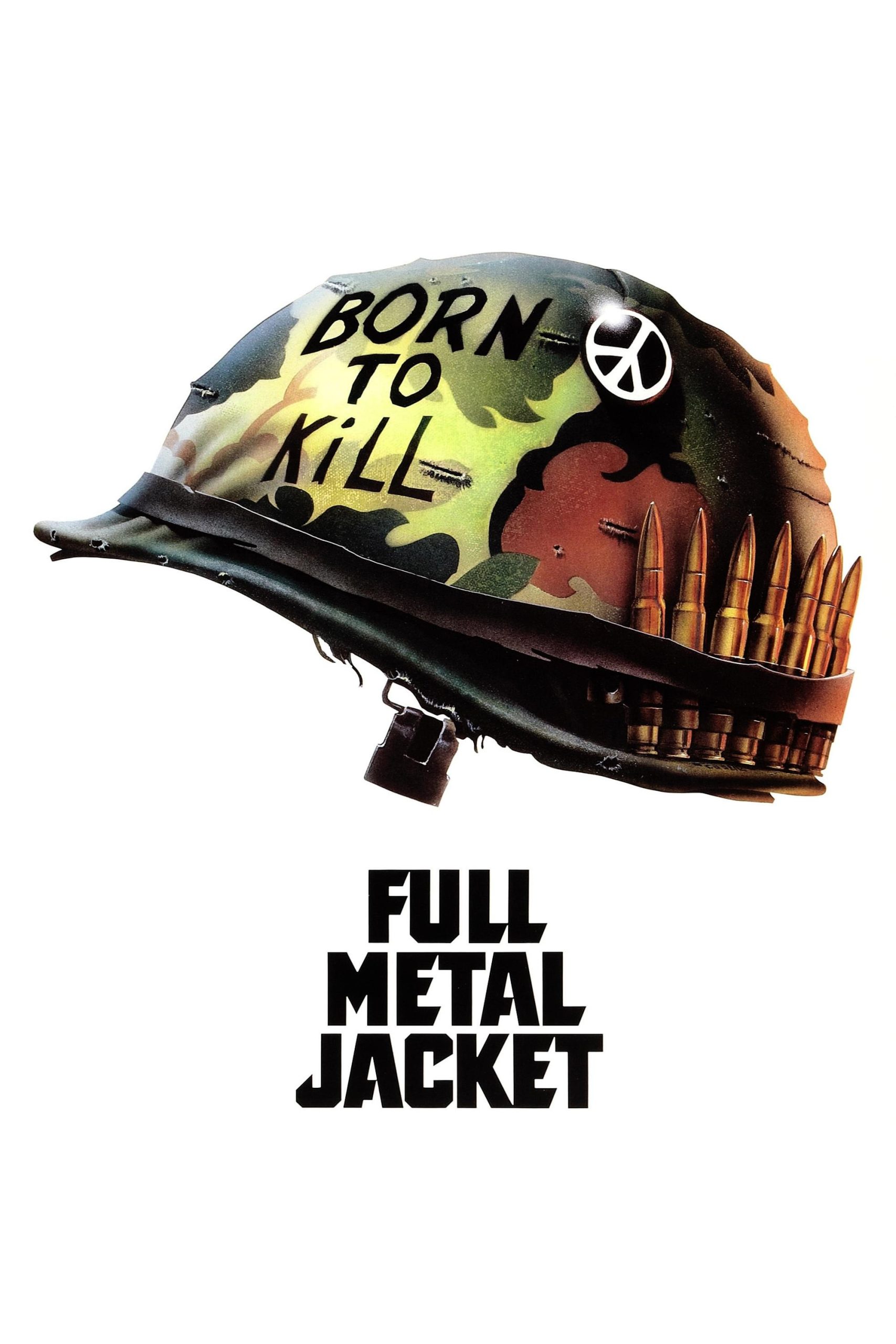
The Question of Truth Behind the Film
When I sit down to watch a film set in a real war, a lingering curiosity often tugs at the back of my mind: did it truly happen this way? With a movie like Full Metal Jacket, which portrays such visceral moments of the Vietnam War, I become acutely aware of the line between depiction and documentation. The expectation of truth in war cinema, I’ve noticed, isn’t just idle curiosity. There’s a palpable weight attached to the “based on a true story” label—almost as if those words promise a direct transmission of history rather than an interpretation. For me, this ceaseless urge to ask “how much of this is real?” speaks to a longing for authenticity, not just in the events themselves, but in the complex human experiences those events embody. At times, I think this expectation arises because stories told on screen gain a kind of authority; imagery burns into the mind and colors how I—and probably many others—recollect the real Vietnam conflict. If a film is promoted, even loosely, as having roots in truth, I inevitably approach its narrative with the notion that it may offer vicarious insight into realities I didn’t live through. Simultaneously, it’s clear that the promise of reality is a double-edged sword: it amplifies a film’s resonance, but it also raises the stakes for accuracy in both detail and atmosphere.
I often catch myself looking for clues of authenticity, especially in the granular details of dialect, uniform, or landscape. There’s an inescapable sense of gravity when watching events that claim a historical basis—I feel the tension between what is being dramatized for effect and what might have truly unfolded. When a story’s source is ambiguous or its authenticity is questioned, the entire viewing experience shifts. Rather than losing myself in the immersion, I’m drawn more to analyze the choices being made: what has been highlighted or omitted, and for what reason?
Historical Facts and Cinematic Interpretation
As I delve into Full Metal Jacket, I can’t help but notice the way the film reshapes the historical arc of the Vietnam War into an intensely personal journey. Knowing that the film draws heavily on Gustav Hasford’s novel The Short-Timers, itself inspired by the author’s own experiences, I’m struck by the interplay between memory and screenwriting. The rigid, dehumanizing drills and psychological warfare of basic training feel vivid, yet I remind myself that these drills are curated to dramatize a broader reality of Marine training, rather than precisely reproducing a specific platoon’s journey from Parris Island to Vietnam. Even when the settings and linguistic tics echo real-life details, I see how moments are heightened or reimagined to distill a sense of the era rather than to document a step-by-step account.
There are scenes—a drill instructor’s tirade, a traumatic turning point in the barracks, the chaos of urban combat in Hue—that unfold with the immediacy of testimony. Yet, as I look closer, their chronology and context bear the fingerprints of adaptation. The boot camp and battlefield stories run parallel but separate, compressing what were, for real soldiers, months or years of transformation and trauma into a film of just over two hours. When I think about how hundreds of Marines might have navigated their own paths through Vietnam, it becomes evident to me that a film must choose representative fragments, weaving them into a coherent dramatic tapestry. The filmmakers are tasked with presenting not the exhaustive sum of reality, but emblematic moments—distillations of the confusion, camaraderie, and fear that marked the era.
For example, in showing the Têt Offensive’s street fighting, the movie roots itself in a pivotal historical event, but it’s clear to me that individual firefights, the sniping duel, and the cumulative exhaustion are constructed to serve the movie’s symbolic aims rather than recreating one unit’s operational log. The motivations given to characters serve a dual function: illuminating both the facts of military life and the interior lives of men who rarely wrote memoirs. In that sense, I perceive the cinematic version of history as a selective spotlight, illuminating certain episodes while leaving others to the imagination.
What Changes When Reality Is Shaped for Cinema
What fascinates me most is the constant negotiation between the responsibility to history and the prerogatives of storytelling. I recognize that no film, especially one covering a sprawling subject like Vietnam, can remain wholly tethered to the literal record; too many competing truths and logistical constraints make this impossible. When I reflect on Full Metal Jacket, I see creative compressions everywhere I look. Characters are amalgamations, events that may have occurred over months are layered into a few charged scenes, and the psychological unraveling is paced according to dramatic necessity, rather than clinical realism. As an essayist, I view these changes not as shortcomings but as necessary responses to the distinct demands of cinema—mediation through imagery, sound, and time.
The granular trade-offs become especially discernible in the film’s structure. By splitting the narrative into basic training and active combat, the film, for me, creates a dramatic contrast—one that might not reflect the measured progression of actual military experience but distills the soul-altering impact both phases can have. Sensory choices—lighting that blanches the training camp, the oppressive soundtrack, lingering close-ups on strained faces—heighten or even fabricate emotional truths that surpass any archival photo. When faced with limited runtime and the constraints of film language, the storytellers must decide not which events are “most real,” but which convey the deepest subjective sense of reality.
Sometimes, the words and actions of characters in Full Metal Jacket seem designed to encapsulate the attitudes of an entire era. The dialogue, especially that of the drill instructor, oscillates between the specific (military lingo and Marine rituals) and the emblematic (rhetoric that borders on the performative). These choices may sacrifice the nuance of an individual’s life for the resonance of shared experience, flattening multiple stories into accessible moments. Yet, these are the moments audiences most often remember, suggesting to me the peculiar power of concise, stylized storytelling over exhaustive documentary precision. In the balance between accuracy and impact, cinema—this film included—frequently tips toward the latter.
Audience Expectations and the “True Story” Label
Whenever I watch a film purportedly inspired by true events or even loosely drawn from factual accounts, my own expectations shift dramatically. I suspect I’m not alone in this. When a film is branded as “based on real events,” as was sometimes the case with the marketing surrounding Full Metal Jacket, there’s a heavier sense of responsibility—almost a demand from viewers that what they see not only entertain but instruct. I catch myself watching more closely, parsing details for fidelity, and sometimes even looking up historical records to see if, say, the specifics of Marine training or the texture of urban battle aligns with what veterans recall.
At the same time, being aware that a film draws from—but ultimately adapts—real experience helps me temper my expectations. Rather than assuming a one-to-one mirror of history, I start to look for what the film reveals through invention as well as through documentation. The famous division of Full Metal Jacket into two distinct acts, for example, feels less like a journalistic recounting and more like an interpretive gesture—an editorial choice that clarifies rather than catalogues. As a result, knowing the degree to which a film is invented or factual changes not just how I process what unfolds but also what I am looking for: symbolic meaning over anecdotal record.
When a film is presented as wholly fictional, I find myself more open to abstraction, metaphor, and dramatic flourish. But once the assertion of fact enters, even by mere association with a memoir or real-world interview, I begin to weigh each scene on the fickle scale of authenticity. The question that grows in my mind isn’t just “did this really happen?” but “how close is this to the aggregate of real experience?” Watching Full Metal Jacket, particularly with prior knowledge of its literary and historical roots, prompts me to focus on its thematic truth: what it claims about fear, institutionalization, and the search for meaning in chaos.
What stands out most is that the “true story” claim alters the film’s audience contract. I sense that my emotional reactions are shaded by a kind of ethical uncertainty—I feel the specter of real suffering and resilience behind the dramatization, yet I must also accept the artificiality inherent in adaptation. This tension, for me, shapes the film’s power and its risk: emotional investment is heightened, but I become more vigilant against possible distortions or anachronism, however slight.
Final Perspective on Fact vs Fiction
After spending years examining films like Full Metal Jacket, I’ve grown deeply aware of the interplay between what I know about a film’s factual origins and the way I process its meaning. Realizing how artfully (and necessarily) history is reshaped for narrative has left me more attentive, and perhaps more generous, in my viewing. I find that knowing where the line sits—between events drawn from memoirs, military records, or composite imagination—frames my expectations, but doesn’t determine my engagement. If I step back and reflect, the awareness of what is real versus what is invented allows me to appreciate both the film’s role as a historical echo and as a constructed emotional journey.
There’s a peculiar richness, I think, in watching Full Metal Jacket knowing some of its elements are taken from actual interviews, real letters home, and documented routines. I become attuned to places where the film reaches for the specificity of the real world, and also where it departs, pushing toward myth, metaphor, or critique. Yet, it’s important for me to remember that this knowledge doesn’t invalidate or diminish the film’s other, more imaginative dimensions. Instead, it deepens my reading—I can both trust the resonance of its images and remain mindful of their constructed nature.
For me, the awareness of adaptation choices becomes another layer to engage with, rather than a barrier. I watch not just to discern fact from fiction, but to explore why the film chooses to compress, to combine, or to stylize, and how these choices invite me to wrestle with the uncertainties embedded in any retelling of war. Ultimately, understanding the boundary between what actually happened and what is dramatized shifts my perspective as a viewer but provides a richer, more nuanced encounter with the film’s themes. It doesn’t require me to pick a side—fact or invention—but rather to dwell in the dynamic space where storytelling and history converge, complicate, and illuminate one another.
For additional context, you may also explore the film’s overview and how it was received by audiences and critics.
🎬 Check out today's best-selling movies on Amazon!
View Deals on Amazon