
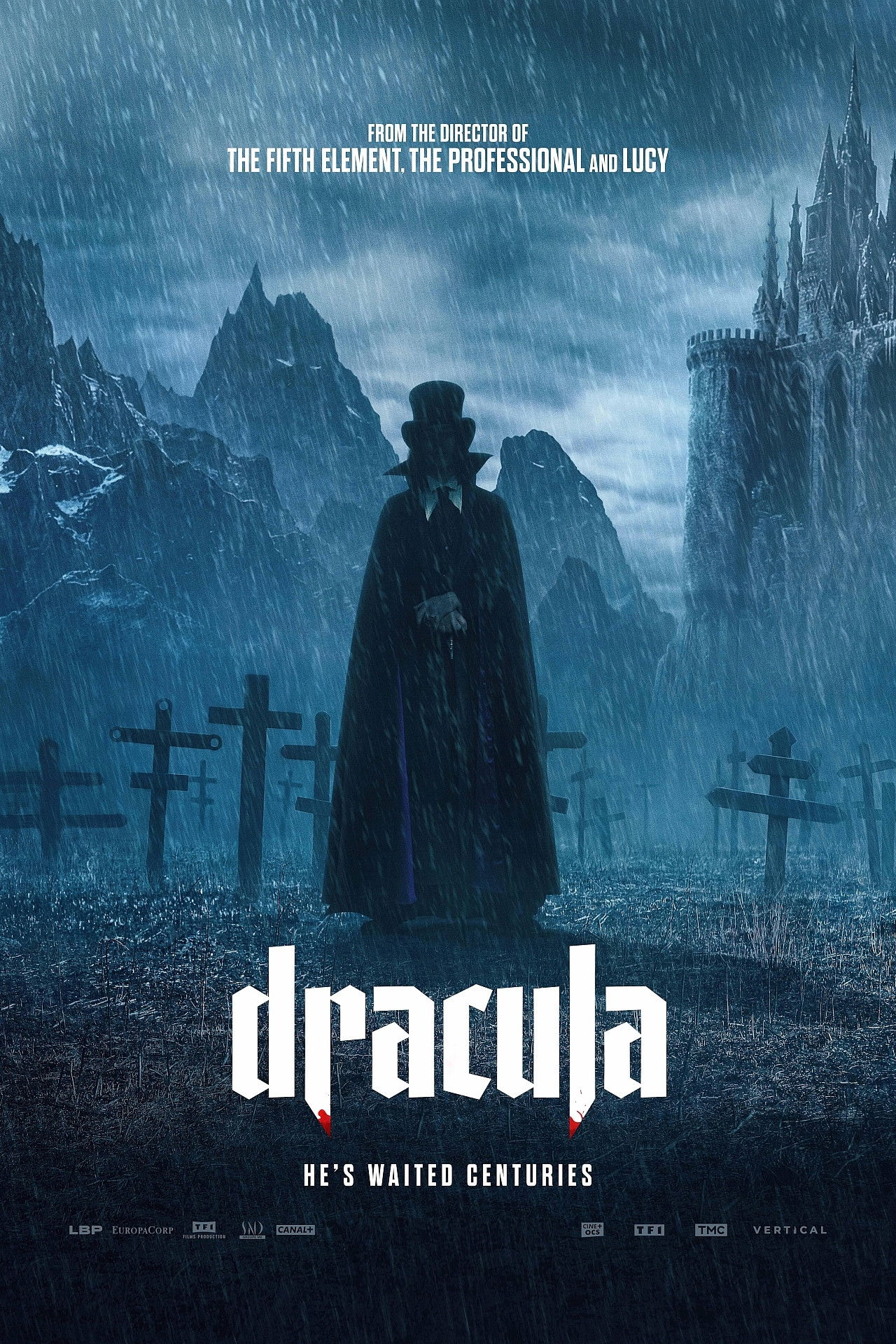
The Question of Truth Behind the Film
Whenever I watch a film like Dracula from 1931, I can’t help but notice how frequently audiences—myself included—ask whether what unfolds on the screen has any roots in reality. The impulse isn’t just idle curiosity; it’s a search for meaning, for a touchstone in the swirl of invention that defines so much of cinema. To me, that persistent question—“Is this a true story?”—acts as a filter through which the entire viewing experience is refracted. When I hear that a film is “based on real events,” I expect a certain fidelity, even if I know, deep down, that artistic license is always part of the package. That label of “truth” brings assumptions: that the events happened much as shown; that the characters correspond, more or less, to actual people; that what I’m watching holds some direct line to history. Even when a film makes no such claim, I find my mind reaching for parallels, teasing out which bits might have emerged from reality and which are products of the storyteller’s craft. Those instincts shape my engagement with a film like Dracula, whose gothic iconography and enduring villain seem to exist on a strange borderland between myth and fact.
What draws me back, again and again, is how the “true story” label alters my reactions. If I believe I’m witnessing a kind of visualized history, every nuance feels weightier. The stakes of the drama seem amplified by the possibility—imagined or not—that something like this once happened. On the other hand, if I know the story to be pure fiction, I permit myself to dwell a bit more in the realm of metaphor, allegory, and archetype. In the case of Dracula, there’s a fascinating ambiguity at work: it’s clearly a work of fantasy, yet rumors and whispers persist about the story’s connection to genuine historical figures. That ambiguity fuels my own curiosity and shapes the way I discuss or even debate the film with others. The search for “truth” in a movie that so fully embraces the supernatural strikes me as a quirk of the cinematic mindset, one that persists no matter how improbable the narrative may seem.
Historical Facts and Cinematic Interpretation
My exploration of Dracula is always colored by the tangled relationship between historical fact and artistic imagination. The 1931 film, I’ve learned, doesn’t have roots in documented events in the way some war epics or political thrillers might. Instead, it’s an adaptation—first of Bram Stoker’s 1897 novel, and more specifically, of the popular stage play derived from that novel. That distinction matters to me because it demonstrates how “facts” can become layered through successive acts of storytelling. Stoker’s original work was influenced by legends, superstitions, and bits of Eastern European folklore. Some believe he was inspired by the historical figure Vlad the Impaler, whose brutality princely reign in Wallachia gave rise to the Dracula nickname, but there’s no evidence he was adapting a genuine biography or aiming for factual retelling. When Universal Studios brought the story to the screen, the process of adaptation introduced even more distance: entire plotlines were streamlined, characters were merged or omitted, and the story was relocated, both physically and tonally, to suit the needs of cinema and the expectations of 1930s audiences.
I find the process of reshaping or condensing history in service of story to be endlessly fascinating. Even in a case like Dracula, where the ground is more myth than memory, the structure of the narrative hints at certain truths about the age in which it was made. The atmosphere of fear, the visual aesthetic, the cadence of the dialogue—all are deliberate choices, designed to evoke not only terror but a sense of foreignness and ancient menace. These refinements are less about distilling a historical “truth” and more about presenting a version of reality that evokes emotional resonance. I often remind myself that the history most viewers are exposed to through such films is more a kind of cultural memory than literal record—a palimpsest where fact, rumor, and creative invention blend. When I see the character of Count Dracula, for example, I recognize echoes not only of Vlad Dracula, but also of centuries-old anxieties about outsiders, disease, and the collapse of social order. Cinema, in this mode, becomes a kind of refracted history—one that reveals as much about the present as it does about the past.
What Changes When Reality Is Shaped for Cinema
Watching Dracula, I’m reminded of how frequently historical or literary source material is transformed to fit the contours of the film medium. The very act of adaptation imposes constraints and opens up new possibilities. In the transition from Stoker’s novel (and the earlier folklore) to the 1931 film, I see clear practical trade-offs. The dense narrative and sprawling cast of the book are pared down; the story relies less on shifting viewpoints and epistolary devices and more on direct, visual drama. Such condensation is, in my view, a practical necessity—film inherently prioritizes clarity and brevity over novelistic complexity. Even the geography changes: the Transylvanian landscapes are rendered through sets and shadows, invoking a sense of otherness without the need for explicit historical detail. Costumes, lighting, and performance become tools for conveying an imagined “historical” world, even if it only ever existed in the minds of writers and audiences.
I often find myself weighing what’s gained and what’s lost when a story like Dracula is reimagined for the screen. On the one hand, the cinematic form allows for atmosphere, tension, and visual spectacle that text alone can rarely match. The film’s haunting, minimalist approach—the way it lingers in silence, employs chiaroscuro, frames its antagonist with such severity—these are elements uniquely suited to its medium. I sometimes miss the psychological interiority of the novel: the swirling doubts, journals, and letters that underscore Stoker’s themes of fear and uncertainty. But I understand that unity and pace are often prioritized in a 75-minute feature. The choices Universal made reflect not just budget or audience constraint, but an understanding of how film “speaks” most effectively. In fact, the canonical image of Dracula himself—the widow’s peak, the cape, the slight Hungarian accent—is as much a creation of Bela Lugosi and the 1931 film as it is of any supposed historical antecedent. These adaptations, for me, are never simple abridgments, but rather reflections of the filmmakers’ sense of what the story can mean to a new audience, in a new format, in a new era.
Audience Expectations and the “True Story” Label
The matter of whether Dracula is true or fictional is more than academic to me; it exposes how my own expectations—and those of countless other viewers—are shaped by the way a film presents itself. If a film proclaims itself as “based on a true story,” I instinctively look for real-world correspondences. Every deviation from the historical record feels significant, almost as if I’m being asked to play detective along with moviegoer. Conversely, when I know a film is openly fictional or adapted from a novel that wears its artificiality as a badge, I engage a different set of interpretive tools. In the case of Dracula, I approach it very much aware of its status as fantasy, yet that awareness doesn’t inoculate me from searching for the “real” within its fiction. What fascinates me is how deeply the film has shaped—even supplanted—public perceptions of vampiric legend, to the extent that visual clichés and gestures introduced by the movie have become, for many, synonymous with “authentic” vampire lore. My own idea of what Dracula looks and sounds like has been influenced as much by Lugosi’s portrayal as by anything I might glean from historical texts.
Yet I notice that audiences of different times and backgrounds may come to Dracula with varying expectations. In 1931, audiences might have been less concerned with factual correspondence than with being transported, frightened, and thrilled; I wonder if today’s viewers, in an era of biopics and docudramas, are more likely to scrutinize period detail and demand plausible motivation. The blurred line between legend and fact in Dracula’s case complicates that picture: some viewers may assume that details—like the connection to Vlad the Impaler—carry more historical weight than is warranted by the evidence available. In my own viewing, I vacillate between searching for embedded “truths”—social anxieties, coded references to real events—and acknowledging the film as a fantasy woven from the fabric of multiple centuries’ worth of fear-mongering and superstition. For me, the “true story” label impacts not only how I judge historical accuracy, but how I interact with the film’s emotional and atmospheric aims.
Final Perspective on Fact vs Fiction
After years of watching, rewatching, and thinking about Dracula, I’ve come to see the interplay between fact and fiction not as a binary choice, but as a spectrum that infuses every frame with its particular resonance. Knowing the historical backdrop against which the Dracula legend developed—real or apocryphal—doesn’t diminish my engagement; instead, it invites a kind of double vision. I can appreciate the story both as an artifact of its time, built upon specific cultural fears, and as an enduring work of cinematic fantasy. My awareness of what is “real” and what is “invented” changes not just the stories I see, but how I see them. When the vampire rises, perhaps I’m seeing echoes of medieval panic or Victorian nervousness, just as much as I’m witnessing genre-defining spectacle. Facts, when present, shape the boundaries of possibility; fiction, when set free, animates those boundaries with new meaning. In the end, my understanding of Dracula is colored by both my knowledge of its roots and my willingness to be carried away by its illusions. The interplay between known history and creative adaptation becomes, for me, a crucial part of the viewing experience—a site of reflection, questioning, and, ultimately, a deeper connection to both the film and the ideas it explores.
For additional context, you may also explore the film’s overview and how it was received by audiences and critics.
🎬 Check out today's best-selling movies on Amazon!
View Deals on Amazon