
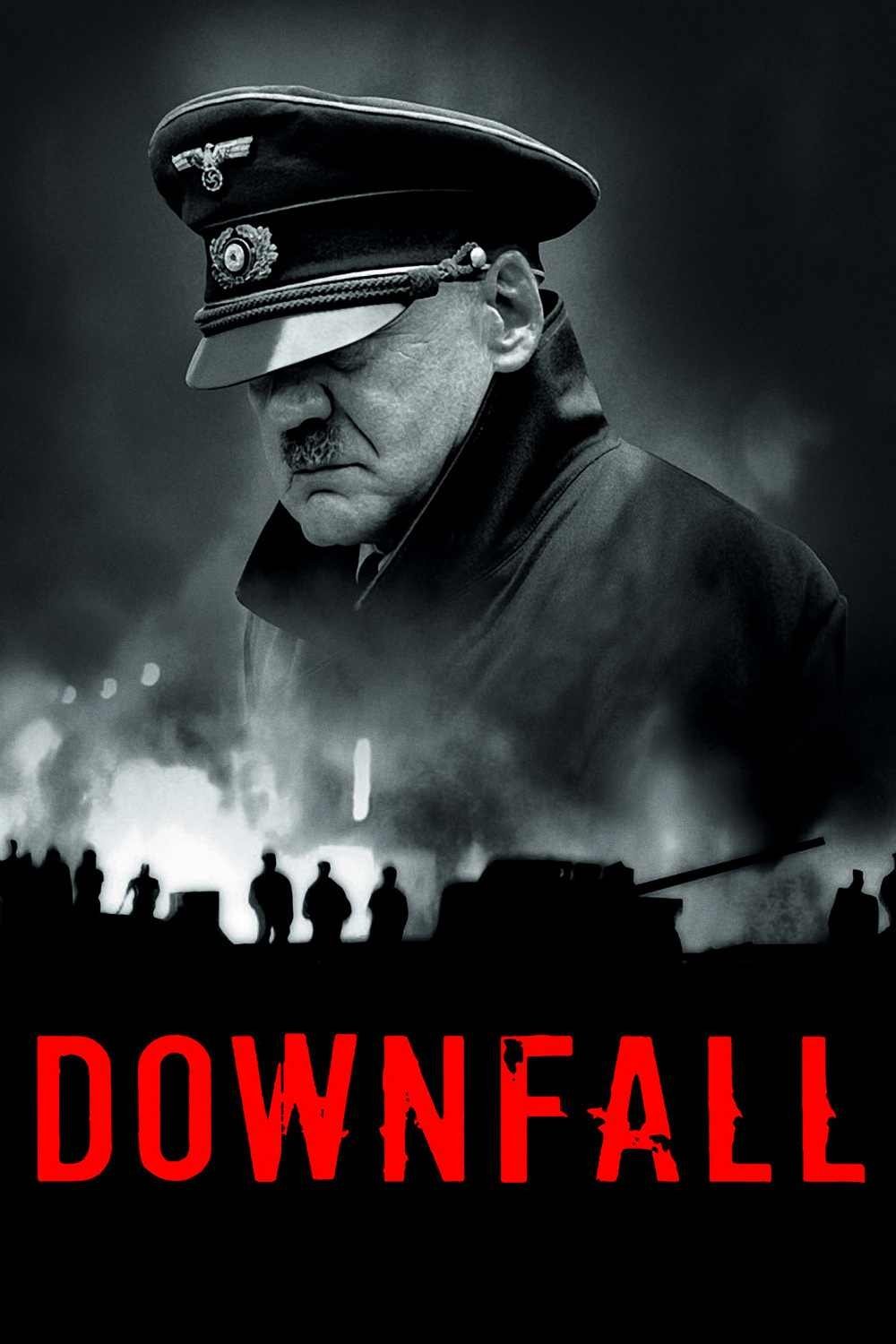
The Question of Truth Behind the Film
Whenever I encounter a film like Downfall, I immediately feel the gravity of knowing—before anything else—whether its events are rooted in documented fact or are the creation of its writers. With historical dramas, this urge feels especially potent. To me, it’s more than just idle curiosity. There’s something almost visceral about seeing infamous figures rendered on screen, portrayed with the nuance and attention to detail that only cinema provides. I notice among audiences, and within myself, an instinct to reach for certainty: did this happen? Is this really how it was? I think this longing comes from a basic human drive to understand our past, especially when the events are as significant and destructive as the fall of the Third Reich. Films promising to be “based on a true story” activate this hunger for truth, but not without bringing a host of assumptions. I sometimes catch myself believing, almost unconsciously, that labeling a film as historically grounded guarantees its accuracy. That label—“true story”—carries the expectation of authenticity, even if I know, rationally, that the demands of cinema differ from those of the archive. I find myself navigating between emotional immersion and analytical skepticism, always aware that the “truth” onscreen lives somewhere between script and source material.
Historical Facts and Cinematic Interpretation
When I watched Downfall, it became clear to me how powerfully a film can reconfigure historical events. I knew, going in, that the broad strokes of the story—the final days of Adolf Hitler within his Berlin bunker—were anchored in primary accounts, notably Traudl Junge’s memoirs and the scholarship of historians like Joachim Fest. But as the film unfolded, I became attuned to how chronology and perspective were crafted to create a coherent narrative arc. Moments that in reality stretched over days or weeks are compressed into minutes. While the film’s dialogue and dramatic structure sometimes feel eerily authentic, I know they must also be inventions—dialogue constructed to serve clarity, tension, or psychological insight rather than verbatim testimony. I notice that cinematic storytelling leans heavily on shaping timelines or focusing characters’ experiences to amplify certain themes—paranoia, despair, fanaticism, or complicity. As a viewer aware of both the original sources and the creative process, I keep returning to the idea that what unfolds onscreen inevitably bears the fingerprints of adaptation. The scenes are shaped not only by what actually happened but also by what filmmakers believe will carry meaning—the kind of meaning that distills the chaos and ambiguity of real history into something that communicates, even if it simplifies.
What Changes When Reality Is Shaped for Cinema
It’s always fascinating to me how adaptation asks the filmmaker to walk an exquisite tightrope. I see—and in Downfall particularly, I feel—how practical limitations and narrative priorities guide what ends up on the screen. For one, cinema thrives on emotional through-lines and clear arcs, but actual historical events almost never unfold with the same neatness. I recognize this very clearly in the way secondary characters are spotlighted or backgrounded, depending on their narrative utility. For example, minor functionaries who play brief roles in the historical bunker might be elevated for dramatic effect, allowing the film to explore themes like denial or despair through their eyes. Conversely, important historical figures may be left undeveloped if their stories would distract from the central thread.
I notice too that realism, as conjured up by sets, costumes, and dialogue, acts as a kind of prism—refracting true events into something both familiar and slightly theatrical. While I may know from reading histories that certain exchanges or emotional breakdowns occurred in private or under conditions lost to the record, the film presents them with a clarity and intensity designed to resonate with the audience. The very act of reimagining chaotic days with order and coherence can transform the emotional tone: what felt, for real people, like confusion or panic, is re-experienced as something almost operatic. I am struck by how the logistics of cinema—time constraints, the need for visual or aural impact, the imperative to focus the audience’s attention—inevitably demand simplification. Yet these choices are not just limitations; they can be tools for interpretation. A scene staged for maximum dramatic effect might not reflect verbatim reality, but it brings out nuances or subtexts that otherwise remain abstract in a written account. I find myself both unsettled and intrigued by this, aware that cinema’s power lies in its ability to evoke understanding and empathy, even at the cost of certain factual details. This raises a complex question for me: does a beautifully staged moment help us engage more deeply with history, even as it distorts certain facts?
Audience Expectations and the “True Story” Label
Over the years, as I’ve revisited films like Downfall, I’ve become ever more attuned to how expectations shift the texture of the viewing experience. Advertisements, opening titles, and even promotional interviews often frame the film as a window onto reality. This framing cultivates a kind of watchfulness in me—I scrutinize performances for authenticity, settings for fidelity to the historical record, dialogue for echoes of real testimony. I recognize that my response is echoed by the audience at large: when told that what I am seeing is factual, I become more invested in the film’s accuracy, and my judgments are colored by this promise. Conversely, if a film signals that it is inspired by, rather than a strict representation of, historical events, I grant it more leeway. I find myself able to enjoy or interpret its narrative digressions without measuring every scene against a factual yardstick.
I notice a further dynamic at play when a historical drama like Downfall earns notoriety simply by virtue of dealing with controversial figures. The audience—myself included—often arrives prepared to scrutinize the portrayal for clues about motivation or ideology. There’s a sense of responsibility that hovers around each scene, shaping not just my expectations of realism but also my sense of what the film is supposed to do. I see the “true story” label casting a long shadow over each creative choice; any sign of departure from known facts feels charged, meaningful. Yet this effect is a double-edged sword. Where the audience trusts the source, the film is taken as a kind of authoritative statement—an interpretation to be judged as much for its teaching as its entertainment. I find myself toggling between awe at the reconstruction of infamous moments and skepticism about the subtle liberties taken in the name of drama. Some viewers, I notice, share my wariness, while others allow themselves to be swept up in the immersive experience, taking each scene at face value. Public debates and critical reviews often reflect this divergence. I occasionally see arguments arise about whether a particularly dramatic scene genuinely occurred, and these debates can sometimes overshadow discussions about the film’s emotional impact or philosophical questions.
Final Perspective on Fact vs Fiction
After watching Downfall and thinking deeply about how it negotiates the boundary between fact and cinematic invention, I am left with a sense of both possibility and ambiguity. My awareness of factual origins doesn’t diminish the impact of its storytelling but rather complicates it, giving each scene a double resonance. On one level, I cannot fully let go of wanting to know precisely which moments are grounded in evidence and which arise from conjecture. On another level, I find myself open to the idea that cinema’s ultimate task is not to serve as a substitute for history but to interpret, illuminate, and provoke reflection. The experience of watching a film like this is colored by my sense of what is real—every invented speech or compressed timeline prompts me to reflect on why the filmmakers chose this structure, this dialogue, this emphasis. Knowing the facts doesn’t merely set the boundaries of my engagement; it introduces a parallel current of questioning and analysis, sharpening my attention to subtext and nuance.
For me, the line between fact and fiction in historical cinema is neither a bright border nor a smudge but a moving threshold, sensitive to the intentions of storytelling and the needs of understanding. I come away from Downfall with profound respect for the layered dialogue between source material and screen, and with acute sensitivity to how each artistic choice reframes my relationship to history. Watching the film as someone aware—sometimes painstakingly so—of its deviations from the record doesn’t mean I find it less meaningful. Instead, I find myself grappling with the idea that fidelity to what happened can coexist with a measure of creative interpretation, provided I remain mindful of their interplay. Factual knowledge arms me with context, but it also challenges me to consider the workings of memory, myth, and imagination whenever history is re-enacted for new audiences. I realize, each time I watch, that my capacity to find meaning in historical cinema depends neither on documentary precision nor on unchecked invention, but on my willingness to enter a dialogue between what was and what is shown. That process of questioning, of holding reality and fiction in active tension, is—at least for me—the heart of what it means to watch history on film.
For additional context, you may also explore the film’s overview and how it was received by audiences and critics.
🎬 Check out today's best-selling movies on Amazon!
View Deals on Amazon