
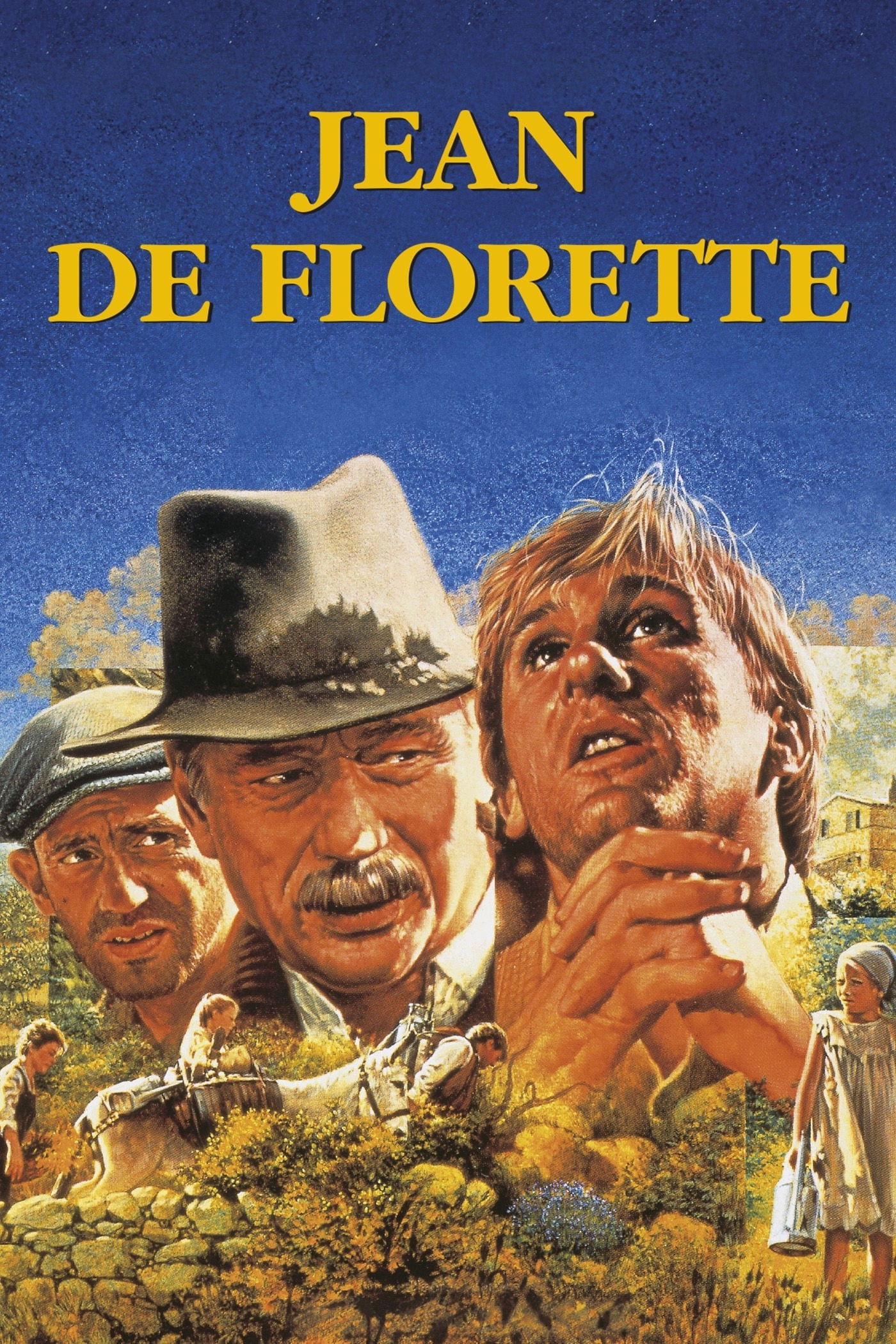
The Question of Truth Behind the Film
For me, watching “Jean de Florette” always prompts an urge to untangle whether the narrative before me ever played out in the world as it’s shown on screen. I find myself drawn to this question not because I need historical accuracy for enjoyment, but because believing something really happened lends a kind of emotional gravity—a seriousness I am conditioned, perhaps, to respect. Audiences, myself included, seem to react strongly to labels like “based on a true story,” often presuming a factual blueprint underpins the characters’ trials and the twists of the plot. When I’m told a film draws from real life, I unconsciously recalibrate my emotional engagement. I’m less likely to dismiss a character’s suffering as narrative manipulation and more inclined to interpret it as faithful witness. This reaction isn’t just personal, but built on cultural assumptions: true stories are seen as “important” or “significant,” while fiction is often felt as a crafted escape, however beautifully wrought.
Yet, these assumptions can be misleading. When I experience a work like “Jean de Florette,” which doesn’t immediately announce itself as fact or fiction, I find the line blurring. Is the story a mirror to some long-buried history of rural France, or is it the creative distillation of universal themes of envy, ambition, and fate? The craving for clarification stems, I think, from a desire to locate one’s own reality in the film: to find evidence of the world’s cruelty, its beauty, or its injustices mirrored faithfully. At the same time, there’s an awareness—sometimes buried, sometimes explicit—that authentic-seeming details can be just as powerfully constructed. I wrestle with this every time a film “feels true” without being tethered to events I can verify.
Historical Facts and Cinematic Interpretation
I’ve spent hours poring over the background of “Jean de Florette,” wondering which parts of the film are drawn directly from the land and time it depicts. What I’ve found is that, unlike a biopic that cleaves closely to an individual’s documented life, this film adapts a work of literature—Marcel Pagnol’s novel—and uses that as its primary factual anchor. Pagnol himself was inspired by the rural Provençal landscape of his youth and the shifting fortunes of people he observed or imagined. When the film adapts these elements, it doesn’t hinge on specific events or named historical figures, but instead, reinterprets what I see as real social currents: the patterns of rural inheritance, the dilemmas of outsiders, the often relentless force of community suspicion.
If anything, the “truth” of “Jean de Florette” comes less from headline-making events than from an accumulation of sensory and social details rooted in the 1920s French countryside. The rhythms of peasant labor, the slow grind of drought, the gravity of land ownership—all these feel deeply observed, even if they are not tethered to any one calendar date. I notice that the filmmakers choose to reorganize these motifs for maximum narrative resonance. The timeline is compressed: seasons pass fluidly, so emotion can gather momentum. Characters’ choices are heightened—dramatic, even—so that they speak not just for themselves, but for a whole period and class. I’m left feeling that while any “historical facts” are blurred, the result is a kind of emotional or social fact, sharpened for effect.
In my experience, this approach fosters both connection and frustration. On the one hand, I relish the sense of lived experience—the mannerisms, the architecture, the methods of working the land that were likely drawn from observation, if not direct historical record. On the other, I’m always wary of how easily such details can be arranged to serve not truth but storytelling. With “Jean de Florette,” the origin is always more folkloric than documentary, yet I’m invited to respond as if it were precisely the latter. This, to me, is the particular alchemy of cinematic adaptation: the relentless dance between “what really happened” and “what feels real.”
What Changes When Reality Is Shaped for Cinema
As someone endlessly curious about where fact ends and invention begins, I see the shift from raw reality to cinematic storytelling as a process of practical necessity rather than deception. With “Jean de Florette,” there’s no attempt to recount a specific, verifiable story from the archives. Instead, the film draws on aggregated truths—attitudes, hardships, prejudices—that might have soaked the hills of Provence in a given era. I recognize that, in translating the atmosphere and conflicts of another time to the screen, certain trade-offs are inevitable.
First, there’s the matter of condensation. Entire years, if not decades, of rural struggle are distilled into seasonal changes and a handful of turning points. I see this condensation not as a falsification, but as a form of narrative efficiency. Too much granular reality risks tedium: real droughts take forever, suspicions simmer slowly, and grudges may last generations. A film, however, has to focus, to distill these grand processes into moments that reveal the underlying tensions rapidly. For me, this compression heightens the sense of urgency and loss, even if it reduces the scale of real change to a digestible plot arc.
I also notice that “types” are more sharply drawn for the screen than they would have been among real people. Jean, Ugolin, and Papet each embody exaggerated aspects of the local-European struggle between strangers and insiders, and between the individual and the collective. While these are rooted in plausible patterns, I’m aware they become archetypal by design—created to dramatize a kind of universal conflict. Reality, in my experience, is far more ambiguous: people are less consistent, their prejudices less conveniently matched to the demands of a single narrative climax. But the demand of cinema is clarity, so nuance is sometimes exchanged for legibility.
Another trade-off I cannot ignore is the aestheticization of hardship and setting. The camera lingers on Provençal hills, the parched soil, the faded shutters, and in doing so, curates a beauty that the real villages of the 1920s might not always have offered. There is a tension here: filming the land through a lens of longing and regret heightens its dramatic purpose but also transforms it into a stage, diminished of some original, accidental messiness. I’ve come to accept that poetic license is part of the translation from reality to screen, even though I sometimes long for an uglier, more ambivalent landscape.
Lastly, I see a tendency for internal states—especially grief, hope, and envy—to be articulated more directly than they probably would have been “in real life.” Facial expressions linger for the camera in ways I doubt they did for neighbors or rivals in the harshly pragmatic world of peasant Provence. These choices help me, as a viewer, to align myself emotionally with characters whose motives would otherwise be obscure. But I am always conscious that the intimacy I feel is partially engineered, designed to bridge a gap between past and present, strangeness and familiarity.
Audience Expectations and the “True Story” Label
I often find that my own engagement with a film is colored by how clearly it signals its relationship to real events. When a film markets itself as a “true story,” every detail feels weightier: I receive violence, triumph, or failure not just as entertainment, but as a record of someone’s life. If “Jean de Florette” were explicitly presented as a direct transcription of one family’s downfall, my interpretive frame would shift—I’d search for markers of authenticity, and critique deviations as breaches of trust rather than tools of storytelling.
When, instead, I watch it as a fictionalization—albeit one laced with cultural memory and historical detail—I locate my response differently. My empathy is real, but I am not burdened by the sense of obligation to the past or to specifically wronged individuals. There’s a freedom in this: I can ask what the story means, what it illuminates about envy or alienation, without worrying about the narrative’s objectivity. I’m also aware, though, that this removes some emotional ballast. If Jean’s undoing isn’t a direct lifting from history, am I less moved by his misfortune, or more? Sometimes, fiction’s capacity to reflect and synthesize many stories feels more honest than a strict adherence to fact would allow.
I’ve seen other viewers—friends, colleagues—react in similar ways. Some cling to the “based on a true story” hook as a measure of importance, worried that fiction is inherently frivolous. Others, myself included, find that the mythic mode of “Jean de Florette” permits a more universal questioning. Does this depict not just what happened, but what always happens, when property and power are in play? Without the pressure to confirm or debunk historical footnotes, I can focus on what the film proposes: that even the most localized tragedy can vibrate with echoes well beyond its setting. But I never stop noticing how the “truth” label evokes both reverence and skepticism—and how, in its absence, a story can paradoxically feel even more resonant.
Most provocative for me is the tension between emotional truth and literal fact. “Jean de Florette” invites me to consider this actively: am I watching a case study of one man, or a dramatized expression of a timeless rural conflict? Without the marker of factuality, the responsibility shifts—the meaning exists in how I, and others, read and interpret the events, not just in how precisely they mirror a ledger or census. The boundaries blur, and I become complicit in constructing the “reality” of the film, which is both freeing and disorienting.
Final Perspective on Fact vs Fiction
After repeated viewings and much reflection, what stands out to me about “Jean de Florette” is how my awareness of its factual origin—or lack thereof—shapes everything I take from it. When I remind myself that this is not a documentary, and that its source is imaginative literature, I relax my investigative posture. The drive to tally moments against an external reality dissolves, replaced by a deeper consideration of what the story offers as metaphor, allegory, or even cautionary tale. I find myself moved less by the question, “Did this really happen?” than by the recognition that what unfolds could have happened, and likely did, in myriad unrecorded ways.
I do not find myself disappointed by the film’s distance from strictly documented history. If anything, knowing that the script emerged from Pagnol’s invented yet observed world encourages me to credit the film with a different kind of truth—a psychological or societal resonance. The injustices, the ambitions, the complications of tradition and modernity, feel no less weighty for being synthesized rather than documented. I notice that the broader themes stand up to my personal scrutiny precisely because they blend the plausible with the poignant. The particular faces and places, while fictional, are recognizable, even archetypal.
For me, the relationship between fact and fiction in film is rarely static. With “Jean de Florette,” every viewing toggles between appreciation for the evocative detail and an awareness of deliberate construction. I don’t deny that an understanding of real-world inspiration, whether from social history or personal memory, deepens my engagement. But I also value the latitude this knowledge offers: I am able to interpret the tragedy as something emblematic rather than accidental. The film ceases to be a referendum on what happened somewhere to someone, and becomes a window onto persistent human dilemmas—ambition, trust, the costs of exclusion.
In all, I’ve come to see that the handled facts—shaped, transformed, or set aside in favor of dramatic focus—invite a richer, more personal reckoning than a simple recounting of “what happened” ever could. My sensitivity to the distinction between documented truth and narrative invention doesn’t diminish the film’s power; it alters the lens through which I perceive, evaluate, and remember what I’ve seen. Ultimately, “Jean de Florette” invites me not just to witness a particular story, but to confront the larger possibilities of meaning that only the sensitive blending of fact and fiction can propose.
For additional context, you may also explore the film’s overview and how it was received by audiences and critics.
🎬 Check out today's best-selling movies on Amazon!
View Deals on Amazon