
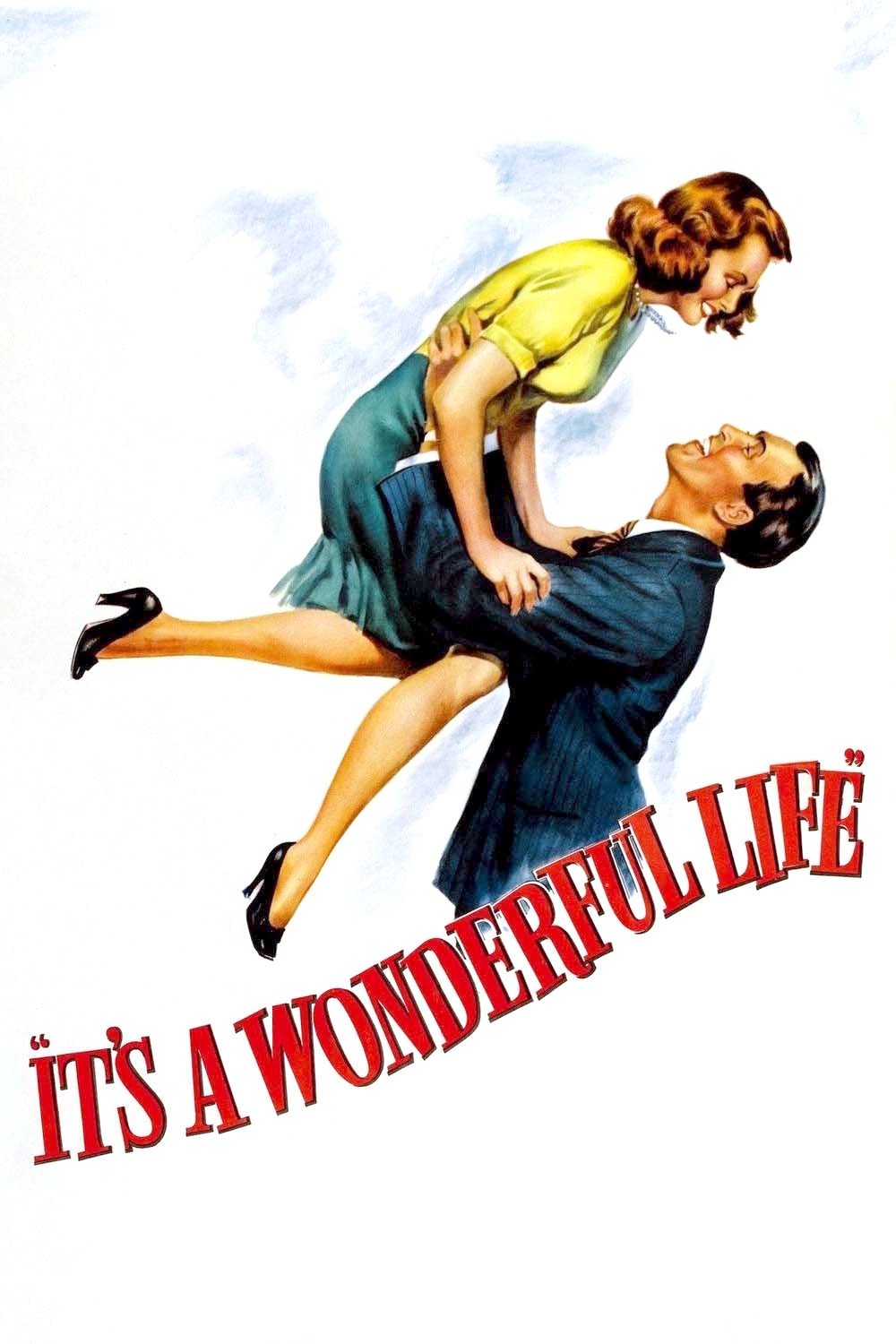
Is This Film Based on a True Story?
The very first time I watched “It’s a Wonderful Life,” I felt an unshakable familiarity in its story—a sense that George Bailey’s struggles and despair could have been pulled straight from someone’s real-life memories. Yet as I delved into the background of this beloved classic, I discovered that the story is, in fact, entirely fictional. There are no direct records of a real George Bailey who lived in Bedford Falls; the film does not attempt to retell the life of any one individual or recounts a historical event. Instead, “It’s a Wonderful Life” weaves its narrative from a blend of universal human hopes and anxieties, presented through the lens of small-town America. The source material for the film—a short story titled “The Greatest Gift” by Philip Van Doren Stern—serves as the cornerstone, and even that originated from the author’s imagination rather than real-world sources. As I came to realize, every element, no matter how authentic it feels, is a crafted piece of fiction designed to evoke genuine emotional resonance rather than to document a lived truth.
The Real Events or Historical Inspirations
What drew me deeper into the fabric of “It’s a Wonderful Life” was my curiosity about what might have inspired its beguiling authenticity. The beginnings of the movie lie in Philip Van Doren Stern’s Christmas story written in 1943. I learned that Stern, after facing rejections from publishers, privately printed his story and mailed it in Christmas cards to friends in 1943. This little tale eventually made its way to RKO Pictures, then to director Frank Capra, who saw cinematic potential in Stern’s narrative kernel.
When I consider the roots of Stern’s inspiration, I don’t find direct allusions to historical events, but there is evidence that he was influenced by the social and economic challenges of the period. Stern grew up during the early 20th century, living through World War I, the Great Depression, and the looming shadows of World War II. While “The Greatest Gift” did not directly mention such events, I can sense that Stern was clearly addressing the kind of everyday anxieties faced by people coping with personal loss, dashed hopes, and questions of self-worth.
Taking this discovery further, I observed that Capra himself was greatly affected by his own life experiences. After returning from World War II—he had directed documentaries for the Army—he found himself drawn to stories about ordinary Americans and community spirit. Although these experiences colored the way Capra approached adaption, there are no explicit historical figures or events fictionalized here. Instead, the film stands as a broad emotional reflection of the uncertainty and resilience that Americans, and indeed many people worldwide, felt during those tumultuous decades. I sense this in myriad details: the scenes of bank runs, the warmth of neighborly bonds, and the sobering stakes of personal sacrifice. These elements are not ciphers for historical fact but emotional echoes of the period’s real existential turbulence.
Stern’s work and Capra’s film both remind me of broader motifs in literature, such as Charles Dickens’s “A Christmas Carol.” I find it interesting that, while not directly cited, the presence of a guardian angel and the notion of examining one’s life circumstance closely parallel Dickens’s tale. Rather than being adapted from a true story, “It’s a Wonderful Life” draws from a rich tradition of redemptive Christmas fables, mingling elements from familiar narrative archetypes without grounding them in concrete historical context.
What Was Changed or Dramatized
In tracing the transformation from “The Greatest Gift” to the film I know, I see that the process was one of thorough invention and embellishment. The original story is strikingly succinct: a man, despondent on Christmas Eve, wishes he had never been born and is shown a world without him by a mysterious stranger. The film, however, turns a brief meditation on gratitude into a complex, multi-decade portrait. Capra and his screenwriting team inserted entire fictional storylines, such as the townspeople’s loyalty to George, the villainy of Mr. Potter, and the foundation of the Bailey Building and Loan Company. I’ve noticed how these inventions serve to amplify the stakes—turning what was once a quiet epiphany into a sweeping account of communal interdependence.
One change that stands out to me is the adaptation of the supernatural character. In the story, the visitor is simply called “the stranger,” an enigmatic figure with few details. By contrast, the film offers Clarence Odbody, Angel Second Class, a distinct personality who injects humor and cosmic warmth. This is not a deviation from fact, since the entire premise is fictional, but it’s a notable flourish that shapes the emotional tone of the narrative. Similarly, the vibrant tapestry of supporting characters—Mary, Uncle Billy, Violet, Bert, Ernie—are inventions aimed at lending the fictional town of Bedford Falls a sense of lived-in reality. These figures, as I see it, are archetypes rather than representations of specific individuals, each serving to deepen George Bailey’s crisis and eventual redemption.
I also can’t help but note the film’s time period. Though released in the immediate aftermath of World War II and set partly against the backdrop of the Depression and the war years, the movie avoids referencing explicit historical dates or events, instead adopting a sort of indefinite Americana. The towns of “Bedford Falls” and “Pottersville” represent more of a conceptual America than a mapped geographic location. This deliberate vagueness enables the film to function as a fable, freed from both the limitations and messiness of strict historical representation. In my experience, the story’s emotional accuracy is prioritized over factual documentation.
While the film is widely regarded as a piece of Americana, I am aware that every plot twist and character arc is designed to fulfill thematic aims, not narrative reportage. The film’s ending, especially—the communal outpouring of support and the resolution of George’s existential crisis—amplifies hope and fellowship beyond what I expect anyone actually experienced in real life during bank crises or depressions. In that sense, “It’s a Wonderful Life” is less a mirror than it is a lantern—crafted to illuminate the ideals of what community might be, not what it was.
Historical Accuracy Overview
When I approach “It’s a Wonderful Life” through the lens of historical accuracy, I encounter a paradox. On the one hand, I find remarkably accurate renderings of certain aspects of American life in the early-to-mid 20th century: the savings and loan industry, the threat of bank collapses, and the experience of soldiers returning home. For someone who has studied this era, the motifs of financial uncertainty and social cohesion in small towns ring true in spirit, if not always in detail. Those scenes of George debating with his customers during a bank run, or the anxiety over affordable housing, echo the very problems many Americans faced in real terms during the Great Depression and the years that followed.
Yet there’s a distinct line between spiritual accuracy and documentary precision. Having pored over historical files, I see that the specifics of Bedford Falls are fabrications. There was never a Bailey family running a building and loan institution precisely as depicted; there was no actual villain quite like Mr. Potter seizing control of an entire town, nor records of a sudden angelic intervention in one man’s darkest hour. The film’s optimistic depiction of postwar society inevitably omits the harsher realities: the long-term effects of poverty, homelessness, or unresolved trauma among returning veterans. George’s transformation, as emotionally powerful as it is, is a matter of psychological truth rather than provable fact.
The historical atmosphere, on the other hand, feels remarkably convincing to me. When I observe the set design, the town’s fashions, and even the social dynamics, I see evidence of careful research into how Americans of the 1920s through 1940s conducted their daily lives. The dialogue’s cadence, the presence of local law enforcement, the small businesses, and even the rituals of holiday celebration all ring with historical resonance, lending believability to the invented plot. I’d say the movie achieves what I might call “emotional historicity”—faithfulness to the mood of an era—without ever anchoring itself to the particulars of documented history.
For those seeking film adaptations that strive for direct accuracy—works that retell known events as closely as possible—this story doesn’t occupy that category. “It’s a Wonderful Life” succeeds instead by conveying the undercurrents of hope, anxiety, and interconnectedness that defined mid-century American life. The world of Bedford Falls never existed on any map, but the pressures and yearnings experienced by George Bailey are ones I recognize through countless letters, oral histories, and sociological records of the time. The historical accuracy here is one of tone, not fact.
How Knowing the Facts Affects the Viewing Experience
Learning that “It’s a Wonderful Life” is an entirely fictional creation initially surprised me, given how powerfully its themes resonate with the realities of 20th-century America. For me, knowing the film’s fictional origins changes the way I watch it—shifting my attention from questions of what “really” happened to the meanings that Capra’s team wanted to explore. Because I’m not constrained by the expectation that the film should document an actual life, I’m able to engage more freely with its symbolic layers.
For instance, recognizing that George Bailey is not a real or composite person allows me to view his journey as an everyman’s struggle. The film’s uplift no longer demands literal validation; instead, I can see George’s crisis as emblematic of so many unseen battles waged by ordinary people when confronted by despair, setbacks, or the feeling of being unappreciated. In this way, the absence of historical anchors paradoxically broadens my appreciation, because the story becomes less about a specific past and more about universal experience.
At the same time, understanding the fictional nature of the film tempers my expectations about its portrayal of history. I am less likely to read it as an unvarnished account of the Depression or the home front during World War II, and more as a parable that borrows the vernacular and dress of history to address enduring themes. Knowing, for example, that the benevolent mob of neighbors who rally for George may be more idealized than realistic enables me to interpret these scenes as aspirational visions rather than records of how real communities functioned. The story’s emotional impact is undiminished—I still feel its catharsis deeply—but my analytic side recognizes the documentary license that has been taken throughout.
When I speak with viewers new to the film, I sometimes sense disappointment that there is no “real” George Bailey. But for me, the awareness that this is an invented world, guided by the ethical dilemmas and hopes of its creative team, enhances its relevance. I find that the emotional realism of “It’s a Wonderful Life” delivers something akin to psychological truth—an insight into what pushes people to the brink, and what can pull them back again—even if it never happened quite this way in history. The story becomes, for me, a mirror not of one man’s fate, but of how we collectively dream of rekindling meaning when hope seems lost.
Ultimately, the knowledge that “It’s a Wonderful Life” is not based on a true story liberates me from fact-checking its plot twists or researching the lineage of the Bailey Building and Loan. Instead, I’m led to contemplate why this carefully constructed myth continues to resonate across generations—and why, perhaps, reality sometimes requires the assistance of fiction to offer us the solace and perspective we crave. By anchoring itself in the universal rather than the particular, the film grants me permission to locate my own struggles and hopes within its frame.
After learning about the film’s origins, you may want to see how audiences and critics responded.
🎬 Check out today's best-selling movies on Amazon!
View Deals on Amazon