
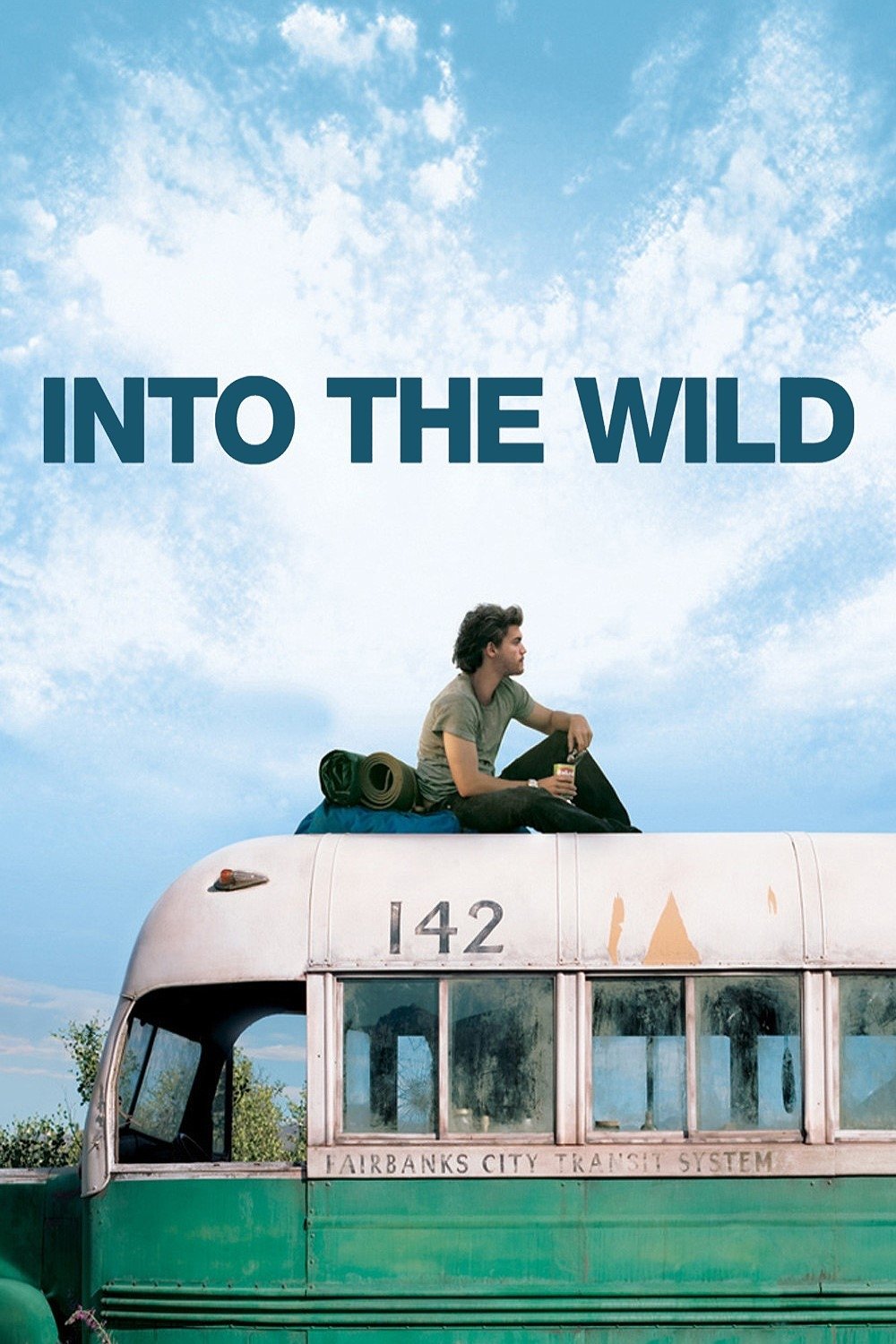
The Question of Truth Behind the Film
Whenever I sit down to watch a film that claims, hints, or even whispers to be drawn from real life, I catch myself wondering exactly what I’m about to experience. The phrase “based on a true story” has a subtle power over me. It suggests I’m not just being entertained, but offered insight into something that actually happened, something that genuinely mattered in this world. With Into the Wild, this feeling intensified. The story isn’t just dramatically compelling; it suggests its roots lie in reality, in a journey that someone actually took and a fate someone truly met. I’m aware that approaching a film this way means carrying in a bundle of assumptions—that I’ll be invited into a closer contact with the past, that storytelling choices strive for honesty, and that the emotional highs and lows reflect events that once rippled through real lives. Perhaps it’s an old habit of mine, trying to bridge the gap between the events onscreen and the pulse that might have driven them out there in the world. But the temptation is there: to treat the film as a lesson in history as much as a piece of art, to imagine myself learning about reality, not just a director’s craft.
This hunger for authenticity seems to be fueled by something deeper than simple curiosity. When a film carries the “actual events” label, I find myself scrutinizing characters, situations, and outcomes, half-expecting the storytelling to serve as a vessel for truth. In my experience, films like Into the Wild become magnetic precisely because they suggest a channel to lives and dilemmas outside my own. But this orientation comes with its own baggage; sometimes I unconsciously grant more authority to the narrative, believing that decisions, moments, and emotions aren’t just plausible—they’re proven. In this sense, I feel my approach becomes laced with a strange seriousness. If I sense the film is “true,” I hold it to standards I never apply to entirely fictional works. And yet, the line between what happened and what is shown is always shifting beneath my feet, leading me to interrogate what I’m seeing: Am I learning about the world, or am I watching it being transformed by someone else’s priorities?
Historical Facts and Cinematic Interpretation
As I watched Into the Wild, I was struck by the tension between what “really” occurred and what the film chooses to shape for the screen. The starting point—the real-life journey of Christopher McCandless—anchors the film in historical fact. McCandless’s odyssey, documented by Jon Krakauer in his non-fiction book, provides the skeleton. But I noticed immediately how cinematic interpretation layers muscle, emotion, and polish atop that skeletal frame. Rather than giving me an exhaustive timeline, the film presents fragments, compressing years into vignettes. I’m made aware—by omission and by rhythm—that choices have been made: side characters are given personality and dialogue, sometimes constructed from secondhand accounts, sometimes plainly dramatized to capture a feeling Krakauer himself only imagined.
The structure follows a loose chronology, but as someone who likes to dig, I recognize that the narrative arc is not purely factual. The real-world McCandless left behind a patchwork of letters, journal entries, and brief encounters—enough for a narrative, but full of silence and uncertainty. The film fills in gaps, sometimes with dialogue that sounds poetic, sometimes with wordless glances or symbolism. When I reflect on these moments, I realize just how much the story is being actively interpreted, rather than simply documented. I think of sequences in which McCandless’s motivations are stated aloud, or relationships are fully fleshed—these are the product of interpretation, not evidence. By condensing and reorganizing McCandless’s experiences, by attributing narrative clarity and closure to ambiguous historical material, the film becomes a translation—and every translation embodies the priorities and constraints of the translator.
One of the most noticeable tools, in my eyes, is the film’s interplay between objective chronology and subjective memory. Flashbacks, voiceovers, and impressionistic editing all highlight that this story isn’t being told as a reconstructed newsreel. Instead, it becomes a ribbon of recollection and speculation. Even as I recognize moments that must be grounded in McCandless’s journals—descriptions of hunger, realizations of isolation—I also sense how much is interpolated through cinematic craft: visual metaphors, scenes tied together thematically rather than temporally. This isn’t deception; it’s an expected artifact of adaptation—history filtered through the needs and possibilities of film language. Still, it reminds me that I am not witnessing the unvarnished act of living, but rather a carefully composed selection of what seems true, relevant, and resonant within the film’s structure.
What Changes When Reality Is Shaped for Cinema
I often find myself wrestling with the practical decisions filmmakers face when adapting reality to fit the frame of a film. There is almost always a negotiation—a selective focus, an intentional simplification, a distillation of emotions that may have been far more ambiguous or protracted in real life. With Into the Wild, these trade-offs seem especially pronounced: the shifts in timeframe, the blending of different voices, the condensation of many personal encounters into composite characters or streamlined arcs. I realize that these are not mistakes or oversights; they reflect the constraints of time, the limitations of narrative, and the need to grant the audience a coherent emotional journey. Yet, every time reality is sculpted for the demands of cinema, something is gained and something is lost—and my awareness of this equation shapes how I process the film as a viewer.
For instance, the way the film attempts to reveal McCandless’s thoughts and inner turmoil often relies on imagined dialogue and visual shorthand. Real human experience is muddied, full of contradictions, all too resistant to neat storytelling. In the medium of film, however, I see this conflict smoothed into arcs and motifs. This clarity, while satisfying, can obscure the fact that actual lives are not so easily organized. I notice how side characters, whose full stories may have unfolded over years or remained only glimpsed in real life, are condensed into emblematic figures—each highlighting a theme or lesson the filmmakers clearly want to emphasize. I recognize that this approach has the effect of sharpening the film’s narrative, allowing me to grasp the broader significance of McCandless’s journey more intuitively; yet, it also means surrendering to a version of events that is more selective than comprehensive.
The visual and emotional language of the film reinforces these decisions. Sweeping landscapes, interludes of silence, and swelling music combine to evoke not only the physical scale of McCandless’s adventure, but its symbolic dimensions. I’m moved not merely to witness a historical case, but to experience, in cinematic shorthand, the hunger for escape and meaning that the story seeks to embody. Of course, I’m aware that the more the film leans into the metaphorical or the poetic, the further it moves from unmediated fact. Every camera angle, every score selection, transforms actual uncertainty or ambiguity into something communicable—something I can feel in under two hours. As I reflect on this, I appreciate how adaptation demands simplification, focus, and occasionally invention, not for the sake of distorting fact, but for transmuting the unruly sprawl of real life into the rhythms that cinema can sustain.
Audience Expectations and the “True Story” Label
There is a discernible difference in how I watch a film when it’s branded as a true story, compared to one identified outright as fiction. When I encounter the phrase “based on real events” in the opening of a film like Into the Wild, my perspective becomes more interrogative. I seek out traces of reality within the fiction, wanting to locate the boundary between documentary fidelity and creative license. The “true story” label carries with it a certain gravity, a claim to significance that fictional stories cannot always muster by themselves. As a result, my emotional investment is different—I approach the film not only to be moved, but to be taught, to acquire some insight into the world I inhabit.
At the same time, I notice that this label shapes my standards for believability and representation. When I accept that a film is rooted in fact, I hold the unfolding scenes to a stricter scrutiny. I find myself wondering: did it really happen this way? Would someone really say that? Is this twist authentic to real life or the invention of dramatization? The closer the film seems to hew to reported events or firsthand testimonials, the more I grant it the weight of documentary authority. Conversely, the more I sense fabrication, the more skeptical I become, sometimes even momentarily resistant to emotional manipulation—which I might otherwise embrace in a fully fictional narrative. My relationship to the film shifts: details become evidence to be weighed, not just texture to be absorbed.
Of course, not every audience member responds as I do. For some, the distinction between what’s authentic and what’s adapted is simply a matter of curiosity, not critical engagement. But for me, knowing—or believing—a film to be based on true events imbues the viewing experience with an extra layer of resonance or discomfort. The human stories, the dilemmas, even the moments of beauty or tragedy, all feel more consequential. If they occurred, they carry a lesson; if they are imagined, I may still be touched, but the significance shifts. I often find the differentiation between “inspired by real events” and “faithfully adapted from real life” blurs as the film unfolds. It challenges me to accommodate both a hunger for authenticity and an appreciation of creative expression, understanding that both impulses can coexist within a single filmgoing experience.
Final Perspective on Fact vs Fiction
The longer I reflect on Into the Wild and its interplay between fact and cinematic invention, the more conscious I become of how my grasp of reality—my sense of what “really happened”—shapes my interpretation of the story. Factual awareness is like a lens: it alters the way I focus, the details I choose to remember, and the ways I draw connections between the film and my own experience. When I know that McCandless was a real person, when I understand the broad outlines of his journey, I watch each scene with a different kind of investment, constantly aware that the narrative is both illumination and translation. I find the ambiguities more poignant, the moments of clarity more fraught, because I am measuring them not just by cinematic logic, but by the weight of biography and reportage.
Yet, I’m also reminded that every adaptation is shaped as much by what it must leave out as by what it can include. My awareness of the liberties taken—the compression of time, the selection of key relationships, the embellishment or softening of character traits—makes me attentive to storytelling as an act of construction. Still, this doesn’t mean I feel cheated by the blend of fact and fiction. Rather, I recognize it as essential to the nature of cinematic retelling. The experience of watching Into the Wild becomes layered: I watch for what I can learn about one person’s real journey, but I also watch for what the filmmakers want to express about all journeys, all quests for meaning and escape. This dual awareness is sometimes unsettling, sometimes deeply stimulating, opening up questions about the limits of representation and the power of myth-making.
As I think back on the film, I realize that the boundary between fact and adaptation is rarely rigid. Even with an understanding of the real events, my emotional response can be led, challenged, or deepened by choices made on the screen. I learn to appreciate not only the friction between authenticity and invention, but also the dialogue between them. Sometimes, the knowledge of truth adds impact; sometimes, it raises questions. In either case, it shapes the way I remember the film, lending it permanence or instability depending on how convincingly I feel it balances historical fidelity and expressive storytelling. Ultimately, for me, being aware of what is factual and what is fictional doesn’t simplify my response to Into the Wild; it enriches and complicates it, prompting me to see the film both as a window into a particular life and as a crafted meditation on what it means to want more from the world than convention can offer.
For additional context, you may also explore the film’s overview and how it was received by audiences and critics.
🎬 Check out today's best-selling movies on Amazon!
View Deals on Amazon