
The Question of Truth Behind the Film
Every time I witness the emotional journey depicted in “Inside Out,” I can’t help but ponder why viewers—even when faced with animated films set inside a child’s mind—still seem drawn to the question of fact versus fiction. Personally, I find this curiosity stems from a natural desire to anchor our experiences in reality, no matter how whimsical the storytelling becomes. When a movie is positioned as “based on a true story,” I tend to approach it with a different set of expectations, seeking a thread that connects fiction with something tangible, something lived. I acknowledge that for me, and likely for many others, this isn’t just about seeking accuracy; it’s about validation. There’s a certain satisfaction in believing that a film reflects something genuine, even if the specifics are artistically modified.
When I analyze a work like “Inside Out,” I see that label, “inspired by,” working on a subtler psychological level. Unlike fact-based biopics or historical dramas, here the magnets are not actual events but universal experiences: the ebb and flow of feelings, the turmoil of growing up, and the confusion within ourselves. What stands out to me is that my engagement changes depending on whether I’m told, explicitly or implicitly, that these on-screen moments are rooted in reality. It seems that when I’m promised a direct link to something true, I look for fidelity—how closely the film mirrors verifiable events or emotions. Without that promise, I allow myself to relax the need for accuracy and instead become receptive to broader emotional truths. This fluctuation in my approach fascinates me, as it underscores how invested audiences are in the idea of truth, regardless of the medium.
Historical Facts and Cinematic Interpretation
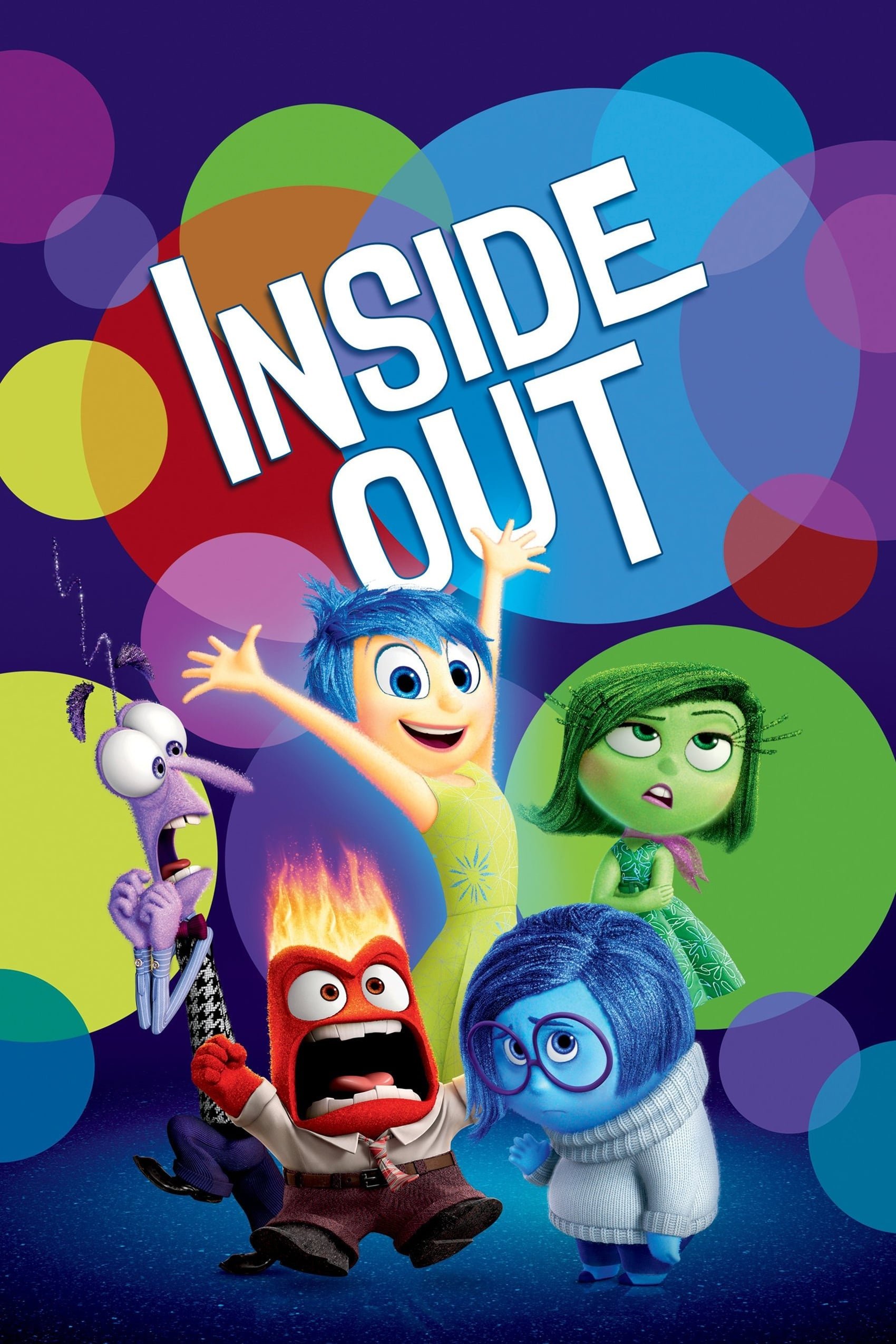
Addressing the factual roots of “Inside Out” challenges me to reconsider what “real events” even mean in this context. The film doesn’t recount actual historical episodes or well-documented moments from a public figure’s life. Instead, its inspiration originates from the director’s observations of his own daughter’s emotional changes as she approached adolescence. I find this blend of personal anecdote and collective experience intriguing, because while it does not offer the kind of concrete reference points I find in historically based films, it does permit a unique form of cinematic interpretation. To my eye, the process resembles translating lived experience into allegory: distilling complex, intangible feelings into tangible, relatable characters—Joy, Sadness, Anger, Disgust, and Fear.
When I explore the creative transformation involved, I see how filmmakers drew from psychological theory—most notably, ideas championed by psychologists like Paul Ekman, who researched basic emotions. Yet, these scientific underpinnings are not reproduced in a clinical, footnoted manner. My experience as a viewer is filtered through narrative devices: memory islands, control panels, imaginary friends. Each of these choices condenses the overwhelming ambiguity of the human psyche into accessible metaphors. Rather than recounting events as they “actually happened,” the film reorganizes the raw material of inner life into a coherent story that audiences of all ages can digest. It becomes clear to me that what’s real in the context of “Inside Out” is less about strict documentation than an honest, if stylized, representation of feelings we all recognize.
My awareness of this process—how the film melds anecdotal impulses with universal psychology—shapes the way I interpret what unfolds on screen. When I spot the deliberate reshaping of reality for narrative clarity, I reflect on how these adaptive choices aren’t errors or oversights but active efforts to communicate internal truths. This dynamic reminds me that cinema often serves as a bridge, translating the indistinct realm of personal, internal experience into the structured conventions of plot and character. As I decode these choices, I recognize the distance the film travels from its source material, all in pursuit of story and communication.
What Changes When Reality Is Shaped for Cinema
For me, examining the trade-offs embedded in cinematic adaptation is about noticing not what is omitted, but what is gained. When I engage with “Inside Out,” I see that representing the interior landscape of a child’s mind requires simplifying the intricacies of emotion and memory. Real neurological processes do not segregate joy and sadness into personified entities vying for control; nonetheless, the filmmakers make these abstractions concrete and animate. I find this a practical adaptation, one that exchanges the messiness of real neurological development for characters and visuals that can carry a story efficiently. The practical advantage here, in my view, is narrative economy—the ability for even a child to comprehend, through personification, what would otherwise be intangible or overwhelming concepts.
I often reflect on the interpretive leap it takes for an audience to process these simplifications. For instance, the film’s visualization of “core memories” and the physical “islands of personality” serves as an organizing principle that gently ushers viewers from scene to scene. As I watched, I understood these elements were not accurate depictions of how minds or memories function, but rather, symbolic frameworks crafted for clarity and emotional resonance. The decision to condense years of slow developmental change into ninety minutes and a handful of color-coded personalities strikes me as emblematic of the trade-offs inherent in all cinematic storytelling. The gains: accessibility, universal appeal, and an evocative shorthand. The losses: the nuances and ambiguities inherent in the real human experience of change.
On another level, I notice that the film sidesteps much of the raw difficulty and unpredictability of psychological development. If reality were allowed to intrude fully, the story would likely be more chaotic, maybe less hopeful, and certainly less narratively tidy. I see the benefits of such narrative shaping—a coherent journey from innocence to complexity—but I’m also aware of what is left unseen. This reshaping does more than alter facts; it affects the film’s entire emotional arc. Viewers, myself included, often come away with a neater resolution than reality would provide. Yet, far from feeling misled, I find I appreciate the act of translation: the decision to prioritize understanding over strict realism.
Audience Expectations and the “True Story” Label
Every time I encounter marketing or reviews that play up a film’s foundation in truth, I notice how quickly it colors my response. When “Inside Out” first arrived on the scene, I did not see it presented as “based on a true story” in the strictest sense. Still, as I watched and learned about its real-world inspirations—the director’s family life and consultations with psychologists—I automatically sought out moments where “my” experience as a viewer might line up with “his” or the scientific realities behind the narrative. I think this phenomenon speaks to an intrinsic need for authenticity, even in the midst of fantasy. If I’m told something happened as shown, I invest myself more fully, mining scenes for accurate references and insights. I also find myself holding the film to a different standard, one grounded in emotional or historical fidelity rather than pure entertainment.
By contrast, when a movie like “Inside Out” foregrounds its fictionality—while still borrowing liberally from lived experience—I relax my criteria. I am not scanning for who said what when, or whether a specific event actually unfolded as depicted; instead, I am monitoring for plausibility, for emotional resonance, for passages that feel “true enough.” I realize this shift is significant: my own expectations guide not only what I notice, but how I feel about what I see. The “true story” label acts as a lens; it can magnify the impact of a scene, lending it gravity and urgency, but it can also invite skepticism and fact-checking.
When I reflect on my experience of “Inside Out,” I see that its blend of fact and fiction opens a different door for audience response. Some viewers, including myself, delight in discovering the kernels of reality embedded within the animated spectacle—recognizable emotions, credible psychological concepts, familiar moments of parental uncertainty. Others might yearn for more explicit real-world ties or question the authenticity of the emotional processes depicted. For my part, I find myself sliding fluidly between these modes: I appreciate explicit factual grounding when it’s promised, but I also understand the necessity and artistry of fictionalization, especially when dealing with subjects as imprecise and personal as the inner workings of a mind. It’s this oscillation between searching for the real and embracing the imagined that shapes my engagement, never settling into one mode or the other.
Final Perspective on Fact vs Fiction
As I reflect on everything, I am struck by how my understanding of “Inside Out” is, in many ways, a testament to the interplay between fact and fiction. Knowing the film does not recreate historical incidents word-for-word frees me from the burden of verification. Instead, I evaluate what is offered: a tapestry constructed out of both researched scientific knowledge and pure speculative artistry. My awareness of the film’s factual inspirations deepens my appreciation for the originality with which those kernels are transformed and reassembled.
At the same time, understanding the divide between reality and storytelling does alter the way I process the film’s thematic ambitions. Instead of treating it as a documentary about the brain, I see it as a meditation on experience—a cinematic effort to visualize the invisible. This awareness allows me to be both critical and understanding. I can admire the effectiveness of the metaphors while also recognizing where they diverge from biological or psychological precision. That boundary, as I see it, is neither a flaw nor a feature, but a space in which interpretation flourishes.
I come away from “Inside Out” believing that recognizing what is real, what is embellished, and what is pure invention transforms passive viewing into conscious interpretation. My own experience becomes dialogic: I am not a mere spectator, but an active participant in the weaving together of lived emotion and imaginative structure. Rather than seeking a final judgment—was it true, or wasn’t it?—I am content to inhabit the fruitful ambiguity between inspiration and invention. For me, the pleasure lies in this continual negotiation, this refusal to settle for easy binaries. “Inside Out” is not less meaningful for its fictionalization; if anything, my awareness of the choices involved enhances my capacity to interpret, question, and connect what happens onscreen with the rich complexity of reality itself.
For additional context, you may also explore the film’s overview and how it was received by audiences and critics.
🎬 Check out today's best-selling movies on Amazon!
View Deals on Amazon