
Is This Film Based on a True Story?
For me, “Inherit the Wind” has always stood out as a film that blurs the boundary between drama and history. Behind its heated courtroom exchanges and passionate speeches lies a foundation built upon real events, though filtered through a distinctly theatrical lens. When I look closely, the film isn’t a documentary or a faithful recounting of actual happenings; rather, it’s inspired by—and freely adapted from—the 1925 Scopes “Monkey” Trial. So, when people ask whether “Inherit the Wind” is based on a true story, my answer leans toward “partially true.” Its events are rooted in reality, its characters are drawn—though not precisely—from historic figures, but the script diverges from fact for the sake of drama, metaphor, and broader commentary.
The Real Events or Historical Inspirations
Whenever I watch “Inherit the Wind,” I find myself reaching for the history books. The film’s narrative, like the original play it’s adapted from, takes clear inspiration from the famous trial in Dayton, Tennessee, where a schoolteacher named John T. Scopes was prosecuted for violating state law by teaching Charles Darwin’s theory of evolution. In my research, I learned the trial became a cultural battleground regarding science versus religion, attracting widespread media coverage, unprecedented public attention, and legendary legal minds.
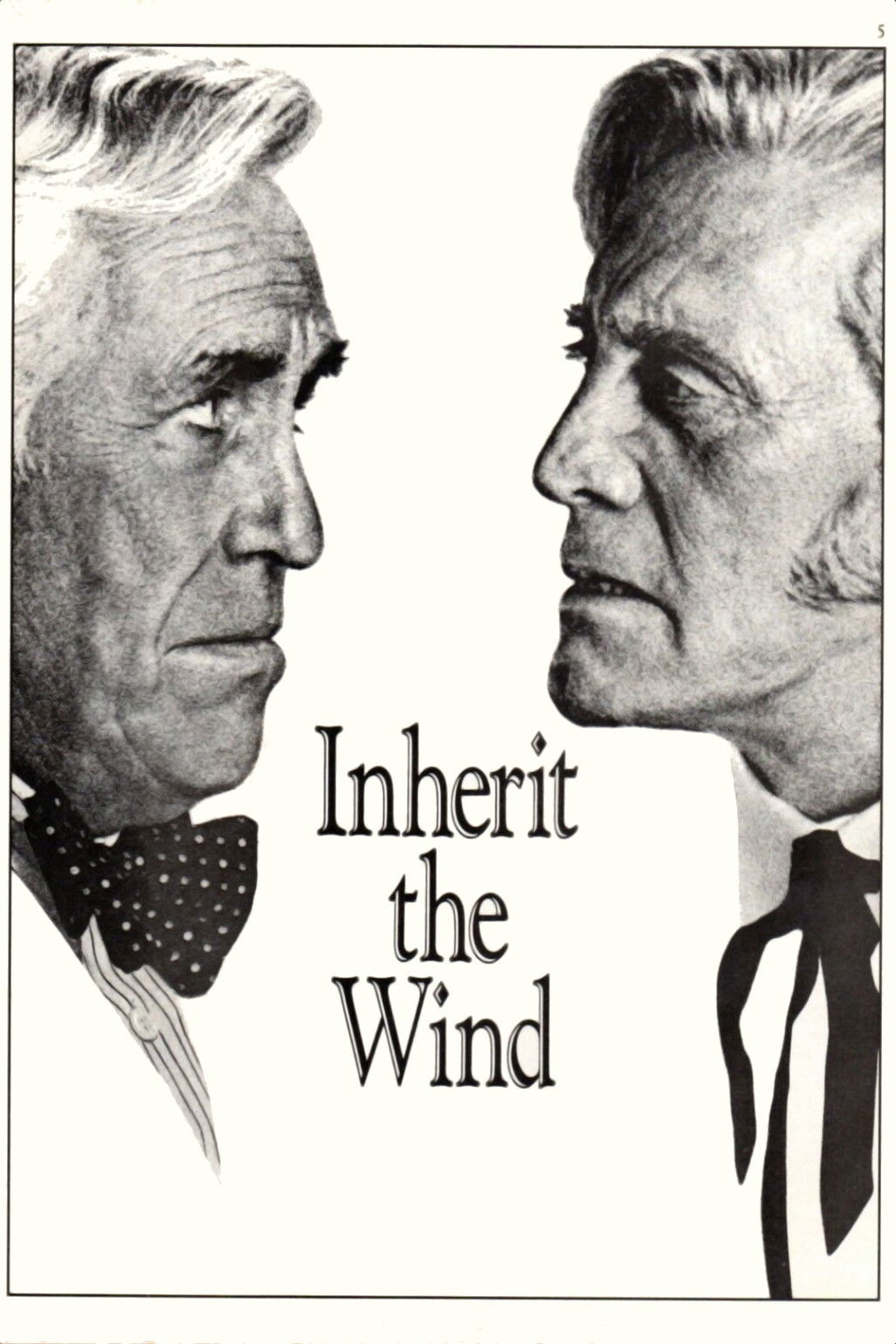
The characters in “Inherit the Wind” are unmistakably modeled on real figures. I quickly noticed that Spencer Tracy’s character, Henry Drummond, is a stand-in for Clarence Darrow, the brilliant defense lawyer and noted agnostic who took Scopes’ side. On the other side, Fredric March’s Matthew Harrison Brady embodies William Jennings Bryan, a celebrated statesman, orator, and three-time presidential candidate, who argued for the prosecution. The reporter E.K. Hornbeck, with his quick wit and pointed commentary, is a clear wink at H.L. Mencken, the Baltimore Sun journalist whose irreverence colored national perceptions of the trial.
But what “Inherit the Wind” does with these real-life inspirations fascinates me. The film draws its primary structure and dramatic arc straight from the Scopes Trial. It stages the tension, the clash of ideas, and many of the verbal sparrings that made the 1925 courtroom drama so compelling. Yet, the script—originating from the 1955 play by Jerome Lawrence and Robert E. Lee—openly acknowledges that the events are “not history” but a parable. For me, this gives the film a double life: both as a reflection of something that actually happened, and as a symbol of recurring clashes about knowledge, belief, and freedom.
What Was Changed or Dramatized
I have always been intrigued by the choices filmmakers make when adapting history. “Inherit the Wind” is a powerful example of how storytelling often overshadows strict fidelity to fact. The most glaring difference is that its characters—even with obvious real-world parallels—carry fictional names and are afforded more latitude in their dialogue and actions than their historical counterparts might have experienced. When I re-examine accounts from the original Scopes Trial, I see how the film’s courtroom is an arena for philosophical debate more than a replica of legal proceedings.
I’m particularly struck by the way the film intensifies the animosity between Drummond and Brady. While Darrow and Bryan certainly disagreed, the degree of personal vitriol in the film goes beyond what’s recorded. Their real-life relationship was marked by rivalry, but also some measure of mutual respect. The dramatic confrontations—where tempers flare, voices rise, and the entire courtroom seems to hold its breath—are, I believe, played up to heighten tension and underscore the stakes of the ideological battle.
Several details are condensed or invented. In the movie, the case is presented as a high-stakes event for the entire community, with townspeople depicted as fervently hostile toward the defense. While Dayton did attract crowds and publicity, the atmosphere wasn’t uniformly antagonistic, and the local response to Scopes himself was less severe than his on-screen counterpart, Bertram Cates, encounters. Scenes of mob mentality and ostracization in “Inherit the Wind” serve a dramatic and cautionary purpose rather than representing a direct translation of the trial’s atmosphere.
I’ve noticed, too, that the film occasionally takes liberties with legal details. In the real Scopes Trial, for example, no one was actually jailed, whereas Bertram Cates is shown behind bars early in the film. The outcome is also tweaked; the real John Scopes’ fine was minimal and later overturned, while the emotional climax and fallout in “Inherit the Wind” are tailored to deliver a more profound sense of tragedy and triumph intertwined. Certain speeches—especially Drummond’s passionate defense of thought and inquiry—are the invention of playwrights, rather than transcripts from 1925.
Religion itself is handled with a heavier dramatic hand in the movie. Where Bryan’s beliefs may have been more nuanced, Brady is portrayed as inflexibly dogmatic, easily goaded into outbursts. Meanwhile, real-life Darrow’s agnosticism becomes Drummond’s rhetorical sword. In this theatrical retelling, beliefs become symbols; individuals are stylized into representatives of larger social forces. From my perspective, these embellishments make for stirring cinema, but also mean that viewers must be aware they are witnessing an allegory, not a direct historical account.
Historical Accuracy Overview
My own assessment of “Inherit the Wind” leads me to a mixed verdict on its historical fidelity. Many viewers, myself included, might watch the film and come away with a sense of the broad argument that divided America during the Scopes Trial: the tension between progress and tradition, between evolving knowledge and enduring beliefs. In that sense, the film delivers a convincing snapshot of the era’s anxieties.
However, when I compare specific scenes to historical records and trial transcripts, the differences become plain. The personalities of Drummond and Brady, while evocative of Darrow and Bryan, are exaggerated for dramatic purposes, constructed to embody unwavering philosophical camps. The small Tennessee town is rendered almost as a crucible of intolerance, which overstates the real Dayton’s climate. Even the verdict and its aftermath are adjusted to serve the film’s central message, with less concern for the legal and social aftermath experienced by the original participants.
What strikes me most is how the language of the screenplay soars beyond court records. The exchanges between Drummond and Brady, as staged in the film, are less about the particulars of Tennessee law and more about abstract and universal ideas: the right to think, the peril of dogma, the endless friction between certainty and doubt. I understand this to be a deliberate choice made by the creators. While some lines of dialogue are inspired by public statements or writings from the time, the most memorable speeches—especially those that bring the house down—are the product of clever, modern dramatists, translating real passions into more streamlined, accessible terms.
On a factual level, the outcome of the trial, the roles of the attorneys, and the presence of the national press are all based on reality. I found that the film gets the overall framework right but condenses, amplifies, or invents many of the details. Its view of the American South, while vivid, skews toward stereotype in order to ramp up conflict. If I’m honest, I see “Inherit the Wind” as more accurate in the “spirit” of debate than in the specifics. After reading contemporary coverage and scholarly analyses, I come to the conclusion that viewers should consider the movie a dramatization first, a historical lesson second. Authenticity is preserved where it serves the story’s larger themes; where it doesn’t, the script freely invents and adapts.
How Knowing the Facts Affects the Viewing Experience
As someone who is deeply interested in how films interpret real events, my experience of “Inherit the Wind” has always been colored by what I’ve learned about its origins. The movie, when viewed without historical context, can feel like a heated debate ripped straight from the American headlines of any era. But understanding that it is filtered through the lens of a stage play written during the McCarthy era—another period of ideological conflict—adds a layer of resonance for me. I realize that the filmmakers aren’t just commenting on events of 1925, but are also using history to speak to their own anxieties and to universal themes of intolerance and free thought.
Whenever I rewatch the film after reading about the Scopes Trial, I pick up on subtle choices that might otherwise escape my notice. For example, I recognize that the town’s portrayal is intentionally heightened, that the characters’ speeches are crafted to dramatize ideas rather than document specific testimony. This awareness affects my expectations: I approach the film not as a reenactment, but as a kind of living parable. It prompts me to think more critically about what is meant by “historical accuracy” in popular media. For me, knowing where the film departs from fact doesn’t lessen its impact, but it does make me more attentive to the divide between what really happened and what’s being dramatised for effect.
I’m also more attuned to the film’s role in shaping public memory. “Inherit the Wind” has perhaps done as much to define cultural recollections of the Scopes Trial as any history book. If I only watched the movie, I might come away with a misleadingly simplified view of the people and the era, perhaps seeing Darrow as a flawless champion and Bryan as a caricature of zealotry. With background knowledge in hand, I become more aware of the humanity and complexity left out for theatrical purposes. This adds to my experience as a viewer, reminding me that while art distills truth, it often leaves nuance behind.
I notice, too, that the deeper my understanding of the facts, the more I appreciate the choices made by the filmmakers—not as omissions, but as interpretive acts. When the film expands a minor moment into a dramatic set piece, I see a commentary on not just the past but modern debate. When it strays from precise history, I interpret this as a move to connect, provoke, and inspire rather than simply record.
For me, knowing the facts doesn’t detract from the emotional impact or persuasive power of “Inherit the Wind.” Instead, it adds intricacy and depth to what might otherwise be read as black-and-white. It encourages me to continue questioning how stories are told, whose voices are amplified, and what gets lost in the translation from life to film. In the end, “Inherit the Wind” becomes—at least in my eyes—more than a chronicle of a single trial; it emerges as a reflection on the ways we contend with issues of belief, evidence, and progress again and again, both in history and in art.
After learning about the film’s origins, you may want to see how audiences and critics responded.
🎬 Check out today's best-selling movies on Amazon!
View Deals on Amazon