
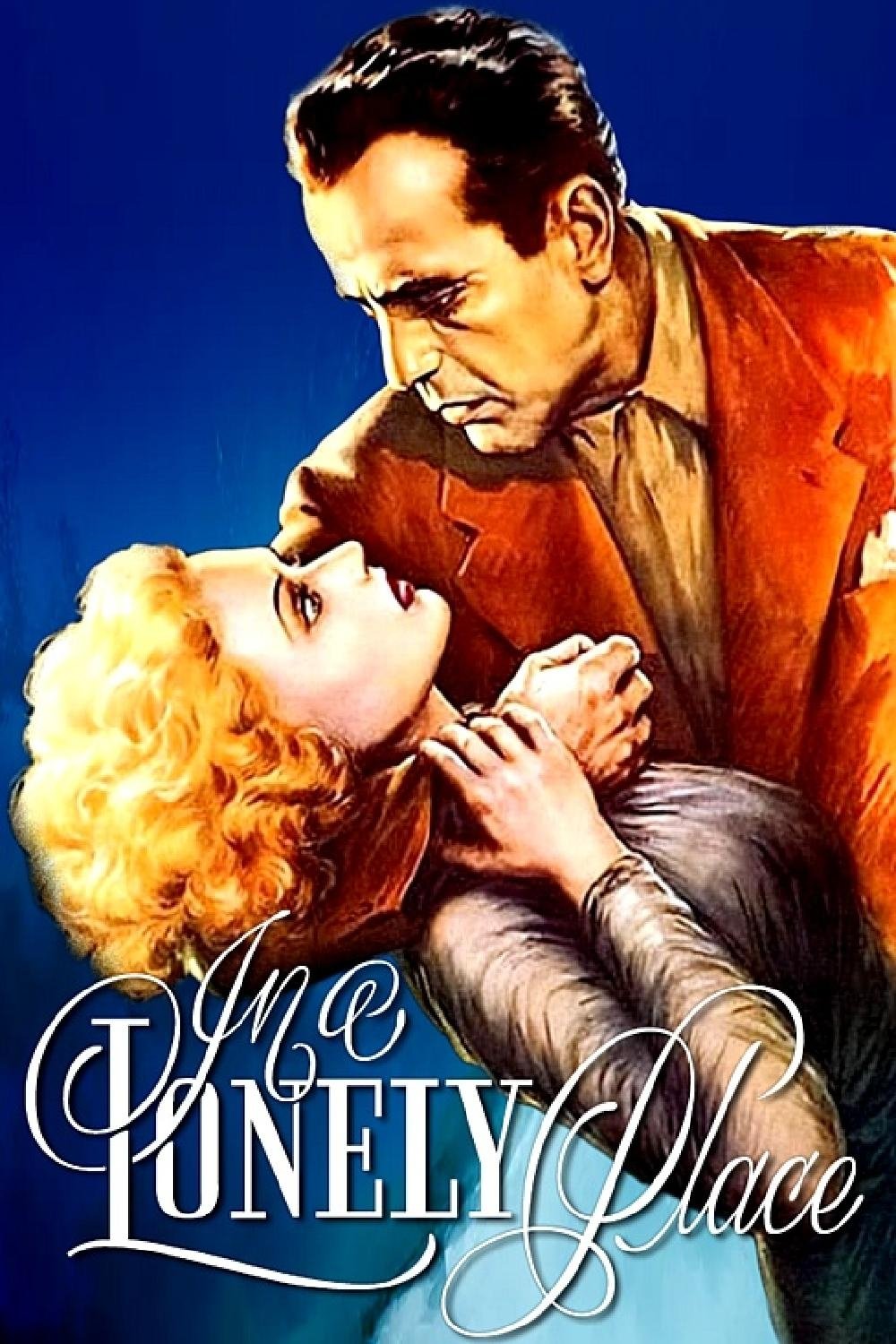
Is This Film Based on a True Story?
I have always been drawn to stories that blur the lines between truth and fiction, and “In a Lonely Place” (1950) is a film that intrigues me precisely because of this ambiguity. When I first encountered the film, I found myself searching for that kernel of reality—a true event or a notorious crime from which its moody narrative might have sprung. Yet the further I dove into its background, the clearer it became that “In a Lonely Place” is not a film directly based on true events. It is not lifted from headline-grabbing murders, nor does it claim to reconstruct a famous Hollywood scandal. Instead, I discovered that the film is entirely fictional, with its origins rooted in literary fiction—a novel by Dorothy B. Hughes. The story that unfolds on screen, with its suspicions, betrayals, and emotional turbulence, is the creation of the novelist first and then reimagined by the filmmakers, without being anchored to a real-life case or a single actual person.
The Real Events or Historical Inspirations
Whenever I try to trace a film’s lineage to the real world, I focus on its deepest source: the material and the milieu from which it arose. In the case of “In a Lonely Place,” my research points directly to Dorothy B. Hughes’s 1947 novel of the same name. Hughes’s novel is a work of fiction, conceived from her imagination rather than a retelling of true crime. However, it is set entirely in postwar Los Angeles—the same city where Hollywood’s glamour rubbed shoulders with its seedier underbelly. The anxieties, aimlessness, and moral ambiguity of that time permeate the story, and I sense that real cultural fears and social dynamics of the era inspired both the book and the film.
While the character of Dix Steele, the troubled screenwriter depicted onscreen by Humphrey Bogart, might feel eerily plausible to anyone familiar with mid-century Hollywood, he is not based on any one actual writer or figure. I’ve read scholarly perspectives suggesting that both Hughes’s and the filmmakers’ characterizations tapped into general archetypes of the disillusioned, cynical creative professional—a type that surfaced frequently in postwar American fiction and cinema. The perpetual suspicion in the air, the tension between surface success and inner dissatisfaction, feels grounded not in literal fact, but in the lived reality of Hollywood denizens at the cusp of the film noir era. Yet nowhere have I found evidence that either the novel or the film dramatizes a true crime, nor did Dorothy Hughes herself base her central mystery on any contemporary case.
The only substantial connection with the “real” lies in the broader sense of the film’s cultural and historical context. The Hollywood dream factory at mid-century was full of those who, like Dix, came to seek fortune and fought to balance their ambitions with their personal demons. I find the film’s ambiance—the sense of suspicion, claustrophobia, and moral uncertainty—reflective of societal undercurrents, but not of any specific newsworthy event.
What Was Changed or Dramatized
I was initially surprised to learn how much “In a Lonely Place” diverges from its original literary source, and how both novel and film depart from literal truth. When I investigate adaptation history, I am always fascinated by the choices screenwriters and directors make to fit a story to their needs and the sensibilities of their era. In this case, Andrew Solt’s screenplay—working under Nicholas Ray’s direction—reshaped Hughes’s narrative into something at once more ambiguous and more deeply psychological than the novel itself.
In Hughes’s original book, the main character, Dix Steele, is in fact the perpetrator of the crimes at the center of the plot—a menacing, sociopathic figure whose inner darkness is clear to the reader. However, when I watched the film, I immediately noticed that Bogart’s Dix is painted with far more ambiguity. The film never confirms his guilt or innocence outright, and instead dwells richly in uncertainty. This fundamental change strikes me as more than just a plot adjustment; it transforms the type of suspense and emotional engagement at the story’s core.
The filmmakers also altered the nature of the romantic subplot. In Hughes’s novel, the character of Laurel Gray serves as both potential victim and bystander to Dix’s unraveling. In the film, Laurel (played by Gloria Grahame) becomes both a source of hope and a tragic casualty of mistrust. The focus shifts from tracking a criminal to exploring the destructive effects of suspicion and violence on intimacy—a change that I suspect was influenced by the filmmakers’ own sensibilities, as well as the demands of 1950s censorship and studio expectations.
Beyond plot, the film dramatizes the world of Hollywood with a particular gloss, mixing glamour and grit. While the book’s setting drew on general knowledge of Los Angeles, the filmmakers seized the opportunity to stage scenes that visually contrasted the sunlit exteriors of Southern California with shadowy, anxiety-ridden interiors. In this way, Ray’s film offers a stylized portrait of the city and the industry—a creative embellishment, not a literal recreation.
One more artful change I noticed is how the film uses Dix’s profession as a screenwriter to inject metacommentary on storytelling and truth itself. The interplay between what is real, what is rumored, and what can only be imagined is foregrounded in ways that seem tailor-made for the screen, even if it isn’t sourced from documented events.
Historical Accuracy Overview
Every time I compare a film to the historical or literary record, I find myself weighing both spirit and detail. In “In a Lonely Place,” the accuracy I detect is not on the level of plot, but on tone and milieu. The postwar anxieties, the atmosphere of suspicion, and the complicated gender dynamics feel authentic to what I’ve learned about Hollywood and urban America in the late 1940s and early 1950s. References to the effects of war on returning soldiers, for example, echo broader social themes found in period literature and memoirs.
Yet, when I dig for actual historical figures, landmark cases, or first-hand documents that directly informed the film, I find nothing of substance. There are no real Dix Steeles, nor any notorious murders or scandals that map onto the narrative in more than the most general sense. The police procedures, while evocative of the era’s cinematic conventions, seem shaped by popular expectations of crime stories rather than case files or authentic LAPD protocol of the period.
The film’s depiction of the inner life of a Hollywood screenwriter does reflect some realities of the profession at the time: the grinding work cycles, the risk of being chewed up by the studio machine, the volatility of careers. Studio interviews, correspondence from industry insiders, and autobiographical accounts from the late 1940s corroborate a sense of disillusionment that pervaded the industry. Still, Dix’s specific psychological unraveling and the events surrounding him are inventions assembled for narrative tension, not documented psychological cases or true-life tragedies.
I also note that the film’s handling of women’s experiences is colored by its era. While Laurel Gray’s increasing anxiety and mistrust towards Dix carries echoes of the real dangers women faced, she is ultimately a fictional character whose responses are guided as much by plot needs as by real social patterns.
The greatest historical fidelity, to my mind, lies in the emotional and societal truths the film explores: paranoia, alienation, and the precariousness of trust in intimate relationships, especially against the backdrop of a world saturated with fear of the unknown. These truths, though real, are not specific to particular events—they are expressions of a cultural moment translated to fiction.
How Knowing the Facts Affects the Viewing Experience
Once I understood that “In a Lonely Place” was neither ripped from the headlines nor a cinematic retelling of real events, my experience of the film subtly shifted. I stopped waiting for it to deliver the catharsis of justice or the neat closure associated with adaptations of true crime. Instead, I was better able to appreciate the emotional ambiguity and unresolved tension at the film’s core. Knowing the facts—namely, that the story is a layered fiction inspired by a richly atmospheric novel—allowed me to focus on how the characters’ struggles spoke to broader and more universal anxieties, beyond the particulars of any real-life case.
I also found myself more sensitive to the film’s use of archetype and allegory. I read the story’s elements—the accusatory gaze of the law, the fragility of romance, the ever-present threat of violence—as both real (in a psychological sense) and stylized. The knowledge that I was not watching a literal dramatization of a newspaper article, but rather a meditation on the ways people misunderstand and destroy one another, intensified my engagement with the film’s emotional territory.
Additionally, I found it freeing not to be haunted by the specter of real tragedy, which often lingers at the edge of films based on actual crimes. Instead, my attention gravitated toward the film’s artistic choices, the texture of the performances, and the way the film invited me to inhabit the uncertainties faced by its characters. When I compared this to watching a film consciously marketed as true, I noticed I was less concerned with fact-checking certain details or anticipating major twists “borrowed” from reality. The fictional status of the story allowed the director and actors to push the psychological envelope, crafting a heightened sense of suspense and unease that owes more to literary tradition than journalistic accuracy.
Most strikingly, knowing the story’s fictionality, I recognized the ways in which the film comments on its own status as a creation. The unresolved ending, the blurred lines between love and suspicion, the focus on storytelling within the story—all these elements seemed like reflections on the very act of making and consuming stories. I began to see “In a Lonely Place” not as an artifact reconstructing an actual past, but as a work reckoning with the uncertainties of human relationships and the dangers lurking in any imagination, whether it belongs to a novelist, a director, or an audience member.
Ultimately, for me, understanding the film’s origins opens it up to more expansive interpretation. I can see traces of the historical moment—McCarthy-era anxieties, gender roles in flux—but I also realize that these are woven into an intricate tapestry of invention. “In a Lonely Place” stands as an example of how fiction, steeped in the details of real life, can capture truths that literal history sometimes cannot. My viewing thus became less about parsing accuracy and more about engaging with the ideas and emotions the film stirs.
After learning about the film’s origins, you may want to see how audiences and critics responded.
🎬 Check out today's best-selling movies on Amazon!
View Deals on Amazon