
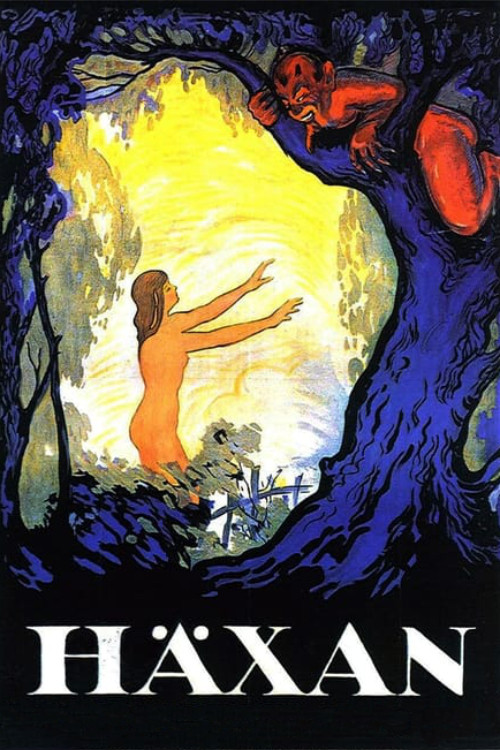
The Question of Truth Behind the Film
Sitting through my first viewing of “Häxan,” I found myself in a state of restless curiosity; I kept asking, almost reflexively, whether what I saw on screen sprang from authentic records or imaginative reconstruction. It struck me that this urge—the almost compulsive need to know whether an image or scene is “real”—is at the root of how I engage with a film grounded in history, or at least in the trappings of it. The assertion “based on a true story” tends to loom over such films, and I notice it reshapes my attention: am I meant to parse these scenes as lessons, as warnings, as entertainment, or as historical documents? I realize I carry assumptions inherited from years of consuming both documentaries and fictional dramas—if a film signals its connection to reality, I instinctively approach it with a certain reverence, even a skepticism. “Häxan” exploits this, presenting itself as a study as much as a narrative, and I find myself toggling between the expectation of factual clarity and the pleasures of storytelling.
That urge is hardly unique to me; it seems to undergird much of cinema’s approach to the past. I see it in audience reactions to everything from historical epics to biopics to horror films based on “real case files.” The question of what’s true isn’t simply about accuracy, I think, but about how I’m invited to connect my world with the one the film presents. A so-called “true story” implies gravitas—it lends authority to the film. Yet, I recognize there’s a risk: the assumption that “historical” means “objective,” or that a touch of the factual can erase or obscure the lines between dramatization and documentation. Watching “Häxan,” I feel constantly reminded of these boundaries, especially as it blurs scholarly tone with imaginative visuals. My temptation to seek the truth behind its images makes every decision on screen more loaded, not less.
Historical Facts and Cinematic Interpretation
What captivated me most about “Häxan” was its apparent commitment to academic rigor. It begins almost as a scholarly lecture, sharing depictions of medieval manuscripts, star maps, and woodcuts. I could not help but wonder to what extent its claims—to reconstruct, or at least evoke the world of witches and inquisitors—were rooted in research, and to what degree they emerged from cinematic invention. In my reading, the film’s foundation lies in historical accounts of witchcraft, demonology, and persecution, particularly texts from the late Medieval and Renaissance periods. I recognize the presence of genuine sources: manuscript illustrations, trial testimonies, and theological treatises. However, the film’s manner of handling these sources feels far less about faithful reproduction and much more about imaginative reconstitution.
I noticed the structural choices “Häxan” makes to achieve narrative flow. Rather than lingering in the granular details of any singular trial or individual, the film collapses centuries of history into an impressionistic tapestry. For example, scenes that evoke inquisitorial interrogations borrow specific gestures and tableaus from primary accounts, but the dialogue (or lack of it), costumes, and the faces populating these worlds appear carefully selected to craft a universal portrait of paranoia. In viewing the film this way, I see “Häxan” as a condensation: it takes truths about witchcraft trials—their cruelty, their social function, their misogynistic undertones—and gives them a visual language that is accessible, and at times, overwhelming in its detail.
I am especially struck by how the film reorganizes time and geography. Instead of demarcating precise eras or locations, it weaves together Scandinavian, French, German, and English influences, allowing anecdotal and visual elements to bleed into each other. I read this as a deliberate technique, favoring thematic synthesis over historical particularity. The rituals, tortures, and superstitions represented arise from a mixed archive, sometimes separated by centuries and thousands of miles. Some vignettes seem inspired by specific historical incidents, others by more generalized fears. In doing this, “Häxan” reshapes the past to make it readable as a psychological and social phenomenon rather than a sequence of isolated events.
What I take from this approach is a paradox: while “Häxan” clearly references sources and has a veneer of archaeology, it cannot be separated from its filmmaker’s vision for coherence and impact. The interplay between the archival and the invented becomes its own kind of historical interpretation—a reframing where facts serve as a springboard for tableau, and narrative clarity trumps systematic scholarship. To my eye, the film lives on that threshold: it draws from real documents, yet it reorganizes, compresses, and even embellishes to conjure an emotional and intellectual response in the viewer.
What Changes When Reality Is Shaped for Cinema
In my experience, the process of adapting real events or documents for cinema, as “Häxan” so distinctly does, is one marked by complex trade-offs. I see a filmmaker grappling with what the audience already knows—or expects—and what might be necessary to build a compelling structure on screen. Fidelity to specific details, such as courtroom protocols or period-accurate costumes, may give way to the creation of motifs or symbols that crystallize broader truths. I am often aware of these necessary transformations, particularly in films like “Häxan,” which straddle the line between documentary and dark fantasy.
One of the tensions that stands out for me is the choice between temporal linearity and thematic coherence. “Häxan” refuses a simple chronological unfolding, opting instead for episodes that circle around motifs of accusation, hysteria, and punishment. Watching these vignettes, I realize that while the methodology is historical—borrowing from records, illustrations, and confessions—the effect is distinctly cinematic. The realities of violence and terror become heightened, stylized, and sometimes grotesque. This amplification, while sacrificing some granular accuracy, delivers a sharpened account of the psychic impact of witch trials.
Compression is another practical necessity. Medieval witchcraft trials, by the evidence I have examined, stretched on for weeks, filled with procedural tedium and social nuance. “Häxan” synthesizes these into tableaus that last mere minutes, yet strive to retain their emotional intensity. I am conscious that this compression makes the film’s arguments about hysteria and cruelty immediate to contemporary audiences, at the cost of detail and contextual depth.
I am also mindful of the demands visual storytelling makes on subject matter. “Häxan’s” lingering close-ups—of faces twisted by fear, or implements of torture—acquire power from cinematic framing, yet depart from the predominantly textual nature of historical sources. The symbolic and the illustrative collide, shaping my perception of events into something more vivid, but perhaps less tethered to specifics. The inclusion of special effects, dreamlike sequences, and allegorical flourishes (such as the witch riding a broomstick through the night—a motif more common in folklore and popular imagination than trial records) brings another layer of storytelling invention. I interpret these visual gambits as attempts to evoke emotional truth or collective memory, as opposed to strictly sticking to chronicle.
All this leads me to recognize that the journey from event to image is never straightforward. The demands of cinematic pacing, emotional clarity, and narrative momentum inevitably filter historical record through selective adaptation. While I miss the patience and ambiguous silences of written history, I appreciate the imaginative force that such transformation allows. “Häxan” becomes, in my mind, both a meditation on belief and delirium and an object lesson in the compromises inherent in bringing the past to the screen.
Audience Expectations and the “True Story” Label
When I enter a film with a “true story” label attached—as “Häxan” semi-consciously does with its hybrid of essay, documentary, and reenactment—I notice how my instincts shift. My attention sharpens; I become eager to discern which elements are meant to be instructive, which are artistic liberty. This expectation of truthfulness could create an illusion of authority, tempting me to accept ambiguous or dramatized details as unequivocal historical fact. With “Häxan,” I find myself navigating tension between admiration for its research and skepticism over its compositional liberties.
If I were to watch the film believing every episode is painstakingly faithful, I risk conflating stylized, exaggerated images with the messy reality of historical events. Yet, should I view it purely as fiction, I fear I might lose sight of the real persecution and hysteria that inspired its images. The balance is tricky. I find that my interpretation lands somewhere between the two poles: I regard the film as a text in dialogue with history, not as a facsimile of it. This reframing subtly changes the way certain sequences impact me. A scene of a woman falsely accused and tortured registers both as a historical possibility and as a symbol for a broader commentary on the psychology of persecution.
What becomes obvious to me is that the “based on true events” claim elevates a film’s perceived status, sometimes turning narrative devices—such as composite characters or rearranged chronology—into points of controversy or misunderstanding. In the case of “Häxan,” the film’s initial academic presentation and didactic tone invite a reading closer to ethnographic observation than cinematic fantasy. I catch myself wanting to “fact-check” the scenes, even as I realize the film makes no rigid promise of historical orthodoxy.
Contrastingly, with films that are open about their fictional status, I allow myself more latitude to enjoy imaginative departures. My critical mind quiets; I look for allegory and psychological insights rather than factual confirmation. “Häxan” complicates this by inhabiting both worlds, forcing me to read with double vision. The tension is productive, yet can be confusing for viewers less familiar with the boundaries between documentary veracity and dramatic license. I interpret the film’s ambiguous stance as an invitation to be both a historian and a participant in the world it builds.
Ultimately, I accept that any “true story” film negotiates with its audience’s desire for meaning and authenticity. “Häxan,” by refusing to settle entirely in either camp, unsettles my viewing habits. It asks me to consider not just what happened, but how stories of belief and punishment are told—and why. This awareness colors my engagement, compelling me to sift the symbolic from the plausible with each scene.
Final Perspective on Fact vs Fiction
Reflecting on my journey with “Häxan,” I am struck by how awareness of what is factual or invented alters, but does not diminish, my appreciation for the film. I approach it now less as a mirror of specific events and more as an evocative patchwork of social anxieties, historical archive, and visual imagination. Outright knowledge of which scenes derive from specific texts or events, and which are speculative or assembled for effect, adds complexity to my interpretation. Instead of reading with suspicion or disappointment, I use this knowledge to decipher the film’s layered meanings. It becomes clear to me that knowing the historical scaffolding behind the film only sharpens my sense of what “Häxan” aims to conjure: not an inventory of fact, but a meditation on the evolution of fear and its institutionalization.
I find my responses shift accordingly. A scene I once interpreted as lurid spectacle now resonates as commentary on the intersection between belief and violence. When I am aware that many tortures were lifted from trial records, but others are more impressionistic, I develop a sensitivity to the film’s ethical stakes. Rather than asking whether every detail is correct, I ask what argument or sensation the film is constructing. The movement between fact and fiction becomes a tool—I read it as a deliberate friction that foregrounds the psychological patterns and mechanisms of hysteria, not just its historical particulars.
I realize that films rooted in historical events inevitably become collaborators with the past, not mere observers or translators. My awareness of what is fabricated, reorganized, or omitted does not detract from the film’s effect; if anything, it deepens my engagement. The moments that drift furthest from fact provoke me to think about the mythological dimension of history—in the case of witchcraft, how stories constructed around paranoia persist across eras. “Häxan,” in shifting between scrupulous reference and wild embellishment, provides a kind of x-ray of collective cultural fears.
In the end, my sense is that “truth” in cinema is always provisional. Recognizing this frees me to grapple with the film as an active negotiation between past and present, research and invention. Knowing where the boundary lies between documentary and dramatization changes the stakes—not because it enables me to police accuracy, but because it encourages a more layered, attentive viewing. With “Häxan,” the line between real and imagined is neither stable nor fixed, and for me, that instability is where the film’s interpretative power resides.
For additional context, you may also explore the film’s overview and how it was received by audiences and critics.
🎬 Check out today's best-selling movies on Amazon!
View Deals on Amazon