
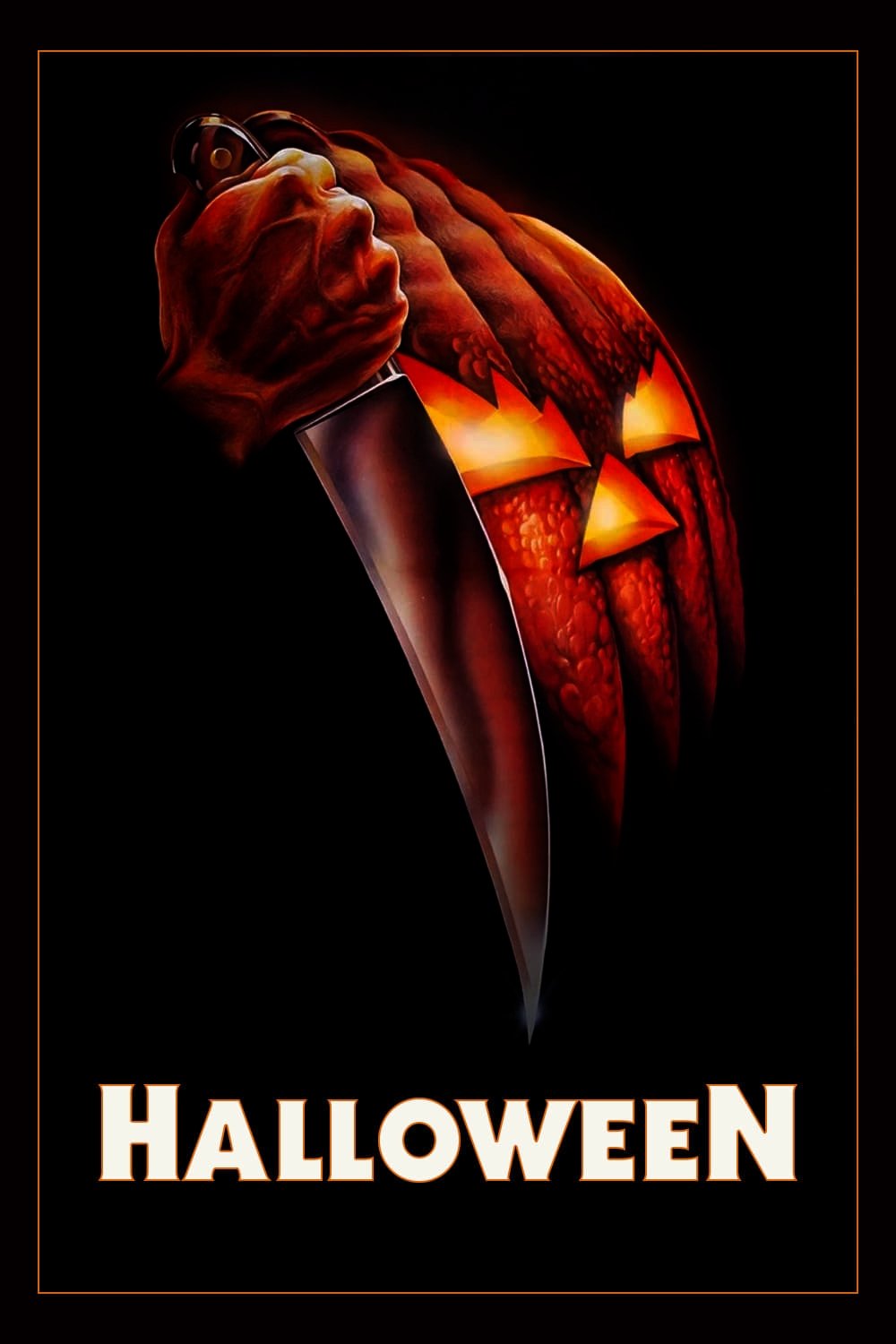
The Question of Truth Behind the Film
Watching “Halloween” for the first time, I remember the odd, prickling sensation that crept over me—not just from the film’s artful deployment of suspense, but from the conviction that maybe, just maybe, I was staring down something primal and true. Even before I knew anything about the production history, I caught myself wondering if such a chilling figure had ever truly stalked midnight small-town streets. This instinctive urge to anchor horror in reality, especially with a film as iconic and minimalist as “Halloween,” struck me as completely understandable. When I talk to other viewers, it’s clear I’m not alone: people crave some assurance that what terrifies or moves them has roots in the real world. Calling something “based on a true story” or even “inspired by real events” immediately seems to intensify both curiosity and dread.
I’ve spent years combing through interviews, press materials, and cultural analyses about horror films, and I’m fascinated by the recurring question of “Did that really happen?” I’ve noticed it’s not merely about satisfying curiosity, but about confronting the membrane between possible and impossible. When I’ve sat in darkened theaters and people around me start to whisper about whether Michael Myers was a real person, I sense a deeper negotiation at play. There is a common, often unspoken set of assumptions behind the “true story” label—a kind of expectation that the events depicted, the characters, or at least the essence of the horror, are tethered to fact. With “Halloween,” some even assume that because the film feels so viscerally plausible, there must be some kernel of reality behind the mask. For me, the positioning of a narrative as “true” infuses it with added gravity, even if the actual connections to fact are thin or nonexistent.
This need to parse fact from fabrication isn’t confined to horror, of course, but I feel it’s uniquely amplified in this genre, where the suggestion of reality can hover over an audience like smoke. I find myself wondering if it’s a defense mechanism—as though if a menace is fabricated, we’re insulated, but if it’s real, we’re on alert. The possibility that a film might capture or even distort real-world terror is part of its lasting pull. My engagement with “Halloween” has always involved, at least in some small way, mentally interrogating its truth content, and I’ve come to realize this is part of its secret power. Even when the answer is clear—the story is an invention—the question never fully disappears.
Historical Facts and Cinematic Interpretation
Peeling back the veil surrounding “Halloween,” I was surprised to discover how thoroughly fictional its story is, at least in terms of literal events and actual people. My own investigation revealed that John Carpenter, in creating Michael Myers, drew on archetypes and impressions rather than specific cases. Carpenter has mentioned various influences—a childhood encounter with a child patient in a mental institution, urban legends, and the broader cultural atmosphere of the 1970s—but nowhere in my research do I find a direct, concrete historical event serving as blueprint.
This revelation makes me reflect on how frequently filmmakers blend traces of reality with invention to create a narrative that feels uncomfortably real. Even in cases where events have not been directly adapted from headlines, there is often a deliberate layering of verisimilitude. In the case of “Halloween,” I notice the way the geography of Haddonfield, Illinois—a fictional stand-in for Midwestern suburbia—mirrors the nondescript, tree-lined neighborhoods familiar to millions of Americans. To me, the film’s attention to the everyday is a directorial choice that signals “this could happen anywhere,” even if it never truly did.
When I consider how films use actual history or personal anecdotes as raw material, I’m intrigued by the mechanisms through which reality is reorganized for cinematic purposes. I’ve seen filmmakers distill years of turmoil into a two-hour narrative, condensing or reconfiguring facts to strengthen a through line or maintain audience engagement. Even in films like “Halloween,” where the story is original, the process can be analogous: the filmmakers gather textures and details from real life—snatches of news stories, bits of folklore, local legends—and transmute them into narrative gold. This interpretive process, to my mind, is what infuses even the most contrived stories with resonances of truth. I find it fascinating how a film can feel authentic not because of exact fidelity to fact, but because of fidelity to emotional reality or collective anxieties of its era.
Through all this, I find myself constantly balancing what I know about the creative process with what I feel as a viewer. Sometimes, even the shadow of truth, as faint as it may be, is enough to bind the story to the world outside the screen. That, I think, is the real secret of why “Halloween” continues to crawl under people’s skin.
What Changes When Reality Is Shaped for Cinema
Whenever I sit with the question of how facts are transformed during the filmmaking process, I’m struck by the inevitable compromises that storytellers make. Watching “Halloween” again with a critical eye, I’m reminded that nearly every element in the film is a product of conscious sculpting for maximum effect. Real-life events—those that might inspire a moment or a mood—are rarely cinematic in their raw form. To craft a narrative as taught and suspenseful as “Halloween,” filmmakers compress timelines, merge character traits, and exaggerate or mute aspects of behavior to serve psychological arcs rather than biographical truth.
In my own study of similar films, I see these practical trade-offs arise repeatedly. I’ve noticed, for example, how actual criminal cases often involve years of buildup, ambiguous motives, and missed opportunities—details that simply do not translate neatly to a film’s brisk running time. In “Halloween,” what makes Michael Myers resonate as an antagonist is his near-mythic autonomy and inscrutable evil, qualities that rarely exist in their pure form beyond fiction. Yet, through clever storytelling, the film captures the audience’s primal fear of the unknown. I see this as a clear instance where factual precision (e.g., real criminal pathology) is sacrificed in favor of symbolic, concentrated threat.
What interests me most is how these adaptations change my relationship with the material. When a film stakes a claim to reality, I find myself scrutinizing its details, watching for lapses or deviations. With “Halloween,” fully aware of its fictional status, I engage more with its ideas than with its documentary potential. The trade-offs here grant the film a certain liberty: because it is not beholden to specifics, it can zero in on atmosphere, pacing, and archetype in ways that factual re-creation might restrict.
I’ve come to realize that cinematic storytelling seldom prizes granular accuracy over evocative storytelling. When the boundaries of truth are deliberately blurred, as in certain “true-crime” adaptations, the narrative must choose which facets of reality are essential and which can be manipulated for dramatic clarity. While I don’t pass judgment on this approach, I note that awareness of these choices can shift my analytical lens from “Did this occur as shown?” to “Why was this version of events chosen?” In the case of “Halloween,” I find the liberties taken are not with historical fact, but with collective psychology—reshaping fear itself into an almost elemental form.
Over the years, I’ve developed an appreciation for how films like this shed light not by reproducing reality, but by distilling its underlying anxieties into memorable, haunting forms. As such, my experience of the film becomes less about tallying factual accuracy and more about tracing the ways it manipulates familiar tropes to elicit a shared response.
Audience Expectations and the “True Story” Label
Whenever someone tells me “Halloween” is or isn’t based on a true story, I immediately notice how their expectations snap into alignment with one interpretation or the other. I often find that my own emotional investment shifts depending on how a film is positioned. Presenting a film as factual or inspired by true events tends to summon a kind of analytical curiosity in me—as if I’m being asked to compare the experience on screen with what I understand about the real world. I’ve observed, too, that many audiences crave the thrill of authenticity, which a “true story” label promises, even if that authenticity is delivered through heavy mediation and creative adjustment.
For me, learning that a film is rooted in documented events often adds an unanticipated layer of tension. In other genres, this might lead me to question the accuracy of costuming or the plausibility of dialogue, but in horror, the process is more visceral. I’ve heard people admit to finding “Halloween” more terrifying after hearing urban legends or news stories about real intruders or home invasions—a testament to how the possibility of reality amplifies our responses. Conversely, some confide disappointment upon learning that Michael Myers is an invention, almost as though the film’s impact lessens when separated from true crime. I wrestle with this paradox myself; part of me seeks comfort in knowing I am safe from the exact horrors depicted, while another part is compelled by the film’s relentless assertion that evil can strike anywhere, any time.
In my analysis, the “true story” label can become a double-edged sword. It provides context and a sense of legitimacy but may hinder appreciation of the film as allegory or myth. When I know a movie is fictional, I feel freer to focus on what it symbolizes rather than deciphering its real-world referents. With “Halloween,” this realization opens up the film in unexpected ways. Myers, I now see, becomes less a transposition of some real-life villain and more an avatar for nameless dreads. His contextless, almost supernatural nature encourages me to ask broader questions about the persistence of fear, rather than fixating on headlines or specific criminal patterns.
Every time I engage with debates about realism in film, I notice how my own interpretive strategies adapt. Like many viewers, I am occasionally swayed by suggestions of authenticity, but I also relish the creative freedom that pure fiction affords. If “Halloween” were attached to a notorious case file, my reading would necessarily focus on its correspondence with reality. Without such a tether, I appreciate the film’s dexterous handling of the universal and the archetypal, divorced from the obligations that “true story” narratives often shoulder. Ultimately, I find myself grateful for the chance to encounter horror on its own terms, unfettered by the constraints of literal history.
Final Perspective on Fact vs Fiction
My time with “Halloween” has consistently left me considering the porousness between what is real and what is conjured solely for the screen. Knowing that the events depicted are fictional does not strip the film of its capacity to unnerve me; rather, it liberates me to explore how it harnesses primal fears, domestic settings, and the iconography of evil. I recognize that having a clear grasp of a film’s origins—whether they’re found in police logs, campfire tales, or an inventive imagination—shapes not only my intellectual response but the very marrow of my emotional engagement.
In reflecting on my own process, I see how facts anchor some interpretations solidly in one place and that ambiguity or fabrication offers up a kaleidoscope of possible readings. For me, “Halloween” ultimately exemplifies the power of pure myth-making—a film that does not require verifiable tragedy to make its mark. When I identify fictional elements, I find myself less concerned with adjudicating truth and more with examining how the film constructs and exploits fear, how it transforms common experience into enduring legend.
I often ask myself whether knowing the divide between fact and fiction changes the impact of the viewing experience. In my case, the answer is yes, but not in the way I first expected. Awareness of the film’s fictional roots helps me see its deeper architectures: psychological archetypes, the elasticity of ordinary spaces, the ritual unfolding of dread. While a factual basis might have focused my attention on the “what happened,” the absence of one allows me to ask “why does this story persist?” The distinction, I’ve found, is not about weakening or strengthening the material, but about changing my access points and the kinds of questions I invite myself to ponder.
In the end, my understanding of “Halloween” has grown richer precisely because I have interrogated where its boundaries lie. Knowing what is real and what is fiction gives me both orientation and freedom: I can respect the cultural anxieties it reflects while approaching its events less as records of fact than as embodiments of shared fears. For me, the enduring legacy of the film is not in any claim to authenticity, but in its ability to make the ordinary world seem suddenly, chillingly strange—reminding me that the most haunting stories are sometimes those that emerge from our own imaginations, sculpted not by what has happened, but by what we believe could.
For additional context, you may also explore the film’s overview and how it was received by audiences and critics.
🎬 Check out today's best-selling movies on Amazon!
View Deals on Amazon