
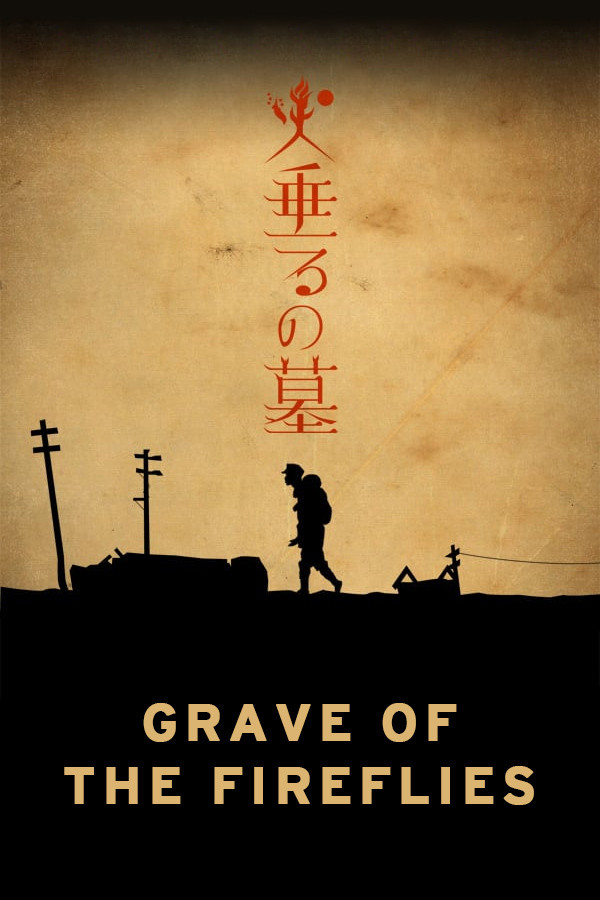
The Question of Truth Behind the Film
When I first encountered Grave of the Fireflies, it was more than just the emotional gravity that lingered with me—it was the nagging question of its foundations in reality. There’s an almost automatic reflex I notice, both in myself and in conversations with fellow viewers, to ask, “Did this really happen?” Any film that deals with harrowing historical events encourages this curiosity, as though knowing the story’s factual origins might either magnify or soften its impact. Over years of engaging with cinema, I’ve realized that “based on a true story” comes with a set of assumptions I seldom consciously examine. I catch myself expecting a certain authenticity of detail, as though the label alone ensures a direct window into history. When a film carries the aura of real events, I tend to assign it a different kind of legitimacy—sometimes as an extension of a history lesson, other times as an emotional reckoning. This instinct shapes not only my expectations for accuracy but also my readiness for emotional engagement or critical distance. I suppose I’m not alone in this; in our media-saturated culture, the search for truth—whatever that might mean in cinematic terms—colors the way we approach films that stake a claim on real suffering or genuine experience.
Historical Facts and Cinematic Interpretation
The line between fact and adaptation becomes especially charged for me when a film as haunting as Grave of the Fireflies intersects with history. While the air raids over Kobe and the devastation of World War II in Japan are well-documented, the story of Seita and Setsuko does not rest exactly on any single true account. Instead, the film draws its narrative from the semi-autobiographical novel by Akiyuki Nosaka, who himself lost his sister during the war. In my analysis, the very act of drawing from an author’s personal grief—but filtering it through fiction—creates a narrative both rooted in the real and unmistakably shaped by memory and interpretation. I see the events on screen not as direct representations of real people, but as composite impressions. Nosaka’s account in the original novel reshapes his pain into the archetypes embodied by the two siblings, and then, the film adaptation condenses his prose still further—removing ambiguities, focusing moments, and adjusting sequences to suit a cinematic rhythm. Where historical records might provide scattered images of bombed cities, food shortages, and childhood abandonment, the film transforms these into a cohesive, emotionally driven story. There’s intentional reordering at work: moments of suffering and small joys are threaded together not because they happened that way in the real world, but because they make thematic sense, allowing an audience to trace a heart-wrenching decline within the span of ninety minutes. I see a kind of necessary condensation in this approach, one that prioritizes narrative clarity over the messiness of actual lived experience. The firebombing sequences, for instance, might fold together multiple attacks or streamline the timeline of events to intensify the emotional arc, rather than to provide an exhaustive chronicle. For me, this feels less like a betrayal of truth and more like an act of narrative curation.
What Changes When Reality Is Shaped for Cinema
Each time I watch a film like Grave of the Fireflies, I’m acutely aware of the practical decisions that go into transforming raw, historical pain into a story that is both watchable and expressive. I see film as a medium where the requirement to engage viewers dictates everything from pacing to what details of suffering are shown. In the case of this film, I notice how the adaptation makes trade-offs: some aspects of wartime deprivation are toned down or dramatized, and sequences are given emotional prominence over forensic reconstruction. Real starvation is rarely so linear or visually manageable, but here, scenes of hunger and disease are carefully composed to chart a tragic but narratively clean descent. These choices are not accidental. I observe how dialogue is more concise than what might be found in a real moment of despair; scenes are often built around a single thematic axis, so that the heartbreak or resilience of a moment lands precisely. This streamlining, while undeniably shaping my perspective as a viewer, seems unavoidable in cinema—historical precision is often set against narrative focus, and filmmakers must decide which star to steer by. In this, there is a constant push-and-pull between representing the fullness of history and ensuring that the audience remains emotionally involved with the characters’ immediate fates.
One trade-off that stands out to me involves the character of Seita. The real-life inspiration for the film—Nosaka’s own grief and guilt—translates to the screen as decisions that are filtered through the lens of narrative logic rather than strict historical reporting. Seita’s choices to care for his sister away from adults, or his sense of pride that leads to further disaster, are dramatized so that viewers can follow a clear arc. In real life, such decisions might be clouded with contradiction or simply the consequence of chaos rather than character motivation. Similarly, scenes that highlight the parallel world of children’s games and the adult violence surrounding them communicate something about innocence under siege—a symbolically charged selection rather than objective reportage. I often wonder how much I am experiencing a curated, emotionally heightened version of the brutality rather than the raw, often formless suffering of real war.
There’s also the question of setting and imagery. The film leans heavily on its visual motifs: the fireflies themselves are loaded with delicate, poetic resonance but may not point back to any single real childhood memory. Their presence shapes the film into a metaphorical space, where the night is illuminated by ephemeral light and loss. This kind of symbolism is where I notice cinematic logic decisively diverging from historical precision. Through the condensation of suffering into a metaphor, the film universalizes a particular loss—something I might recognize, emotionally, even while knowing the story does not strictly adhere to the letters of documented history.
Audience Expectations and the “True Story” Label
Whenever I discuss Grave of the Fireflies with friends, the question of “Is this a true story?” often takes center stage. It seems that when a film markets itself as inspired by real events, or is received by critics as a near-historical text, expectations shift instantly. Personally, I approach a “true story” with anticipations of realism, sometimes even hoping for a degree of explanation or context that pure fiction need not provide. When films like this are labeled as “based on” real suffering, I see audiences expecting a more direct correlation between narrative events and documented reality—expectations that can lead to both deeper engagement and, sometimes, confusion or disappointment if moments veer into the abstract or stylized. If, instead, a film openly signals its fictional status, I’ve noticed that viewers, myself included, tend to treat it more as an imaginative meditation on its themes than as a representation of historical events. The pain might be no less potent, but the urge to “fact-check” or map out accuracy recedes.
In my experience, the ambiguity around this film in particular—rooted in real trauma, but realized through artifice—also opens interpretive channels for the audience. I might feel more freedom to see Seita and Setsuko as symbolic stand-ins for all children caught up by war, rather than as attempts to tell precisely one person’s story. Yet, the underlying knowledge that the original author endured similar wounds inevitably colors my reading. I find myself oscillating between empathy and critical distance. The urge to know “what really happened” can even heighten my engagement with specific scenes; a moment becomes more charged because I sense it grew out of a real ache. Conversely, learning that scenes or characters have been rearranged or invented for dramatic purposes can shift me towards appreciating the film’s artistry rather than its evidentiary authority.
When critics or audiences respond to the film—often with great emotional intensity—it seems to deepen depending on their awareness of its factual boundaries. If viewers believe the work is wholly autobiographical, the grief feels heavier, the failings of characters or society more pointed. If, instead, the film is engaged with as semi-fiction or metaphor, it’s easier to talk about its beauty, its structure, or even its worldview in ways that don’t require deference to reality. I notice this most acutely in discussions about its ending: some see it as a historical indictment, others as a poetic evocation. The label of “true story” amplifies each of these reactions, while its absence encourages more analytical or symbolic readings. This is where the boundary between historical fact and fiction becomes, for me, less a matter of accuracy than of interpretive stance.
Final Perspective on Fact vs Fiction
The more I revisit Grave of the Fireflies, the more I recognize how knowledge of its roots in lived trauma shapes my interpretations of its every choice, from character development to visual metaphor. While awareness of its semi-autobiographical origins deepens my respect for the emotional core of the story, it also complicates my relationship with the film’s presentation of suffering and agency. Knowing that it did not literally happen to these two characters does not distance me from their pain, but it does encourage me to read the film as both testimony and parable—a duality that sits at the heart of my experience. Each viewing is tinged with the understanding that this is both a personal expression and a constructed narrative, something shaped as much by aesthetic decisions as by fidelity to the real past.
For me, the tension between fact and cinematic adaptation is less a matter of betrayal than of intent: what does the film want me to contemplate? The awareness that Grave of the Fireflies is rooted in personal, but not entirely factual, memory compels me to look past the impulse to measure its accuracy, and instead to engage with its invitation to empathy and reflection. I see the adaptation choices—whether in compressing time, simplifying motivation, or building symbolism—not as filters that obscure reality, but rather as lenses that draw particular aspects of the past into sharper or more poetic focus. The knowledge that much of what’s shown is metaphorically true changes the way I appreciate the design of its heartbreak, the visual language of its loss, and the universal resonance of its grieving children. This doesn’t make me value the film less; rather, it makes each return to it an evolving conversation between history, memory, and art.
Reflecting on Grave of the Fireflies after learning what is real and what is fictional, I am reminded that cinema has always mediated between the record of the real and the needs of the story. For me, understanding the boundaries of authenticity isn’t about policing fact, but about recognizing how those boundaries shape my emotional response and analytical engagement. The story’s connection to both an individual’s memories and broader historical trauma invites me to inhabit a space where empathy and critical thinking coexist. As a viewer, my awareness of the distinction between historical truth and artistic adaptation transforms my interpretation of the film, illustrating how the search for authenticity is ultimately a search for meaning—one mediated not only by facts and fiction, but by the very experience of watching and reflecting.
For additional context, you may also explore the film’s overview and how it was received by audiences and critics.
🎬 Check out today's best-selling movies on Amazon!
View Deals on Amazon