
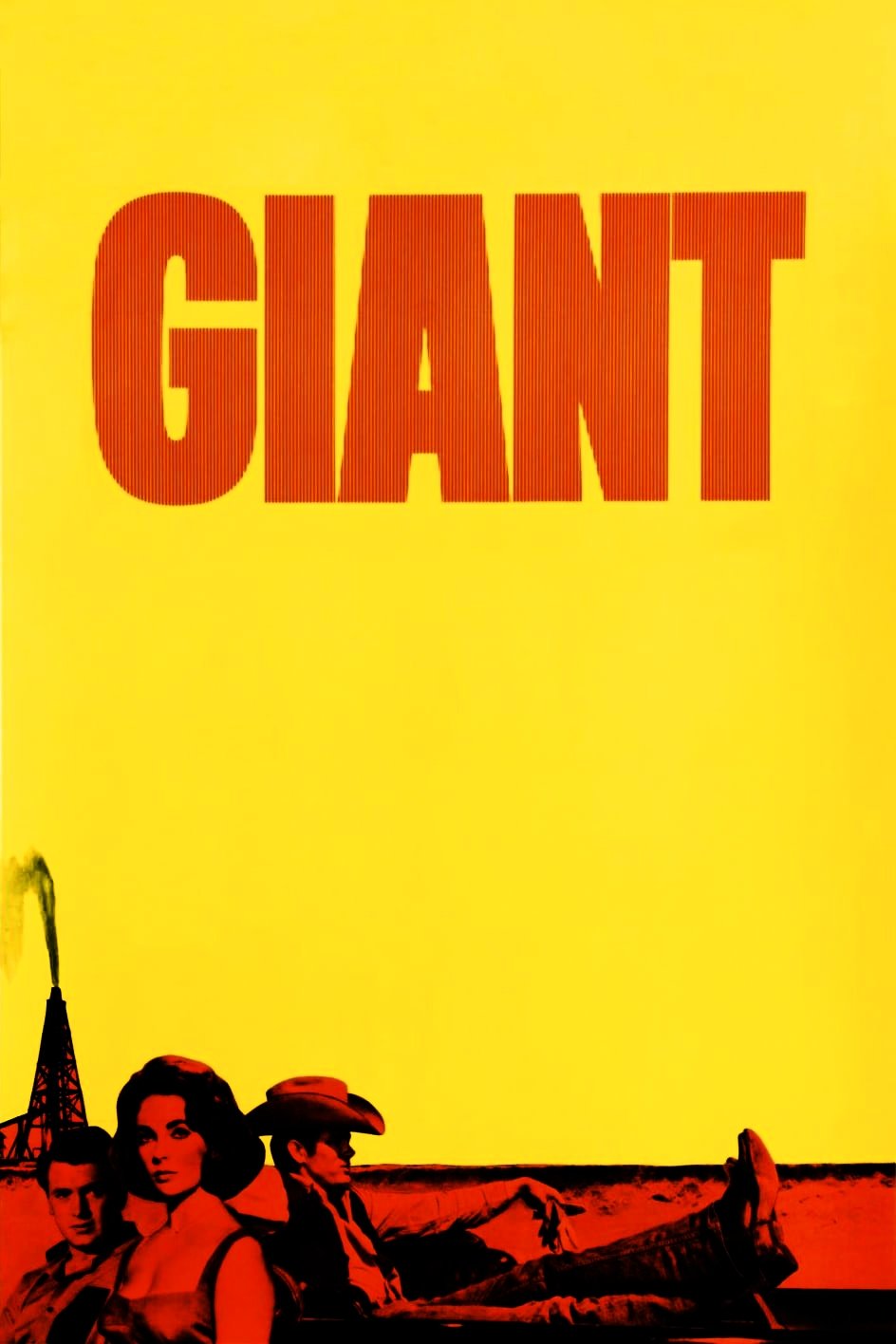
The Question of Truth Behind the Film
Watching “Giant” for the first time, I was struck by the sweeping cinematic vistas and the tumultuous personal histories that seemed almost mythic in scale. Yet I couldn’t help but wonder: how much of what I was seeing actually happened, and how much was constructed just for the sake of drama? I find that this question isn’t mine alone—whenever I sit among other viewers at a screening, whispers about what is “real” pervade conversations. Personally, the urge to discern historical fact from fiction in a film like “Giant” is less about verifying details and more about searching for clarity in a story that feels both specific and universal. There’s an assumption, at least for me, that if some part of it is rooted in truth, then its emotional impact carries a different kind of weight. It’s as if reality can reinforce the narrative’s authority, challenging me to see the past in a new light. Yet “based on a true story” can simultaneously limit and liberate—when a film lays claim to reality, I unconsciously start parsing events with the expectation that they align with documented history. My willingness to suspend disbelief is filtered through the promise of truth, but that promise also sets up a peculiar tension: do I watch for the narrative, or do I watch for the history lesson underneath?
Historical Facts and Cinematic Interpretation
As I engaged deeper with “Giant,” it became clear to me that the tapestry of Texas, oil, and social upheaval isn’t drawn from one singular event, but more from a blend of documented societal currents and inventive storytelling. The original novel by Edna Ferber, which the film adapts, was itself a composite—Ferber was inspired by real views of Texas ranching dynasties and the transformation brought by oil, but she didn’t anchor her narrative on a specific family or a unique, chronicled event. For me, this realization re-frames my experience: instead of searching for direct one-to-one parallels with real people, I start to see “Giant” as an exploration of influence rather than re-creation. The film draws on easily recognized cultural touchstones—cattle empires, sprawling families, the oil boom—to ground me in a world that feels plausible, even as individual character arcs and plotlines spiral into invention.
It’s fascinating, in my view, to watch how certain scenes compress complex socioeconomic history into vivid, digestible drama. The film condenses decades of shifting Texas demographics, class tensions, and evolving gender roles into the multi-generational saga of the Benedict family and their interactions with Jett Rink. Sometimes, this condensation means streamlining the painful reality of discrimination or the disruptive force of oil discovery into symbolic exchanges—such as heated debates over dinner or public altercations. I notice that the adaptation, both in Ferber’s novel and George Stevens’s direction, reorganizes events for thematic clarity: moments of conflict and reconciliation between characters are heightened or rearranged not because of historical chronology, but to serve narrative momentum and present the story’s ideas about identity, legacy, and progress more forcefully. So, each time I watch “Giant,” I’m less concerned with whether such-and-such scene “really happened” and more intrigued by how the film uses fragments of a recognizable past to reimagine what those years might have felt like for those caught in their tides.
What Changes When Reality Is Shaped for Cinema
One of the most thought-provoking aspects, to me, of engaging with “Giant” is appreciating the inevitable trade-offs that underlie its transformation from source material and lived history to the screen. When I watch the film, I’m aware that historical precision gives way to visual metaphor, dramatic structure, and the requirements of mass entertainment. The movie’s three-hour sprawl, for instance, isn’t meant to be an archival record of Texan life, but rather, a curated selection of pivotal moments. This selection process, I realize, demands choices about what is foregrounded and what is omitted. Dialogue that, in real life, would have unfolded in coded language or subtle gestures is heightened in “Giant”—characters speak their truths more overtly, conflicts that might have simmered for years erupt over the course of a few scenes, and social change that was incremental in real history occurs in strikingly rapid cinematic terms.
In my analysis, this streamlining allows viewers—myself included—to grasp overarching patterns of cultural transformation, but it also inevitably reshapes individual experiences. I find myself considering the emotional calculus at play: fidelity to the facts versus the visceral clarity of a structured story. “Giant” employs visual shorthand to convey magnitude—symbolic tableaus of oil rigs, extravagant parties, and moments of open defiance—that stand in for the accumulation of countless small events that truly shaped the American Southwest. Chronology is bent to serve catharsis; characters are composites, their lives telescoped into archetypes. Sometimes, I pause to think about what’s lost: the granular contradictions of real history, the quiet periods of everyday life, those parts that aren’t easily dramatized. Yet, this reshaping also sharpens elements that might otherwise recede into the historical background, bringing forward questions of race, inheritance, and power in a form that makes them impossible for me to ignore.
Audience Expectations and the “True Story” Label
Whenever I see a film prefaced with claims of authenticity—“inspired by true events,” “based on a true story,” or even subtler references—I notice my attention shifts. The label, for me, acts almost like an invitation to compare and contrast: I enter the theater armed with curiosity about what’s real and what’s imagined. My conversations with other viewers suggest most people experience a similar effect. When I watch “Giant,” however, I am aware it doesn’t wear the “true story” badge in the explicit way that later biographical films do. This ambiguity leaves me in a fascinating middle space. I become attuned to the ways the film echoes the social and economic dynamics of early twentieth-century Texas, but I’m not tied down by an expectation that each character or scenario corresponds directly to an entry in the historical record.
When films are presented as strictly factual, I find myself more critical of perceived inaccuracies; I want events to line up with my understanding of what really happened. The narrative becomes, in a sense, a test of memory or documentation. With movies labelled as “inspired by real events,” my focus shifts slightly. I tend to grant the filmmakers more creative license, allowing for possible embellishment without feeling misled. In the case of works like “Giant,” which draw from real cultural milieux without making strong factual claims, my expectations are the most flexible. I approach these stories with an openness to seeing the imaginative re-crafting of the past, but I also remain alert to the resonances that feel genuine. The experience is less about fact-checking individual events, and more about sensing whether the film’s emotional reality matches, in some way, the spirit of the era it invokes.
What I have found is that the “true story” label fundamentally changes how I process the drama: it moves my attention from the interiority of characters to the external circumstances guiding them. Without that claim tethering the film to specific events, I’m free to appreciate the broader portrait without feeling obligated to chronicle the historical record in my head.
Final Perspective on Fact vs Fiction
Thinking back on my viewings of “Giant,” what stands out is not just the sweep of its cinematic achievement, but the intricate web of reality and invention it weaves. The more I learn about the origins of the story—the blend of Edna Ferber’s research, the influence of regional anecdote, the purposeful gaps left open for dramatic effect—the more my relationship with the film changes. For me, the knowledge that “Giant” doesn’t document a particular family or event, but rather distills a time and place into compelling narrative form, allows me to engage with the film’s themes on their own terms. I interpret the struggles over land, race, and belonging as both specific to their setting and as universal questions that transcend literal history.
When I recognize the gap between reality and cinematic recreation, I’m drawn less to judgment than to curiosity: what does this choice dramatize, what does it obscure, and what emerges from the interplay of the two? I see fictionalization in “Giant” not as a departure from value, but as a lens that magnifies certain truths about power, prejudice, and ambition that pure fact might fragment or soften. As a film essayist, I can’t help but see the act of shaping reality for cinema as both a challenge and an opportunity. It demands that I reorient—still attentive to history, but no longer wedded to the expectation that it will appear unmediated on screen.
Ultimately, when I watch “Giant” with its factual origins and cinematic adaptations in mind, my understanding is richer and more nuanced, if also more complicated. The distinction between fact and fiction doesn’t dissolve, but it becomes, for me, a spectrum rather than a binary. I watch with new eyes, alert to the ways real social developments were stylized for dramatic unity, yet still moved by the authenticity of the feelings and questions the film provokes. Knowing what is real, or fictional, in “Giant” doesn’t lessen the experience—instead, it multiplies the avenues through which I can interpret its significance, both as a reflection of an era and as a crafted piece of storytelling.
For additional context, you may also explore the film’s overview and how it was received by audiences and critics.
🎬 Check out today's best-selling movies on Amazon!
View Deals on Amazon