
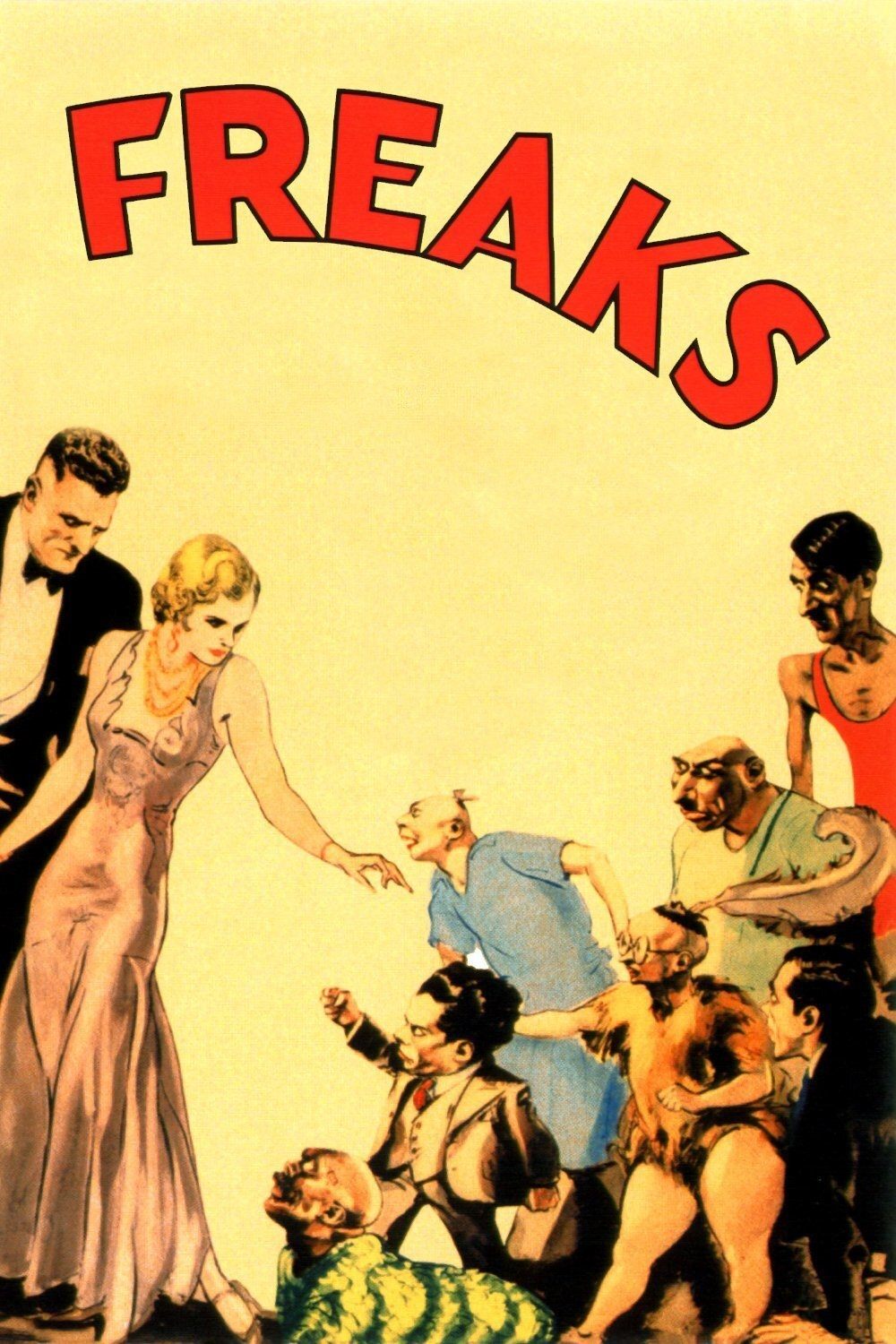
The Question of Truth Behind the Film
Whenever I sit down to watch a film like “Freaks,” I often catch myself wondering how much of what I’m seeing actually happened. This impulse, I realize, is more than simple curiosity—it’s a desire for meaning, a search for authenticity that I suspect most audiences share. The label “based on a true story” carries a certain gravity, as if those words bestow more significance to the narrative, perhaps even more ethical urgency. Whenever a film claims a connection to reality, I notice that both I and those around me start adjusting our expectations; suddenly, every dramatic decision or visual detail seems implicitly justified, judged not only on its narrative function but also on its fidelity to the supposed source. With “Freaks,” the boundary feels even murkier, since the facts are interwoven with legend, publicity, and the air of taboo that surrounded its original release. I find myself reflecting not only on the events depicted but also on the motives behind how they are presented. Why do I, and so many others, seem to crave assurances about a story’s origins? Is it because real history feels more resonant, more urgent, as if cinematic fiction needs to borrow authority for us to care? Or is it that we fear manipulation, and feel safer when we know which elements are authentic versus invented? These questions haunt my relationship with films that blur the line between fact and invention—never more so than with a work like “Freaks.”
Historical Facts and Cinematic Interpretation
When I read about the origins of “Freaks,” I’m struck by how elusive the history truly is. The movie, as I understand it, is loosely drawn from a short story called “Spurs” by Tod Robbins, yet most of the shock and controversy stem not from the plot but from the casting—namely, the choice to fill principal roles with disabled performers and actual sideshow workers. In my view, these casting choices introduce a direct connection to real-world circus history, something I can’t easily separate from the spectacle and drama of the film itself. Yet while performers like Schlitzie and Johnny Eck did earn their living as part of traveling freak shows, the film’s storyline—a lurid revenge tale—bears little resemblance to recorded events. I see this as evidence of a two-part negotiation: the preservation of surface authenticity through casting and environment, counterbalanced by a wholesale invention of plot elements for dramatic effect. The original source narrative is adapted with dramatic condensation and exaggeration, so that an episodic, perhaps more meandering reality is collapsed into a tight morality fable. When I watch “Freaks,” I sense that the lived experiences of its cast are echoed, but filtered through the lens of 1930s Hollywood and the commercial priorities of MGM. This makes me wonder whether the “reality” I feel is only partially historical, and considerably shaped by the demands of narrative compression and audience expectation. It reminds me that cinematic storytelling never relies solely on facts; it extracts what is necessary for drama, then rearranges reality until it serves a cinematic architecture. In the process, entire swathes of truth are omitted or transformed, and moments of ambiguity or contradiction are often discarded for clarity’s sake.
What Changes When Reality Is Shaped for Cinema
Confronting the reality that much of “Freaks” is reconstructed, I am always aware of the trade-offs made in adapting real world detail for the screen. On one hand, including performers who truly worked in sideshows lends the movie an immediacy I find impossible to overlook; there’s an authenticity to their presence that no makeup or special effect could achieve. Yet, once these authentic elements are woven into a fictional narrative, the circumstances that shaped their lives are compressed, simplified, or sometimes wholly reimagined. For example, when I consider the infamous climactic scene, it’s clear such a moment of collective vengeance is less a documentary of real events than an embroidered fable, exaggerated for the sake of shock and catharsis. The day-to-day realities of sideshow performers—from their inter-personal dynamics to their working conditions—are traded for spectacle and metaphor.
There’s a real tension here: the need for narrative economy versus a desire to honor messy, complex histories. I find myself negotiating between my wish for historical accuracy and my understanding that storytelling often demands symbolic representation. Whenever a movie like “Freaks” invokes reality, some audience members (myself included) may begin searching for factual consistency, only to find those expectations frustrated by the narrative’s momentum. I see this as a practical consequence; the ambiguities of real life are often deemed unsuitable for cinema’s time constraints and emotional arcs. Whether for reasons of pacing or emotional clarity, most historical details are trimmed, amalgamated, or recontextualized.
This doesn’t strike me as unique to “Freaks.” I’ve noticed similar patterns in films that draw more overtly from documented events: the way a composite character might replace several real people, or how a sensational moment is drawn from rumor rather than report. What I take from this is that cinema, by its nature, encourages a blend of the real and the artificial. Authentic elements are filtered through the lens of drama, so that by the time the story reaches me, it has traveled some distance from its apparent origins.
Audience Expectations and the “True Story” Label
I find it fascinating how much my own engagement shifts when a film bears the stamp of historical inspiration. With movies like “Freaks,” where the distinction between fact and fiction is a matter of interpretation, I notice a spectrum of responses—both in myself and in wider discussions. When I am told outright that something is factual, I watch with a kind of reverence, evaluating each moment for its degree of faithfulness or insight. Conversely, if a story is presented as “inspired by real events,” my expectations soften; I grant more leeway for creative liberties. When I perceive a film as entirely fictional, I relax the standards further, allowing the narrative flight and fantasy its own internal coherence.
With “Freaks,” I’m acutely aware that the label “true story” is complicated. The cast’s real backgrounds lend an air of documentary, but the plot’s sensationalism foregrounds invention. This ambiguous zone—neither outright fabrication nor journalistic account—challenges my assumptions. I feel the weight of authenticity only in isolated moments: a group of performers chatting on the circus grounds, or the mundane routine of dressing for a show. These fragments of plausible reality resonate as true, even as the plot veers into melodramatic territory. For me, the impact of knowing what is real versus concocted amplifies certain scenes and diminishes others. I find myself asking which parts to take at face value, and which to view as allegory or creative liberty; my emotional investment recalibrates according to those guesses.
Often, I sense that audiences approach these blurred boundaries with an appetite for transgression—seeking both sensational storytelling and a sense of privileged insight into real lives. The marketing and reception history of “Freaks” seems, to me, to have capitalized on this dual desire. I’ve seen archival reports and contemporary reviews oscillate between praising its raw truthfulness and condemning its exploitative tactics (Critical and audience reception). When the “true story” label is imprecise or absent, as it arguably is here, viewers are left to negotiate the truth for themselves—interpreting, doubting, reasserting their own boundaries between fact and fiction.
What I find most intriguing is that my own reading of the film changes depending on how much I know about its production and historical backdrop. If I focus on the fictional elements, “Freaks” reads almost as myth. But once I learn about the cast’s real histories and the controversies that surrounded the circus world of the early twentieth century, my sense of the film’s stakes expands. The emotional current grows stronger—not necessarily more sympathetic, but certainly more complex. I become a more active viewer, sorting myth from memory, performance from reportage. This process feels at once enriching and unsettling, as it resists the easy comforts of simplistic categorization.
Final Perspective on Fact vs Fiction
After so many re-watches and so much reading, I’ve come to think that the boundary between fact and cinematic storytelling in “Freaks” is more than a simple line—it’s a field of tension that invites constant negotiation. Knowing what is real and what is fictional doesn’t necessarily make the story clearer to me; if anything, it introduces richer questions about whose stories are being told, and how. The historical knowledge I carry into the film—about real circus performers and the era’s social context—informs my understanding, but it also complicates it. Is the movie attesting to the lived experience of marginalized people, or is it shaping those experiences into convenient dramatic forms?
For me, factual awareness acts as a lens, zooming in on certain details while blurring others. When I watch a scene featuring the real-life figures of circus lore—Schlitzie’s infectious laugh or Johnny Eck’s movements—I recognize a trace of world-weariness entwined with the performance. That recognition doesn’t mean I’m uncovering truth untouched by mediation, but it does deepen my engagement. The more I learn about the real history, the more I notice where the film conforms to or diverges from it. Sometimes, this sharpens my skepticism; other times, it simply enhances my appreciation for the choices made by the filmmakers.
What I ultimately carry with me after reflecting on “Freaks” is not a fixed verdict about where fact ends and fiction begins, but a sense of how unstable and fluid that boundary can be. I am reminded that my interpretation—like that of any viewer—is shaped by my awareness, my questions, and my attentiveness to the negotiations that go on between documentary fidelity and narrative invention. The film’s impact on me, then, is less about whether the events actually happened and more about how knowing their origins shifts my reading from passive consumption to active interrogation. Each new piece of research, each personal testimony from a cast member, each account from circus history, invites me to reconsider my assumptions and engage with the film in deeper, more complicated ways.
In the end, “Freaks” remains, for me, a compelling case study in the persistent interplay between fact and myth. Watching it, reading about it, and considering its production context all combine to remind me that the act of viewing is not merely about absorbing a finished product but about tracing, however imperfectly, the tangled threads of reality and imagination. My sense of the film’s meaning is always in flux, guided as much by what I know to be real as by what the film invites me to believe.
For additional context, you may also explore the film’s overview and how it was received by audiences and critics.
🎬 Check out today's best-selling movies on Amazon!
View Deals on Amazon