
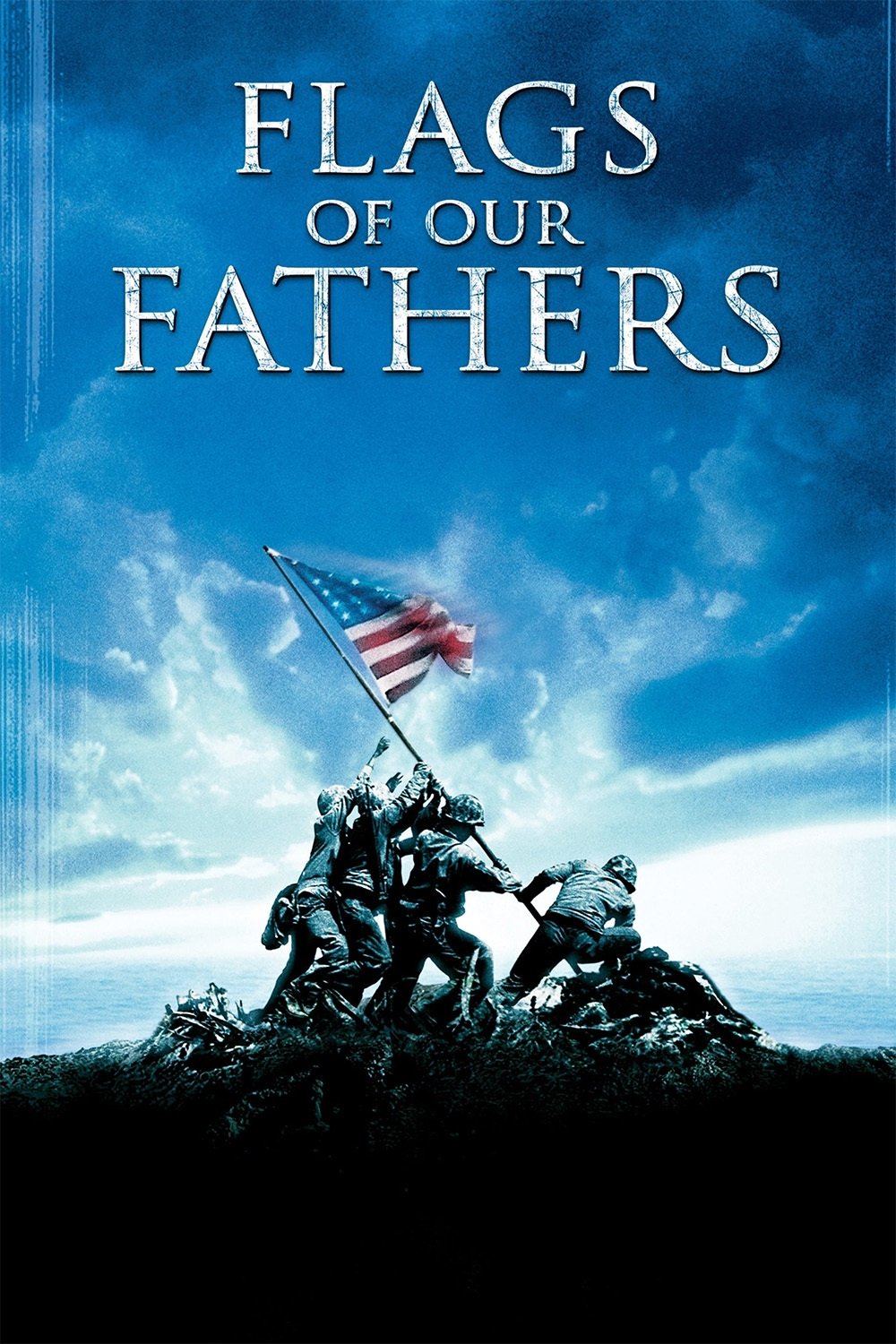
The Question of Truth Behind the Film
The first time I watched “Flags of Our Fathers,” I found myself grappling with the boundary between what I was seeing and what had actually happened nearly eighty years prior. I think that’s a natural impulse when sitting down to a film that so clearly states its roots in the real-world storming of Iwo Jima and that iconic image—the flag raising on Mount Suribachi. For me, knowing a film draws from actual events always sparks a kind of double vision; I’m not only paying attention to the narrative, but also running a parallel track in my mind that wonders, “Did it really happen like this?” I believe this instinct emerges because the “based on a true story” label doesn’t just promise entertainment—it offers a connection to collective experience and, maybe, a lesson from history itself. There’s an assumption that a film adopting this label will serve as a window onto some larger truth, that it might strip away artifice long enough to show us what people really did, said, or endured. I notice, though, that with every mention of truth, a host of expectations follows: accuracy, authenticity, and an emotional fidelity that’s as gripping as it is plausible. For me, knowing a film is “true” sets a higher bar for engagement because I find myself critically attuned to both the events as represented and my own sense of their veracity. That scrutiny is heightened with war films like this; people often want not just a compelling story, but an understanding of a pivotal point in history, and with that desire comes a tricky relationship between historical fact and cinematic invention.
Historical Facts and Cinematic Interpretation
As I reflect on “Flags of Our Fathers,” what stands out most is the balancing act between the raw material of history and the needs of storytelling. The film takes as its centerpiece the flag raising on Iwo Jima—a subject exhaustively documented, endlessly discussed. My reading of the film reveals that while the actual photograph and event are immovable historical objects, nearly every other aspect is shaped by the requirements of constructing a coherent, emotionally resonant narrative. I’ve observed that the movie restructures the timeline in ways that fragment chronological sequence, using flashbacks and overlapping memories to evoke the complicated aftermath experienced by the flag raisers themselves. I recognize that in reality, events didn’t arrange themselves neatly for later dramatization. Literary adaptation (from the memoir by James Bradley and Ron Powers) itself involves a significant act of selection—who to follow, what moments to highlight, and where to embed the emotional core. The film chooses three surviving Marines among the six photographed—Bradley, Hayes, and Gagnon—and orients much of its emotional thrust around their experiences during the war and their subsequent tour to sell war bonds. Based on my knowledge, individual experiences are sometimes melded or sharpened; secondary characters may serve as stand-ins for entire groups or emotional dynamics. This is not, to me, a careless manipulation, but a necessity when translating the sheer scale of battle and aftermath into cinematic language. The process involves condensing months of combat and post-war reaction into scenes that can be digested within a couple of hours, and in doing so, I notice the film irons out certain contradictions and ambiguities inherent to real life into structured arcs. In reality, the confusion over who was in the photograph, the ambiguity regarding the first and second flag raisings, and the subsequent investigation unfolded with fits and starts, something far harder to access and impactful in a conventional narrative form. Yet, I recognize the film does attempt to communicate the emotional dislocation caused by these uncertainties, even as the specifics are sometimes shuffled for the sake of dramatic clarity.
What Changes When Reality Is Shaped for Cinema
What I consistently notice when watching “Flags of Our Fathers” is how adaptation transforms the colors and textures of lived historical experience into something at once familiar and alien. Every time an actual documented event is boiled down to fit the grammar of film—dialogue, montage, point-of-view—I sense both a loss and a gain. On one hand, there is the practical necessity to compress—major operations must be visualized in minutes, complex motivations distilled into glances or a single line of dialogue. Watching these scenes, I’m acutely aware that the film chooses where to linger and where to move on, and these choices all but determine which aspects of history are foregrounded. I realize, for instance, that the bond tour as depicted trucks in heightened moments—a Marine’s discomfort with fame, the dissonance of ticker-tape parades, and the sharp pang of survivor’s guilt. These feel, to me, as carefully selected as the images of combat itself, and I understand why: cinema requires focus, clarity, and a rhythm that history itself almost never possesses in real time. The filmmakers, from my perspective, are not recreating every detail as an historian might, but rather shaping a sequence of moments that evoke a feeling of history as experienced by the central characters. This prioritization means elisions are inevitable—side stories vanish, minor participants are omitted, complexity is streamlined. At the same time, I’m aware of how film can amplify certain realities: the mud, noise, and chaos of the battlefield are almost overwhelming in their intensity, providing an immersive texture that no book or photograph can quite deliver. That said, in that amplification, other truths may fade. When the film drives home the point that heroism is a label imposed from the outside, sometimes at odds with the inner truth of those involved, I wonder whether it is possible to communicate the messiness of historical reality without recourse to dramatic simplification. I suppose I accept these trade-offs as part and parcel of filmmaking, but I’m always aware of what’s lost—context, nuance, and the multitude of silent voices that never find their way to the screen—when a true story is given cinematic shape.
Audience Expectations and the “True Story” Label
Every time I sit down to a film loudly presented as “based on true events,” I find myself in a different frame of mind compared to watching something openly fictional. With “Flags of Our Fathers,” the promise of historical truth alters my approach—I become more attentive, more skeptical, more willing to interrogate what I’m being shown. It’s a curious dynamic: the closer a film claims to reality, the more I scrutinize its choices, both overt and subtle. I often see this in the reactions of those around me as well; conversations after the film frequently circle back to questions of accuracy, as though factual correspondence is key to unlocking the experience’s full power. There’s also, I think, a hope or even a demand that a film based on reality will offer insight or meaning unattainable through fiction alone. The “true story” label becomes almost a contract—viewers expect the depiction to reflect not just surface events, but a deeper emotional or moral truth about history itself. However, I’ve noticed that when filmmakers use a softer phrasing (“inspired by real events”), the audience expectation shifts; people become more forgiving of artistic license and more attuned to thematic resonance rather than point-by-point accuracy. With pure fiction, there is freedom—anything goes, because nothing is promised or owed from real life. To me, “Flags of Our Fathers” sits at an interesting intersection: it harnesses the potency of real-world events, yet it is shaped by selective adaptation and the practicalities of screenwriting. The film’s resonance, I find, is often measured not by its plot’s credibility, but by whether it succeeds in conveying something emotionally honest about the lived experience of those at its core. When the lights go up, I see viewers transformed—the weight of real loss carries into the lobby, but so does the knowledge that what we saw was, finally, an interpretation. It’s this tension between representation and authenticity that complicates, but also enriches, the viewing.
Final Perspective on Fact vs Fiction
Looking back on my encounters with “Flags of Our Fathers,” I recognize that the distinction between fact and fiction is never straightforward within cinematic storytelling. For me, discovering which parts of the story are corroborated by history and which are dramatized does not diminish or embellish my emotional response; instead, it reframes my understanding of what the film is aiming to achieve. Every time I learn more about the complexities of the actual events—the confusion surrounding the flag raising, the psychological burdens of unwanted heroism—I reevaluate the film’s narrative choices in a new light. This knowledge doesn’t necessarily undermine engagement; instead, it prompts a subtler, more layered appreciation or, at times, a more critical stance toward the implications of adaptation itself. Reflecting on the specifics, such as how the identities of the flag-raisers were not originally clear or how contradictory accounts emerged with time, I become aware of the challenges inherent in “getting it right,” especially in war stories where memory is so fraught. Fact-checking doesn’t spoil the experience for me; rather, it opens avenues of inquiry—why were these choices made, what pressures shaped the story, how does the adaptation serve the broader conversation about national memory?
I’ve come to value films like “Flags of Our Fathers” less as definitive histories, and more as lenses through which larger questions about remembrance, myth-making, and collective understanding can be examined. Knowing what is real and what is fictional doesn’t simply provide answers; instead, it forces me to trace the contours between commemoration and exploration, between lived experience and artistic evocation. For me, the utility of that knowledge is not in catching the filmmakers out or holding them up to a historian’s standard, but in deepening my engagement with the story’s resonances, complexities, and silences—all of which echo well beyond the closing credits.
For additional context, you may also explore the film’s overview and how it was received by audiences and critics.
🎬 Check out today's best-selling movies on Amazon!
View Deals on Amazon