
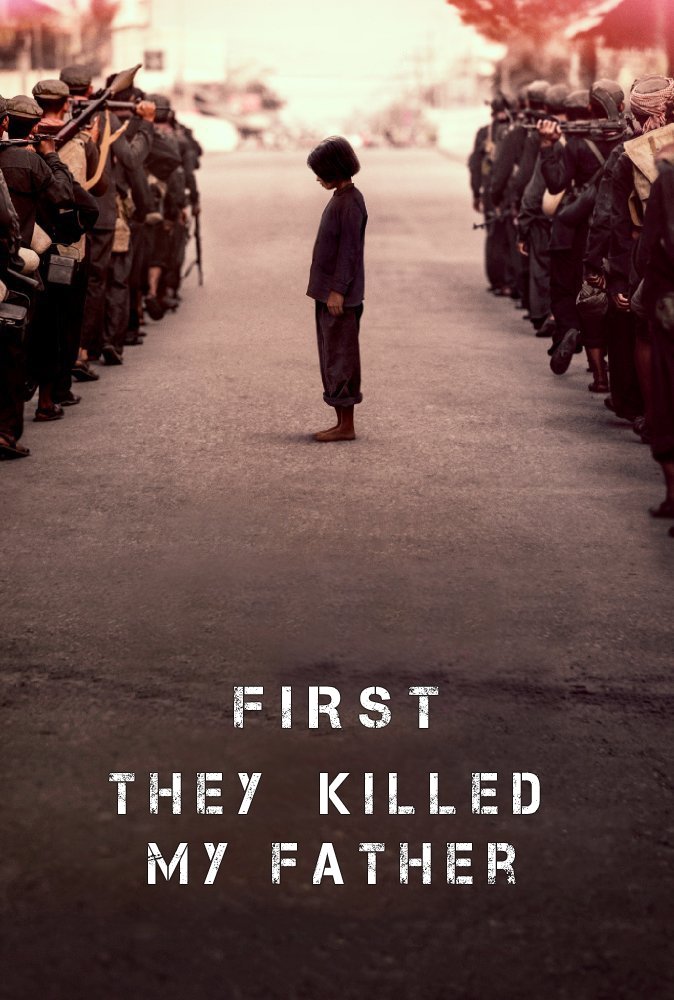
The Question of Truth Behind the Film
When I first encountered “First They Killed My Father,” there was an immediate gravity to its claim of being based on true events. For me, that phrase—“based on a true story”—carries a certain tension. It invites me closer, not just as a viewer, but as a participant in remembering; it promises a passage into lived experience. I often notice how audiences, myself included, gravitate to this label with a unique set of expectations. There’s a tacit trust I extend to such films, hoping for illumination or, perhaps, some revelation about the wider world. Yet I also realize that this “true story” designation leads me down a path of assumptions: that what unfolds on screen is emblematic of actual lives, shaped by history, unencumbered by the usual artifice. Often, I find myself questioning not the accuracy, but the intention—why this story, why these images, why now? The wish for authenticity is palpable, yet I am always aware that cinema is, by its nature, a construction, even when rooted in memory.
Reflecting on my own reactions, I see that this drive to ask, “Is this how it truly happened?” is almost unavoidable. The question is not just about verifying facts; it’s about calibrating my emotional investment. Knowing that a film draws from reality creates, for me, a bridge to empathy I might not otherwise cross so willingly. I expect, perhaps irrationally, to gain access to experience that transcends the fictionality I associate with most films. Still, I must admit: the line between truth and storytelling is never wholly transparent, and I often find myself wrestling with the validity of what is being portrayed, especially as I become more familiar with cinematic methods.
Historical Facts and Cinematic Interpretation
Watching “First They Killed My Father,” I couldn’t help but compare the cinematic portrayal of Loung Ung’s childhood in Cambodia to my understanding of the country’s real history. As someone drawn to the boundaries between history and reenactment, I perceive the film as navigating the complex terrain between documentary fidelity and the demands of narrative cohesion. The Khmer Rouge era, as depicted here, offers more than just a history lesson; it is a memory rendered through a camera lens, refracted through time and translation. I notice how sequences drawn from Ung’s memoir are adapted to fit within the rhythms of cinema: timelines condensed, sequences reordered, moments drawn out or diminished to create emotional resonance.
One vivid example that stays with me is the film’s choice to filter almost every event through young Loung’s viewpoint. I see this as both a method of interpretation and a necessary adaptation. Whereas the historical record features a network of voices, documents, and statistics, the film’s focus on a single perspective sharpens the story’s immediacy while inevitably narrowing its scope. The vast tragedy of Cambodia’s genocide is telescoped into one family’s experience, and, through cinematic technique, these personal moments are both faithful and transformed. Scenes like forced labor, starvation, and displacement are undoubtedly drawn from real collective suffering, but presented here with an intimacy and narrative clarity that could not exist in such cohesive form in the disorderly flow of actual experience.
I notice how the film compresses events for the sake of progression. Where memoirs and primary accounts linger or jump hesitantly, the screenplay chooses a direction that moves efficiently from village to labor camp to the climactic confrontation. These choices, while inevitable, reshape reality: certain encounters are made more vivid, sequences are dramatized for effect, and the emotional arc is calibrated for the running time. I find that my own grasp of “what really happened” becomes porous in the face of these alterations, but perhaps this is the nature of every historical adaptation. What strikes me most is how the film’s very structure—its pacing, its focalization, its selective silences—reveals as much about the process of remembering as about Cambodia itself.
What Changes When Reality Is Shaped for Cinema
As a viewer attuned to both historical context and cinematic craft, I am sensitive to the ways reality is refashioned for the screen. In “First They Killed My Father,” I sense a persistent tension between representing suffocating hardship faithfully and creating a watchable piece of cinema. The trade-offs become apparent as I note alterations motivated by the need for coherence. The brutal chronology of the Khmer Rouge years is, by necessity, distilled into scenes that carry narrative momentum. In doing so, certain complexities and ambiguities inherent to lived trauma are streamlined so that audiences, including myself, can follow Loung’s internal journey without being overwhelmed by digressions or contradictions.
One of the most notable effects of this process, in my experience, is the way emotion is calibrated for the audience. I recognize that unfiltered reality, especially of this magnitude, isn’t always representable within two hours. The decision to emphasize Loung’s visual and sensory impressions—her widened eyes, her sudden startle at distant explosions, the symbolism of mud and darkness—serves to create an emotional access point for viewers. It is a cinematic trade-off: the audience, through these choices, may gain visceral empathy, but the scale and disorder of history is necessarily reduced. I think about the countless unnamed victims—those whose stories do not fit neatly into narrative structure—and how their facets become absorbed into composite scenes or left untold.
Another practical consideration, one I’ve grown increasingly aware of, is the treatment of language. The use of Khmer throughout the film, for instance, deepens authenticity, but also requires delicate subtitling and careful staging to ensure international viewers remain engaged. Casting, too, reflects compromise: while real survivors and non-professional actors bring verisimilitude, they also shape the performance styles (and thus the emotional cues) of their scenes in ways professional actors might not. In all these elements—the script, the casting, the staging—I see a series of negotiations between truth as lived and truth as communicated. As an analyst, I am less interested in judging these negotiations than in tracing their influence on my own experience of immersion and understanding.
Ultimately, the film’s shape emerges as neither simple transcription nor pure invention. Rather, it is a constructed memory, drawing from documentation but filtering it for significance, rhythm, and accessibility. I find that the act of mediating reality into cinema highlights certain values—intimacy, trauma, survival—while inevitably sidelining others. The experience is not diminished for this, only transformed. My awareness of these changes does not decrease my investment, but it does alter the texture of that investment; I am watching something both rooted and reframed, an echo of history rendered through a distinctly cinematic voice.
Audience Expectations and the “True Story” Label
I’ve realized over years of watching films like “First They Killed My Father” that the label “true story” is more than a marketing tool; it’s an agreement between filmmaker and viewer. For me, it serves as both an invitation and a challenge. The invitation is to relate on a level deeper than mere entertainment, to acknowledge that what unfolds has roots beneath the surface of fiction. The challenge is to discern, as I watch, how much is documentary and how much is dramatized—how the line blurs and what meaning that blur produces for my own understanding.
When a film is presented as factual, I enter with heightened attention to detail. I often find myself scrutinizing the authenticity of costumes, locations, even dialogue rhythms, holding the film accountable to the version of history that I carry—or suspect exists. In the case of stories inspired by real events, I expect a looser adherence, almost a creative license, and my emotional response is accordingly more reserved. When I know a film is entirely fictional, my focus shifts: I become less concerned with representational accuracy and more attuned to themes, symbolism, or emotional catharsis.
This subtle recalibration happens almost automatically. I find myself more deeply unsettled by violence when reminded that it is not fabricated, more invested in small gestures when assured they are records rather than inventions. When watching “First They Killed My Father,” I recall how the promissory note of “based on memoir” heightens my sense of responsibility as a viewer: I am not only consuming a narrative, but also participating in the act of bearing witness. Still, I am cautious—painfully aware that every act of storytelling involves selection, emphasis, and omission, even when anchored in lived memory.
The impact of the “true story” label ripples outward. I notice conversations after the film veer quickly into historical discussion: Did this happen? Was it really like this? The distinction between what is authentic and what is shaped becomes the hinge on which my own and others’ interpretations turn. The distinction does not necessarily make the experience more or less powerful, but it does orient my approach. I am alert to the ways real suffering is translated into images, how the burdens of testimony differ from those of fiction. This expectation—sometimes explicit, sometimes unspoken—transforms my role from consumer to interlocutor, from passive onlooker to provisional witness to history as reframed by cinema.
Final Perspective on Fact vs Fiction
Having reflected on these nuances, I find that my knowledge of what is real—what is carefully transposed from memory or record, and what is invented or condensed—deepens the way I process a film like “First They Killed My Father.” It is not a matter of more or less enjoyment, nor of assigning moral value to the film’s choices. Rather, my awareness of fact versus fiction draws me into a dialogue with the material. Each choice—each reframing, each creative condensation—becomes part of the meaning I extract. The knowing itself is inseparable from the experience. I am reminded as I watch that what I am seeing is at once a memory and a re-creation, an act of personal and collective storytelling shaped by the pressures of representing the unrepresentable.
In sitting with this complexity, I realize that the distinction between fact and fiction is fluid, and my understanding of the film is layered accordingly. Knowing that the events depicted actually occurred—albeit not always in exactly the way they are shown—lends a kind of weight to every frame. At the same time, recognizing the hand of adaptation prevents me from conflating cinematic experience with direct access to the past. The film, for me, becomes both a window and a mirror: it offers a glimpse into Cambodian trauma while also reflecting the ways we choose to remember, reconstruct, and communicate memory through art. My interpretation is guided not by the pursuit of total accuracy, but by a desire to discern what remains when history is filtered through the particular lens of cinema.
Ultimately, my approach to films like “First They Killed My Father” is shaped by this dual awareness. I do not relinquish my hope for authenticity, nor do I deny the validity of artistic license. What matters, to me, is the interplay between the two—the dynamic relationship where the presence of fact anchors me and the presence of fiction challenges me to interrogate not only the film, but also my own stance as a viewer of history mediated by the artform. In this way, my experience remains alive to the shifting boundaries of truth, memory, and imagination, all coalescing with every viewing.
For additional context, you may also explore the film’s overview and how it was received by audiences and critics.
🎬 Check out today's best-selling movies on Amazon!
View Deals on Amazon