
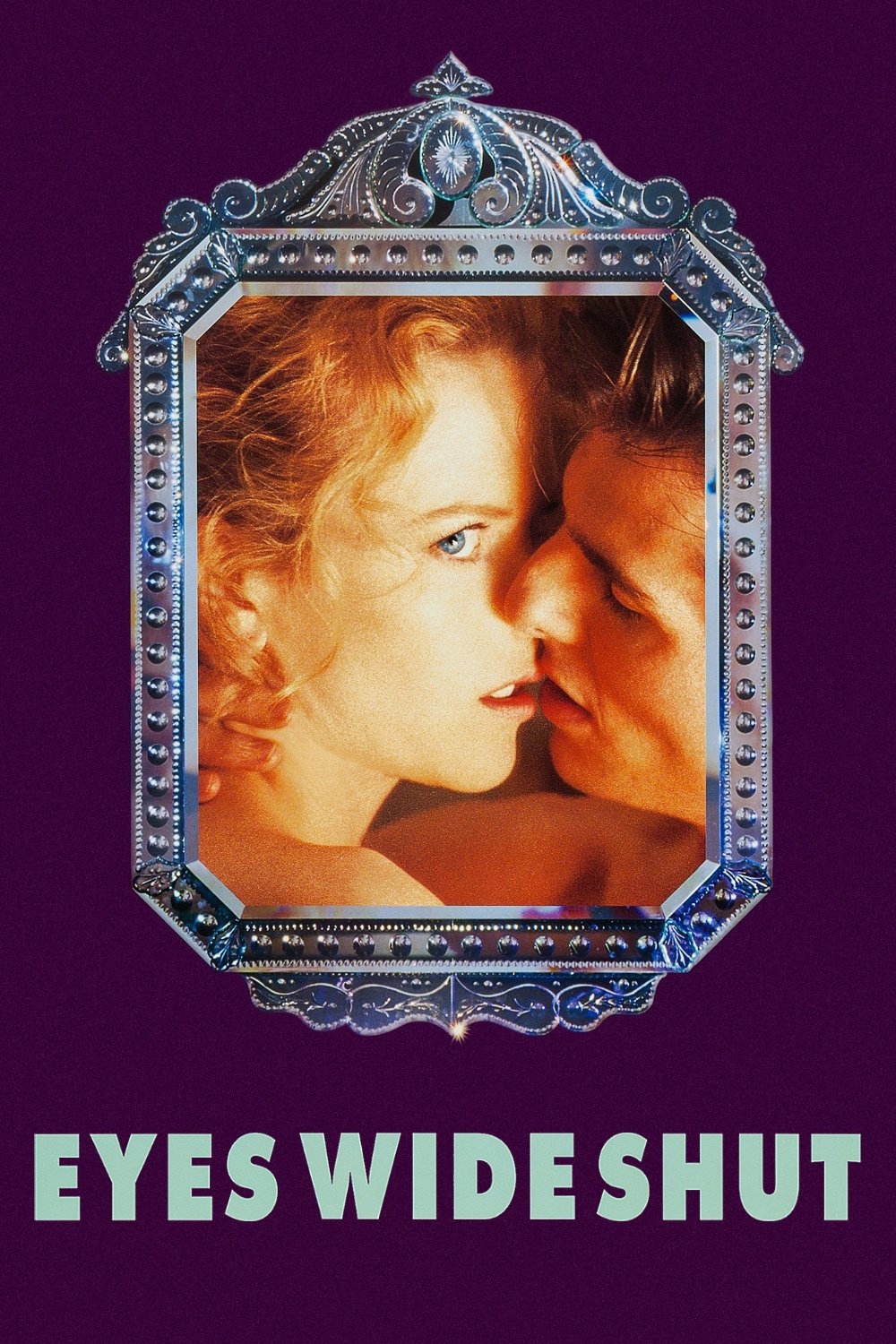
Is This Film Based on a True Story?
Whenever I rewatch “Eyes Wide Shut,” I find myself drawn into its enigmatic atmosphere, only to remind myself that despite its realism, the events unfolding on screen never actually happened. For me, it’s clear: “Eyes Wide Shut” is not based on a true story. There aren’t any records of the events depicted—at least not in the literal sense. What I have found is that while the film seems to thrum with a certain believability, especially in its depiction of the hidden aspects of adult lives and relationships, it springs primarily from a work of fiction rather than any documented, verifiable occurrence. However, the movie’s sense of authenticity comes from its source material, which has its own history and context, rather than from a direct retelling of real-world incidents. So every time someone asks me if Tom Cruise’s nightlong odyssey could ever have taken place, I remind them: its roots lie in literature and psychological truth, not historical fact.
The Real Events or Historical Inspirations
As I dove into the origins of “Eyes Wide Shut,” what fascinated me was its literary backbone. Stanley Kubrick’s adaptation draws directly from Arthur Schnitzler’s 1926 novella “Traumnovelle,” which translates to “Dream Story.” When I explored Schnitzler’s work, I discovered it’s not a diary or a historical confession—it’s a work of psychological fiction, set in turn-of-the-century Vienna. Schnitzler’s Vienna was a place of psychological ferment, known for Sigmund Freud and explorations of hidden desires beneath bourgeois respectability. I realized that while the novella grapples with the secret lives of individuals in a constrained society, it doesn’t claim to recount genuine events.
Schnitzler’s influence on Kubrick, in my view, is more about atmosphere and philosophy than specific facts. While the novella is entirely fictional, historians often mention that its social backdrop—the anxiety, repression, and shifting morals in European high society—mirrored the realities of that time. Schnitzler, himself a physician, was fascinated by sexuality and the subconscious, inspired indirectly by the scientific currents rippling beneath early 20th-century Vienna. What struck me most in my research is that Schnitzler was writing fiction to probe human psychology, not chronicling real events. Some have speculated that Schnitzler’s experiences or observations as a doctor may have influenced his themes, but I’ve never encountered direct evidence that any of his case studies specifically informed “Traumnovelle.” So when Kubrick transposed the sexual anxiety and existential restlessness of Schnitzler’s Vienna into the modern New York of his film, he transported those social questions, not documented happenings.
Having read countless interviews and behind-the-scenes commentary, I can say Kubrick himself never claimed the world of “Eyes Wide Shut” existed outside the page or screen. The claims about secret societies, elaborate rituals, and high-society debauchery are built more from urban legends and collective cultural anxieties than from facts. Still, I’ll admit there are many who see reflections of real social dynamics—about power, secrecy, and desire—in both the novella and the film, especially given infamous rumors about elite social clubs. But, as I’ve found, these are interpretations and allusions rather than firsthand evidence.
What Was Changed or Dramatized
Whenever I compare “Eyes Wide Shut” with Schnitzler’s “Traumnovelle,” the first major change I notice lies in the setting. Schnitzler’s original Vienna is transformed by Kubrick into late-1990s New York. Even though Kubrick filmed primarily in London, every detail is meant to evoke the pulse and possibility of New York nights. For me, this shift modernizes the anxieties and the tensions between duty and desire, making them feel more immediate to 1990s audiences. But this change isn’t historical adaptation—it’s creative license.
Another difference that stands out is the characterization of the protagonists. In Schnitzler’s novella, the main figures are Fridolin and Albertine. Kubrick reinvents them as Bill and Alice Harford, and what I see in this translation is that their dialogue, insecurities, and fantasies all get a distinctly contemporary (and visual) update. Kubrick chooses to ground them in the world of American urban professionals—successful, polished, but ultimately adrift. The anxieties are the same, but their expressions change with the culture. This to me is less about matching any particular period’s reality and more about exploring timeless emotional truths.
One of the most dramatic components in the film—the lavish, ritualistic masked orgy—is, in my experience, a stylized exaggeration of what appears in the novella. While “Traumnovelle” features masked balls and clandestine sex, Kubrick amplifies their theatricality and shadowy allure. The famous “Red Cloak” character, the strict rules of secrecy, and the atmosphere of looming threat are all Kubrick’s additions, heightening the sense of intrigue and foreboding. When I try to trace these elements to any real-world fraternity or secret society, I always find they belong more to the realm of myth, rumor, and psychological fantasy than to any substantiated historical secret order. The same goes for the imagined consequences for those who transgress the group’s boundaries—a thematic device rather than a documented reality.
I also notice that Kubrick, in his storytelling choices, imposes a series of unresolved questions—much more so than Schnitzler. Where the novella offers a certain clarity by the end, Kubrick deliberately leaves Bill Harford’s journey open-ended, intensifying the sensation of ambiguity and unease. For me, this dramatization transforms a psychological case study into what feels almost like a fever dream, blurring what is literal with what is symbolic or imagined.
On a smaller scale, there are plenty of dramatized moments: the over-the-top encounters Bill has with various characters—the costume shop owner, the prostitute Domino, the series of cryptic and menacing warnings—all serve Kubrick’s story more than represent a plausible series of real-life run-ins. I don’t see any direct suggestion in either Kubrick’s film or Schnitzler’s text that these specific plot events are meant to reflect actual, reported occurrences in any city, past or present.
Historical Accuracy Overview
From my perspective, “Eyes Wide Shut” is not historical in the conventional sense. When I scrutinize the events in the film, I don’t see any evidence that they reproduce specific occurrences from a particular time or place. Instead, the film achieves a certain authenticity in mood and psychological realism. The anxieties, temptations, and secrets that Bill and Alice grapple with are all plausible, but they’re universal concerns, not historical anecdotes no matter how much the film’s painstaking details create a sense of grounding in a real, lived-in world.
When measuring Kubrick’s depiction of high society revelry and secret societies against the historical record, I’ve never found documented events that align point-for-point with what’s portrayed. There have certainly been real-life secret societies, both benign and sinister, throughout history—Freemasons, Skull and Bones at Yale, and numerous others. Yet their inner workings are rarely, if ever, as elaborate, sexually charged, or overtly threatening as the group in the film. To my knowledge, those elements are embellishments intended to evoke a sense of mystery and danger rather than to document specific real-world societies.
I have encountered some commentary suggesting that Kubrick and Schnitzler’s shared environments—whether Vienna or New York—reflect authentic social crosscurrents. For example, the fear of infidelity, the draw of sexual curiosity, and the rigid facades maintained in public are recurring historical themes when discussing metropolitan bourgeois life. However, these themes appear throughout literature and art because they are fundamental to the human experience, not because either storyteller recorded a true story.
From wardrobe and set design to cultural references, “Eyes Wide Shut” is fastidious in capturing the aesthetic reality of late 1990s New York. Still, the narrative undercurrent—escalating from a relatable marital spat to a surreal, perilous masquerade—signals to me that accuracy was chosen selectively for effect, not for adherence. The film is not aiming for historical documentation; it’s crafting a world that feels real enough to be unsettling, even though its most sensational moments belong unmistakably to fiction.
How Knowing the Facts Affects the Viewing Experience
My own understanding of the film’s origins profoundly shapes the way I interpret what’s on screen. Knowing that “Eyes Wide Shut” descends from a literary, not a historical, tradition helps me appreciate the film as an exploration of psychological and philosophical questions rather than as a dramatization of hidden truths. When I watch Bill Harford’s hesitant plunge into New York’s nocturnal underbelly, I don’t expect to learn about actual secret clubs or a city’s covert rituals. Instead, I’m aware I’m witnessing a series of dreamlike, sometimes surreal encounters meant to probe the limits of desire, trust, and personal identity.
For me, the lack of a true historical foundation removes the question of “Did this really happen?” and instead invites “What does this represent about us?” It’s a shift in perspective: I can let go of searching for clues about real events and focus entirely on the symbolic implications—how ritual and secrecy reflect social alienation, how sexual fantasies intersect with fear. I find that Kubrick’s framing of the story as somewhat plausible (but never quite real) creates a special tension. I’m drawn in by the sensation that the world I’m watching could exist just out of sight, even as I know it’s built upon fictional source material and heightened for the screen.
At the same time, knowing the movie’s foundation makes me read the ambiguity of the film differently. Instead of looking for a “solution” or hidden message with roots in conspiracy fact or scandal, I interpret the unresolved questions as deliberate provocations. I feel emboldened to probe the subtext—what Kubrick and Schnitzler seem to be saying about marriage, power, and self-deception. I can appreciate how the details borrow from real anxieties, but the story’s trajectory—a single night’s exposure to the city’s most arcane pleasures and perils—is best approached as metaphor, not reportage.
I’ve met viewers convinced that the film points to real-world secrets and cover-ups; the film’s ambiguity undoubtedly fuels imaginative speculation. But knowing the fictional basis helps me anchor my interpretation in the universality of its themes rather than the specificity of events. It creates space for allegory and dream logic, reminding me that what feels true need not always have happened to resonate. Ultimately, “Eyes Wide Shut” becomes, for me, an illuminated portrait of the imagination: a story rooted in psychological curiosity rather than historical accuracy, challenging me to reflect on inner truths rather than external realities.
After learning about the film’s origins, you may want to see how audiences and critics responded.
🎬 Check out today's best-selling movies on Amazon!
View Deals on Amazon