
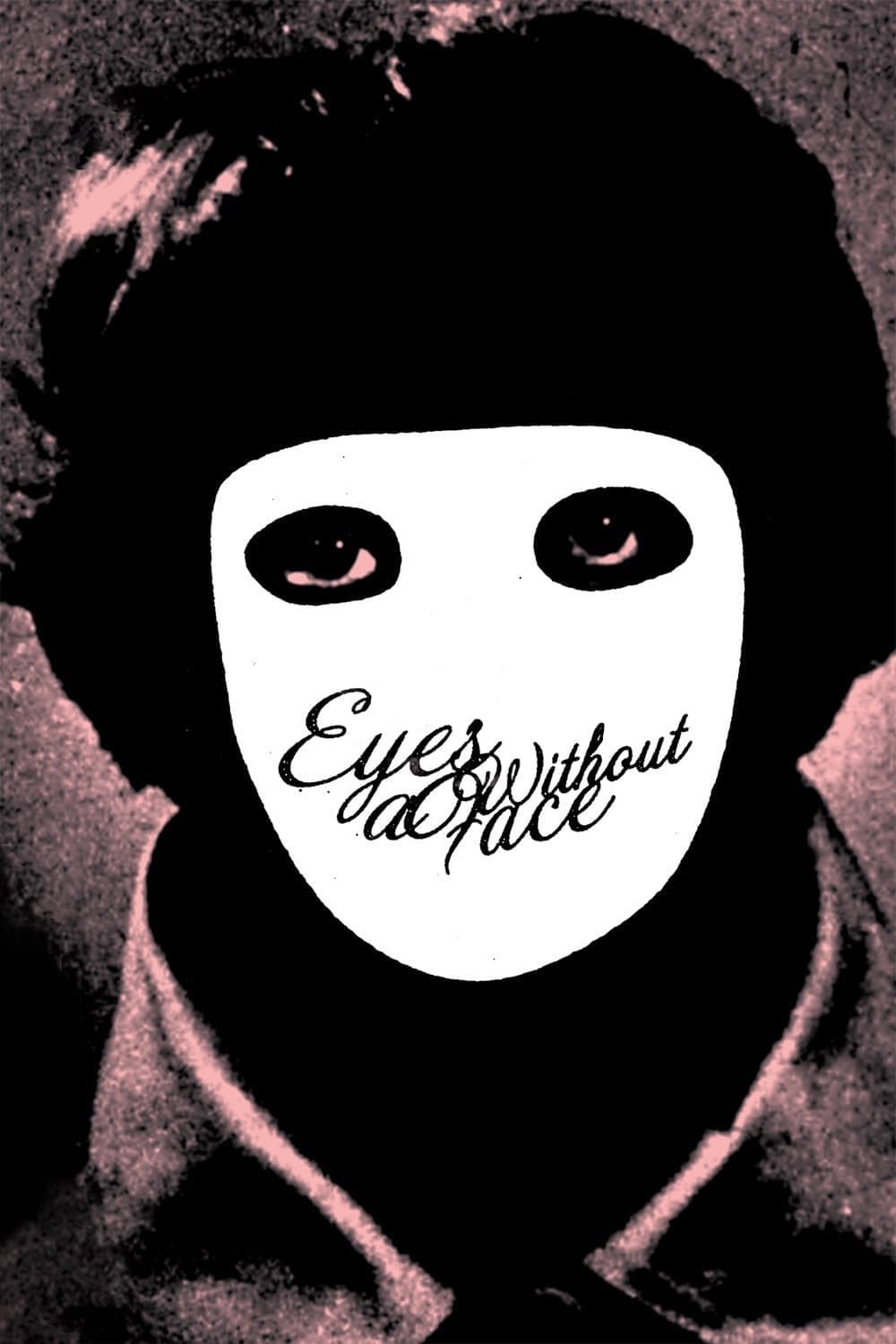
The Question of Truth Behind the Film
Every time I encounter a film woven with macabre imagery and provocative ideas like Eyes Without a Face, I find myself tempted by the underlying question: is any of this real? There’s something about the movie’s icy detachment and haunting lyricism that makes the grotesque seem plausible, as if perhaps somewhere, at some point, a scientist truly crossed that boundary. I notice in myself—and in the way people discuss such films afterward—a deep curiosity about whether the on-screen horrors sprang from the fertile ground of true events or from an unfettered imagination. That curiosity isn’t random. I think it’s almost ritual, part of the way audiences collectively process unsettling stories. Hearing that a film is “based on a true story” conjures a certain gravity; the phrase shapes an expectation that we’re witnessing not just narrative invention, but an adaptation of history, no matter how stylized. There’s an unspoken contract, I’ve noticed: that the storyteller offers some shard of truth, and that I, as a viewer, am obligated to weigh the experience differently as a result. The root assumption seems to be that truth-endorsed stories claim a special significance, as if reality always trumps fiction. But with a film as ambiguous and atmospheric as this one, I start to see that those assumptions are sometimes more revealing about myself than about the film itself.
Historical Facts and Cinematic Interpretation
When I start digging through the background of Eyes Without a Face, trying to pinpoint whether history had anything to do with its uncanny world, I quickly realize how stubbornly the film blurs the lines between reality and invention. My research leads me to discover that, unlike overt historical dramas, Franju’s film isn’t a straight retelling of any specific factual event. However, the anxieties and medical possibilities animating its plot emerged from the period’s real-life experiments in reconstructive surgery and skin grafting, a postwar fixation that, in the late 1950s, both dazzled and disturbed the public imagination. I’ve noticed how the film takes those medical advancements—the reports of facial transplants and the moral unease swirling around them—and distills them into a surreal, almost mythic tragedy. The scientific real-world advancements exist in the background, but the narrative I see on the screen is both more concentrated and more poetic than any case study. In that sense, what fascinates me isn’t a direct translation from newspaper headlines but a process: reality gets filtered, pared down, and intensified until it becomes something emotionally resonant yet unmistakably cinematic. Here, the facts act less as a foundation and more as a faint signal, reshaped by the needs of mood, genre, and theme.
It strikes me that this approach is a kind of alchemy. Instead of dramatizing a headline-grabbing surgeon or a notorious criminal, Franju and his collaborators borrow scattered elements—surgical masks, the terror of identity loss, clinical detachment—and reorganize them into a nightmare that feels timeless. Where a documentary might have recited the details of actual medical experiments, the movie chooses to rearrange and condense, distilling the essence of contemporary fears into a single, unforgettable metaphor. For me, this process raises immediate questions: what have the filmmakers left out, and what have they chosen to emphasize? The condensation of real advances in medical science into a tightly wound chamber drama changes the very meaning of the source material, transforming a series of technical achievements and ethical debates into a meditation on guilt, obsession, and the dangers of unchecked devotion. I can’t help but notice that what’s left is both less “true” in a literal sense and more revealing of collective anxieties. This reshaping is what makes the film persistently uncanny—I always sense the presence of something real just out of reach, made stranger by its adaptation into the language of horror and lyricism.
What Changes When Reality Is Shaped for Cinema
As I reflect on Eyes Without a Face, I see the way practical demands—of duration, audience engagement, emotional impact—force even the most documentary-minded films to diverge from reality. Whenever a story with some basis in fact enters the cinematic sphere, it passes through a filter that compresses, distills, sometimes even erases key elements in the service of clarity and pacing. I find myself fascinated by these trade-offs: a filmmaker may choose to simplify the chain of events, amalgamate multiple real figures into a single character, or exaggerate timing for maximum suspense. In Franju’s film, for example, the depiction of medical procedures owes a debt to genuine surgical innovation, yet unfolds in a slow, almost ritualistic fashion, more attuned to nightmare logic than the procedural rigor of real medicine. Watching these sequences—clinical, stylized, and emotionally heightened—I feel a sharp contrast between the measured progress of scientific advancement and the film’s devotion to atmosphere and mood. The process raises a difficult but necessary question: what becomes of truth when it is corralled by the needs of narrative tension and emotional amplitude?
I’ve often noticed that filmmakers walk a delicate tightrope between presenting facts as they were and constructing a story that resonates with the peculiar demands of the medium. Accuracy, in the strictest historical sense, may yield to metaphoric clarity or thematic power. For me, this tension becomes most apparent in the portrayal of the film’s protagonist, her suffering at once rooted in the plausible aftermath of trauma and magnified into a nearly operatic symbol. The emotional compression at work here is intentional. The real complexity of medical recovery, the patient’s psychological struggle, and the nuances of scientific ethics are streamlined to focus attention on questions of identity and loss. By sharpening these questions, the film distances itself from the slow, often inconclusive messiness of real-life tragedy. Instead, I’m offered a scenario that is both more vivid and less representative of the actual world. It’s a necessary trade-off: the film achieves emotional coherence and symbolic density at the expense of granular detail or documentary exactitude. This isn’t a flaw so much as a feature—a way to extract resonance from reality by focusing on what will linger in a viewer’s memory long after the story ends.
Audience Expectations and the “True Story” Label
I can’t help but notice how differently I respond when I sit down to a film that claims a direct link to the truth. If a movie’s opening moments announce that what follows is factual, my attention sharpens—I’m on alert for cues, for markers of verisimilitude, for the telltale signs that this story truly happened. With Eyes Without a Face, the absence of that proclamation makes a difference. There’s no “based on a true story” assurance to anchor my viewing. Instead, the film hovers in an ambiguous zone, where every fantastical element might be colored by a hint of realism, but not tethered to any single, documented event. I find that this ambiguity changes the way I interpret both the plot and its emotional impact. When details feel plausible—medical experiments, invasive surgery, the cold will of a scientist—I wonder: could this horrifying scenario have emerged from some combination of historical trauma and the push for scientific advancement? Yet because the film doesn’t position itself explicitly as fact, I allow myself to be drawn into its poetic undercurrent without the pressure of using the story as a record of real events.
I notice that when other viewers learn a film is “inspired by true events,” they bring their own assumptions about its authenticity and value. Some see the “true story” badge as a guarantee of significance, a way to frame the story’s events as both cautionary and meaningful, regardless of how much artistic license is taken. For others, such a claim invites skepticism—a prompt to search for departures from the source material, to weigh every exaggeration or omission. In the absence of that label, as in Eyes Without a Face, the experience shifts. I find myself less concerned with accuracy and more receptive to abstraction and allusion. The film’s set-pieces, unsettling as they are, become less about what did happen and more about what could happen—or what it might feel like if they did. That elasticity of interpretation, unanchored from specific fact, grants the movie its hypnotic, dreamlike texture. I experience the horror less as distant historical curiosity and more as a metaphor made visceral.
What I find especially compelling is how the mere suggestion of authenticity—references to medical research, plausible details about facial reconstruction—can prompt audiences to overlay their own sense of reality onto even the most stylized narrative. Many viewers, myself included, sense a heightened engagement when a story draws inspiration from the plausible, even if it falls short of complete accuracy. In the hands of Franju, the film’s ambiance and psychological undercurrents tap into the credible fears of technological overreach and the boundaries of the self. I think that makes the distinction between fact and fiction less about the presence of a factual anchor than about the willingness of the audience to accept the film’s premise as emotionally, if not literally, truthful.
Final Perspective on Fact vs Fiction
As I reflect on how knowing what is real or fictional changes my understanding of Eyes Without a Face, I’m struck by the paradox at the heart of historical adaptation. On the one hand, an awareness of the film’s roots in contemporary anxieties over medical progress gives depth to its surreal narrative. I’m reminded that the horror here is not entirely imaginary—there are echoes of real fears, real injuries, real attempts to heal or remake identity in the aftermath of catastrophe. On the other hand, the lack of direct factual basis unmoors the story, allowing it to play out as a kind of psychological fairy tale, one where the details are less important than the emotional undertow. For me, that combination is intoxicating. I find myself floating between fact and fiction, my interpretation shaped by a shifting awareness of what might have happened and what never could. The line between real and constructed blurs, not just in the telling but in my own act of viewing.
Watching the film with the knowledge that it’s not recounting a specific true story frees me from the fact-checking impulse, letting me surrender to its singular vision. I realize that my experience becomes less about verifying the plausibility of each development and more about exploring the anxieties and questions the film raises. How far would someone go for redemption? What happens when science collides with love and obsession? Those questions feel as urgent and meaningful as any historical inquiry, yet they’re filtered through the distorting lens of genre. I appreciate the ambiguity: if the movie were strictly factual, some of its poetic force might be sacrificed. Yet, the traces of real-life medical innovation keep the film grounded enough to remain unnervingly possible. My awareness of these factual undercurrents enriches the experience, adding layers that I might otherwise miss. I stop seeing the movie as a binary case of “real” or “fictional” and instead encounter a work that amplifies the uncertainties and desires at the heart of scientific progress and human vulnerability.
Ultimately, the value I find in situating Eyes Without a Face between reality and imagination lies in the way my own understanding of the film expands. I carry both the spectral presence of true events and the liberties of invention in my thoughts after the credits roll. Neither eclipses the other; each shadows and enriches the meaning of the story as I recall it. The distinction between fact and fiction is not a dividing line, I realize, but a shifting terrain—a place where my own curiosity, doubt, and recognition deepen the emotional resonance of what unfolds onscreen. Whether I view the film as a commentary on real scientific anxieties or as a feverish dream, the edge between fact and invention remains blurred, and my interpretation remains fluid. That, for me, is where the film’s real potency lies: not in affirming what did or didn’t happen, but in shaping new ways for me to understand the haunting possibilities hidden in the spaces between.
For additional context, you may also explore the film’s overview and how it was received by audiences and critics.
🎬 Check out today's best-selling movies on Amazon!
View Deals on Amazon