
The Question of Truth Behind the Film
Every time I watch a film like Edward Scissorhands, I become acutely aware of a curious cultural impulse: the question of whether what I am seeing actually happened. I can’t help but notice how often, either in conversations or after the credits roll, people ask if the events or characters on screen are based in reality. For me, this speaks to a longing for a different kind of connection with a story, one that bridges the gap between art and lived experience. That presumption creates a certain expectation—if something is “true,” it must be more potent, more meaningful somehow. The “based on a true story” label, I’ve realized, often carries both promotional weight and an unspoken promise: what unfolds on screen is tethered, perhaps even obligated, to reflect something authentic. When approaching a film like Edward Scissorhands, which is so visually stylized and consciously fantastical, I find myself questioning where, if anywhere, reality lies within its pastel suburbia and Gothic castle. The question isn’t simply about accuracy, but about how the notion of truth shapes my emotional investment and frames my search for meaning in the narrative. I’m reminded that even the most implausible tale can take on a sheen of gravitas if it’s whispered to be rooted in fact.
Historical Facts and Cinematic Interpretation
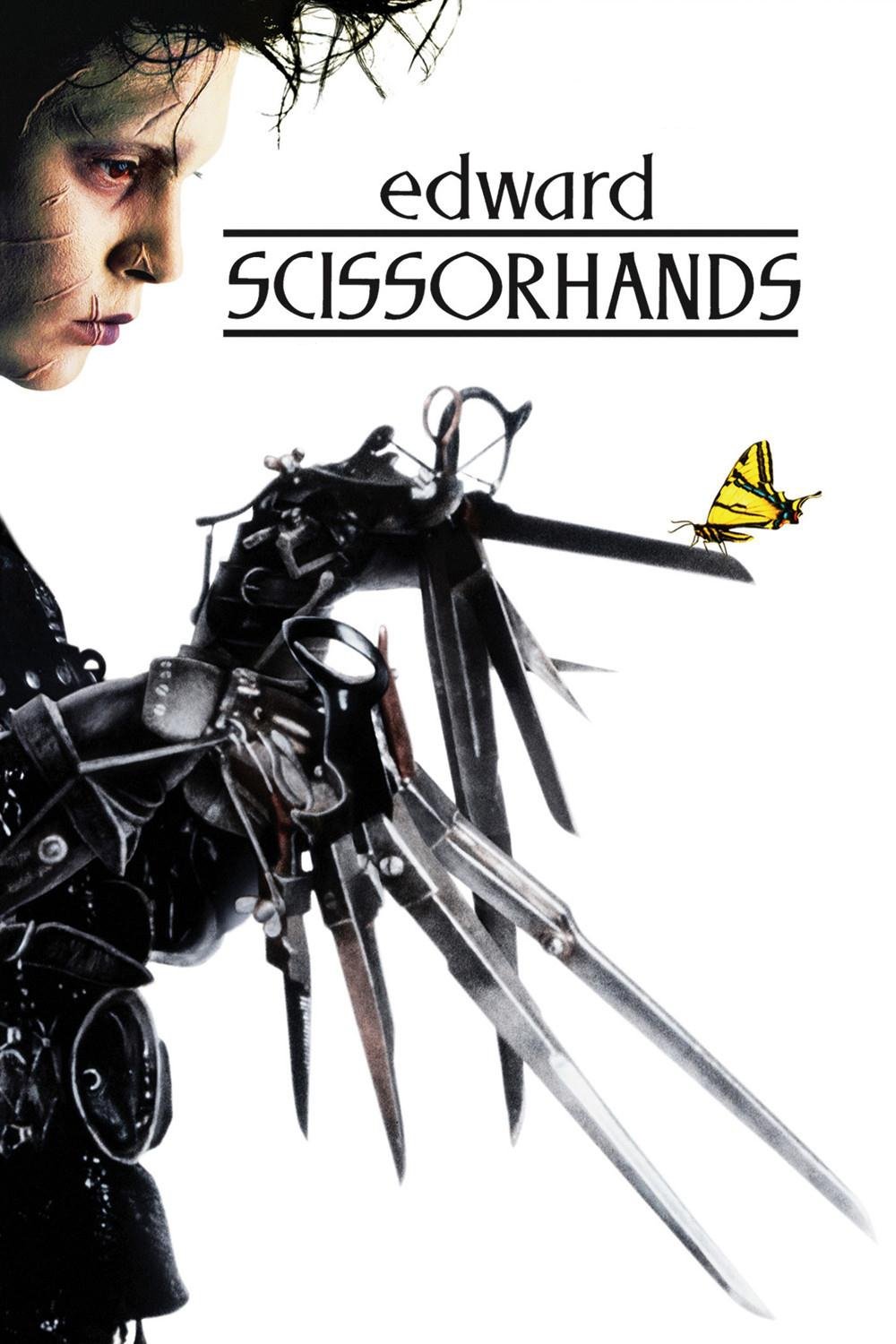
Thinking about Edward Scissorhands in relation to actual events, I find myself confronted by the reality that the film does not draw directly from any documented history, widely-known figure, or incident. Instead, I view it as an amalgamation of personal recollections, references, and themes more than strict biography. I have read that the film reflects elements from the childhood feelings of its creator—tales of social outsiderdom and the experience of being misunderstood. In my mind, this functions less as a factual adaptation and more as a stylized translation of sentiment and memory. Such inspiration, to me, differs markedly from a film that adapts a news story or historical event; it is more impressionistic. Yet, even in these cases, I notice how real experiences undergo a transformation. In Edward Scissorhands, suburban landscapes, archetypes of conformity, and the motif of the gentle outsider are all heightened and abstracted to serve the narrative. If there are small kernels of reality—say, the universal experience of alienation or feeling “different”—these are stretched and reshaped for clarity and resonance. I find it fascinating that the film’s fantastical premise—a man with scissors for hands—is not a distortion of a real event but an eccentric metaphor through which both pain and beauty are refracted. It becomes clear to me that, whether drawing on loose inspiration or documented fact, films must organize and often condense messy, nuanced realities into digestible parables. In Edward Scissorhands, the historical “truth” is glancing at best, replaced by a truth of feeling.
What Changes When Reality Is Shaped for Cinema
Whenever I contemplate the relationship between fact and fiction in film, I find myself examining the delicate balance that storytellers must maintain. I’ve observed that historical accuracy often yields to the demands of pacing, character development, and visual storytelling. In the case of a movie like Edward Scissorhands, I see the trade-off laid bare—the film surrenders the possibility of historical faithfulness in exchange for a palette of heightened emotion and visual symbolism. I notice how the world of the film, with its sharply defined contrasts between dark and light, new and old, or inside and outside, is meticulously engineered to convey particular themes rather than to document lived experience. In my view, the narrative becomes more illustrative than referential, and that changes the fundamental way I interact with it as a viewer. I’m intrigued by how, even in more fact-based cinema, events are often rearranged, minor details omitted, or new personalities introduced for cohesion or emphasis. This practice is not unique to historical adaptation; even films that borrow only a mood or an emotional landscape from real events, as in Edward Scissorhands, participate in an act of curation. What stands out to me is that, when reality is adapted for cinema, it gravitates toward metaphor, symbolism, and, above all, coherence. I notice that certain sacrifices are made—accuracy traded for universality, individual quirks chiseled into archetypes. I find myself asking, at what point does a memory become a fable, and does that transition enhance or obscure the “truth” the film seeks to express? In watching Edward Scissorhands, I sense that the choice to pursue emotional clarity over fidelity to any particular event situates the film within a tradition of cinematic mythmaking, where the feeling of truth can eclipse the literal truth itself.
Audience Expectations and the “True Story” Label
It has always intrigued me how my expectations shift depending on a film’s relationship to real events. If I sit down knowing that what I am watching is based on a true story, I find myself hyperaware of details, acutely conscious of accuracy or apparent embellishment. There’s an undercurrent of skepticism—was that really how it happened?—but also a readiness to accept more challenging or uncomfortable elements as a reflection of reality. When viewing a film like Edward Scissorhands, which makes no claim to factual basis, I am instead liberated to interpret its events symbolically or allegorically. The absence of a “true story” label offers, in my experience, both freedom and ambiguity. I can focus exclusively on the imaginative world built on screen without the constraint of cross-referencing to the outside world.
I notice that, collectively, audiences often seek validation or immediacy from the “true story” label—perhaps to ensure that their emotional responses are justified, that what they feel is in some way reciprocated by life itself. For me, the fictional status of Edward Scissorhands reroutes those expectations. I am no longer searching for fidelity or biographical precision but am instead challenged to find meaning in the fantastical. The film’s visual cues—the exaggerated sets, the almost hyperreal colors, the fairytale framing—signal to me that I am in the realm of invention. Yet this doesn’t diminish my investment; rather, it shifts my curiosity from “Did this happen?” to “What is this film saying about the experience of being human?” I sense that for some viewers, the absence of “based on a true story” distances them emotionally, relegating the story to metaphor. For others, including myself, it is precisely this fictional status that fosters a kind of universality. In the case of Edward Scissorhands, I find myself searching less for the particulars of history and more for the universal phenomena it enacts: difference and acceptance, creation and abandon, innocence and otherness. In this way, I understand why the “true story” tag so powerfully colors how a film is received, not so much by changing the text of the film but by changing the lens through which I (and others) interpret it.
Final Perspective on Fact vs Fiction
As I reflect on my own experience with Edward Scissorhands, I find that my awareness of what is real or invented profoundly affects not my enjoyment but my interpretive lens. Knowing there is no direct historical precedent liberates me to see the film as a dreamlike canvas, a vehicle for exploring ideas that resist quantification. I approach its inventions with a different attitude than I would a film grounded in documented fact; I grant it permission to deviate, to exaggerate, to gesture instead of record. My responses to the film—my emotional investment, my willingness to accept its fantasy—are informed by this lack of factual burden.
What becomes clear to me is that the role of fact in cinema is less about accuracy for its own sake than about framing the relationship between the film and its audience. In the case of Edward Scissorhands, I find myself drawn into an allegory, one whose sincerity does not depend on literal truth. Instead, the film’s honesty, if I can call it that, emerges in the empathy and identification it inspires. I am left considering whether the line between fact and fiction is as rigid as it sometimes appears. Often, I realize, the effect a film has on me is determined less by the origin of its material and more by the clarity and resonance with which it presents its themes. In choosing not to claim a documentary or biographical foundation, Edward Scissorhands offers me latitude to approach it as both invention and confession, a unique blend of fantasy and emotional authenticity.
This awareness doesn’t diminish or trivialize my engagement with the film; rather, it sharpens my analysis, inviting me to pay close attention to what is being expressed rather than what, if anything, is being remembered. I am reminded, especially by a work as dreamlike and sui generis as Edward Scissorhands, that what cinema seeks to communicate cannot always be measured against the yardstick of history. Sometimes, I think, films invent their own truths—truths of longing, alienation, belonging—and through their artistry compel me to reckon with the boundary where reality ends and imagination begins. Knowing the distance between the film’s world and my own does not undermine its impact. Instead, it clarifies the process by which I come to understand not only the film but also my own responses to stories that blur fact and fiction with such exquisite deliberation.
For additional context, you may also explore the film’s overview and how it was received by audiences and critics.
🎬 Check out today's best-selling movies on Amazon!
View Deals on Amazon