
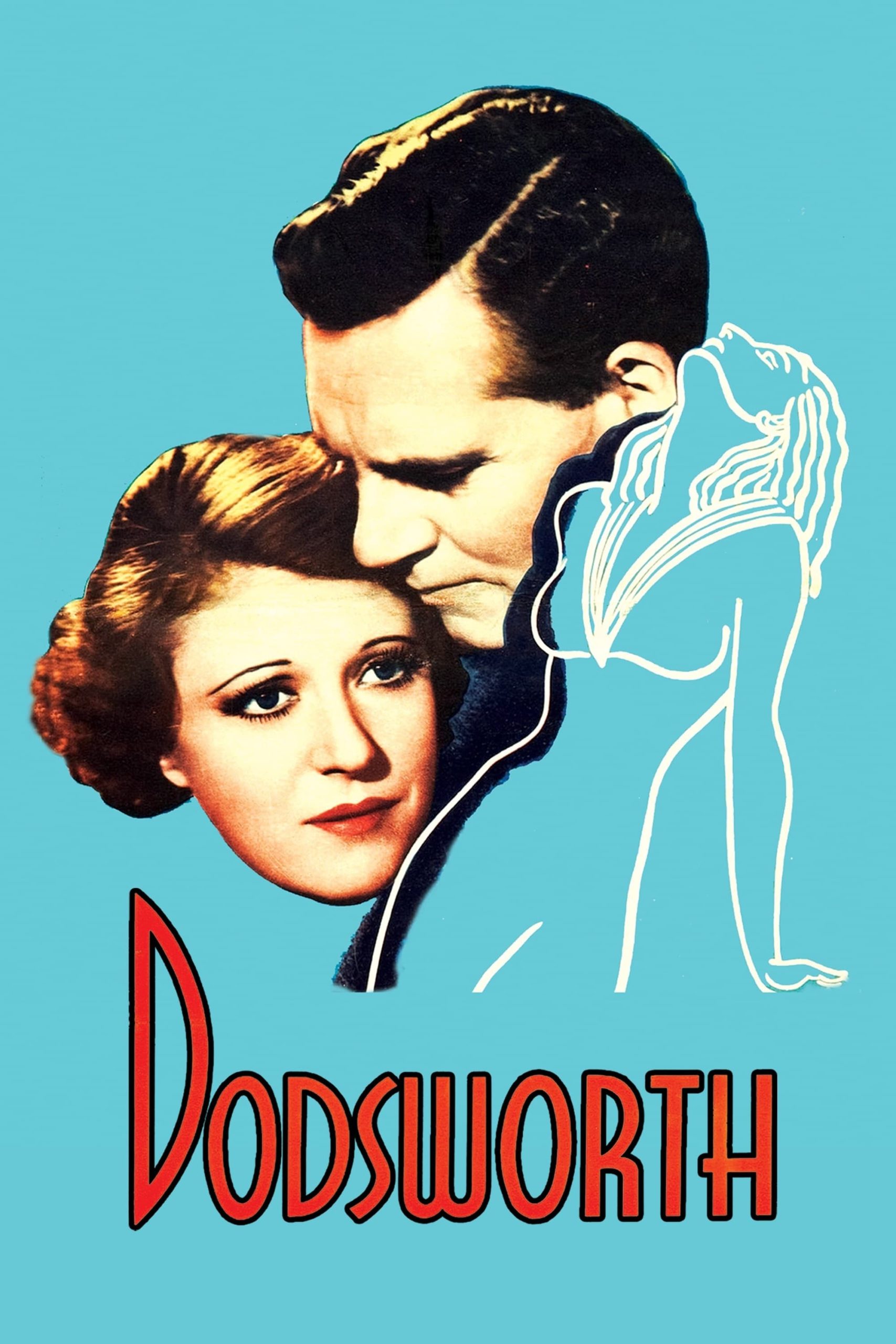
Is This Film Based on a True Story?
When I first encountered “Dodsworth,” I was immediately struck by how authentic its characters felt—each moment portrayed with a kind of subtle honesty rarely seen in films of the 1930s. However, as I delved deeper into its origins, I discovered that “Dodsworth” is not based on any specific true story or historical event. It unfolds as a completely fictional narrative, crafted from the imagination of the novelist Sinclair Lewis, whose work was later adapted for the stage and then for the screen in 1936. While the emotional truths of the film’s midlife crises, marital dilemmas, and cross-cultural encounters resonate with real-life experiences, I found no evidence that its characters were drawn from actual people or that its key plot points mirrored any documented events. To me, this speaks to the universality and relatability of its themes, rather than a direct retelling of real events. In essence, watching “Dodsworth” is stepping into a world that feels familiar, even though every aspect stems from literary invention rather than documented history.
The Real Events or Historical Inspirations
As I traced “Dodsworth” back to its roots, I was reminded of the immense cultural impact Sinclair Lewis had on American literature. His 1929 novel, “Dodsworth,” serves as the foundation for the film. Lewis, celebrated for his incisive portrayals of American life, often dissected societal trends, which allowed me to see how the film borrows its thematic depth from the shifting social landscape of his era. While there is no single “real” Samuel Dodsworth or Fran Dodsworth, I can’t help but notice how the story draws inspiration from the broader experiences of Americans in the early twentieth century—especially those seeking self-discovery abroad.
The novel, and by extension the film, emerged during a period when affluent Americans frequently traveled to Europe, prompting the so-called American expatriate movement. In my research, I found that Lewis himself traveled extensively throughout Europe and was closely attuned to the contrast between American pragmatism and European sophistication. These observations filtered directly into his writing. The novel gained further notoriety when it was adapted for the stage in 1934 by Sidney Howard, who also wrote the screenplay for the 1936 film. Howard maintained much of Lewis’s substance, ensuring that the film’s foundation rested firmly atop the established literary and dramatic source material rather than real-life events.
Whenever I try to locate historical figures that may have inspired Dodsworth, all paths lead to a generalized reflection of a certain class and era, instead of a biography. The cultural and social phenomena of American tourists engaging with European etiquette, art, and romance was well-documented. Plenty of essays and contemporaneous accounts from the early twentieth century describe similar journeys of self-reinvention and culture shock. In this way, “Dodsworth” reflects a collective reality rather than an individual’s experience. My impression is that the film draws less on real people and more on the archetypes and trajectories observed during a time of cross-Atlantic curiosity and introspection.
What Was Changed or Dramatized
Seeing the film after reading Lewis’s novel, I became acutely aware of the differences introduced to translate prose and stage drama into a cinematic experience. While the overall arc of an American couple traveling abroad in search of personal fulfillment remains, the film streamlines the narrative and reshapes character dynamics to better fit the conventions of 1930s Hollywood.
One of the most noticeable dramatizations, to me, was in the portrayal of Fran Dodsworth’s restlessness and self-absorption. The film heightens the emotional stakes in her quest for youth and excitement, emphasizing the contrast between her desires and Samuel’s search for genuine connection. While Lewis’s novel was more nuanced in its critique of both characters, the film sharpens their ambitions and resentments, making their struggles both more accessible and more dramatic for audiences.
I also noticed that certain philosophical discussions and social critiques present in the novel, especially around economic class and cultural clashes, are muted or focused more on character interplay rather than explicit debate. This seems typical of adaptations from literary to cinematic form, especially under the constraints and sensibilities of pre-World War II America. The central romance—between Samuel Dodsworth and Edith Cortright—becomes more pronounced, and the emotional resolution is accelerated, giving the film a cleaner, more hopeful conclusion than the more ambiguous ending of the novel.
Some complexities of secondary characters were omitted or merged in the screenplay, a choice I interpret as necessary for a film running just over 100 minutes. The adaptation simplifies subplots and peripheral motivations, ensuring the audience maintains focus on the central triangle: Samuel, Fran, and Edith. Another notable dramatization is the film’s visual evocation of Europe, which I feel glosses over historical hardships like post-World War I economic instability, instead favoring a more romanticized depiction of continental lifestyle and leisure. Such choices reflect the period’s production limitations and audience expectations, trading gritty realism for escapist allure.
Historical Accuracy Overview
Evaluating the film’s historical accuracy, I’m struck by the blend of cultural realism and narrative invention. The depiction of affluent Americans touring postwar Europe fits well within the actual travel patterns and social customs of the 1920s and early 1930s. From what I’ve gleaned, the film captures the sensibilities and worldviews of Americans encountering European society—particularly the mixture of awe, discomfort, and desire to “find oneself” that characterized many transatlantic sojourns.
The costumes, settings, and social rituals—ballrooms, cafes, ocean liners—are rendered with a careful attention to period detail. My research suggests that director William Wyler and the production team aimed to authentically evoke the environments described in Lewis’s work. However, when it comes to economic and political contexts, the film veers toward a timelessness that erases specific historical instability in favor of more universal, character-driven concerns.
In terms of characterizations, I felt the film accurately conveys the types of anxieties, ambitions, and romantic entanglements encountered by upper-middle-class Americans at the time. I didn’t see evidence of anachronistic behaviors or attitudes, which supports the sense that the filmmakers strove for plausible psychological and social realism. Yet, because the plot itself is a fictional exploration—a parable of personal growth and marital evolution—the actions and decisions of its protagonists remain ultimately unattached to any actual historical figures or explicitly documented real-life incidents.
If I am to judge “accuracy” by fidelity to actual events, “Dodsworth” is a simulation rather than an account—an evocative, plausible rendering of an era and a social phenomenon, but wholly untethered from specific names, places, and anecdotes that would qualify it as “true.” For viewers and researchers, this distinction is key: the film can serve as a springboard for considering how Americans viewed themselves on the world stage, but it stops short of serving as a historical document about any one person or episode.
How Knowing the Facts Affects the Viewing Experience
My understanding of the film’s fictional basis profoundly shaped my experience as both a viewer and a researcher. Knowing that “Dodsworth” isn’t based on a specific true story allowed me to focus on the symbolic dimensions of Sam and Fran’s journey, rather than searching for literal historical parallels. I found it liberating to watch the film unfold—free of the usual concerns about biographical veracity or fidelity to complex real-life timelines. Instead, I zeroed in on the motifs: the restlessness of the American spirit, the ache of unrealized aspirations, the contrasts between Old World tradition and New World optimism.
Recognizing that Lewis’s novel—and by extension the film—captures a generalized, almost archetypal narrative of personal and cultural awakening, I was able to approach its characters not as proxies for real people, but as composite reflections of a generation’s hopes and discontents. For viewers expecting to glean historical information about the American expatriate experience, I think the film offers atmosphere and attitude more than fact. I found myself paying closer attention to the visual grammar—how the camera lingers on passport offices and train platforms—and to the layering of American and European values, which subtly reveals the tensions of an era without spelling them out through specific events.
For those who enjoy examining how cinema translates literary works, I found that knowing the novel’s background enriched my appreciation for the filmmakers’ adaptation choices. It’s fascinating to see what is preserved—such as the emotional complexity of Samuel’s self-searching—and what is reshaped for an audience seeking both entertainment and insight. The absence of strict historical anchors allowed the filmmakers to universalize the story’s exploration of aging, love, and loss, making the viewing experience resonant regardless of background knowledge.
Had the film claimed to be a biopic or a direct docudrama, I know I would have watched with different expectations—scrutinizing each scene for historical telltales or discrepancies. Instead, freed from that expectation, I saw in “Dodsworth” a kind of emotional truth that transcends the need for documentary precision. This sense of universality is itself a kind of accuracy, mirroring the real anxieties and dreams of countless Americans who have faced similar crossroads, even if no single “Samuel Dodsworth” ever existed.
After learning about the film’s origins, you may want to see how audiences and critics responded.
🎬 Check out today's best-selling movies on Amazon!
View Deals on Amazon