
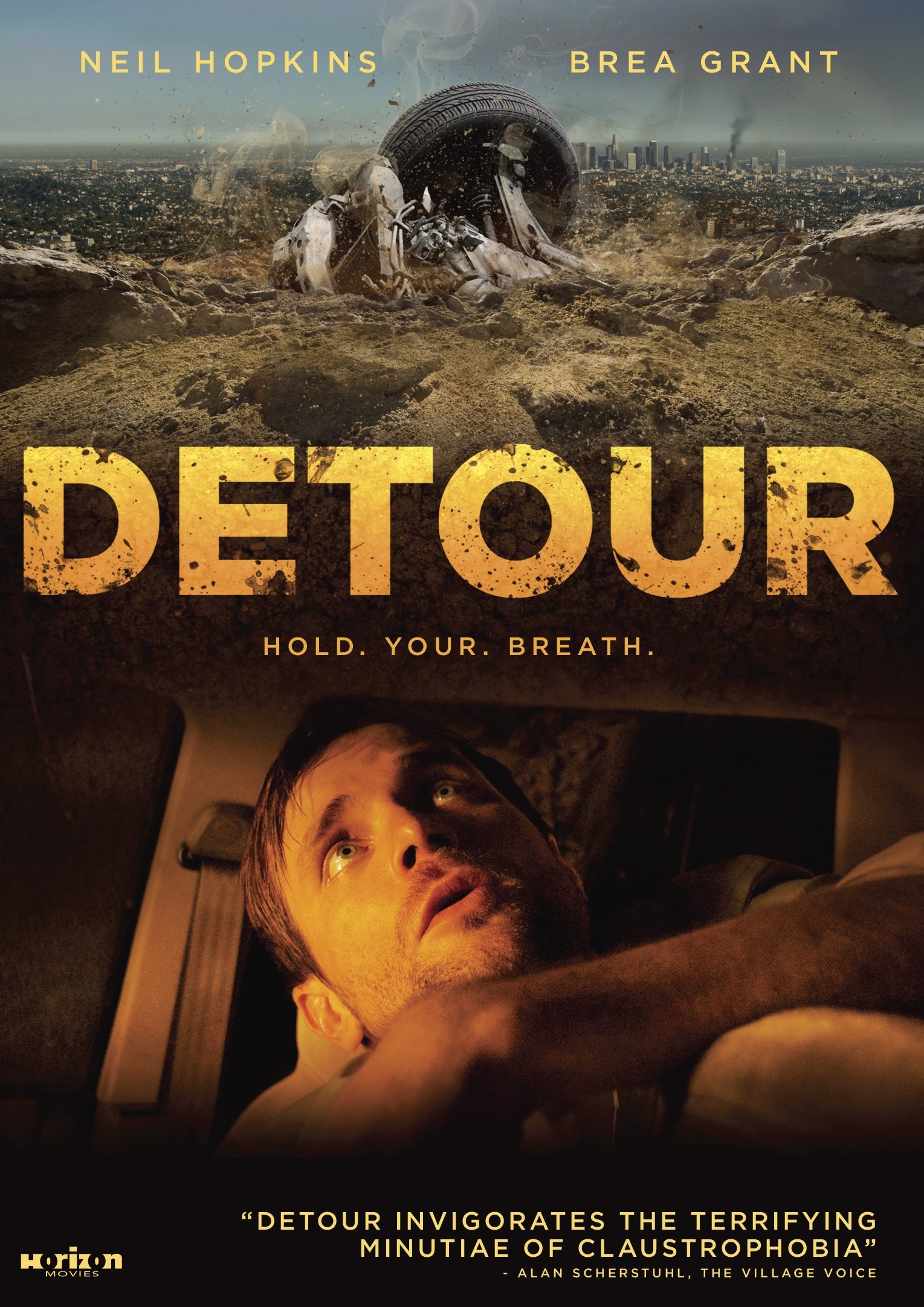
The Question of Truth Behind the Film
When I first encountered Detour, I was struck not just by its claustrophobic mood and moody visuals, but also by the perennial question that shadows many films: Did any of this actually happen? I find that whenever a narrative leans into despair and fatalism as deeply as this film does, the urge to seek out its factual underpinnings only grows stronger for me. There’s a fundamental curiosity at play—I want to know if the world could really be this unrelenting, or if what I’m watching is a crafted nightmare spun from imagination. Often, I notice that audiences come to a film like Detour with very clear, if sometimes unspoken, assumptions: if a story is “real,” the events seem to carry extra gravity, a kind of testimonial authority; if it’s “fiction,” the same events might seem more stylized, less immediate, easier to dismiss as genre exercise. This tension fascinates me because it reveals just how much the label of authenticity—whether explicit or merely hinted at—shapes my engagement with the story. The desire to know what is “real” in cinema feels almost primal, as though peeling away artifice might deliver some deeper, essential truth about human nature or fate. Each time I revisit Detour, I catch myself listening for echoes of real-life sorrow, just as I weigh each twist for traces of pure invention.
Historical Facts and Cinematic Interpretation
When I examine the roots of Detour, I’m reminded how rarely movies adopt a one-to-one relationship with documented history. Instead, I believe the film situates itself somewhere in a liminal space between fact and fabrication. Rather than drawing directly from a notorious true crime or a headline-grabbing news item, Detour adapts a novel by Martin M. Goldsmith—who penned both the original book and the screenplay. The novel itself offers a grim but wholly fictional incident of bad luck and bad choices, yet it’s soaked in the existential dread and happenstance that, to me, feel more real than literal transcription could ever achieve. Instead of presenting realism as a function of verifiable events, I see the movie as compressing the emotional experience of mid-century anxieties, channeling what feels plausible even when it isn’t factual.
I am often amazed by how cinematic interpretations like this one manipulate time and sequence to deliver sharper focus or stronger mood. Scenes that might unfold languidly in life—a stretch of hitchhiking, a slow build-up of suspicion—appear rapidly condensed or heightened in the movie. I notice that dialogues are purpose-built, functional, lacking the flab of real conversation, yet this streamlining doesn’t always feel artificial; sometimes, I sense a deeper core of truth shining through the artifice. I think the film’s greatest departure from “reality” isn’t necessarily inventing incidents out of whole cloth but, instead, reorganizing events for maximal tension and ambiguity. I see how the sparse settings and grim coincidences are exaggerated to underline the impossibility of escape—a feeling that reality often hints at but rarely displays so explicitly. For me, this approach crafts a narrative that isn’t interested in fact-checking so much as in sculpting a recognizable, if doomier, emotional landscape based on the kinds of small disasters that could happen to anyone but rarely do all at once.
What Changes When Reality Is Shaped for Cinema
Whenever I think about how fact is reshaped for cinematic purposes, I become attuned to the intricate trade-offs that storytellers navigate. In the case of Detour, I see the absence of direct historical veracity not as an oversight, but as a conscious practical choice. The film doesn’t showcase literal events; instead, it borrows the structure and texture of real misfortune. To me, this means that the filmmakers are free to emphasize compelling themes—like cosmic bad luck and the fragility of innocence—without being shackled by cumbersome documentary fidelity. What always stands out in my viewing is how the narrative economy demanded by low-budget filmmaking heightens this stylization. Economic constraints force certain events to occur off-screen or be referenced elliptically, which, paradoxically, brings a sharper focus to the bleak atmosphere and relentless chain of mistakes.
I find that cinematic storytelling thrives on license; the more a director bends or compresses reality, the easier it becomes to grip the audience’s attention and guide their sympathies. If the story were held strictly to factual chronology, perhaps every setback would appear mundane or even tedious. By distilling life’s uncertainties into a relentless cascade of misfortunes for the protagonist, I believe Detour manages to evoke a sense of crushing inevitability that pure reportage rarely achieves. Conversely, I’m aware that such trade-offs can risk reducing complexity—character motivations may be made blunt, and ambiguous or contradictory details are often smoothed away. But I also suspect that clarity, rather than strict accuracy, is what most viewers unconsciously crave when confronting a movie as emotionally charged as this one.
For me, the shaping of reality into story is less about deceit and more about seeking an expressive truth. The choices made—what gets left out, what is amplified, what is fabricated whole—ultimately serve a narrative logic that’s internal to the film. In Detour, I notice that every adaptation decision seems designed to keep the viewer trapped inside the protagonist’s bleak view of fate, even if real life is never quite so appallingly direct.
Audience Expectations and the “True Story” Label
Reflecting on my own reactions and the reactions I observe in others, I see how profoundly the “based on a true story” label can tilt our interpretive frame. If I approached Detour under the guise of documentary fact, I would likely invest more readily in the plausibility of every cruel coincidence, treating each disaster as something proven by history. Paradoxically, though, I find that removing this label liberates me to look for allegory and symbolism rather than news clippings. When a film is positioned as fiction or as “inspired by” reality, I read its events for psychological truth and emotional resonance instead of hunting for literal parallels.
Occasionally, I’m struck by how film audiences—myself included—seem to yearn for stories that carry some stamp of factual authority, as if truth alone can justify the extremities of narrative or excuse dramatic contrivances. Yet, when I recognize that a film is operating outside the boundaries of fact, my analytical lens shifts. In Detour, knowing there’s no real Al Roberts, no documented miracle of misfortune, allows me to focus on what the film is saying about wider concepts: the inscrutable nature of luck, the slipperiness of guilt, or the possibility that fate itself is a kind of unwritten law.
There’s a curious double-standard at work—I observe that viewers, including myself, tend to grant more leeway to factual liberties in the service of theme when we are aware that a narrative isn’t strictly literal. At the same time, I recognize a tendency to be more forgiving of implausibility if the film carries the “true story” imprimatur. For Detour, whose foundation is fiction shaped by the rhythm of real-life anxieties, I find myself oscillating between these two modes of engagement, never fully surrendering to either skepticism or credulity. This ambiguity, in my view, is part of what gives the film its unsettling impact—the story hovers in the uncanny valley between the plausible but unproven, making each choice the protagonist faces feel less like a scripted necessity and more like something that could, in some dark corner of the world, actually transpire.
Final Perspective on Fact vs Fiction
Circling back to how awareness of a film’s factual basis—or lack thereof—shapes my understanding, I’m drawn less to verdicts and more to the questions raised by this awareness. With Detour, I keep returning to the way my perception of the narrative shifts each time I remind myself that it’s a work of adaptation rather than documentation. The knowledge that these events did not happen, at least not to specific individuals in specific places, encourages me to search for patterns beneath the surface: anxieties about fate, the allure of self-justification, and the ever-present possibility that the line between victim and perpetrator is as faint as a rain-washed highway line.
For me, distinguishing between fact and fiction doesn’t necessarily mean weighing which is more “important” or “valid.” Instead, I see it as an invitation to engage with the film on multiple registers—sometimes interrogating what the story gets “right” about American desperation, sometimes allowing myself to drift into the poetic exaggeration that only fiction can provide. Knowing the origins of the story helps me parse which moments aim for a kind of essence, rather than accuracy, and which are just products of genre convention or narrative necessity.
Ultimately, my experience of Detour changes in subtle but significant ways depending on how I position it in relation to the real. I notice that a story doesn’t need to be factual to feel true; artistry can craft emotional facts that outstrip what journalism or memoir might convey. What’s crucial, in my view, is recognizing the distinct effects these different sources of authenticity bring—how a fictional film like Detour can transmit lived-feeling despair and yearning, even if no archive or court record could verify its events. This recognition allows me to approach the film with both critical curiosity and a surprising sense of empathy, meeting its fiction on terms that don’t diminish the impact of its core human concerns.
For additional context, you may also explore the film’s overview and how it was received by audiences and critics.
🎬 Check out today's best-selling movies on Amazon!
View Deals on Amazon