
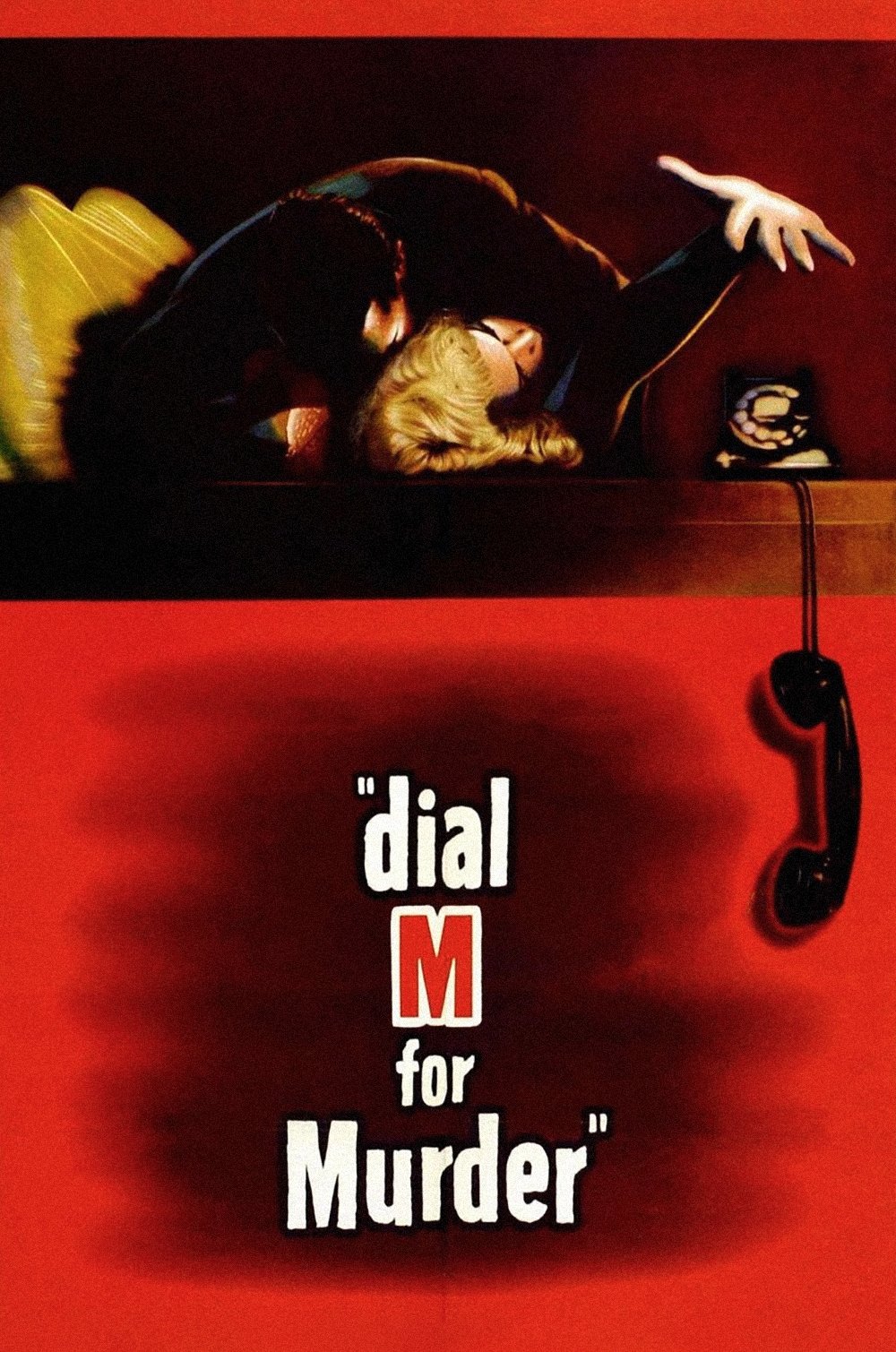
Is This Film Based on a True Story?
The sensation I felt after my first viewing of “Dial M for Murder” was rooted in the film’s air of plausibility and restraint. It struck me as a story that could, conceivably, unfold behind the closed doors of a stylish London flat. Yet, as I dug into its origins, I quickly realized that “Dial M for Murder” is firmly in the realm of fiction. There are no archives, trial transcripts, or unsolved cases that serve as its foundation. The film’s narrative stems not from real criminal proceedings, but from the pen of playwright Frederick Knott. While the film never claims to be ripped from the headlines, its tightly wound plotting and rich psychological tension left me fascinated by how wholly invented circumstances can masquerade as authentic life. What I discovered is that the film is not based on actual events; it’s a wholly imaginary construct, created for entertainment and suspense.
The Real Events or Historical Inspirations
As I traced the story’s lineage, its fictional nature became even clearer. The screenplay for “Dial M for Murder” was adapted by Frederick Knott from his own 1952 stage play, and this play is the true literary root of the film—rather than any historical event. When I searched for real-life counterparts to the story’s characters—ex-tennis star Tony Wendice, his wife Margot, or the contract killer Charles Swann—I was met with silence. There are no police archives or court records pointing to their existence beyond the stage and screen. What resonates with me, especially as someone keen on fact versus fabrication, is how Knott’s narrative voice drew inspiration from the crime literature and theater traditions of England. The intricate plotting, the emphasis on blackmail, and the manipulation of everyday objects all owe something to the golden age of detective fiction, but I have found no evidence that they were taken directly from real life.
The world that Knott conjured—a tale balancing love, greed, and betrayal—certainly echoes the series of “perfect crime” stories that pervaded mid-20th-century English fiction. I often think about how these influences swirl in the background: Agatha Christie’s locked-room puzzles; the finely honed stagecraft of British whodunnits. Still, everything about “Dial M for Murder” begins and ends with imagination. The play’s initial success in 1950s London, and its rapid adaptation into a film by Alfred Hitchcock, came about because of its psychological intrigue, not because it chronicled a notorious crime. To my knowledge, even minor plot points—like the clever use of a latchkey or the failed murder attempt—don’t directly mirror anything in the English tabloids of the period. The entirety of “Dial M for Murder” is a cerebral what-if exercise, rather than a recreation of true events.
What Was Changed or Dramatized
Whenever a story is adapted from stage to screen, I pay close attention to the nuances that shift along the way. In “Dial M for Murder,” the journey from Knott’s play to Hitchcock’s film is a master class in dramatization. Since there was no baseline of real events to conform to, these changes are about theatrical effect and emotional resonance, rather than historical revision. I’ve noticed that Hitchcock made several adjustments to heighten tension and create cinematic flair. Dialogue was compressed or sharpened; characters became more visually expressive. The single-room setting of the play broadened slightly on film, but the confined atmosphere remained intact, enhancing the sense of claustrophobia and paranoia.
The most notable shift, in my view, lies in the portrayal of Margot’s emotional plight. On the page, she is a more ambiguous figure—her predicament amplified for dramatic suspense. Hitchcock, through Grace Kelly’s performance, accentuated her vulnerability and the looming sense of injustice. There’s also the matter of the murder scene, which is filmed with greater intensity: close-ups, dramatic lighting, and sharp sound cues intensify the feeling of real danger. I’ve found that while the mechanics of Tony’s murder plot—the precise manipulation of objects, the careful planning—remained faithful to the original, Hitchcock’s visual style made those details pop in ways the theater couldn’t provide. These are twists of presentation, rather than rewriting any historical record, but they demonstrate how adaptation can psychologically draw viewers deeper into an entirely invented story.
Another area of dramatization, in my opinion, is the policing dynamic. The character of Chief Inspector Hubbard, played by John Williams, is written with a knowing, wry intelligence that tips the audience off to his suspicions early. This is a device of suspense, tempting me to try solving the puzzle ahead of time. Yet, as far as factual basis goes, the investigative methods and clues—magically discovering the swapped key or anticipating the murderer’s next move—are products of genre convention, not real-world forensics. The conclusion, in both play and film, wraps up neatly, far cleaner than most actual criminal investigations of the era. For me, this is a romantic vision of police work rather than a recreation of grim reality.
Historical Accuracy Overview
Whenever I approach a film for its factual content, I look for evidence of documented reality versus artistic license. With “Dial M for Murder,” the question of historical accuracy is, in many ways, beside the point. There is no factual benchmark for comparison, since the film’s world was crafted from the imagination alone. Still, I find it useful to reflect on what rings true in terms of mood, setting, and social dynamics, even if the core events are fiction.
For starters, the film’s depiction of elite, postwar London society feels authentic to me. The costumes, the decor of the Wendice apartment, and the manners of the characters all evoke the aspirational urban life of the 1950s. Tony’s career as a retired tennis champion, and Margot’s cosmopolitan tastes, provide a realistic context to the story’s psychological stakes. What is less true to life, in my observation, is the streamlined pace of the crime investigation, the rapid deductive leaps of the inspector, and the almost algebraic neatness of the denouement. Real mysteries, I’ve learned, are more likely to baffle, with evidence overlooked and motivations tangled by human fallibility. Here, because everything is structured to serve the cat-and-mouse dynamics of suspense fiction, the sense of accuracy yields to narrative clarity.
I also pay attention to the representation of law, gender roles, and class. The film’s treatment of domestic relationships and gender expectations is in keeping with the era’s conventions. Margot’s position is vulnerable, both as a wife and as a woman targeted for murder. The suggestion that an extra-marital affair could motivate blackmail is consistent with public attitudes of the period, though the melodramatic consequences are more characteristic of fiction than everyday life. In terms of legal realism, the depiction of courtroom proceedings—especially the brisk rendering of Margot’s conviction and near-execution—does not reflect the lengthy, often muddled, process characteristic of the British justice system. The plot sacrifices legal complexity for suspense. This isn’t an issue of factual misrepresentation per se, but rather a purposeful bending of reality to suit a tightly wound drama.
One element that does align with real-world conditions is the popularity of crime as subject matter—both in literature and in newspapers. I noticed that the public appetite for sensational cases and the obsession with “the perfect crime” is manifest in the story’s themes. But no individual case has served as the film’s inspiration. Instead, what “Dial M for Murder” offers, in my view, is a synthesis of the anxieties and fantasies of mid-century audiences. For those seeking a documentary-style exploration of true crime, the film delivers more in the way of genre satisfaction than factual documentation.
How Knowing the Facts Affects the Viewing Experience
For me, a big part of the enjoyment in researching a film like “Dial M for Murder” is unpacking the layers between invention and reality. Knowing that its narrative is purely imaginative doesn’t lessen its impact—instead, it sharpens my awareness of just how effectively crafted fiction can capture the spirit of lived experience. When I watch the film (or revisit the play), I notice how the plausible details—a misplaced key, the ebb and flow of suspicion—create an atmosphere so convincing that I momentarily forget I am watching a story with no roots in tangible history. This is a testament to both Knott’s writing and Hitchcock’s direction, blending the trappings of realism with the spirals of suspense.
Approaching “Dial M for Murder” armed with the knowledge that it is entirely fictional changes the stakes for me as a viewer. I am freed from the expectation of accuracy, allowing myself to sink into the pleasures of deduction and psychological intrigue. Without the weight of real-life tragedy or the responsibility of representing actual individuals, the film invites me to focus instead on the mechanics of suspense. Scenes that might otherwise carry a documentary gravity instead pulse with a playful, theatrical energy. The drama becomes less about what happened and more about how events could be manipulated for effect.
At the same time, I acknowledge that audiences fascinated by true crime or historical recreations may feel a subtle letdown upon learning the story is wholly invented. For those of us accustomed to parsing films for factual clues, the realization that “Dial M for Murder” offers no direct window into the past shifts the interpretive lens. I, for one, become more attentive to the cleverness of the plot’s construction, admiring just how thoroughly it mimics the patterns of real investigations and criminal motives. This awareness enriches my appreciation of the genre conventions—the red herrings, the incremental reveals, the symmetrical plotting. Far from being disappointed, I marvel at how fiction can evoke a sense of lived experience without borrowing from it.
What also fascinates me, knowing the story is fictitious, is the opportunity to reflect on why the narrative feels so plausible. The characters inhabit an emotional reality—jealousy, ambition, fear of exposure—that resonates with common human anxieties. I find it intriguing how the lack of a real-life “original” liberates the film from ethical dilemmas about sensationalizing or misrepresenting actual victims. Instead, the suspense arises purely out of the audience’s engagement with the mechanics of storytelling—misdirection, timing, and the push-pull between what characters know and what viewers suspect.
In sum, understanding the truth (or in this case, the pleasant falseness) behind “Dial M for Murder” fundamentally alters how I watch it. It remains, for me, a masterpiece of fictional suspense rather than an exploration of true events. Its realism lies in the artifice—how convincingly illusion can pass for authenticity. This revelation, far from undermining my appreciation, actually enhances it, allowing me to celebrate the story’s ingenuity without conflating fiction with fact.
After learning about the film’s origins, you may want to see how audiences and critics responded.
🎬 Check out today's best-selling movies on Amazon!
View Deals on Amazon