
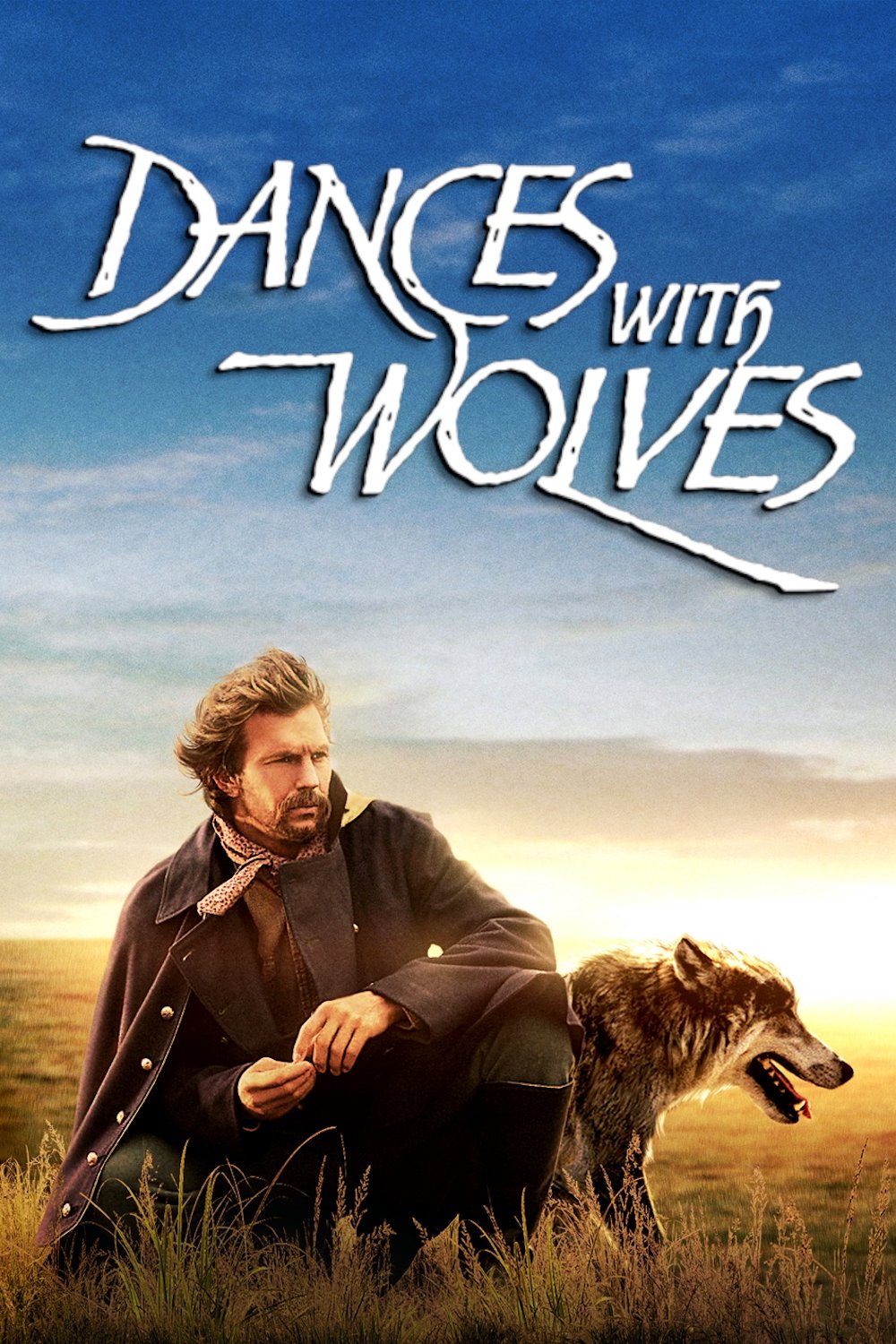
Is This Film Based on a True Story?
Dances with Wolves left me with this nagging urge to dive into its reality—was any of it drawn directly from history, or was it simply an evocative imagining? Through my research and after reevaluating what the film presents, I’ve come to understand that Dances with Wolves is not a retelling of a specific true story. There are no surviving journals written by a real “John Dunbar.” There were no exact events paralleling his singular experience. However, I found that the film’s roots run deep into the broad soils of American history: it is a work of fiction inspired by real historical settings, types of events, and cultural encounters that genuinely occurred during the westward expansion. The movie is adapted from Michael Blake’s 1988 novel, also titled “Dances with Wolves,” itself a creative work that tries to channel the broader experience of 19th-century American frontier soldiers, settlers, and Native American tribes rather than depicting a documentary-level account. In other words, while none of the principal characters or incidents are historical records, the fabric of the narrative draws from a tapestry of real moments, conflicts, misunderstandings, and transformative encounters typical of that American era.
The Real Events or Historical Inspirations
What fascinated me most about Dances with Wolves, upon scratching beneath its surface, is how much of its fictional tale listens to the echoes of actual 19th-century history. The entire story emerges from an awareness of the real westward movement following the Civil War, the U.S. Army’s presence out on the edge of the American frontier, and the tense, complex relationships with the Lakota Sioux and neighboring tribes. Though John Dunbar himself is the product of Michael Blake’s imagination, I can’t ignore the composite nature of his journey—his path was one that many real soldiers and settlers may have, at least partly, experienced as the U.S. expanded westward.
Researching further, I realized that the novel and film tap into historic episodes like the establishment of remote military outposts, similar to the fictional Fort Sedgwick, and the bewilderment many Anglo-Americans felt when encountering Native cultures. The details surrounding the U.S. Army’s frontier life, their operational details, and the types of isolation or confusion they would have faced feel largely lifted from studies and records of the period—diaries, army reports, and reminiscences. The treatment of the Lakota Sioux in the film resonated for me because the filmmakers engaged with actual Lakota consultants and tried to showcase their culture, language, and worldview as authentically as possible, even hiring Native actors and having much of the dialogue spoken in Lakota. The film’s centerpiece—the emerging bond between Dunbar and the Lakota band—reminded me of historical accounts, sometimes rare, where outsiders formed close relationships with Indigenous communities; these stories crop up occasionally in the annals of fur traders, explorers, or soldiers who truly immersed themselves in Native life. The struggle to portray buffalo hunts, tribal customs, or even the army’s various engagements with Native people echoes moments described in 19th-century accounts, if not always in such cinematic terms.
What I find most compelling is that the atmosphere—the loneliness of the prairie, the logic of survival, the losses suffered by tribes being pushed west, and the dignity and spirit of Lakota life—is thoroughly grounded in historical research. Even the involvement of women and the figure of “Stands With a Fist,” a white woman brought up among the Lakota, mirrors real cases (such as Cynthia Ann Parker, who lived with the Comanche after being taken as a child, or Olive Oatman with the Mojave). These narrative choices seem inspired by broader patterns from the historical record, even if the storyline we watch belongs uniquely to the film.
What Was Changed or Dramatized
Diving further into the line between inspiration and fiction, I have to recognize that Dances with Wolves takes artistic liberties to create a cohesive and dramatic arc. For all that the context is real, almost every key incident and character in the film is shaped for maximum narrative impact rather than strict adherence to actual events. For instance, John Dunbar is not a literal figure from history, but the combination of his actions—seeking peaceful coexistence, learning from Native cultures, becoming an actual member of the tribe—pulls from the idealized hopes and rare occurrences rather than the norm of the era. The character’s full integration into Lakota society happens with a swiftness and completeness that feels designed for storytelling more than historical document.
I also noticed that the film shapes clear “heroes” and “villains” for emotional clarity—the U.S. Army officers who appear later in the story, especially, are distilled into antagonists more cruelly obtuse and openly aggressive than many real officers of the time, who could be as much cogs in a problematic system as they were individual moral agents. The depiction of Lakota and Pawnee relationships is likewise sharpened: the Pawnee, in particular, serve largely as narrative instruments to contrast with the Lakota, their more hostile traits exaggerated for dramatic confrontation.
Even the film’s treatment of language and culture, for all its historical research, necessarily adapts for modern audiences. Many Lakota lines have been compressed or simplified for comprehension by viewers, and certain cultural rituals are staged for the screen rather than followed in exact detail. The epic buffalo hunt sequence, though checked for authenticity by technical advisers, condenses what would have been a much lengthier operation, and the action is constructed to foreground the main characters and their changing relationships. Even the landscape, while shot in South Dakota and Wyoming (close to the real territories), is arranged for visual grandeur more than pinpoint exactitude about location and migratory patterns. For me, these changes do not diminish the movie’s atmospheric power but they do mark what is invention and what is inspired approximation.
Historical Accuracy Overview
As someone who values a responsible approach to historical films, I found Dances with Wolves unusually committed to accurate details in certain domains—if always mindful of audience needs. The film is often commended by historians for its more respectful and researched portrayal of the Lakota compared to earlier Westerns, many of which either stereotyped or outright erased Native perspectives. The decision to have the Lakota characters speak in their own language, and to cast Native actors, was at the time a rare effort toward authenticity. Scene by scene, the construction of clothes, tipis, tools, and daily tasks was guided by archival images, consultation with tribal historians, and material evidence.
Yet as I see it, the film’s accuracy has important limits. The experience of John Dunbar, as one man single-handedly crossing cultural barriers and smoothly joining a Lakota band, is a dramatization that sidesteps the great complexities and frequent dangers of such encounters in real life. Few, if any, frontiersmen—and certainly no army officers of Dunbar’s background—would have gained the fluent trust of a Native band so swiftly or with so little suspicion from either side. There are documented cases of individuals assimilating into Native tribes, but usually after longer periods of captivity or gradual trust-building, not the relatively brief, idealized process shown in the film. Likewise, while the film accurately references the threat to bison herds and the shifting fortunes of the tribes, it focuses mostly on the psychological journey of one outsider rather than the deeper trauma and resistance experienced by the Lakota as a people.
The representation of the U.S. military as monolithically antagonistic also overwrites the variety of encounters that occurred—some officers advocated for peaceful negotiation, others for outright removal or violence, and often outcomes were shaped more by policy and military bureaucracy than by individual animus. It is clear to me that the story simplifies these contradictions to create clear allegiances and resolutions for viewers. Historically, the Lakota themselves did not welcome all outsiders as unreservedly as the film’s band does Dunbar; past incidents involving white captives or defectors were fraught and rarely ended as seamlessly as the storybook romance of Dunbar and Stands With a Fist.
From a cultural standpoint, I appreciate the film’s careful recreation of certain ceremonies, dances, and daily moments, but I know that the blending of different tribal signifiers, objects, or rituals into a single, easily digestible narrative can inadvertently mix elements that would not all have appeared together or at that specific time. For a modern viewer, the broad strokes are respectful and emotionally powerful, but the finer historical threads are, at times, intentionally sacrificed for story.
How Knowing the Facts Affects the Viewing Experience
Every time I revisit Dances with Wolves armed with a deeper knowledge of its roots and choices, my appreciation becomes more nuanced rather than diminished. Understanding that the film does not recount the story of an actual John Dunbar, but channels many fragments of documented frontier life, nudges me to view it less as a historical record and more as a kind of meditation on historical possibility. I find the movie especially powerful in its attempt to revise and challenge the clichés of the Western genre: by foregrounding Native voices, by focusing on language barriers, and by showing the fragility of “civilization” in the wilderness. Knowing that the Lakota characters are composites, constructed through consultation but also shaped by narrative needs, makes me more attentive to both their dignity and the risks of unintentional romanticization or simplification.
My engagement with the story shifts from wondering “Did this really happen?” to asking myself more textured questions about identity, belonging, and loss. I find myself thinking about how the fictional Dunbar represents all the outsiders—real and imagined—who crossed borders in their own lives, some with tragic results, others forging unexpected relationships. If I didn’t know how much research went into the costumes, the language, and the feel of Fort Sedgwick, I might simply accept everything as given; knowing these were care-filled re-creations lets me both admire the authenticity and keep mental notes of what was reshaped for clarity or drama.
Knowing the history also sharpens my awareness of what isn’t shown—the far wider and more violent dislocations faced by actual Lakota and other tribes, the lack of a neat resolution for cross-cultural encounters, and the shifting, often unstable allegiances that defined the era. It also affects how I process the final moments: the summary text doesn’t pretend that Dunbar’s actions change the fate of the Lakota, but my awareness of the coming decades—the Dawes Act, forced removals, the near-extinction of the buffalo—colors my reaction with a tangible sense of historical sadness alongside any movie catharsis.
Ultimately, my understanding of the film as an “inspired fiction,” firmly anchored in, but not beholden to, the true complexities of American frontier history, lets me engage with it both emotionally and critically. I can be swept along by its narrative of transformation and self-discovery while also holding space for the stories not told—the harsher, more complicated truths beneath the poetry of its images. Dances with Wolves becomes, for me, a bridge between imagined empathy and historical inquiry; it does not deliver hard fact, but it encourages me—and, I hope, many others—to seek out the real stories woven beneath its fictional skin.
After learning about the film’s origins, you may want to see how audiences and critics responded.
🎬 Check out today's best-selling movies on Amazon!
View Deals on Amazon