
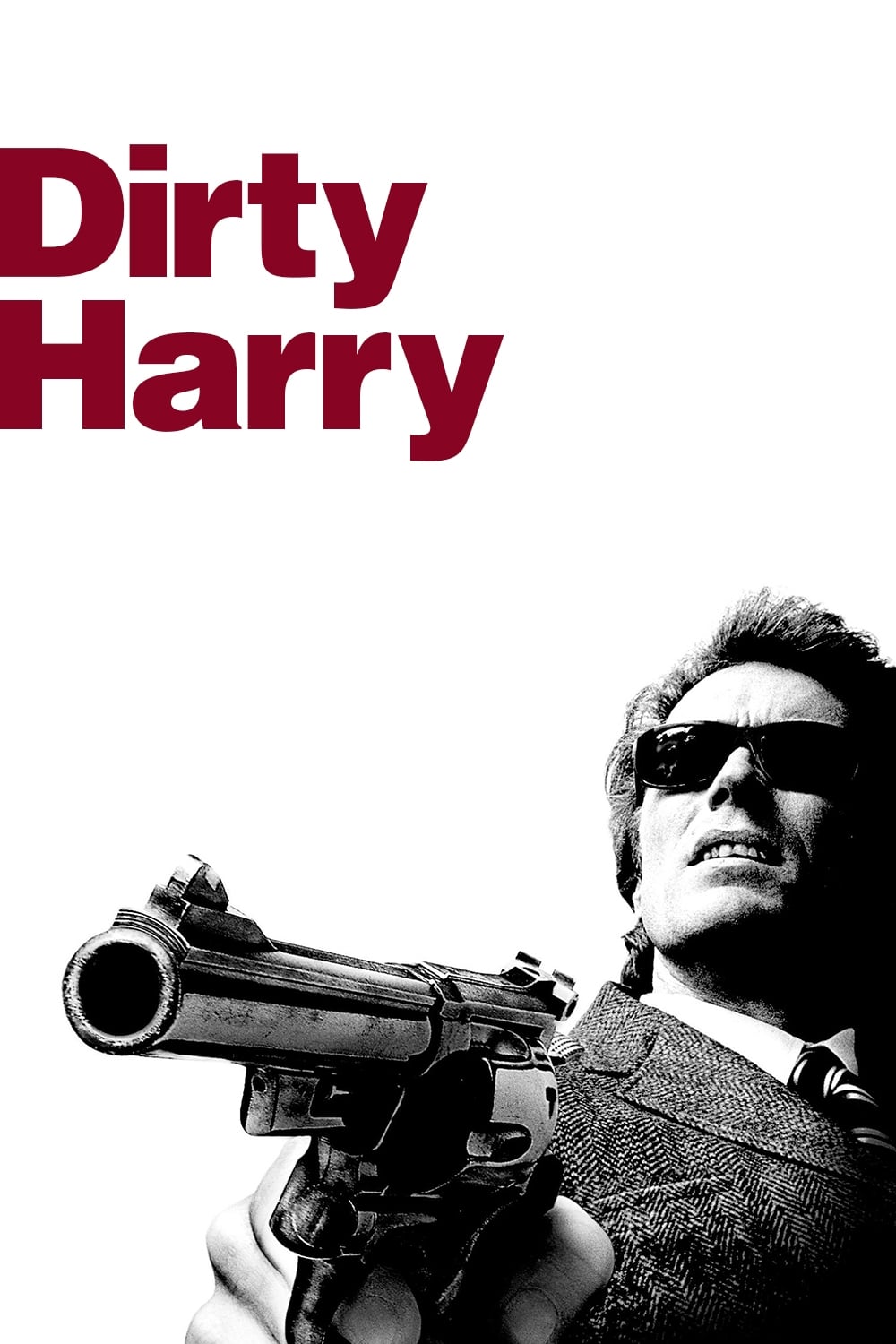
The Question of Truth Behind the Film
My earliest encounter with Dirty Harry left me unsettled in a way that was less about its notorious violence and more about something buried underneath: a persistent awareness that the film walked a peculiar line between reality and fiction. Year after year, I’ve noticed how conversations about this film—whether among friends, in essays, or during late-night discussions—almost unfailingly return to variations on one question: Was it based on something that really happened? For me, this urge isn’t rooted in a simple craving for facts, but in a deeper human search for meaning. When a film operates in the gritty realm between what “really happened” and what is invented, I find myself ascribing a sort of authority to it, believing this touchstone with reality makes its statements about human nature somehow more urgent. I suspect many of us unconsciously bring this same assumption to such films. When a movie is advertised as fact-based or even gestures toward a recognizable headline, there’s a shared expectation—maybe even a demand—that its moral ambiguities, dramatic stakes, and character choices are tethered to the world beyond the screen.
This relationship with cinematic truth extends beyond simple curiosity. I find that the notion of a film being “true” or “inspired by real events” shapes the way I process its plot turns, its moments of brutality, and even the conclusions it draws. There’s a kind of gravity to seeing a character based on an actual person, a way in which I lower my defenses and accept grayer morality because the implication is: life, after all, is complicated. In contrast, when I learn that something is entirely invented, my critical faculties snap to attention. The rules change. I can’t help but parse out what the film is really trying to say, rather than what it is reporting. With Dirty Harry, I oscillated between these two states—sometimes believing I was watching a commentary on late 20th-century America, other times feeling lost in the tonal world of a stylized crime thriller. The confusion, for me, is not accidental but central. It’s the blurred line that animates my thinking whenever I engage with films nestled in the hazy territory between history and invention.
Historical Facts and Cinematic Interpretation
When I dig into the roots of Dirty Harry, I realize that its connections to real events are tantalizing but ultimately partial. The film’s antagonist, the so-called Scorpio Killer, feels eerily reminiscent of the Zodiac Killer who haunted the San Francisco Bay Area in the late 1960s. I find this parallel impossible to ignore, especially as I see the ways in which both figures taunt the police, unsettle the public, and create a sense of urban dread. However, the more I read about the making of the film, the clearer it becomes that Dirty Harry is not a straight dramatization of the Zodiac case, nor does it trace any single crime spree with fidelity. Instead, it borrows moods, details, and gestures—folding them into a narrative designed for satisfying escalation rather than documentary accuracy.
My own experience of watching the movie, knowing it nods to reality without claiming to be a true story, is shaped by these creative choices. I see the script’s intentional condensing of timelines, the composite nature of its villains, and the deliberate framing of the protagonist as both a heroic and troubling figure. These are the kinds of adaptations I expect in cinema: the simplification of messy, chaotic, and unresolved history into a form that delivers cohesive narrative punches. Whenever I trace the film’s details back to press clippings or case files, I find another layer of artifice—real letters and threats become streamlined through the lens of screenwriting. The drawn-out investigations of the actual Zodiac killings, which lasted for years and never resulted in a clear resolution, become a brisk series of set pieces in Dirty Harry, all culminating in singular confrontation.
For me, this highlights a broader reality of how movies bent on social resonance use fact and fiction simultaneously. I see how the Scorpio Killer is less an attempt at accurate portraiture and more an archetype—drawing not just from one criminal’s actions but from a tide of contemporary anxieties about urban violence, policing, and public fear. The settings, too, are a blend: the familiar urban geography of San Francisco is depicted with a charged visual language that makes it both specific and mythic. As a viewer, I become aware that what I am being shown is a refracted truth, one that borrows the intimidating weight of real headlines while reworking them for dramatic immediacy. This tension between adaptation and invention is especially vivid when I recall scenes that feel both rooted in “what happened” and exaggerated for the screen: a serial killer stalking city buses, public taunts, the standoff under the California sun—all these echo reality while never being simple reenactments. The film stages reality as something you can recognize but not quite claim as wholly factual.
What Changes When Reality Is Shaped for Cinema
As I reflect on Dirty Harry, I’m constantly reminded of the necessary concessions filmmakers must make when transmuting actual events into compelling fiction. There’s a lot that is sacrificed and a lot that is gained in this process, and I find myself torn between wanting rigorous fidelity to the facts and relishing the propulsion of cinematic storytelling. Compressing years of police investigations and public hysteria into a two-hour film, for instance, creates both an intensity and an artificial neatness. Characters who, in real life, would have been a small army of detectives get distilled into a single, emblematic figure—Clint Eastwood’s Harry Callahan. In doing so, I notice the psychological complexity of law enforcement becomes concentrated, personified, and exaggerated for audience identification.
There are scenes in Dirty Harry where this distilling process is especially transparent. Take the film’s most famous confrontation: Harry’s “Do you feel lucky?” speech over the barrel of his gun is not just a feat of screenwriting bravado but a moment that defines the film’s ambiguous attitude toward justice. In reality, tense negotiations and fraught police procedures rarely yield such pithy, iconic dialogue or moments of instant resolution. But as a viewer, I see how the filmmaking decision to script these moments shapes my understanding of the story’s stakes and meaning. The violence loses its repetitive, random character and acquires a narrative logic. Events unfold with fated momentum, not with the randomness of real life.
As I see it, one of the most significant trade-offs in adapting reality for cinema lies in the way films create closure where history often refuses to supply it. The Zodiac case remains unsolved, frustratingly open-ended, a source of endless speculation and discomfort. Dirty Harry, by contrast, provides the emotional release of resolution—be it satisfying or troubling, it is decisive. I am struck by the film’s ability to funnel a city’s amorphous anxieties into a single story arc, delivering catharsis in a way almost no factual account could. While I recognize that this simplification might leave out crucial nuance, I also realize that without it, the story’s power as a piece of narrative art would be diminished for most public audiences. There’s an inevitability to the way reality is pruned and arranged to suit the structural requirements of film.
When I watch Dirty Harry through this lens, I find the film exists in a kind of suspended space: it references headlines and social tensions with documentary sharpness but ultimately answers to the demands of genre and audience expectation. Every time the script heightens the stakes, condenses a timeline, or merges multiple events into a single encounter, I sense both a loss and a gain. Something granular and unresolved in lived experience is traded for patterns, rhythms, and symbolic gestures that make for indelible cinema. I find myself wrestling with the question: Does this process diminish the “truth” of the film, or is it merely transforming truth into a different kind of emotional resonance?
Audience Expectations and the “True Story” Label
One of the most fascinating phenomena I’ve experienced as both a viewer and analyst is the profound shift in expectations that comes with labeling a film as a “true story” or even “inspired by real events.” I find that when a movie makes explicit or implicit claims to factual origins, I approach every detail—not just the plot but the character psychology, the depictions of violence, and the broader worldview—with a very different skepticism. Watching Dirty Harry, I noticed myself searching the film’s surfaces for telltale signs of alignment or deviation from reality. The ambiguity in the film’s relationship to actual events left me perpetually uneasy—never quite sure how much I should “believe.”
Especially with a film that traffics in social anxieties as pointed as those of early 1970s America, the stakes of presentation are heightened. The fact that Dirty Harry has always floated in the cultural imagination as something plausibly grounded—without ever claiming to be a docudrama—creates both a permission and a pressure for me as an audience member. I often find myself more forgiving of its contradictions and ambiguities when I imagine it as a mirror of real chaos and confusion. At the same time, if I discover that key elements are wholly invented, a different calculus emerges. I am less willing to suspend disbelief in the service of social insight; instead, I hunt for allegory, metaphor, or critique. My sense of what the film “means” becomes as much about its construction as its content.
I’ve noticed that group reactions follow similar contours. Friends and critics who approach Dirty Harry as a fictional meditation on justice and violence tend to read its provocations as statements about genre and mythmaking. When the film is discussed as an indictment—or defense—of real policing practices or the era’s crime wave, the emotional charge becomes more intense, more polarized. The “based on a true story” tagline acts as a kind of amplifier or filter, focusing collective attention on the correspondence between film and reality, often at the expense of subtler questions about style, form, or storytelling choices.
This dynamic isn’t unique to Dirty Harry. With any culturally resonant film that nods toward truth, I find myself observing the intricate ways public reception shifts according to how the filmmakers position their source material. If a movie like this had made its factual inspiration explicit from the outset, I might have felt bound to judge it by the standards of documentary accuracy. Since it hovers in the ambiguous territory between reality and invention, I’m left to oscillate between being swept up by the energy of storytelling and pausing to study its seams, to wonder where the boundary sits. This tension, for me, is not a flaw but an intrinsic part of the experience—one that continues to shape the contours of my viewing long after the credits have rolled.
Final Perspective on Fact vs Fiction
After years of thinking and rewatching, I’ve come to see the question of what’s real and what’s invented in Dirty Harry as less a binary and more a spectrum that colors my emotional and intellectual response. Whenever I approach a film that borrows selectively from history, I’m reminded that my understanding is not just shaped by what the film shows, but by what I know—or think I know—about its origins. The knowledge that the Scorpio Killer is a composite drawn loosely from the Zodiac case, for example, encourages me to look for echoes rather than precise parallels, to read the movie not as a record but as a kind of forensic dream: an attempt to process cultural fears through storytelling.
In some ways, I believe this layered awareness augments my appreciation for the film’s craftsmanship. Recognizing the deliberate choices involved in melding fact and fiction, I find myself attuned to the details of what’s magnified, what’s omitted, and what’s invented wholesale. The film’s unsettling mood and moral ambiguity resonate more deeply because I know they are informed by—but not beholden to—real-world uncertainties. Conversely, being aware that Dirty Harry is not a strict retelling frees me to wonder about the meanings generated by its dramatic inventions, its stylizations, and its departures from the messiness of actual events.
For me, the enduring appeal of grappling with a film like this lies in its capacity to provoke reflection on these very boundaries: how our hunger for truth is satisfied, redirected, or frustrated by the spell of narrative. My sense is that audiences, myself included, are drawn toward stories “based on real events” not because we crave only factual retellings but because these calibrations between what happened and what is imagined form a distinctive lens—a way of reconsidering both the world outside the theater and our collective myths. Dirty Harry offers, in this respect, not just an echo of historical anxiety, but a presentation of what those anxieties can become when filtered through the shaping tools of cinema.
The question of fact versus fiction, then, becomes for me not a simple test of accuracy, but an invitation to engage with the film as an artifact—one that contains within it both the traces of actual events and the dramatic imperatives of storytelling. The more I learn about the real-world backdrop, the more multifaceted my interpretation becomes. While knowing what’s real can sharpen my viewing, it also deepens the mystery: why certain stories must be told the way they are, and how the act of transforming history into narrative reveals as much about our culture as any documentary could. In the end, I don’t look to Dirty Harry for direct truth, but for the complex interplay between memory, imagination, and the timeless urge to make sense of chaos through the art of cinema.
For additional context, you may also explore the film’s overview and how it was received by audiences and critics.
🎬 Check out today's best-selling movies on Amazon!
View Deals on Amazon