
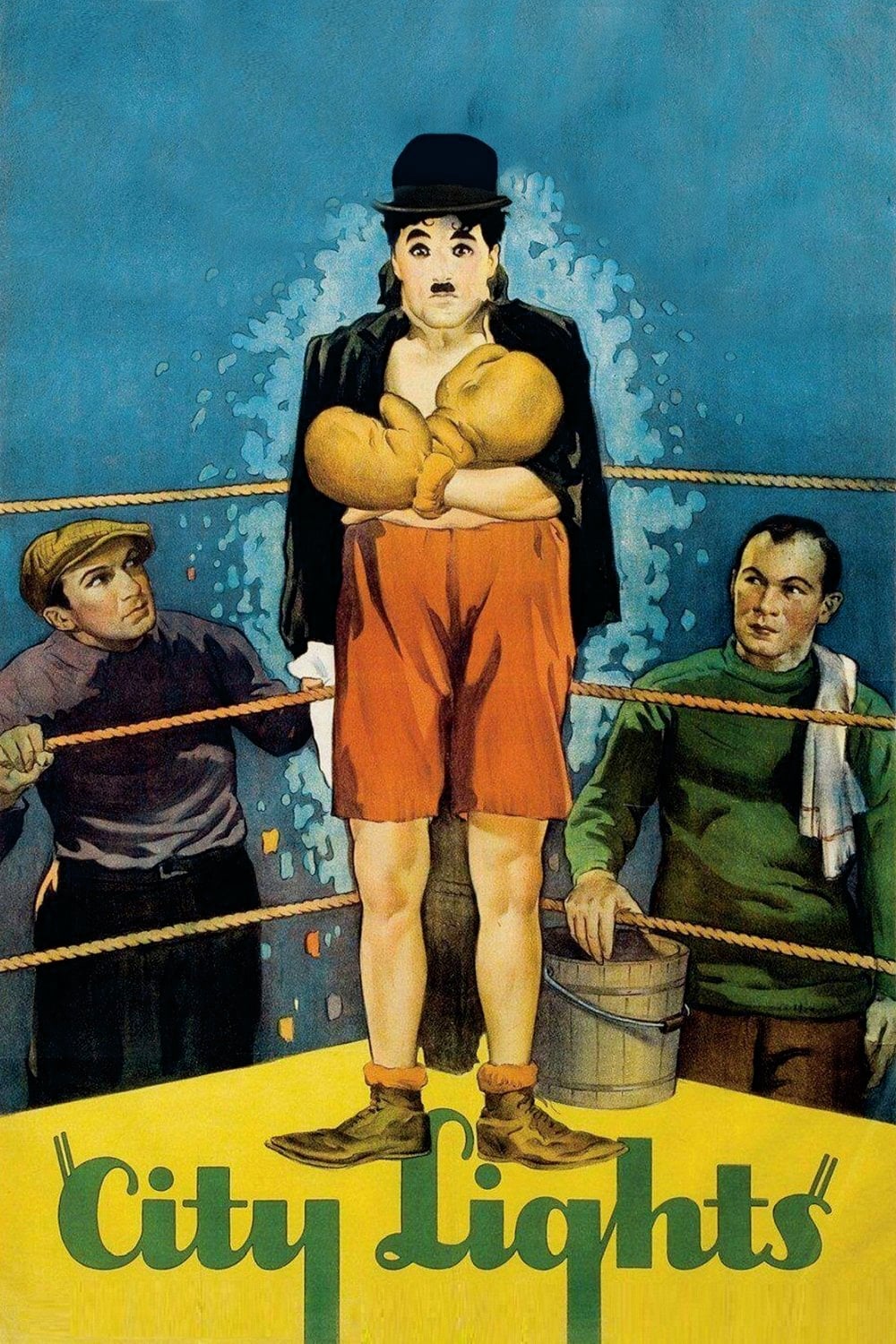
The Question of Truth Behind the Film
Right from the first time I encountered “City Lights,” I found myself asking—not for the last time—whether the pain and yearning stitched into its silent world had any root in someone’s real experience. I notice in myself, and in audiences, this reflexive curiosity about truth in cinema. There’s something magnetic about the possibility of a true story; it’s as if the promise of historical fact imbues the images with weight beyond fiction. I suspect, from countless post-screening conversations, that many people want to know: “Did this really happen?” I think it’s because narrative has always played a dual role for us—as entertainment and as cultural record. Whether the story unfolded exactly as shown or is a carefully woven amalgam of invented circumstances, the mere hint of reality draws me into a more intimate relationship with the material. When I’m told a film is “based on true events,” I come to it with a particular set of expectations: I look for traces of the world I know, glimpses of the actual past, empathizing not just with crafted characters but with the real figures behind them—or their absence.
When “City Lights” presents its story of a tramp and a blind flower girl, it tugs at the boundaries of truth and invention in ways that feel almost subconscious. I’ve caught myself wondering if there was a real person like Chaplin’s tramp wandering urban streets—if perhaps there was once a girl whose vision was restored against long odds. Even knowing the film is widely acknowledged as a work of fiction, the emotional resonance is so potent that the label “true story” seems almost redundant. Still, by habit and by culture, audiences like me are trained to search for real-life referents. There’s an implicit assumption that a film inspired by actual events is somehow more significant or valid, and conversely, that pure fabrication is lesser—or at least different—in its relevance and impact. Yet, as I reflect, that assumption brings with it a set of problems: it can obscure the artistry of storytelling, or unjustly push us away from stories that are “merely” invented but no less revealing about the human condition.
I’ve realized that asking about the truth behind a movie is not just a matter of intellectual curiosity. For me, it changes the emotional texture of the experience. When I perceive a film as a true story, I feel invited—or sometimes obligated—to see it as a document, a window onto something that actually happened. This is both a privilege and a responsibility because it colors the way I react to characters, plot turns, and endings. With “City Lights,” I’m reminded how quickly I calibrate my interpretations based on whether I am watching a creative meditation or a cinematic testimony to history. That distinction—fragile and indefinite though it is—impacts my experience as both a viewer and an interpreter of the medium.
Historical Facts and Cinematic Interpretation
In investigating the factual roots, or lack thereof, behind “City Lights,” I found myself compelled to separate what is factual from what is imaginative architecture. Unlike films openly adapted from well-documented historical incidents, “City Lights” occupies a liminal space; it is steeped in social reality, yet it claims no specific event as its backing. When absorbing the film, I was struck by the urban setting’s authenticity—the downtrodden streets, the visible divide between rich and poor, the urgent need for human connection. It is clear to me that Chaplin drew from real sources: his personal observations of city life, the societal transformation of the early 20th century, and the persistent challenge of poverty during that time. Yet these are less discrete happenings and more ongoing societal truths, shaped and colored by the director’s own perspective as someone who had lived those hardships.
I’ve always viewed “City Lights” through the lens of its historical moment—released in 1931, as the world lurched deeper into economic depression. The sweep of the Great Depression is not named outright in the film, but as I reflect, its influence permeates nearly every frame. The tramp embodies a collective struggle: the inescapable hardship of the unemployed, the dignity found in perseverance, the isolation inherent when society marches forward and leaves some behind. Still, I cannot attribute his journey to any one historical figure or legend. Instead, what’s presented is a distillation—a reshaping—of societal truths, observed and then given narrative clarity. If I crave historical accuracy in details, I will not find it here; rather, I encounter a thematic truthfulness that can only come from a synthesis of many such stories, painted in broad yet evocative brushstrokes.
When I think about how Chaplin reinterprets the raw material of city life, I’m reminded that cinema’s power often lies in its ability to reorganize reality into forms that are both recognizable and heightened. In “City Lights,” elements that could be plucked from real life—beggars on city sidewalks, the extravagant manners of the wealthy, fleeting acts of generosity—are reorganized for narrative clarity. Scenes unfold with a precision and economy that real life hardly permits. I am always aware, especially on repeat viewings, that this process has created a story not concerned with exact transcription, but rather with refining a prevailing mood or sentiment. The emotional stakes are clear, the obstacles intimately drawn, and yet the source material is diffuse, drawn from a general understanding rather than specific fact.
What Changes When Reality Is Shaped for Cinema
When I reflect on the transformation that reality undergoes as it is shaped for cinematic storytelling, the central trade-off seems unavoidable. On one side, there is the raw unpredictability and messiness of lived experience; on the other, the need for a narrative arc that delivers emotional coherence. Watching “City Lights,” I am constantly aware that what I see—the carefully constructed sequence of gags, the timing of each emotional crescendo—would be almost impossible to encounter in real-life increments. Yet, the emotional authenticity feels intensified by the very act of artifice. I wonder frequently about the choices that go into compressing years of hardship and longing into a single glance, or distilling societal complexity into the silent misadventures of a single tramp.
I appreciate that characters must be condensed, timelines compressed, and situations heightened to achieve narrative drive. Chaplin’s tramp, for instance, is an amalgam: echoes of countless individuals distilled into an archetype. While I sometimes wish for specificity—did the blind flower girl have a documented inspiration? Was there ever a wealthy drunk who befriended a vagabond on a whim?—I recognize that the film’s impact depends on its universality. The cinematic form lets stories accelerate and converge in dramatic fashion, something that is rarely possible if one insists on replicating history in its scattered detail. Yet even as history is reshaped, I see how the film retains a kind of truth—an emotional honesty that becomes, paradoxically, a new form of reality for the viewer.
This trade-off between precision and artistry reminds me that cinema, unlike documentary or biography, is less interested in cataloguing facts than in creating an atmosphere or inviting an emotional response. The deliberate vagueness about location, the absence of named dates or direct referents, allows “City Lights” to transcend its time even while being shaped by it. Instead of anchoring itself to a specific moment, the film blends characteristics—urban poverty, fleeting generosity, and miscommunication—into a structure that no realist record could emulate. I find this realization liberating: the reshaping of reality for film is not a failure of accuracy, but a transformation designed to reveal something more enduring than mere fact.
Through the process of shaping, the limitations of precision yield a space for symbol, metaphor, and surrogacy. “City Lights” does not ask me to recognize a historical subject so much as a shared experience. Importantly, this adaptation does not erase the underlying realities that informed it; instead, it reconstitutes them in a new, accessible language. While some viewers might lament the loss of minute historical detail, I find myself appreciating the clarity and cohesion that narrative adaptation brings. For me, the boundaries and liberties taken with real-life source material are not mere embellishments, but an acknowledgment of the different demands cinema faces in capturing attention and summoning feeling.
Audience Expectations and the “True Story” Label
My own response to films shifts dramatically depending on their relationship to truth claims. When a film identifies itself as “based on a true story,” I approach it with a heightened sense of scrutiny and, oddly, a more personal investment; I expect to learn, to witness, or at least to be offered some insight into a world beyond fiction. Conversely, when the narrative is openly fictional, my interpretive frame adjusts—I am more attuned to artistry, invention, and universality rather than specificity. It’s always surprising to me how quickly my expectations settle around this distinction, shaping not only how I interpret characters, but also how I receive the central themes as either commentary or testimony.
With “City Lights,” I am reminded that the lack of an explicit “true story” claim offers a particular kind of freedom. I find myself less worried about historical fidelity and more willing to submit to the emotional, almost mythic logic of Chaplin’s vision. The narrative, while anchored by familiar realities, is not tethered to individual veracity. This opens up possibilities: I take scenes not as documentation but as invitations to feel something broadly human and relatable. Had the film begun with a proclamation of factual basis, I suspect I might have been more circumspect—dissecting which parts were authentic, which dramatized, and which invented wholesale. Instead, the lack of explicit reference to real-life figures makes it easier for me to lose myself in the symbolic, to encounter the story on its own emotional terms.
Still, I recognize that audiences—myself included—can bring their own cognitive frameworks regardless of a film’s label. Many people, I’ve noticed, read real-world relevance into cinematic fiction out of habit or hope. They look at the struggles depicted in “City Lights” and see echoes of their own communities, or of stories passed down by family members who lived through similar times. The meaning of “true story” becomes slippery, no longer a binary but a spectrum. Some find that the film resonates exactly because it captures a feeling that seems more truthful than the unruly facts of real life. Personally, I can’t help but be moved most when fiction achieves a kind of universality that feels truthful even when it is entirely invented. A story need not have happened to be real in its impact, and my expectations have evolved, over time, to honor that distinction.
There’s also a curious effect I notice in myself when I discover a beloved film is almost entirely invented—sometimes, there’s a sense of disappointment, as if an illusion has been punctured. Yet, with “City Lights,” I never feel that loss; the authenticity embedded in Chaplin’s depiction of loneliness and hope seems unaffected by the lack of direct sourcing. I suspect that for many viewers, emotional realism matters as much, if not more, than factual accuracy. The shape of the story, the integrity of its themes, and the resonance of its images can create a sense of reality that operates alongside, or even outside, historical fact. Whether a film is promoted as factual or fictional profoundly alters my experience, but never fully determines the ultimate value I find in it.
Final Perspective on Fact vs Fiction
The more I reflect on “City Lights,” the more I realize that factual awareness acts less as a verdict on the film’s worth, and more as a subtle filter through which I perceive its intentions and effects. Knowing that Chaplin’s creation was not adapted from a specific real-world incident frees me from the compulsion to fact-check, to scrutinize timeline or authenticity. Instead, I anchor my appreciation in the emotional coherence and narrative motifs that the film conjures. For me, the absence of explicit historical record shifts my focus away from “Did this really happen?” toward “What truth does this story reveal?” That question, I find, is equally—if not more—provocative.
In my personal engagement, the absence of literal fact never seems to dilute the impact of the film. If anything, I become more attuned to the metaphoric resonance: the way hardship and compassion intersect, the enduring loneliness of the marginalized, and the possibility of redemption through connection. What is real, in one sense, is the psychological terrain the film covers. That landscape, though fictionalized in specific, feels broadly applicable to countless human lives—perhaps even more so than a strictly factual chronicle could achieve. The power of the film lies partly in its refusal to anchor itself to a single “truth,” instead drawing on many smaller fragments of experience observed, remembered, and reimagined on the screen.
It is tempting, as I discuss and analyze films like “City Lights,” to seek a conclusive answer about the divide between fact and fiction. But for me, the beauty and significance of the work rest in its capacity to transcend those categories. Awareness of fictionality might alter the way I interpret character motivation or narrative structure, but it does not diminish the film’s relevance or insight. I see “City Lights” less as a record and more as a reflection—not so much a photograph of history as a painting inspired by it. Knowing what is real or fictional becomes more than a scholarly debate; it is an ongoing process of negotiation with the material, a dance between identification and imagination.
Ultimately, I have found that awareness of a film’s factual roots—or lack thereof—informs my understanding rather than my judgment. Whether I am moved by “the facts” or by the emotional structure built atop them, my engagement with the work remains vibrant and complex. “City Lights” reminds me that the lines between truth and invention, memory and imagination, are always shifting. The impact of those distinctions is felt most clearly not in the search for accuracy, but in the search for meaning—something I return to each time I rewatch, reconsider, and reimagine what the film has to say about the tenuous, unending relationship between history and storytelling.
For additional context, you may also explore the film’s overview and how it was received by audiences and critics.
🎬 Check out today's best-selling movies on Amazon!
View Deals on Amazon