
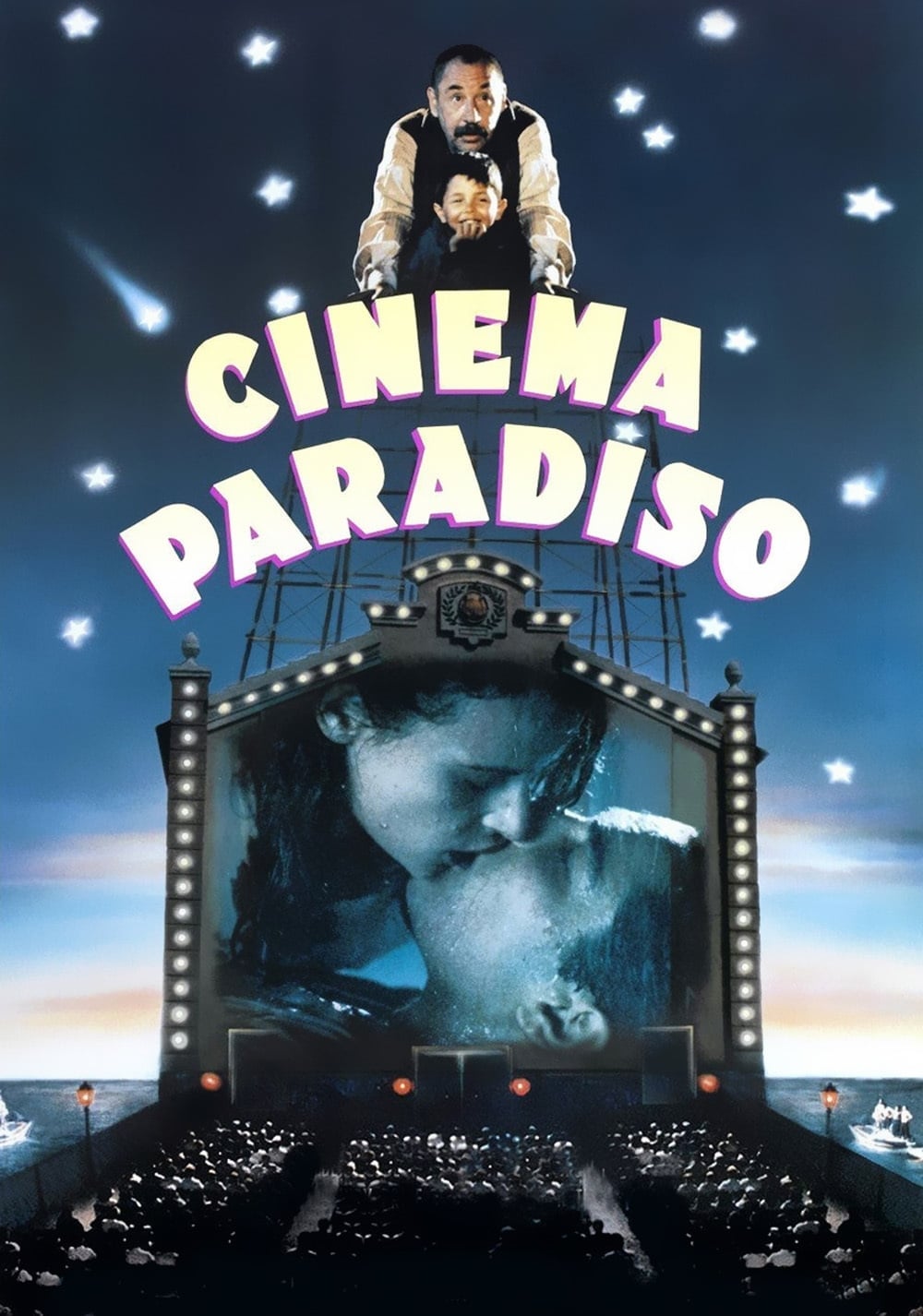
The Question of Truth Behind the Film
From the very first moment I encountered “Cinema Paradiso,” I found myself asking that familiar question: did any of this really happen? There’s a natural curiosity that arises when a film feels so intimate, so richly textured with what appears to be genuine nostalgia and personal longing. In my experience, when a story moves me deeply, my instinct is to look for its roots in reality, almost as if knowing some part of it is “true” will anchor the emotional experience with added weight or legitimacy. I think many audiences come to films carrying that same hope. We crave the validation that a story’s power comes not only from the artistry of its creators but also from the resonance of lived experience. There’s an implicit assumption—sometimes whispered but often unspoken—that truth lends a story gravity; fiction, no matter how moving, seems somehow lighter unless it’s tied to real events or a real person’s life. Whether that’s fair or not, I can’t help but notice how the “based on a true story” label colors the conversation, inviting viewers to scrutinize what comes next with a different kind of attention. When I watch “Cinema Paradiso,” I find myself negotiating with these urges: do I watch with an eye for biographical detail, searching for scraps of autobiography from Giuseppe Tornatore, its director, or do I allow myself to drift with the film’s gentle current, appreciating it purely as an invention?
Historical Facts and Cinematic Interpretation
Reflecting on “Cinema Paradiso,” I quickly became aware that its core narrative isn’t documented history, but rather draws on loosely autobiographical impressions. As I delved into its structure and emotional landscape, it became clear to me that the film is less concerned with recreating precise events and more focused on evoking the aura of a bygone Italian era—a world both colored by memory and refashioned through storytelling. What’s fascinating to me is how Tornatore reconstructs not a literal autobiography, but an emotional one. The character of Salvatore, his bond with Alfredo, and the evolution of the titular cinema are shaped by recognizable details from postwar Sicily. Yet, the specifics—how events unfold, the cinema’s role, even the fates of its characters—are less records than evocations. Rather than documenting a real person’s life, the film takes snapshots of collective memory: the communal movie house, the transition from film to television, the changing face of small-town Italy. I noticed how moments are compressed and rearranged—years fly by in a single montage; relationships grow, rupture, and resolve within the boundaries of a two-hour film. Instead of offering a documentary record, Tornatore crafts moments that, while not factual, feel authentic. In my estimation, this approach foregrounds emotional truth over verifiable fact, allowing the film to act as both a love letter to cinema’s golden age and a meditation on nostalgia itself.
My own reading of the film leads me to see it as thriving on imagined reconstruction rather than literal translation. The legendary “kissing montage,” for example, likely has no direct root in any real theater’s archive, but the sequence still conjures the formative power of early cinema for generations of filmgoers. Even the town itself, Giancaldo, is a composite, constructed from elements of Tornatore’s Sicilian childhood and locations from Bagheria. The historical backdrop—the presence of war, the transformation brought by technology, and the intertwining of sacred and profane experiences in a provincial town—serves more as a suggestion of time and place than as a record meticulously cross-checked with reality. For me, this blending of half-memory and invention is what gives “Cinema Paradiso” its poignant atmosphere. It’s a mosaic, not a photograph, and what gets omitted or shifted in the retelling feels just as purposeful as what is included.
What Changes When Reality Is Shaped for Cinema
When I consider what happens as reality is filtered through the demands of cinema, I’m struck by the deliberate act of selection that occurs at every turn. The difference between real life and its dramatization, for me, seems most pronounced in how films like “Cinema Paradiso” prioritize coherence, rhythm, and poetic resonance. Real events are notoriously untidy; life doesn’t break itself into neat acts or offer tidy resolutions. In the film, time is stretched and compressed—childhood melts into adolescence, seasons blur, and decades disappear with a dissolve. This is, in many ways, the necessary trade-off for emotional clarity. A real friendship might develop over years of incremental encounters, filled with mundane detail and uneventful pauses, but cinema must distill those experiences into emblematic incidents: a conversation in the projection booth, a lessons-in-love scene, or a tragic accident that precipitates a turning point.
I also think about how shaping reality for the screen means surrendering some factual complexity in order to heighten a story’s emotional arcs. Characters are often transformed into symbols or amalgamations, as happens with Alfredo, whose paternal wisdom and sacrifice encapsulate the collective influence of many mentors rather than a single historical individual. The practical necessity of dramatic structure—a setup, conflict, climax, and resolution—means that moments in the film are arranged not to faithfully reproduce the messiness of life, but to clarify the inner journeys of its characters. In my viewing, this felt most apparent in the film’s resolution: the return to Giancaldo and the rediscovery of the film reel filled with censored kisses. In real life, such closure is rare, yet it’s precisely these orchestrated moments that grant the audience a sense of emotional completion.
I think there’s a give-and-take found here: by reshaping or even inventing details, the film opens a path to universal feeling, even though it may drift from strict historical record. This exchange between factual accuracy and resonance with the audience is a hallmark of cinematic adaptation. For me, “Cinema Paradiso” offers a case study in how filmmakers balance the specificity and messiness of lived history with the broader ambitions of mythmaking. The film’s heightened nostalgia, the painterly composition of its shots, and the symbolic use of the cinema as both playground and sanctum all speak to deliberate choices that trade literal truth for the subjective sense of “truthfulness.” It’s never just about what happened, but about what it felt like it happened, as remembered and retold across a distance of time.
Audience Expectations and the “True Story” Label
When I sit down for a film that claims to be “based on a true story,” my antennae go up—I notice myself parsing each scene, looking for echoes of documentary detail or hints of artistic embellishment. I’ve found that this label primes audiences to approach what they see with an interrogative mindset: is this what really happened? How much has been added, changed, or glossed over? With “Cinema Paradiso,” the dynamic feels different, more open-ended. There is no explicit claim to documentary fidelity. Instead, the story’s aura of authenticity comes from the emotional verisimilitude, not the literal accuracy. For me, this opens a greater freedom to inhabit the work as metaphor, as memory-piece rather than reportage. Still, I detect in myself a lingering desire to know the degree of fiction. Audiences often wish to measure the distance between screen and reality, perhaps in search of either permission to be moved or defense against manipulation.
When a film is presented as factual, I notice that viewers—including myself—tend to position themselves almost as evaluators, assessing how well the story’s facts have been served or dramatized. There’s a sense that the stakes of representation have changed: every deviation from the known record might feel like a breach of trust or a missed opportunity for authentic portrayal. But with “Cinema Paradiso,” which is widely considered a fictionalized homage rather than a rigorous slice of autobiography, I find myself less prone to these reactions. The film invites me to enter its world as a kind of extended reverie, untethered from the need for validation through documentation. This, in my experience, enables a more porous, dreamlike relationship to the material. The rhythms of memory—its selective re-coloring, its sentimental exaggerations—feel not only permissible but essential to the film’s effect.
Still, I’ve observed that some members of the audience are drawn to investigate: was there really a theater like this, did Tornatore know someone like Alfredo, were films in small-town Sicily really censored in such a manner? The search for fact becomes a parallel narrative, running underneath the cinematic text. Even when a film does not claim to be strictly true, the proximity to personal experience prompts questions. For me, knowing a film’s origins—be they entirely invented or loosely inspired—changes not just how I receive the story, but also how I weigh its insights against my own experiences of nostalgia, loss, and artistic passion. Each viewer’s emotional engagement is shaped, in part, by the perceived distance from reality: too close, and the story might seem constrained; too far, and the risk is that it floats into abstraction. The “true story” label thus acts as both invitation and boundary, guiding expectation before a single frame has even passed.
Final Perspective on Fact vs Fiction
After spending considerable time wrestling with these dynamics in “Cinema Paradiso,” I’ve come to feel that the awareness of where fact ends and fiction begins shapes, but never wholly determines, my intimacy with the film. My knowledge that the story is not historical fact but a composite—rooted in memory, invention, and homage—encourages me to engage with it on multiple levels. I find myself attentive not only to what “happened,” but to how the rhythms of recollection, longing, and loss are staged for the screen. In a way, this split awareness enhances my appreciation: it’s as if the line between fact and fantasy becomes a creative tension, an interplay that animates the film’s sense of yearning for a bygone era that may never have fully existed.
What strikes me is how the permeability between the real and the fictional shapes my emotional response without dictating its value. I can admire the film as a meditation on memory and cinema itself, understanding that its emotional truths are constructed, not merely recorded. Rather than testing the film against history’s ledger, I watch for how it persuades me of the reality it conjures—how it persuades me, in other words, to care. Whether Alfredo is an actual figure or an inspired composite, his impact on Salvatore—and, by extension, on me as a viewer—feels undiminished. I don’t need to verify the details to register the ache and elation of his mentorship. The knowledge acts instead as a subtle filter, inviting me to shift focus from surface accuracy to artistic resonance.
Ultimately, I believe my encounter with “Cinema Paradiso” becomes deeper, not shallower, when I recognize its status as a crafted fiction with roots in lived experience. By acknowledging that the film rearranges reality for narrative grace, I free myself to appreciate the act of storytelling itself—the selective emphasis, the stylized memory, the poetic license that lends the film its bittersweet affect. This awareness does not lessen my involvement; it contextualizes it. For me, fact and fiction are not strict binaries when it comes to my engagement with cinema. Instead, the tension between them becomes the space where art flourishes, where stories are shaped and reshaped until they feel—if not exactly real—then deeply, permanently true in their own right.
For additional context, you may also explore the film’s overview and how it was received by audiences and critics.
🎬 Check out today's best-selling movies on Amazon!
View Deals on Amazon