
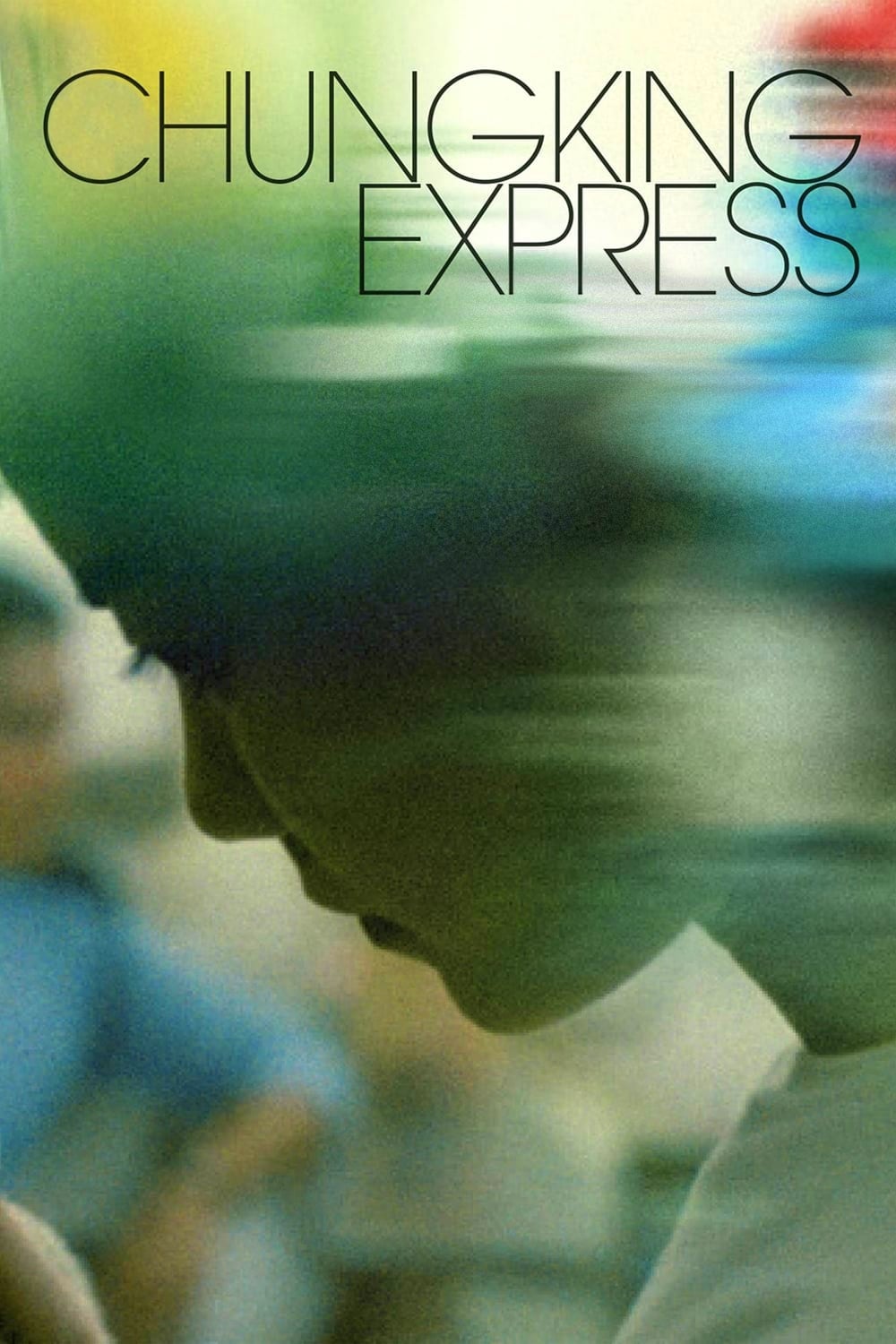
Is This Film Based on a True Story?
Whenever I revisit Chungking Express, I find myself pulled into its mosaic of fleeting encounters, longing, and urban loneliness. Yet, despite the film’s resonant realism, I can say without hesitation that it is not based on a true story. The two intertwining tales at the heart of Wong Kar Wai’s 1994 film are entirely the product of imagination—crafted, shaped, and textured without direct reference to documented people or events. There’s no source biography, no headline-grabbing incident, and no confessionals or diaries that inspired these particular characters. Everything, from the two lovesick policemen to the enigmatic woman in the blonde wig or the quirky snack bar attendant, springs from the creative process of cinematic storytelling rather than literal history or journalism.
The Real Events or Historical Inspirations
One of the most fascinating aspects of Chungking Express, for me, is how plausible these stories feel, even though their source lies firmly in the realm of fiction. I’ve often wondered what, if any, real-world elements seeped into the film’s creation. While I haven’t found evidence of specific individuals or singular events serving as direct inspiration, it’s clear to me that the bustling energy and mood of early-1990s Hong Kong function as the film’s primary backdrop—and perhaps, the closest thing to a “true story” it contains.
From what I’ve learned, director Wong Kar Wai conceived the script during a period of personal creative uncertainty, working through ideas as he experienced them rather than adapting someone else’s reality. His technique involved soaking in everyday sights—street vendors, neon-lit corridors, transient crowds through the Chungking Mansions complex—which lend the film its authenticity. But these are backdrops, not adaptations. The snack bar itself, with its fluorescent lighting and quickfire meals, is not meant to reference a single real eatery but rather the genre of tiny Hong Kong fast-food counters ubiquitous at that period. Sometimes, I get the impression that what inspired Wong was the feeling of rootlessness and impermanence sweeping through Hong Kong society just before the 1997 handover, a time when uncertainties about identity and future prospects permeated the collective consciousness. Yet, even this is ambiance and mood rather than plotted narrative.
Snippets of the film’s development process paint a picture of spontaneous creativity rather than researched adaptation. I’ve read stories of Wong writing scenes daily on scraps of paper, passing them directly to cast and crew. This on-the-fly approach suggests a reliance on emotional and atmospheric truth—those little human moments witnessed in passing—rather than on fact-based storytelling. For example, Brigitte Lin’s mysterious character was reportedly crafted to evoke the archetype of noir women, but she was not modeled after a particular historical personage.
When I reflect on the setting, Chungking Mansions itself is perhaps the most “real” part of the film. The building is legendary for its labyrinthine corridors, cultural melting pot, and atmosphere of anonymity. Still, Chungking Express uses the location as a canvas for fictional drama rather than documenting the real lives of its diverse inhabitants.
What Was Changed or Dramatized
Because the events depicted weren’t real to begin with, it’s more accurate for me to say that the film dramatizes an idea of city life rather than altering recreated records or testimony. What fascinates me is the way mundanity is made poetic—lingering over canned pineapples, counting down the days until expiry, finding heartbreak on the other side of a payphone. These are dramatizations not of documented events but of something abstract: the collective mood of urban isolation and the gentle absurdities that color daily existence. The characters’ inner lives are, in a sense, heightened versions of real emotional truths. When I see Cop 223 obsess over the shelf life of canned fruit, I think Wong Kar Wai amplifies ordinary coping mechanisms to near-mythic proportions.
Yet, even elements that feel realistic are often heightened or stylized. Faye Wong’s character, for instance, embodies restless spontaneity by sneaking into Cop 663’s apartment and subtly rearranging his domestic world. While such behavior borders on the whimsical (and occasionally trespassing ethics), it is not referenced as a process anchored in reality. I see these choices as part of Wong’s pattern of transforming common feelings—obsession, grief, inertia—into visually inventive sequences rather than sticking to documentary-style realism.
Wong Kar Wai’s storytelling relies heavily on the architecture of chance meetings and parallel lives. To me, this suggests an awareness of how city dwellers often brush past one another without ever truly connecting—and while this is a real phenomenon, its depiction in Chungking Express is one of orchestration, not reportorial truth. Relationships begin and end in the space of a few fleeting days; chance dictates the narrative. The precisely timed run-ins, secret apartment visits, and symbolic gestures (like eating expired pineapple or cleaning another’s home) exist on a poetic level. It’s these very dramatic liberties, untethered from direct real-life analogues, that give the film its signature tone.
Historical Accuracy Overview
Since I’ve established that Chungking Express is entirely fictional in terms of storyline, my attention shifts to its authenticity in depicting time and place. In this context, the film’s realism is rooted more in atmosphere than record. I’ve always noticed that the bustling neon-lit streets and diverse crowds within Chungking Mansions feel lived-in and accurate to early-1990s Hong Kong. From clothing choices to background conversations, the world presented feels like a memory—or perhaps a reflective journal—of what the city was like during that transitionary period.
One might say that while the narrative is a work of creative invention, the world-building is historically faithful. The city in Chungking Express is not an idealized consumable; it is cramped, noisy, at times lonely, and alive with tiny dramas playing out in corners and stairwells. I’ve noted how the film’s depiction of Hong Kong’s snack shops, near-anonymous guesthouses, and the hodgepodge of cultures in Chungking Mansions lines up with what various interviews, travel accounts, and photographic evidence suggest about that era. The cultural representation doesn’t shy from messiness or contradiction, even if the main plots themselves are products of fiction.
If accuracy is judged not by adherence to documented events but by the ability to reflect the pulse and pressure of a time and place, then Chungking Express is quite successful. Its portrayal of emotional and social reality—men and women searching for connection, the anxieties of city life, the backbeat of pop music and fast romance—is resonant with lived experience. The film’s characters occasionally reference pop culture (for instance, songs like “California Dreamin’,” the obsession with Americanization, quick food fixes), and those are historically appropriate details that further ground the film’s tone in its real era. But again, they do not derive from specific newspaper stories or legal cases.
I always come away believing that while nothing in Chungking Express happened as shown, much of what occurs could have taken place—or at least, could have been observed in some altered form in Hong Kong at that time. The line between fact and fiction is blurred, but the factual nature of the city serves as a bedrock for the fictional tales on screen.
How Knowing the Facts Affects the Viewing Experience
Understanding that Chungking Express is an invention rather than an adaptation changes the lens through which I watch it. Instead of searching for “what really happened” or trying to draw one-to-one comparisons between reality and film, I allow myself to tune into what the story conveys emotionally and aesthetically. The realization liberates me from the burden of fact-checking, freeing me to focus on the thematic resonances—the universality of heartbreak, the strangeness of coincidence, and the poetry that can be found in even the most mundane activities.
For someone expecting a docudrama or a news-inspired account, this understanding might alter expectations. Instead of learning about specific individuals or dissecting the motivations of real-world figures, I find myself primed to appreciate broader truths. The loneliness, hope, desperation, and resilience at the heart of these stories are feelings I recognize not as historical documentation, but as persistent elements of the human condition. The film’s power, for me, comes not from its closeness to headline events but from its ability to transform private sensations—grief, anticipation, or even boredom—into shared cinematic experience.
This knowledge shifts my attention to the subtleties of Wong Kar Wai’s craft: the color palettes, the way music becomes a form of communication, and the importance of fleeting glances or missed opportunities. By divorcing itself from real events, the film attains a kind of universality—and sometimes, knowing it is pure fiction encourages me to project my own memories and associations onto the characters and settings. I encounter a city that feels both real and dreamlike, peopled by characters who become avatars for anyone who’s ever felt their own smallness or longing in a crowded metropolis.
Learning that the narrative is not true to life also affects how I absorb its symbolism. When I encounter major plot points—the expired pineapple, the clandestine apartment visits, the gradual transformation of relationships—I’m not compelled to ask, “Did this really happen?” Instead, I ponder, “Do I recognize this emotional truth? Does this feel like something that might exist in the liminal spaces of memory or fantasy?” I find this liberating, as it lets me enjoy the film’s visual and aural pleasures and its eccentric narrative logic without being tethered to historical accuracy checklists.
And so, for me, discovering that Chungking Express is fictional helps me lean into the film’s strengths. The story may not be a record of what actually happened, but it captures what it felt like to inhabit a certain world at a certain time—or to long for something as ephemeral as connection in the swirl of urban life. The facts neither constrain nor limit my engagement; rather, they give me permission to appreciate the work for its source of invention and the echoes of real experience it manages to recreate.
After learning about the film’s origins, you may want to see how audiences and critics responded.
🎬 Check out today's best-selling movies on Amazon!
View Deals on Amazon