
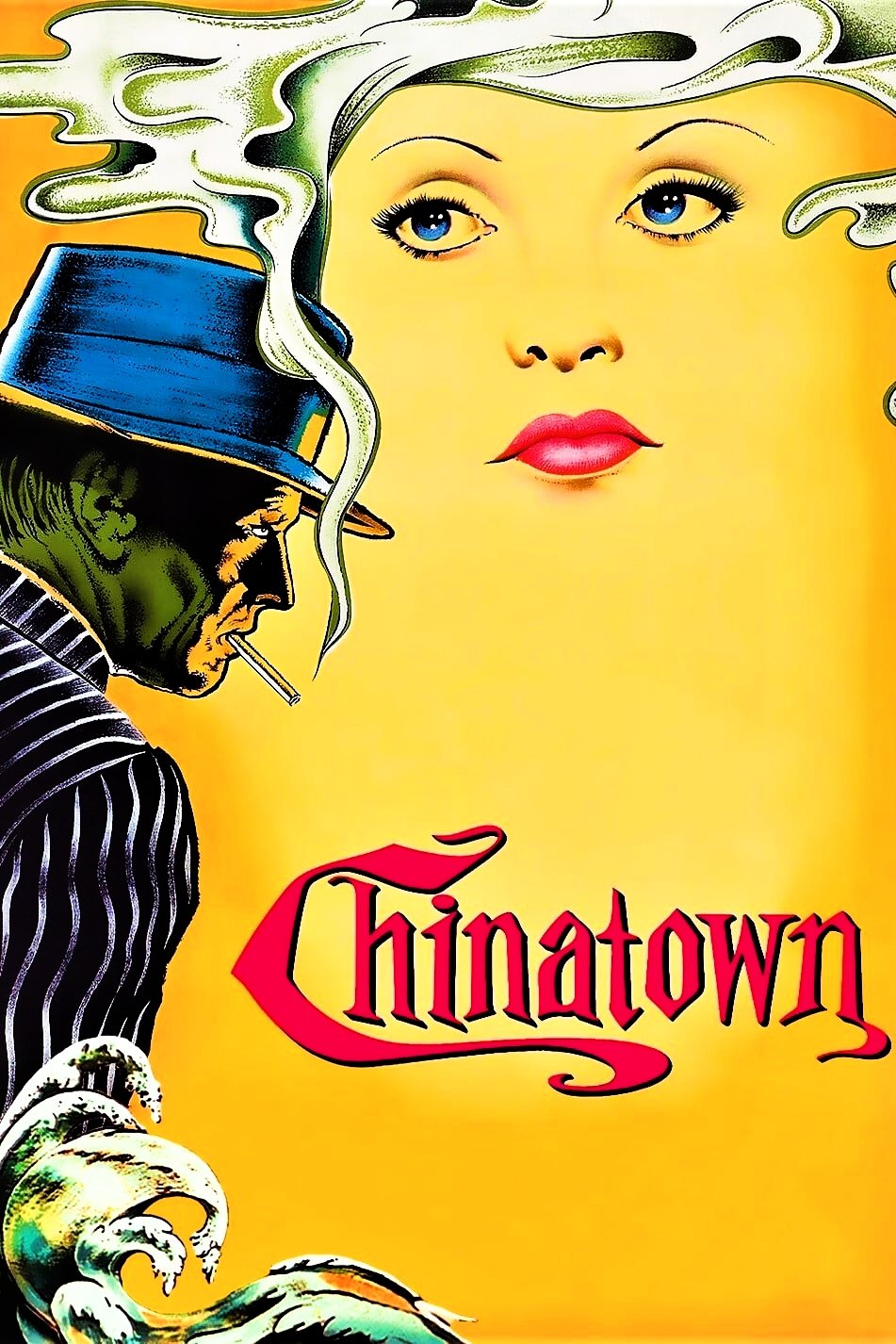
The Question of Truth Behind the Film
The first time I watched “Chinatown,” the line separating what I felt to be “real” and what I suspected to be invented left me unsettled. I remember leaving the theater with this gnawing sense that the story’s bleak vision must have been rooted in history—how else to explain the inescapable machinery of corruption at work in the film? For me, that lingering question—did this really happen—was more than idle curiosity. I realize that every time I approach a film set in a recognizable historical moment or involving realistic political machinations, I bring a set of expectations. I find myself wondering: am I witnessing a dramatization of historical fact or a fiction simply borrowing the textures of the past? That question, I think, charges my viewing with a different kind of energy. When a movie like “Chinatown” unspools, I start interpreting the events through a dual lens—one eye on the evidence of lived reality, the other watching for the flourishes of cinematic invention. The urge to know “Is it true?” shapes how I engage with the movie’s moral universe, its character motivations, even its moments of outrage or revelation.
I often notice that those three words—“Based on a true story”—have become a kind of contract between filmmaker and audience, a tacit agreement about the rules of storytelling. When I see this claim, I tend to assume a certain degree of historical fidelity, even if I know that dramatization inevitably involves alteration. Without this label, I admit, I walk in expecting more creative license. But when a film dances in that ambiguous territory—suggesting real-world connections without explicit claims—I become a detective myself, searching for anchors to the tangible past. “Chinatown” fascinates me exactly because it courts these questions. It’s neither a biopic nor a direct adaptation of a headline, but it feels like an exposé ripped from archival newsprint. That feeling, for me, points to how cinematic storytelling feeds off our preoccupation with truth, authenticity, and the slippery boundary where fact fades into narrative design.
Historical Facts and Cinematic Interpretation
As I explored the background of “Chinatown,” I found my curiosity rewarded in complex ways. The film never claims to be a documentary record, but when I dig into Los Angeles history, I notice uncanny parallels between its plot and actual events from the early twentieth century. Specifically, “Chinatown” draws on the so-called “California Water Wars,” most notably the controversy surrounding the diversion of water from the Owens Valley to Los Angeles—a conflict that did, in reality, fuel suspicion, displacement, and enduring civic resentment. However, the more I read about the factual origins, the more I notice how much Robert Towne’s screenplay transforms the historical scaffolding into something more symbolic than documentary.
I find that the real-life events underpinning the story are abstracted, stripped of the messy details and timelines. The actual water conflict played out over decades, involving a tangle of engineers, politicians, landowners, and lawsuits—far too sprawling and convoluted for the tight focus of a feature film. In “Chinatown,” these realities are distilled into a single sprawling land grab, personified by larger-than-life characters whose motives, allegiances, and relationships are streamlined for narrative economy. The figure of Noah Cross in the movie, for example, isn’t a direct stand-in for any one historical person, but rather serves as a composite of several powerful men who engineered the city’s transformation. Similarly, the multiple agencies and legal battles from history are merged into a more cinematic conspiracy. I see how the screenplay excises the bureaucratic maze and replaces it with a cleaner—albeit more sinister—machinery of corruption, making the story both more accessible and more mythic.
When I compare timelines—the slow, grinding progression of real-life water rights disputes versus the compressed schedule of the film—I’m struck by the necessity of this reshaping. The film leans on coincidence and a neatly escalating series of revelations; reality, by contrast, unfolds in fits and starts, often with ambiguous villains and unintended consequences. Yet, even as details are condensed and identities blurred, I sense that the emotional truth the film conveys draws directly from the anxieties and betrayals that marked the historical record. For me, this interplay between fact and cinematic interpretation isn’t about accuracy so much as resonance—the film reworking the bones of history into a drama that still pulses with the aftershocks of genuine events.
What Changes When Reality Is Shaped for Cinema
Every time I lay out the points where “Chinatown” diverges from the literal truth of history, I find myself considering the balancing act any historical adaptation must perform. There’s the matter of fidelity—how closely does the film stick to documented fact? But for me, what’s equally important is how the reimagining serves the demands of narrative clarity and emotional engagement. If the filmmakers hew too closely to the texture of real events, as I sometimes see with rigorous historical docudramas, the resulting story can become unwieldy, full of extraneous players and opaque motives. I recognize that screenwriters and directors resort to composite characters, time compression, and other devices not out of disrespect for history, but out of a pragmatic need to fit a sprawling and ambiguous reality into a coherent, affecting shape.
In “Chinatown,” I notice that the decision to focus on a private detective’s gradual uncovering of a conspiracy offers an immediate identification point for the viewer—a clear through-line that real-life events rarely provide. As I reflect on the film’s narrative structure, the detective story framework excises procedural minutiae and instead builds to moments of revelation and irreversible change. The actual Owens Valley dispute, from what I’ve read, was incremental, defined by endless negotiations, unclear lines of culpability, and a pervasive sense of uncertainty. The movie, in contrast, dramatizes ambiguity through ethical dilemmas and personal betrayals, letting Jack Nicholson’s character serve as my guide through a labyrinth that’s as much about psychological darkness as civic crime.
The result, as I see it, is a film that trades granular detail for mythic sweep. Names and dates might be exchanged for archetypal figures, and historical debate converted into dialogue and set pieces. This doesn’t merely simplify; it also transforms. When I revisit that infamous line—“Forget it, Jake. It’s Chinatown.”—I realize it acts as a thematic summation rather than a factual statement. “Chinatown” becomes an idea, a symbol of disorder, trauma, and failed justice. In turning history into folklore, the movie makes room for a different kind of truth, one that may be more emotionally legible to me as a viewer but less accountable to the specifics of what actually happened.
Audience Expectations and the “True Story” Label
Whenever I recommend “Chinatown” to someone new, I’m reminded of how film marketing and paratexts shape my own expectations. If a film opens with “Inspired by true events” or a similar disclaimer, I often find myself on high alert for deviations from the historical record, mapping scenes against what I know or think I know. In the case of “Chinatown,” the absence of such a claim lets me approach the narrative with fewer assumptions about its obligations to accuracy. Still, as the story unfolds in a world so convincingly modeled on 1930s Los Angeles—and as the plot leans so heavily on matters of public policy, infrastructure, and social injustice—I instinctively look for cues about its relationship to reality.
I think this ambiguity activates a particular kind of engagement. Without being told outright that what I’m seeing is factual, I find myself oscillating between immersion in the film’s constructed world and curiosity about its sources. I suspect that audiences who come expecting pure fiction experience the film’s revelations differently from those who anticipate some measure of historical documentation. When I perceive a film as “true,” I tend to read its symbols and outcomes as reflective of collective experience, not just narrative arc. The depiction of corruption in “Chinatown,” for instance, feels all the more chilling if I connect it—even subconsciously—to real civic abuses.
For me, there’s also a risk attached. When a film flirts with authenticity but ultimately diverges from the record, I can experience a sense of disappointment or even confusion after the credits roll, especially if I begin to research the actual events. Yet, I also notice that a more opaque approach—like that of “Chinatown”—encourages a deeper interpretive activity. I’m compelled to learn more, to compare dramatization with documentation, and in doing so, I enter a more active dialogue with the material. This, ultimately, shapes not just how I evaluate the film’s story, but how I think about the interplay between history and artifice in cinema at large.
Final Perspective on Fact vs Fiction
As I look back on my experience with “Chinatown,” I find that the interplay between fact and fiction alters not just my understanding of the movie, but my approach to cinematic storytelling in general. When I’m aware of a movie’s roots in history—however tenuous or abstracted those roots might be—I feel compelled to read its narrative as more than private melodrama or individual tragedy. The suggestion of the real, even when modest, invites me to weigh broader social forces, to consider the echoes of history in the present, and to question where the boundary between representation and invention truly lies.
At the same time, I appreciate how the distance from strict factuality opens up imaginative territory. I’m not bound to treat on-screen events as definitive history, and that liberates my search for meaning. “Chinatown,” in particular, seems to thrive in this ambiguous space. Knowing what has been drawn from actual conflicts and what has been transformed or invented enriches my reading, without diminishing my engagement with the film’s themes. Rather than settling for binary judgments about accuracy or invention, I find myself more invested in the kinds of questions the film poses: What happens when public trust is betrayed? How do systems of power persist beneath the surface of civic progress? What is the cost of attempting to unravel—and perhaps reverse—old wrongs?
Awareness of the film’s mixture of truth and invention doesn’t lead me to dismiss its achievements or to fetishize accuracy for its own sake. Instead, I find that it sharpens my sensitivity to the choices behind the story—the ways in which real events can be reimagined to serve new narrative and emotional purposes. “Chinatown” may not deliver a lesson in history, but it does prompt me to think more critically about the past, the present, and the seductive power of cinematic realism. For me, knowing what’s real and what’s not isn’t just trivia; it’s a key that unlocks a deeper, more nuanced interpretation, allowing me to appreciate both the artistry and the ethical stakes of storytelling that draws its inspiration from life.
For additional context, you may also explore the film’s overview and how it was received by audiences and critics.
🎬 Check out today's best-selling movies on Amazon!
View Deals on Amazon