
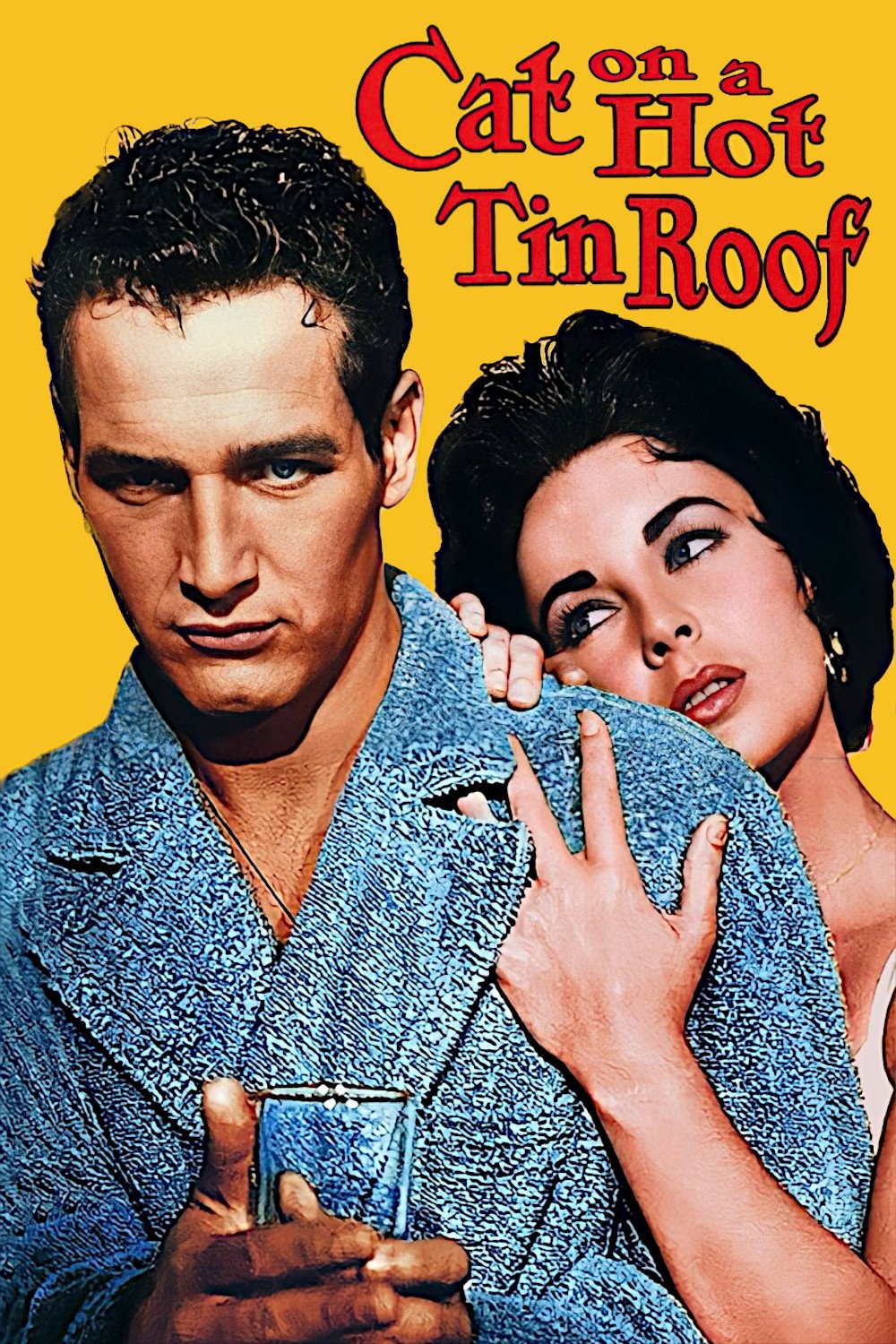
Is This Film Based on a True Story?
When I first encountered “Cat on a Hot Tin Roof,” the impression left by its brooding Southern atmosphere and familial intensity made me wonder if such a story could have come from someone’s real life. However, as I dug deeper into its origins, I discovered that the film is not based on actual events or real people. Instead, it stands as an adaptation—not of history, but of Tennessee Williams’s celebrated 1955 stage play. The narrative, while realistic in emotional resonance and social context, emerges entirely from Williams’s imagination rather than any documented event. There is no public record of a family such as the Pollitts or a distinct set of incidents that the film draws directly from. In my assessment, “Cat on a Hot Tin Roof” is completely fictional, albeit rooted in universal human experiences that feel deeply authentic.
The Real Events or Historical Inspirations
While researching the context behind the story, I came to realize that Tennessee Williams was known for channeling elements of his own psyche and familial complexities into his characters and narratives. Yet, as I looked for any specific, concrete real-life inspiration for the plot or the explicit characters of “Cat on a Hot Tin Roof,” I didn’t find direct evidence linking them to actual people or events. Williams’s works are often infused with autobiographical undertones, but the lines between fact and fiction have always been blurred in his creative process. For this particular play, and by extension the 1958 film, I perceive no verifiable individuals or episodes that serve as an undisputed template.
That being said, the stage play does encapsulate the very real issues dominating Southern American society in the mid-twentieth century. Themes like generational conflict, repressed sexuality, alcoholism, mortality, and the pursuit of inheritance weren’t just figments of the playwright’s imagination—they were present in the societal fabric of the country at the time. The South, with its pronounced social hierarchies and family traditions, provides more of a thematic backdrop than a literal source. Williams’s own life did contain experiences with family illness (his father’s alcoholism, his mother’s formidable temperament, his sister’s medical struggles), but the connections are interpretive rather than strictly documentary.
Over the years, I’ve noticed that Williams described himself as writing “out of his own feelings.” The emotional truths within “Cat on a Hot Tin Roof” are intimate, and the tensions present in it—inheritance disputes, social facades, stifled desires—certainly had echoes in Williams’s world. Still, these influences, while psychologically real, are not historical in the way, say, a film like “Schindler’s List” or “Selma” lays claim to a chronological chain of documented events and participants. Instead, what I see is a dramatist constructing a world that attempts to be truthful about the human condition, rather than truthful about verifiable events.
What Was Changed or Dramatized
Turning my attention to the transition from stage to screen, I found “Cat on a Hot Tin Roof” to be a fascinating example of how artistic works can morph when adapted to new media, especially under the constraints and cultural climate of late 1950s America. The film’s narrative and character arcs underwent notable changes—mainly the adjustment or outright removal of explicit references to Brick’s implied homosexuality and the true nature of his relationship with Skipper. As I learned, these modifications were driven not by a fidelity to history (since the story was not historical to begin with), but by the then-powerful Hollywood Production Code, which imposed strict restrictions on depictions of sexuality and “controversial” social themes.
In Tennessee Williams’s original play, Brick’s anguish and alienation are intricately tied to his feelings for his late friend Skipper, and the ambiguity of their relationship is central to the emotional power of the story. On screen, I noted that much of this is either omitted or left ambiguous, recasting Brick’s pain as stemming more from general disillusionment and trauma rather than any specific suppressed love. I found that the film’s climactic reconciliations and moral revelations, too, diverge from the play: while Williams’s work tends to end on uncertain or unresolved notes, the film bends toward a more resolute, redemptive conclusion, or at least a softer ambiguity, to meet both censors’ standards and audience expectations at the time.
Another dramatized element I observed was the stylization of characters and dialogue. The film, directed by Richard Brooks, leans into grand performances and heightened moments, which sometimes smooth over the play’s raw, jagged exchanges. In the movie, Big Daddy’s character retains much of his forceful presence, but some of his more hard-edged remarks about mortality, sexuality, and social hypocrisy are reworked to appease a broader, conservative audience. Margaret (“Maggie the Cat”) remains assertive, but her desperation is occasionally redirected toward reconciliation rather than the more antagonistic maneuvering depicted on stage.
I also noticed changes in pacing and thematic emphasis. In the play, family dysfunction is layered and oppressive, whereas the film’s structure occasionally lightens the mood, incorporating moments of humor or warmth interspersed with the tension. The adaptive process inevitably required compression and restructuring, streamlining scenes for screen time and reorganizing dialogue for cinematic flow. These shifts, while not affecting points of historical fact, certainly impact the psychological and thematic texture experienced by viewers like me who compare both versions.
Historical Accuracy Overview
Since the story itself isn’t historical, my analysis of “accuracy” focuses on how convincingly the film depicts the era, its social environment, and the sorts of familial and personal crises that might have unfolded in the American South during the 1950s. My research shows that the setting, attitudes, and family dynamics evoke a vivid sense of realism, even though they never trace back to a single true event. The Pollitts’ Mississippi plantation, with its grandeur and sense of generational pressure, is authentic in the way it conjures up the region’s traditions and social codes of the time.
When I examine the film’s depiction of economic privilege, inheritance anxiety, suppressed desires, and the undercurrents of marital discord, I see patterns that match the documented social realities of the era. The film’s focus on patriarchal expectations, the taboo around homosexuality, and the reverence for familial legacy reflect the actual pressures affecting many Southern families in the decades after World War II. The emotional truths embedded in the narrative are likely familiar to anyone who has lived through or observed similar family dynamics, even if the specifics are fictional.
On the other hand, any search for literal events, headline-making stories, or existing biographies to which the film’s events adhere comes up empty. The creative flourishes, heightened dialogue, and arrangement of confrontational scenes serve the purposes of drama rather than documentary nostalgia. In my reading, the degree to which the film “gets things right” lies not in adherence to news archives but in its persuasive invention of interpersonal tensions and the Southern setting. Williams, and by extension the filmmakers, draw psychological and social accuracy rather than reporting verifiable facts.
One area that may mislead viewers—especially those less familiar with the nuances of 1950s American culture—is the film’s treatment of sexuality. The coded language, elisions, and non-explicit references were necessary for compliance with the Production Code, but they can create a sanitized portrait of relationships and identity struggles. Historically, the realities of closeted lives, as well as the silence and shame that could envelop a family confronting taboo subjects, are only partially rendered. If a viewer seeks a vivid picture of how such conflicts played out behind closed doors in actual Southern mansions, the film provides a hint, not an exposé.
How Knowing the Facts Affects the Viewing Experience
Once I realized that “Cat on a Hot Tin Roof” is not based on a true story, but is instead an adaptation of a play saturated with psychological realism, my approach to the film shifted markedly. I stopped hunting for direct analogues in history or decoding the narrative as a disguised biography. Instead, my attention moved toward how the characters and conflicts channel archetypal struggles that could just as easily be found in countless other families, whether in the American South or beyond. The universality of their pain, longing, and ambition became the heart of what resonated with me.
Armed with this knowledge, I found myself more open to the symbolic and thematic layers woven into the story. For example, Big Daddy’s bluster and underlying terror of mortality felt less like the portrait of a single “real person” and more like the embodiment of a generational archetype—the self-made patriarch forced to confront his fragility. Maggie’s efforts to reclaim her husband’s affection and assert her power struck me as a dramatization of the struggles faced by many women seeking agency in restrictive environments, rather than an adaptation of one individual’s memoir. Brick’s emotional paralysis and search for meaning now register with me as a reflection of universal, not particular, anxieties.
Another shift in perspective came as I navigated the differences between the original play and the film. Knowing that censorship and cultural expectations altered the substance of some characterizations, I read between the lines—watching Paul Newman’s subtle gestures or listening for what Elizabeth Taylor’s Maggie leaves unsaid. The subtext, aware that its explicit treatment would have been impossible under the 1958 Production Code, became richer for me as a result. Sometimes, I even found myself filling in the gaps with my imagination, perceiving possibility where the film only hints. This “coded language”—unspoken dialogue about sexuality, for example—felt like a time capsule of how films once negotiated cultural boundaries, which I found fascinating in its own right.
In my experience, understanding that the story is fictional does not detract from its relevance or impact. If anything, it heightens the sense that Williams (and the filmmakers adapting him) intended the film not to serve as a record of events, but as an inquiry into the timeless contradictions of human relationships. Whether the dialogue has specific historical anchor points becomes less important than recognizing how well those words describe certain inward truths. That said, if I were unaware of the Production Code era or the stage play’s bolder themes, I might miss some of the tension running beneath the surface. With knowledge comes a new kind of appreciation—for both what the film reveals and what it strategically withholds.
Ultimately, knowing the facts helped me to calibrate my expectations. I no longer searched for hidden history, but instead watched for the echoes of genuine experience filtered through the artifice of fiction. The film, while not a historical document, achieves a kind of emotional veracity that reminds me why stories, even wholly invented ones, matter so deeply. They allow us to see our own unspoken truths reflected in strangers, real or imagined, in settings rendered real by the power of writing, performance, and—sometimes most potently—what remains unsaid.
After learning about the film’s origins, you may want to see how audiences and critics responded.
🎬 Check out today's best-selling movies on Amazon!
View Deals on Amazon