
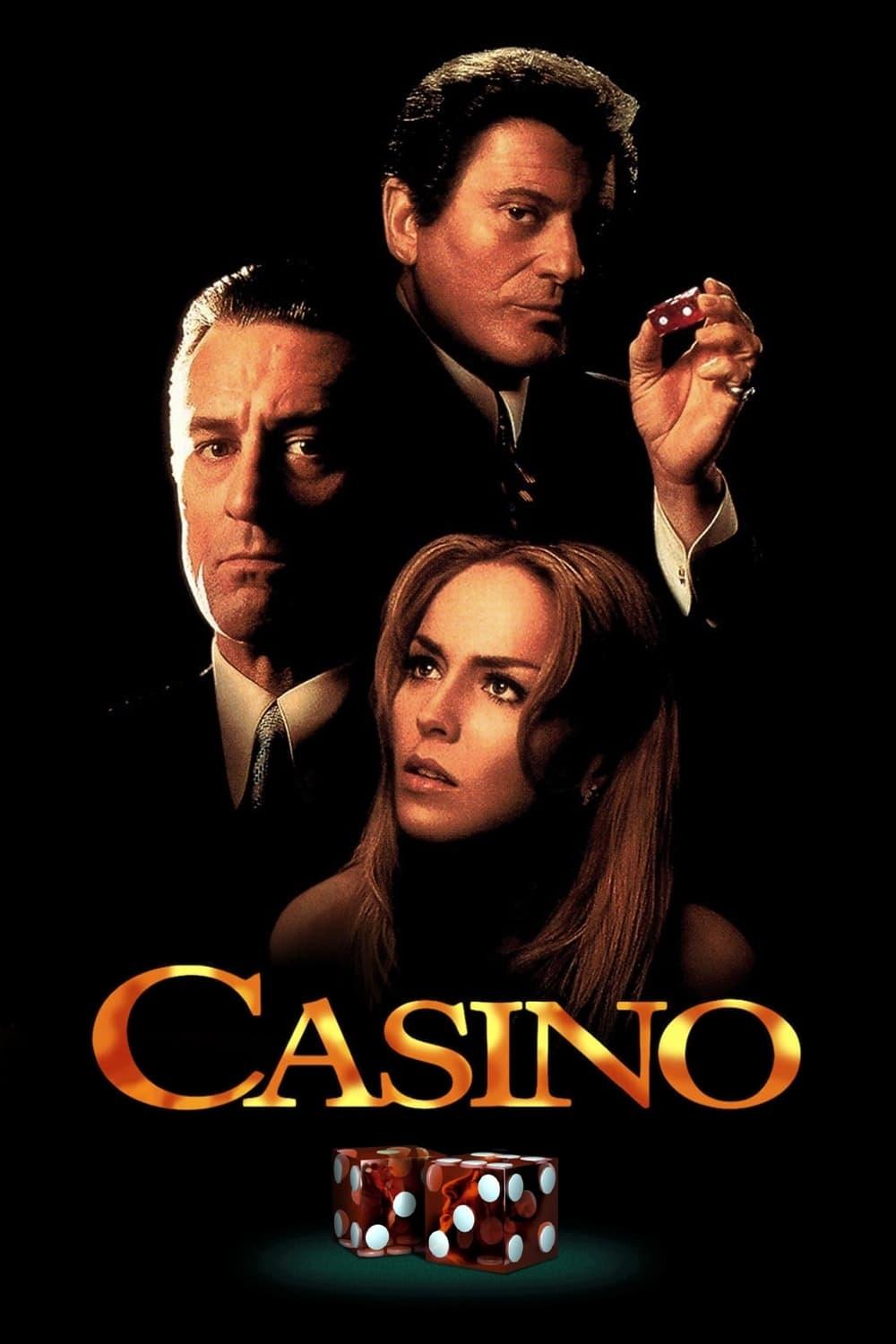
The Question of Truth Behind the Film
I have always been intrigued by the way certain films provoke the question, “Is this based on a true story?” With Casino, that curiosity intensifies every time I revisit its bustling Vegas tableaux—the glitzy veneer concealing layers of intrigue and caution. When I watch a film so deeply rooted in the texture of a particular era and world, I find myself instinctively searching for factual anchors: Were these characters real? Did these events happen as the film suggests? There seems to be comfort, or perhaps heightened engagement, in the belief that what I’m watching is not just artifice, but somehow tethered to the temporal world I inhabit.
This expectation is never a passive one. When I sit down for a film labeled “based on a true story,” I anticipate a kind of authenticity that is granted a special authority. For some reason, even before I parse the narrative or cinematography, my mind sets up parallel tracks: what actually happened versus what I am shown. In the case of Casino, inspired by the book by Nicholas Pileggi and shaped by events in 1970s and 1980s Las Vegas, I find the boundaries between history and dramatization unusually porous. The source material lends credibility—yet I know, instinctively, that cinematic storytelling inevitably bends the truth, sometimes for clarity, sometimes to heighten drama.
My own assumptions, I realize, are shaped by this elusive promise of insight into real events; I hunger not only for spectacle but for a window into the psychology and motives of people who might have actually existed. With films like Casino, those lines are deliberately ambiguous. The depiction of organized crime, casinos, and the shifting power structures is seductive—its effect on me colored by the tantalizing idea that some version of this unfolded in the corridors of historical Vegas. I cannot help but weigh what feels truthful against what is simply effective drama, which complicates my immersion in the film’s world. Every artistic flourish makes me wonder where history ends and storytelling takes over, and in many ways, that tension becomes the film’s unspoken narrative for me.
Historical Facts and Cinematic Interpretation
When I approach Casino, I’m acutely aware of how cinematic interpretation reframes and reorders reality. The film takes real-life figures and events—many of which are detailed in Pileggi’s book, itself based on exhaustive reporting and court records—and translates them into characters with new names, composite personalities, and orchestrated destinies. For instance, I recognize that Sam “Ace” Rothstein, portrayed by Robert De Niro, is a stand-in for Frank “Lefty” Rosenthal; Nicky Santoro echoes Tony Spilotro. But their journeys, as rendered on screen, are sculpted to fit the shape of myth rather than strict biography.
One example that always stands out to me is the compression of multiple events and personalities into singular moments or figures. When I watch the intricate power struggles among the casino operators, mob enforcers, and local authorities, I am reminded of the need for a coherent arc—stories have to make sense, and real life is rarely so tidy. The timeline, too, is streamlined. Rather than tracking every legal proceeding or diversifying the web of relationships beyond comprehension, the film distills years of history into a narrative I can process in just under three hours.
There’s something fascinating about the interplay of documentation and imagination. Casino does not treat its source material as a static script but as raw ore to be smelted and fashioned. Minor events are blown up for dramatic effect; essential facts are cloaked in plausible deniability. Even the infamous “head in a vice” scene, which shocked me the first time I viewed it, is an amalgamation—possibly inspired by real crimes yet magnified to leave an indelible mark on the viewer. The city of Las Vegas itself transforms into a character, standing for a particular intersection of lawlessness and commerce, rather than merely a backdrop. In drawing from the historical record while narratively enhancing or diminishing certain threads, the film situates itself in a creative tension that I find endlessly compelling.
Biographical films often lean on “story beats,” and Casino is no exception. Scenes are often staged to deliver exposition, or to allow inner conflicts to surface through dialogue that no court transcript would record. Dialogue attributed to fictionalized characters, whose words no historian could verify, serves as a stand-in for the interior life of the era’s underworld. I am always struck by how these choices shape not only my understanding of the “facts” but the emotional current of the story, and how moments of uncertainty force me to reconsider the very idea of knowing historical truth.
What Changes When Reality Is Shaped for Cinema
In my experience, witnessing real events reshaped for the screen inevitably alters the essence of the story told. Casino relies on precisely these trade-offs; the needs of character, pacing, and dramatic payoff come into regular friction with the slow churn and ambiguity of actual events. When reality is translated into structured narratives, I notice certain patterns—characters become more legible in their motivations and arcs, and the logic of cause and effect becomes artificially clarified.
I often ask myself what gets gained and what lost in this process. The film’s narrative thrust, for example, demands that disparate events—some spread out over years, others perhaps never directly connected—collide within the space of a scene or a sequence. The complexity of historical personalities is pared down, behaviors heightened to ensure the stakes resonate within the confines of two or three acts. The infamous rise and fall, the alliances and betrayals, are staged at a tempo that sometimes belies the drawn-out, enigmatic shape of historical reality.
The simplification is not merely for accessibility, but also for immediacy. I have noticed that cinematic structure privileges clarity; the film wants me to intuit quickly how risk turns to tragedy, or why loyalty collapses into violence. For instance, Ginger’s path from glittering con artist to tragic figure is streamlined from what I’ve read about her real-life counterpart, Geri McGee. Her motivations, relationships, and final fate are shaped to both reinforce and question the central themes of greed and illusion, while perhaps sacrificing some less dramatic, but still essential, truths about her life.
Yet, these adaptations serve a purpose: they streamline not to deceive, but to invite the audience into a particular emotional experience. I see how certain emblematic moments—such as the climactic betrayals or the relentless rhythm of mob hits—are constructed to linger with me long after the film is over. The pacing and focus shift the emphasis from documentation to evocation. At times, the film diverts from literal retellings, but those choices are often justified by the logic of thematic exploration: I am being asked not just to witness events, but to feel the worldview they evoke.
Another aspect that strikes me is the blending of fact and invention to enhance narrative momentum. The deployment of voiceover narration, alternating between Rothstein and Santoro, is a clear example. This technique gives a sense of omniscient commentary—one that suggests (without ever truly confirming) an authenticity of perspective. In reality, such access to internal thinking is impossible. But in watching, I find myself alternating between skepticism and submission, wondering whether the subjectivity expressed is authentic or dramatized for effect. The film’s formal elasticity becomes a lens, refracting the documented past into something simultaneously greater and less than “the truth.”
Audience Expectations and the “True Story” Label
It’s clear to me that adding “based on a true story” to a film’s introduction is a powerful act. That label rewires my expectations—I watch with heightened alertness, parsing not only the storytelling choices but the imagined fidelity to real-life events and people. In the case of Casino, the invocation of true events carries an implicit promise: “This really happened,” or at least, “Something akin to this unfolded beneath the neon lights.” Yet, as a viewer, I hold onto the awareness that adaptation is its own kind of authorship.
When confronted with films that trace the outlines of real history, I am more likely to scrutinize inconsistencies, looking for where creative license bends toward invention. If a film admits up front to being “inspired by,” as opposed to strictly factual, I prepare myself for more interpretive leaps. With Casino, the interplay between documented source material and imaginative embellishment becomes part of why I’m so engaged: I am drawn into a story that asks me to question, to compare, to mentally footnote what I’m watching. The presence of stand-ins—fictional names occupying real roles—adds another layer of ambiguity, letting the film claim authenticity while reserving the right to embellish or omit as needed.
I’ve observed that some viewers treat “true story” films almost as documentaries, measuring their credibility by how closely they stick to historical records. Others, myself included, accept cinema as a space for reinterpretation rather than recitation. This elasticity in reception deeply influences how the film is experienced. I am both audience and interlocutor, tasked with discerning whether what I am seeing is plausible, or if it’s a stylized reflection of broader social truths.
The emotional impact of the film, I find, is intensified by the belief that the stakes once existed outside the screen. Moments of violence or personal tragedy evoke a different response when I suspect they may have left real scars; victories and losses become more immediate when I imagine their echoes in lived memory. Yet, I recognize that this “true story” label is also a narrative device, one that guides my empathy and judgment. When films choose to blur these boundaries, as Casino does, my interpretation is shaped just as much by what is left ambiguous as by what is presented with conviction.
I sometimes attend to films’ reputations as well, aware that audience and critical reception can elevate fictionalized recounting into perceived truth. The lasting influence of Casino owes much to the impression that it has somehow unravelled the real story of Vegas’s twilight era. My interaction with the film is therefore layered: part history lesson, part mythmaking, and part mirror for my own fascination with the interplay of fact and fiction.
Final Perspective on Fact vs Fiction
Reflecting on my relationship with Casino, I realize that factual awareness invariably colors my entire viewing experience. Knowing which characters are inspired by real figures, and which dramatizations stray furthest from the record, prompts me to alternate between immersion and analysis. I watch for the slippages, the artistic flourishes that suggest motive or personality beyond what biographical sources might confirm. This double vision does not diminish the power of the film, but it does ensure that I move through its world with a questioning eye.
There’s a constant push and pull: the more I learn about the history behind the story—the nuances of Frank Rosenthal’s real life, the specifics of Tony Spilotro’s criminal trajectory—the more conscious I become of the artistic mechanisms at work. My appreciation of character, theme, and mood is intertwined with my assessment of how they stem from or deviate from the historical record. Each viewing brings new questions, often inspired by recently uncovered details or reinterpreted anecdotes, and these layers become part of how I absorb the film’s meaning.
Yet, I also find myself increasingly comfortable with the ambiguity. The division between fact and fiction, never exactly sharp, need not be a source of frustration; it becomes an invitation to curiosity. For me, the richness of Casino lies in its ability to balance documentation and drama, to provide both an affecting narrative and a conversation with the past. Awareness of the underlying facts adds complexity, letting me appreciate subtleties I might otherwise overlook. At the same time, I accept the artifice as an essential part of cinematic storytelling, an act that uses the tools of fiction to evoke enduring truths about power, greed, and the changing tides of a city built on dreams and schemes.
Ultimately, my own journey with Casino is shaped by the recognition that cinema rarely aims for pure reportage. Its genius, for me, lies in the tension between what happened and what could have happened; between the documentary impulse and the transformative force of the imagination. Fact and fiction, far from being opposites, exist in productive dialogue. My viewing is most enriching when I allow both to inform my understanding, using the knowledge of what actually happened to spark new questions about what might matter most on the screen.
For additional context, you may also explore the film’s overview and how it was received by audiences and critics.
🎬 Check out today's best-selling movies on Amazon!
View Deals on Amazon