
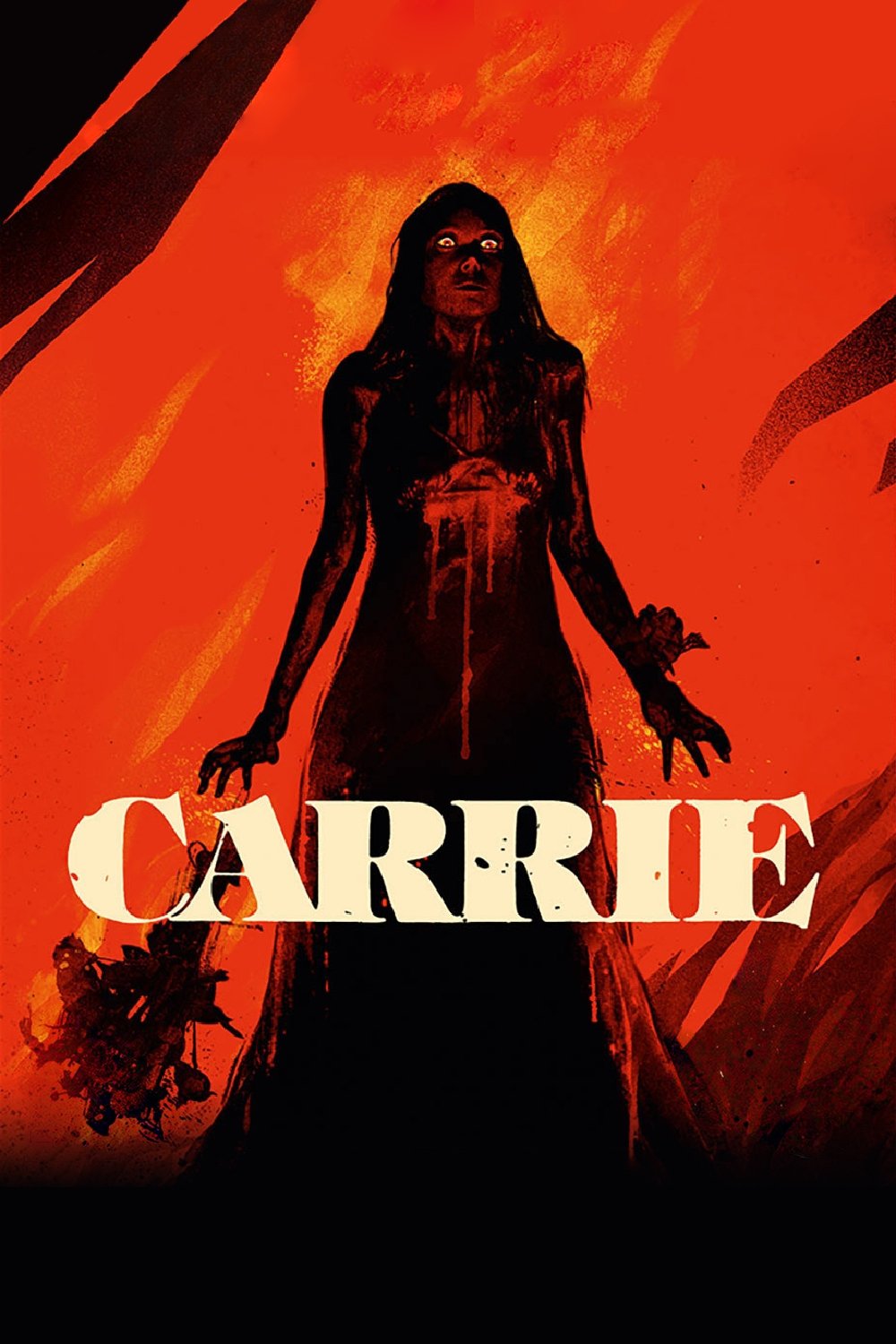
The Question of Truth Behind the Film
From the very first time I watched “Carrie” (1976), I was struck by an odd, lingering curiosity: did any of this really happen? It’s not that I thought there was a telekinetic teenager lurking in mid-century America, but the emotional authenticity and the rawness of its scenarios made me wonder if some shadow of reality had inspired this iconic tale. Whenever a film leaves such a visceral impression, I often find myself questioning how much of what I witnessed is tethered to actual events, or whether it’s entirely a product of literary invention. To me, the urge to interrogate a film’s relationship to the truth isn’t just about literal accuracy—it’s about a deeper search for resonance. Audiences, myself included, frequently lean forward with a heightened sense of engagement when faced with the phrase “based on a true story.” That label carries a gravity, a tacit promise of relevance and legitimacy that pure fiction sometimes seems forced to justify. I find that such assumptions guide us, consciously or not, to interpret character decisions and narrative outcomes through a different lens.
I can’t help but feel that, over the years, the boundary between fact and fiction in cinema has become not just blurry, but almost porous. When I watch a film that claims any anchor in reality, there’s an added charge—an emotional quickening—because I am suddenly witnessing what feels possible, not merely imaginable. Carrie, despite being rooted in horror and supernatural motifs, is filmed and performed with such intensity that it almost dares us to pause and ask: “Could someone have suffered like this in real life?” I think that’s why people return to this question about truth so often; it’s an attempt to navigate not just what’s plausible, but what truths—emotional, psychological, or social—might be lurking beneath the story’s surface. To me, the fascination with a movie’s factual origin flows from our own investment in understanding where stories begin and why they matter.
Historical Facts and Cinematic Interpretation
When I try to trace the historical roots of “Carrie,” I quickly realize it is not adapted from a specific incident but from Stephen King’s first published novel. King’s inspiration reportedly drew from people he had met and events he’d observed in his own life, rather than a headline-grabbing tragedy. This means that while “Carrie” is not reporting history, it borrows from the emotional landscape of lived experience—bullying, alienation, religious fanaticism, and high school cruelty. It fascinates me how elements that feel so painfully specific on screen are, in fact, composites: distilled and amplified to create universal recognition. When De Palma adapts King’s prose, I see choices that compress psychological complexity into visible action—the supernatural becomes a proxy for all the powerless moments that real teenagers endure every day.
I notice how the cinematic interpretation streamlines or even exaggerates aspects of real social dynamics for greater impact. For example, Carrie’s relationship with her mother and her peers is intensified in ways that heighten emotional stakes, perhaps more than most real-life situations. The events are orchestrated so that humiliation and isolation build toward the film’s climactic bloodbath. These narrative devices seem to speak less to historical precision and more to a distillation of many possible truths. For me, “Carrie” reflects a pattern I see in many adaptations: real-world feelings, anxieties, and hostilities are isolated, sharpened, and placed in a dramatic crucible where catharsis can erupt. I find it less relevant whether Carrie was “real” and more compelling to consider how her pain is a mosaic drawn from truth’s fragments, arranged poetically rather than chronologically.
This reorganization of real themes and feelings for screen clarity is something I’ve come to expect in cinema. Whether by eliminating extraneous characters, condensing timelines, or sharpening motivations, filmmakers shape narratives that suit the medium’s rhythm and tone. When I reflect on “Carrie,” I see its structure as one that harvests the raw, unfiltered emotional facts of adolescence and rearranges them to fit a gothic tragedy. As a result, the realism isn’t about literal accuracy, but about capturing the contours of adolescent suffering and rage—realities that may not have unfolded precisely as depicted but nonetheless ring hauntingly true.
What Changes When Reality Is Shaped for Cinema
My experience watching films “based on true events” always reminds me how adaptation is a negotiation. Directors, screenwriters, and actors all participate in a kind of translation—a subtle molding of reality into artifice. In the case of “Carrie,” these changes are perhaps more abstract, since the film does not reconstruct a documented episode but rather converts atmospheres of truth into potent, stylized drama. I’ve observed that when prioritizing cinematic storytelling, filmmakers often face trade-offs between depth and momentum. The emotional journeys of real people might be less coherent or more ambiguous, but cinema thrives on narrative clarity. In translating King’s novel, De Palma and his team refashioned a sprawling, interior monologue-driven novel into a tightly woven, visually driven narrative. What’s lost in psychological detail is often gained in immediacy and affect. I see this as a practical, almost necessary trade—the camera can only register the external; everything else must be suggested through performance, design, editing.
The demands of visual language compel filmmakers to exaggerate and crystallize. In “Carrie,” for example, the infamous prom sequence is stretched and intensified, pushed to a fever pitch that captures the novel’s emotional crescendo through stylized slow-motion, split-screen, and brutal sound design. This is not a depiction of any single, real prom gone wrong, but I believe it expresses the overwhelming terror and humiliation that many real people might recognize from less extreme, but no less formative, personal experiences. What changes in this process, for me, is not the truth, but its shape and scale. Instead of a documentary-style recounting, the audience is given a heightened, metaphorical version—a story that is at once more concentrated and, paradoxically, more recognizably “true” in its emotional resonance.
In this act of transmutation, I see the essential balancing act: filmmakers must weigh fidelity to plausible experience against the imperatives of suspense, pacing, and catharsis. The result, as in “Carrie,” can sometimes read as both archetypal and unreal—an impressionistic treatment of reality’s sharpest edges. Cinema’s constraints are both a limitation and a gift; what is omitted makes room for what must be highlighted. Had “Carrie” adhered more strictly to ordinary reality, I’m not convinced it would have lingered in my memory the way it does. On the other hand, its departures from recognizable experience draw sharper attention to what, exactly, the film is trying to say about its world. This perpetual modification is, for me, the defining tension at the heart of all real-to-reel adaptations.
Audience Expectations and the “True Story” Label
There’s an entire psychology, I’ve noticed, that surrounds how audiences process a film’s origins. If I sit down with the belief that a movie is factual, my response becomes less about “What if?” and more about “Did it happen this way?” I’m primed to scrutinize plausibility, to weigh the evidence. When I watch “Carrie,” fully aware that it is a work of fiction inspired by emotional realities rather than headlines, I find my immersion less troubled by factual doubts and more open to metaphor and symbol. My expectations shift from fact-checking to empathy, from historical scrutiny to universal relevance.
When a film is branded as “inspired by true events,” I find myself treading a peculiar ground in the viewing experience. This label triggers a certain seriousness, even a solemnity, as if the story holds a mirror up to society or offers cautionary tales rooted in real pain. At the same time, knowledge of the film’s creative liberties can make me read its excesses or exaggerations more as commentary than as direct reportage. The supernatural elements of “Carrie” firmly place it in the realm of fantasy, but the relentless bullying and social estrangement feel plausible. I notice a cognitive duality at play: my mind oscillates between viewing these moments as allegorical and asking whether they represent “what really happens” beneath the surface of small-town life. In this sense, the “true story” label is as much about audience disposition as it is about the facts themselves.
With purely fictional stories like “Carrie,” I feel liberated to engage with the material as a kind of myth—a vessel for truths too complex to trace to a single source, yet nonetheless deeply familiar. I’m more receptive to metaphor and emotional authenticity, rather than being distracted by questions of documentary veracity. However, I also know that for some viewers, the lack of factual foundation might diminish the immediacy of the film’s impact. For me, though, narrative authenticity—truthfulness to human feeling, if not to literal events—often leaves a more profound mark than strict historical accuracy could. The distinction colors not only my expectations, but also the terms on which I connect with and learn from the film.
I sometimes reflect on how popular reception shifts as these nuances are better understood. Films that announce themselves as fictional might, for some, carry a kind of disclaimer: “Suspend your disbelief.” But for others—including myself at times—fictional cinema can paradoxically offer access to a deeper layer of shared experience. The “true story” label shapes, restricts, and expands our interpretive palette. It forces me to reckon with the complicated dance between belief and imagination, skepticism and empathy. I suspect that the more aware I am of these shifting expectations, the more thoughtfully I can engage with what the film is urging me to feel or reconsider.
Final Perspective on Fact vs Fiction
In all my years watching and analyzing films like “Carrie,” I have come to regard the intersection of fact and fiction as a sort of creative friction—one that gives birth to meaning rather than merely controversy. Knowing the difference between what is real and what is imagined doesn’t make the film less powerful for me; it simply moves the conversation inward, toward questions of why we believe certain stories resonate so sharply. Being aware that “Carrie” was not lifted from the newspaper but rather brewed from collective memories of adolescence and marginalization, I find myself less concerned with literal truth and more entranced by the film’s ability to distill the essence of universal experiences. The story’s particulars may never have happened, but its emotional geography feels as true as any lived reality.
For me, awareness of fictionality shifts the way I interpret symbols, characters, and conflicts. I don’t look for a singular, “real” Carrie, or a lone villain to blame. Instead, I read the film as a meditation on powerlessness, on the monstrosities created by ordinary acts of cruelty, and on the sometimes-catastrophic consequences of social alienation. Understanding that “Carrie” does not claim to be true in the literal sense frees me to pursue its deeper, often more unsettling, truths—those tied not to fact but to feeling. I’m less obliged to align events with historical benchmarks and more willing to see them as expressive, even operatic, translations of social anxiety and longing.
This awareness doesn’t diminish my engagement; it enriches it. I find myself appreciating the liberties taken, the narrative amplifications, as efforts not to deceive, but to communicate on a grander scale—to speak for those whose stories are rarely documented yet widely felt. In this way, my appreciation of “Carrie” transcends the need for factual provenance. The line between fact and fiction, instead of being a boundary, becomes a portal—one that carries me deeper into the heart of what the film is really addressing. Rather than seeking confirmation of events, I search for resonance, a feeling of recognition, or even warning. Whether rooted in documented truth or in the imaginative leap, the story’s impact on me as an audience member is continually shaped by the awareness of its origins, shifting my interpretive stance without ever dictating it. It’s a dynamic, ongoing negotiation that I cherish every time I watch a film that dares to blur the line between what is and what could be.
For additional context, you may also explore the film’s overview and how it was received by audiences and critics.
🎬 Check out today's best-selling movies on Amazon!
View Deals on Amazon