
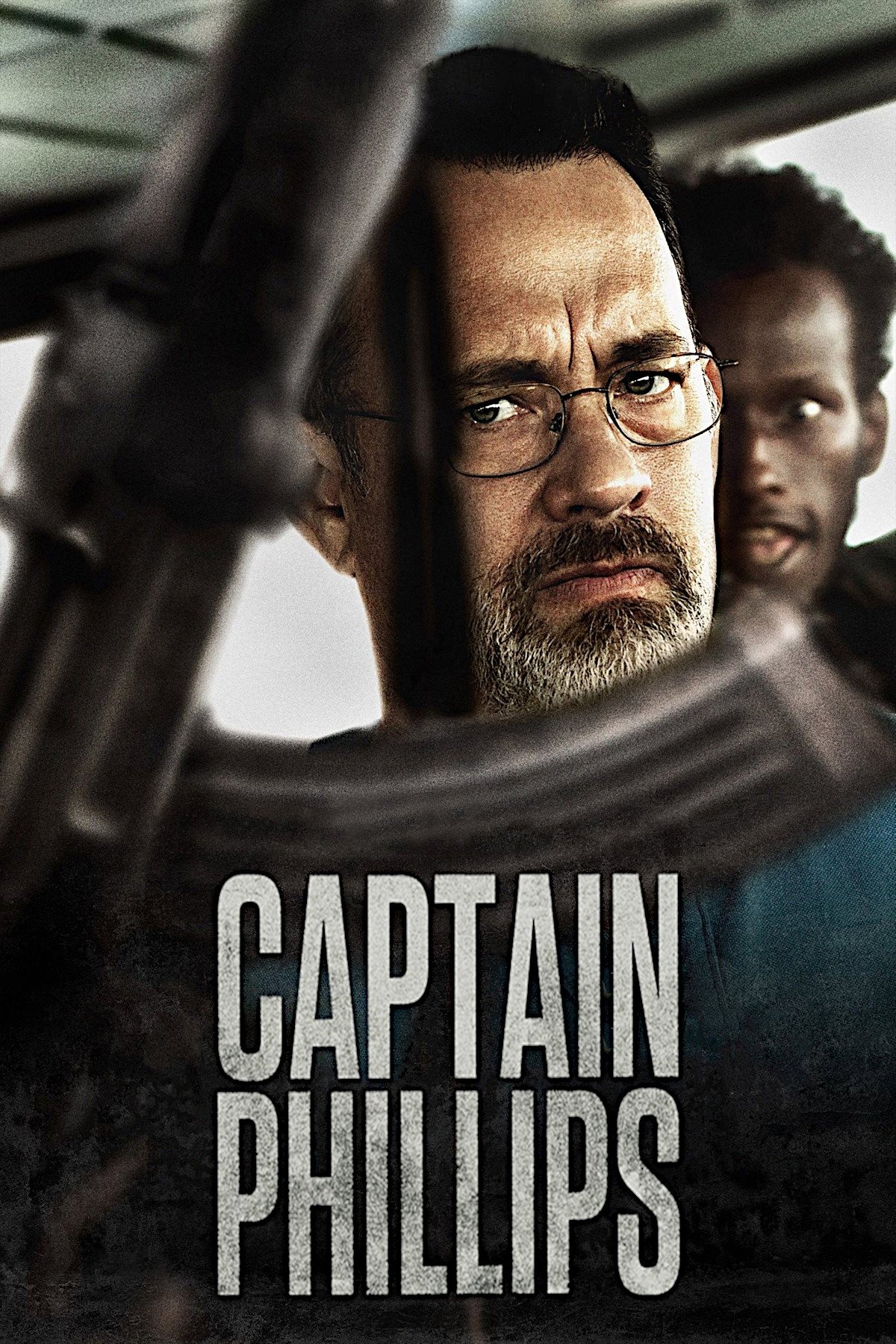
Is This Film Based on a True Story?
When I first watched “Captain Phillips,” I felt an immediate sense of stakes that seemed almost too intense to be the product of fiction. My curiosity pushed me to research the film’s origins, and I discovered that it is indeed based on true events—the 2009 hijacking of the Maersk Alabama by Somali pirates. The movie isn’t just loosely inspired by reality or draped over a fictitious framework; it directly adapts the firsthand account of Captain Richard Phillips, drawing from his memoir, “A Captain’s Duty: Somali Pirates, Navy SEALS, and Dangerous Days at Sea.” For me, knowing it was built on actual events infused every scene with added tension and realism, leaving little doubt that the narrative’s core was rooted in real-life peril experienced by actual people.
The Real Events or Historical Inspirations
I was struck by the film’s direct ties to a specific incident in recent maritime history. The hijacking of the Maersk Alabama occurred in April 2009, marking the first successful pirate seizure of a U.S.-flagged cargo ship in nearly two centuries. Delving into news archives, testimony, and the official records gave me a clear view: this wasn’t a dramatization of anonymous piracy, but a pointed recreation of a defined event with surviving participants and documented actions. I found that the screenplay was closely adapted from Richard Phillips’s own words, as recounted in his memoir. The film relies on real locations, such as the Indian Ocean and the lifeboat that became the focus of the hostage standoff. Key military figures, like the U.S. Navy SEALs and the USS Bainbridge, are based on verifiable operations, and I recognized several plot points directly corresponding to the sequence of negotiations, the failed escape, and the final rescue authorized by President Obama. These details, corroborated by public reports and Phillips’s book, assured me that the narrative skeleton is drawn faithfully from documented history. Still, I was aware that simply having source material doesn’t guarantee every detail will remain untouched in the translation to film.
What Was Changed or Dramatized
As someone who frequently examines scripts versus reality, I’m always fascinated by the minute—and sometimes major—alterations made to intensify drama or streamline storytelling. In “Captain Phillips,” some of the most debated choices center around the portrayal of Richard Phillips himself. By cross-referencing crew interviews and investigative articles, I noticed that Phillips’s leadership style is shown far more heroically on screen than some former crew members described. For instance, several lawsuits and public statements suggest the real Maersk Alabama crew had reservations about the decisions leading up to the attack, such as how far the ship ventured into high-risk waters, which is compressed or omitted in the film to shape a more cohesive narrative focused on the individual bravery of Phillips. The time compression is obvious; the real events unfolded over several days, while in the movie, the sense of constant, unrelenting pressure builds with almost no respite or passage of time.
Another change I noticed was how the Somali pirates are constructed as characters. In reality, the background and motivations of the pirates weren’t so thoroughly explored or individualized in public reports, yet the movie grants them distinct personalities and motivations, particularly with Muse, the group’s leader. While this adds layers for audiences, it’s an interpretive leap: the filmmakers fill in gaps where historical sources leave things ambiguous. Direct dialogue, emotional exchanges, and specific lines—such as Muse’s statement “I am the captain now”—may be inspired by actual exchanges but have been stylized for maximum impact. Also, the role of the U.S. Navy SEALs and their operational tactics are compressed and made more cinematic. The tension around the rescue operation is depicted with split-second drama, whereas the real-world military operation, while tense, was more methodical and governed by fluctuating intelligence and hours of waiting. The emotional climax—the visible trauma on Phillips as he is medically examined immediately following the rescue—draws from accounts of post-crisis shock, but its intimate camera work, lingering shots, and dramatic pacing are clearly shaped to deliver a poignant cinematic moment.
Historical Accuracy Overview
Balancing fact and dramatization always becomes clearer when I put the film’s events side by side with historical records. The broad strokes of “Captain Phillips” track closely with what is documented: the Maersk Alabama did sail into dangerous waters, did get boarded by Somali pirates, and Captain Phillips did end up as a hostage in a lifeboat. The rescue by Navy SEALs through the coordinated sniper attack happened largely as depicted. For example, news flashes from April 2009 confirmed the three simultaneous sniper shots and the dramatic release of Phillips. However, in recounting personal experiences, several crew members disputed the movie’s emotional portrayal of their relationship with Phillips, as well as the captain’s decision-making and actions during the ordeal. Some claimed the threat warnings prior to the attack were ignored and that the crew, not the captain, played a larger role in regaining control of the ship after the pirates initially boarded. These distinctions don’t override the reality-based core, but they do place the film in the realm of dramatization rather than documentarian accuracy.
I also noticed that character dynamics were trimmed or embellished for narrative economy. The pirates’ backstories and English-language exchanges with Phillips are more detailed in the script than what would be supported by radio logs or official statements. The political and economic motivations of the pirates, while rooted in genuine social forces, are presented with dramatic license, constrained by the necessity of screen time and the need to build a personal confrontation between captor and captive. Meanwhile, the technical aspects of the Navy’s rescue reflect credible tactics but are shot and edited for suspense, withholding logistical details that would bog down the pacing. Finally, Phillips’s trauma is amplified through filmic devices—close-ups, silence, and breakdowns—that, while rooted in reported psychological truth, show an interpretive hand shaping the narrative for maximum emotional resonance.
How Knowing the Facts Affects the Viewing Experience
Every time I watch an adaptation drawn from headline events, I catch myself mapping the film’s flashpoints back to the reported facts. “Captain Phillips” is one of those rare movies where my awareness of its real-world inspiration made the tension feel not just theatrical but acutely believable. I couldn’t help but analyze each moment, wondering how much was shaped for the camera and how much actually played out on the open ocean. Instead of pulling me out of the story, this consciousness deepened my engagement; the stakes felt higher because, underneath the screenplay, were lives that genuinely hung in the balance. This sense of authenticity—in large part due to the film’s adherence to the basic facts—provided a grounding effect, even as I noticed the moments where the narrative strayed toward heroism or cinematic neatness.
I’ve often found that the more I understand the real events behind a dramatization, the more attentive I become to the choices filmmakers make about whose perspective dominates and what themes are amplified. In the case of “Captain Phillips,” knowing about the crew’s contesting viewpoints and the pirates’ limited communication skills gives the film a second layer—one where I’m both absorbed in the suspense and alert to what’s missing or re-imagined. When the plot accelerates or scenes escalate, I frequently recall reports highlighting slower, more chaotic moments of confusion during the actual hijacking, making the movie’s tension simultaneously gripping and a little stylized. But this double-vision, far from spoiling the film, supplies added context; it clarifies whose voices are foregrounded and which moments come from invention more than recollection.
Interestingly, I’ve met people who find knowing the facts a distraction, preferring to let the suspense wash over them as pure entertainment. For me, separating the factual elements from the dramatized ones transforms each viewing into a richer experience. I watch with an inner commentary, weighing each line of dialogue and depiction of strategy. At the same time, it becomes easier to appreciate the universal themes—the collision of vastly different cultures, the personal toll of leadership, and the raw mechanics of survival—that the film uses as a lens. Recognizing the balance between record and reinvention doesn’t diminish the accomplishments of the cast or storytellers in my eyes; instead, it reminds me that even the most precise adaptation is still a constructed narrative, designed to invite empathy, tension, and understanding.
By interpreting scenes through a lens aware of both public record and creative license, I find myself better equipped to talk about “Captain Phillips” not just as a thrilling survival story, but as an example of how reality is translated for the screen. It gives me a frame through which to discuss ethics in representation, the inevitability of dramatization, and the reasons audiences connect so deeply with stories grounded in actual events. For those curious about the dividing line between history and adaptation, “Captain Phillips” remains a compelling example—delivering an impression of truth that’s both grounded in fact and tailored for emotional impact on the big screen.
After learning about the film’s origins, you may want to see how audiences and critics responded.
🎬 Check out today's best-selling movies on Amazon!
View Deals on Amazon