
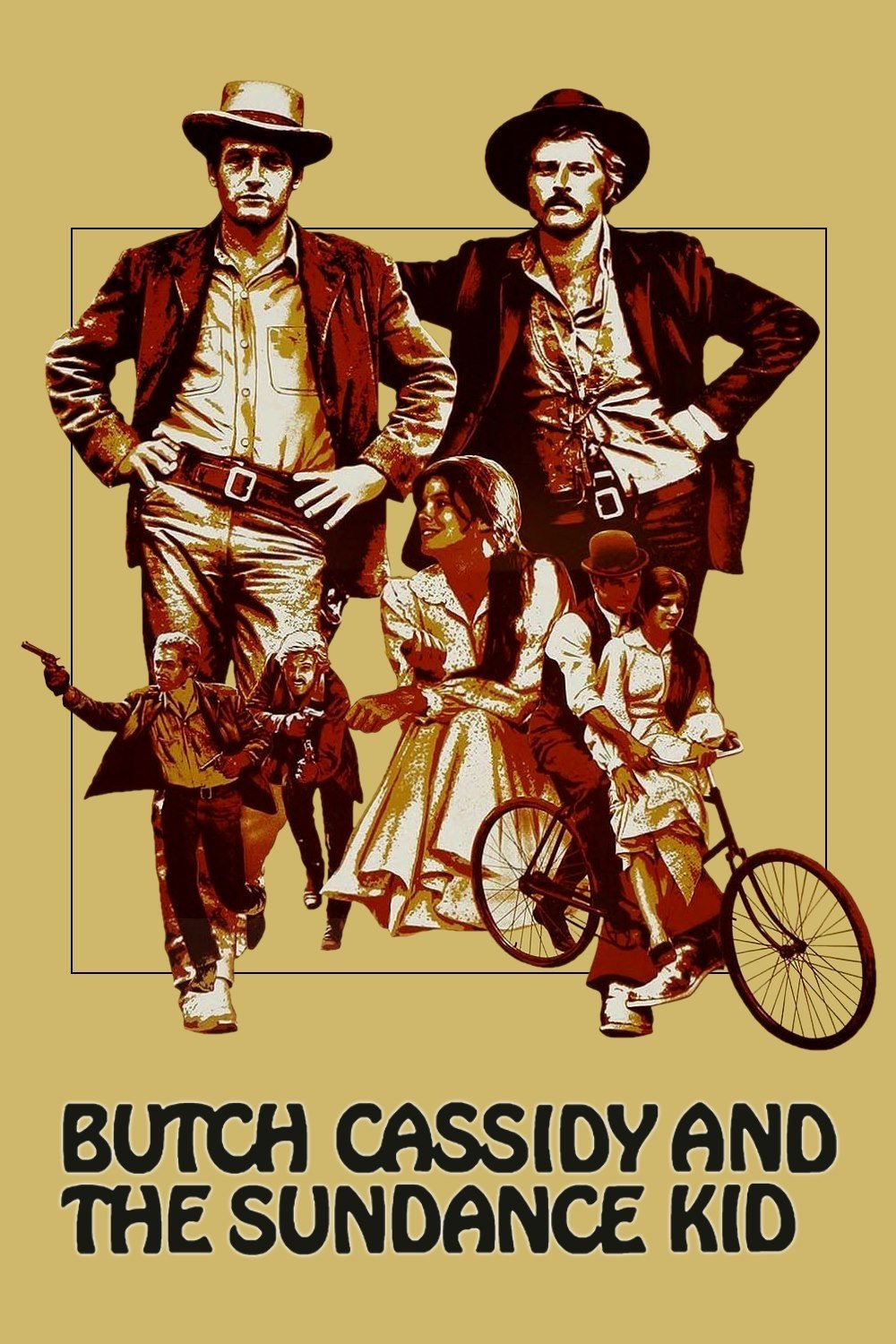
The Question of Truth Behind the Film
Every time I sit down to watch a film that proclaims, “Based on a true story,” I feel a subtle shift in my expectations. In the case of “Butch Cassidy and the Sundance Kid,” that shift is almost palpable. I find myself looking beyond the surface, searching for veracity among the flourishes—a fascination as deeply ingrained as my interest in old legends. There is something about the promise of “truth” in cinema that alters my approach as a viewer. I’m aware that audiences, including myself, are often drawn to narratives that have some foundation in reality, almost as if anchoring the story to historical fact elevates its emotional weight or cultural relevance. When a film evokes the real world, it carries an unspoken contract: that what I’m witnessing, while dramatized, refers back to events that actually unfolded. This expectation can become a lens through which every scene is filtered, turning a mere adventure into something that feels like testimony or witness.
It’s never just idle curiosity that compels me to check whether a story actually happened. More often, it’s the desire for meaning—a kind of reassurance that life itself can be as vivid, strange, and compelling as the stories I consume in darkened theaters. But there’s also a persistent wariness at play. I notice that when a film presents itself as rooted in historical fact, I begin to scrutinize its choices more rigorously: Did these people really exist? Did these events unfold as depicted? The “true story” label sets my intellectual gears turning, often making me less forgiving of creative deviations even though I know, on some level, that narrative cinema is not—indeed, cannot be—pure reportage. Ultimately, the label of authenticity comes with its own complex set of assumptions, affecting not just my experience of the film, but my imagination of history itself.
Historical Facts and Cinematic Interpretation
When I reflect on “Butch Cassidy and the Sundance Kid,” the boundary between documented fact and cinematic fantasy is anything but straightforward. My research, pieced together through books, articles, and even the odd local history museum, reveals that Butch Cassidy and the Sundance Kid did exist, as did the so-called “Hole-in-the-Wall” gang. Historical records confirm that they robbed banks and trains, fled from authorities, and eventually disappeared in South America under mysterious circumstances. Yet, as soon as I start investigating the specific contours of their lives, the concrete becomes misty. So much is lost to time or shrouded by legend, and I quickly realize how much latitude any filmmaker might have taken in adapting their stories for the screen.
The film, in my experience, doesn’t so much reconstruct the past as blend fragments of fact with a distinctly modern sense of irony and camaraderie. Events are streamlined; timelines are compressed. I often notice dialogue that is unmistakably too witty and modern for the era, revealing a deliberate choice to foreground entertainment over ethnographic fidelity. The train robberies that anchor the narrative are drawn from actual incidents, but their details—the explosions, the bumbling Pinkerton agents, the meticulous chases—are heightened, reconstructed, and sometimes outright invented to serve the film’s structure. I see the same shape-shifting with characters. The historical Butch Cassidy, born Robert LeRoy Parker, possessed a far more ambiguous record than the generous, quick-witted rogue played by Paul Newman. The historical Harry Alonzo Longabaugh, known as the Sundance Kid, was indeed a marksman, but evidence of his personality or interpersonal dynamic with Cassidy is more inferential than strictly documented.
Perhaps the greatest transformation comes in the film’s depiction of the South American period. Archival evidence is patchy at best; accounts vary as to whether either outlaw died in San Vicente, Bolivia, as depicted in the film’s climactic shootout, or slipped away into legend. The filmmakers, I notice, choose narrative closure over unresolved ambiguity. In doing so, they do not simply report the past but reconstruct it with an eye to thematic coherence. The end result is a cinematic world recognizably anchored to real people and events but diffused through the haze of selective storytelling choices, hindsight, and the demands of genre.
What Changes When Reality Is Shaped for Cinema
I am continually fascinated by what’s gained and lost when history is tailored to the logics of cinematic narrative. Watching “Butch Cassidy and the Sundance Kid,” I’m acutely aware of the choices made—choices I have also encountered in countless other films: which aspects of the record to include, which to omit, and which to invent outright. The act of adaptation is less a matter of simple translation and more a process of negotiation. For a story to move at the pace and with the clarity demanded by a two-hour feature, there is almost always a compression of time, a fusion of characters, and a glossing over of the messy, contradictory complexities that define actual lives.
Take for example the film’s seamless movement from the American West to the lush landscape of Bolivia. In historical reality, the fugitives’ transition was likely far more fraught and unromantic, marked by logistical hardship and long stretches of uncertainty. The movie, however, distills this period into a brief, vibrant montage—a choice that enhances narrative propulsion but inevitably departs from any attempt at comprehensive depiction. I find myself continually measuring these trade-offs. The former lawmen, adversaries, and love interests are likewise sharpened or softened for maximum dramatic effect, with personalities shaped to serve particular themes: loyalty, friendship, resilience in the face of historical change. I see in their friendship a poignancy that may be only partially rooted in fact, but fully realized as an emblem of a vanishing frontier spirit.
In pursuing narrative unity, filmmakers often sideline or elide the untidiness that clings to most historical records. The inexplicable details, the unresolved subplots, the characters who appear for one chapter and then vanish—these are often left out. I entirely understand why. After all, cinema operates in a medium that prizes cohesion and emotional arc above the documentation of every stray event. If the story were presented as unmediated truth, I suspect it would feel scattershot and unsatisfying. Yet, by reframing and reconfiguring select moments, the narrative acquires a flow and resonance that is unmistakably cinematic.
Still, I notice that some real-world nuances become casualties of this process. The inflation of character traits for narrative shorthand, for instance, transforms living people into symbols. Likewise, historical environments—such as the dusty outlaw hideouts or claustrophobic towns—are chosen as much for visual impact as for their authenticity. Sometimes entire episodes, such as the relationship between Etta Place and the two men, are treated with more poetic license than documentary rigor. For me, the tension between truth and storytelling is not so much a weakness as a defining creative dilemma—one that every history-based film must negotiate anew.
Audience Expectations and the “True Story” Label
I’ve observed, both in myself and others, that how a story is contextualized—whether as factual, inspired by real events, or pure fiction—colors the entire viewing experience. With “Butch Cassidy and the Sundance Kid,” the effect is particularly pronounced. When I watch knowing it references real historical figures, my attention focuses on the interplay between dramatization and documentation. I find myself questioning what is plausible, what’s probable, and what’s wholly invented. For audience members who enter the theater expecting documentary-like accuracy, every deviation from the perceived record can feel like a betrayal or at least an equivocation. Conversely, when I approach the film as a work “inspired by true events,” I accept a certain degree of embellishment as not only inevitable but desirable. The film’s playful tone, wry dialogue, and occasionally anachronistic humor become features rather than flaws—they signal a self-aware approach that prizes emotional engagement over dry recitation.
There’s also the phenomenon of retroactive discovery. After viewing a film, many people—myself included—actively seek out background on the real-life events and characters. This process often reshapes my original impressions, layering the fictional narrative with new shades of meaning. Sometimes it enhances the film’s impact, casting familiar scenes in the light of bittersweet truth. At other times, it exposes creative liberties that momentarily jar me out of immersion. I’m struck by how the “true story” label activates a specific mode of engagement, prompting research, comparison, and a grappling with the unstable nature of historical memory. A movie like this becomes a springboard for further inquiry rather than a closed universe unto itself.
At the same time, I’m aware that not everyone approaches such films with the same investigative zeal. For some viewers, the label is a marketing flourish—one that imparts gravitas or intrigue but doesn’t fundamentally alter their appreciation. For others, it raises the bar, setting up expectations for verisimilitude and coherence that can strain under the demands of spirited storytelling. The persistence of legend over verifiable fact in the case of Butch and Sundance might even work to the film’s advantage: ambiguity leaves space for romanticization, inviting the audience to fill in gaps with their own imaginations. I often find value in this open-endedness; it encourages me not just to watch, but to imagine, to question, and to wonder what lies between the poles of pure fact and invention.
Final Perspective on Fact vs Fiction
Ultimately, my encounter with “Butch Cassidy and the Sundance Kid” is one colored by a continual oscillation between the poles of fact and creativity. Knowing what is real and what is fictional doesn’t simply resolve the story into a binary of true or false. Instead, it furnishes the narrative with supplementary layers—each one shaping my interpretation in subtle, personal ways. The awareness that certain events actually took place invests the film with an undercurrent of possibility: that such improbable characters could grace the stage of history, that their exploits might persist in both archival records and cinematic dreams. But my knowledge of the film’s many fabrications tempers this with an appreciation for the artistry of adaptation—the skillful manner in which real-world fragments are reconfigured to attain emotional resonance and narrative cohesion.
I find that understanding the historical foundation of a story does alter my relationship to it. My investment becomes doubled: I’m intrigued by the reality the story hints at, but equally absorbed by the interpretations and inventions filmmakers deploy to bring that history to life. What exists on screen is not intended as a substitute for research or scholarship, but as an entry point to a more nuanced engagement with the past. Sometimes, recognizing the creative license taken enhances my enjoyment—shifting my focus away from the minutiae of documentation and toward the larger questions the film raises about identity, friendship, and cultural transformation. Other times, it invites me into a kind of playful skepticism, where I delight in disentangling fact from artifice.
By the end of my viewing, I rarely find my experience diminished by the presence of invention. Rather, I become more attuned to the different registers a film like this can occupy: as entertainment, as mythmaking, as a loose meditation on lives half-remembered. Knowing what is real or fictional acts not as a verdict but as an enrichment, allowing me to appreciate the ongoing dialogue between history and storytelling. “Butch Cassidy and the Sundance Kid” does not present itself as a strictly accurate document, and for that reason, my engagement with it remains dynamic—open to continual reconsideration and discovery.
For additional context, you may also explore the film’s overview and how it was received by audiences and critics.
🎬 Check out today's best-selling movies on Amazon!
View Deals on Amazon