
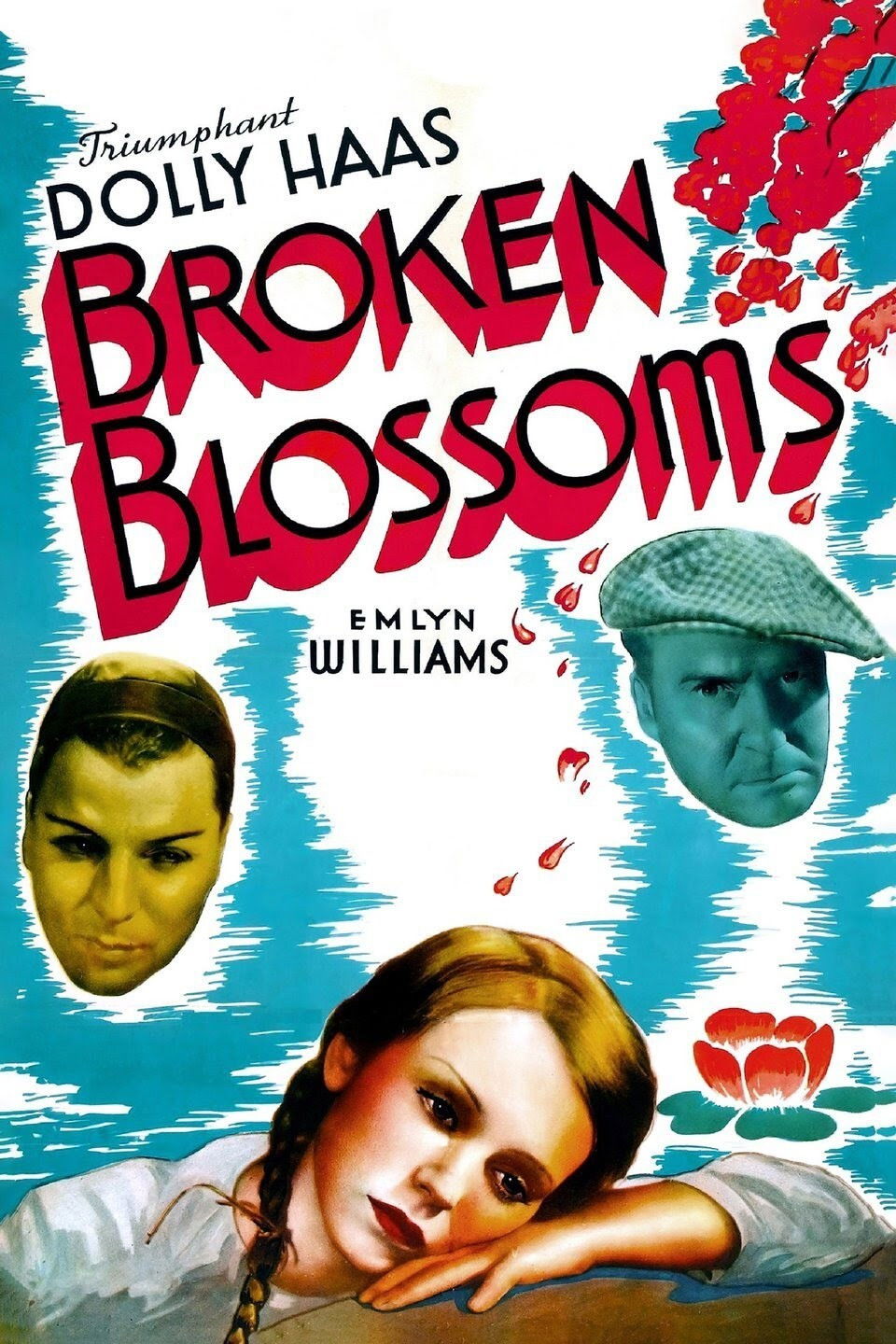
Is This Film Based on a True Story?
The most striking thing that hit me as I began to examine “Broken Blossoms” was just how wholly rooted it is in fiction, rather than any direct reporting of real events. When I first encountered the film, I was curious if its moving depictions of hardship and cross-cultural longing were inspired by an actual historical case, a newspaper article, or a biography. However, as I dug deeper, it became clear to me that “Broken Blossoms” does not directly reconstruct any one person’s life or a particular incident from history. The narrative, as I came to understand it, is entirely the product of literary imagination, shaped primarily by the novella “The Chink and the Child” by Thomas Burke, itself a work of fiction. While the world of the film is evocatively drawn from the social atmosphere of the late Victorian and Edwardian era London, I did not find evidence linking its characters or primary plotline to real individuals or a verifiable event. In essence, I see “Broken Blossoms” not as a documentary or a cinematic restaging of established facts, but as a fictional tale built atop a foundation of period observation and literary invention.
The Real Events or Historical Inspirations
As soon as I started investigating what real-world sources the film might draw from, I saw how “Broken Blossoms” is built on layers removed from direct history. My research led me first to Thomas Burke’s 1916 short story collection, “Limehouse Nights,” which features “The Chink and the Child,” the direct precursor to the movie. This story doesn’t recount a real incident; instead, Burke cobbles together an array of urban legends, street anecdotes, and his observations of East London’s Limehouse district — a place where Chinese immigrants, sailors, and the British working poor mingled at the turn of the 20th century.
When I delved into the atmosphere of the period, I saw the resonance. London’s Limehouse was, at the time, the subject of significant myth-making and social anxiety. Tales circulated about heroin dens, interracial relationships, and poverty-induced violence. These stories were rarely based on rigorous journalistic investigation. Instead, they were shaped by rumor, prejudice, and the broader social anxiety of a metropolis dealing with rapid change. Burke himself often blurred the line between first-hand observation and creative embellishment, populating his fiction with archetypes rather than biographically accurate people. From what I’ve uncovered, there’s no record of any real “Cheng Huan” or “Lucy Burrows” living in London’s East End during this period, nor of a relationship precisely mirroring the film’s events.
When the director D.W. Griffith adapted Burke’s story into “Broken Blossoms,” he did so at a further remove from documented events. Griffith’s script wasn’t based on archival research or interviews with real participants; it was about embodying the emotional register conveyed in Burke’s writing, and the social tensions of the imagined East End rather than reconstructing a true account. Even the geography shown in the movie — shadowy opium dens and fog-choked alleys — felt, as I watched it, closer to a literary fantasy of urban decay than a recreating of a specific event or documented experience.
What Was Changed or Dramatized
One of the most absorbing aspects, for me, is how Griffith and his collaborators consciously chose to dramatize social dynamics and characterizations for emotional effect rather than strict authenticity. When I compare Burke’s original story to the film, I see clear tailoring to the screen: certain characters are streamlined, their motivations sharpened, conflicts intensified. Lucy Burrows in the film struck me as even more isolated and vulnerable than in the novella; her innocence feels dialed up to maximize audience sympathy.
Cheng Huan, the Chinese protagonist, is fictionalized with layers of poetic tragedy that aren’t tied to a real biography. Instead of being closely grounded in the realities of Chinese immigrant experiences, his character is crafted as a spiritual idealist — a Buddhist missionary with a longing to spread peace. This idealism is, in many ways, heightened for narrative drama. Everything from his lifestyle to the way his cultural background is visualized in the film — elaborate temple sets, stylized robes, and Buddhist symbolism — is exaggerated and curated for emotion rather than strict adherence to historical norms.
I also noticed how the portrayal of Limehouse leans heavily on stylization. Where actual historical accounts from the era (police logs, city directories, or social reformers’ tracts) describe a neighborhood dealing with the struggles of overcrowding and economic hardship, the film transforms Limehouse into a near-mythical realm of menace and gloom. Cinematography, lighting, and costume design all serve to place the viewer deep inside a fictionalized, almost expressionist vision of urban malaise—one unanchored from the granular realities of early 20th-century London life.
Perhaps most significantly, the antagonistic figure of Battling Burrows is rendered as the archetype of unchecked brutality. While domestic violence certainly existed in the era (and has been documented in various social histories), the film magnifies this condition to tragic, melodramatic proportions. In my view, the patterns of characterization are designed to evoke strong feelings, rather than to record a particular history or faithfully depict period society. For those who value authenticity in historical cinema, these clear examples of dramatization make it evident to me that “Broken Blossoms” is not a reliable reporting of true-life events, but rather a work shaped by emotional resonance and the conventions of melodrama.
Historical Accuracy Overview
When I try to reconcile the world depicted in “Broken Blossoms” with the realities of London at the time, I find a fascinating interplay between evocative period detail and imaginative embellishment. Certain surface textures are consistent with what I’ve learned about Limehouse around 1900—there was a presence of Chinese sailors, some Chinese-owned businesses, and a significant community of impoverished working-class families. The film succeeds, in my estimation, at imparting the sense of claustrophobia, despair, and hope for escape that colored contemporary descriptions of slum life. These elements are accurate to the mood and setting if not always precise in the factual sense.
On the other hand, I see the divergences stack up quickly when examining the specific situations and characters. The presence of violent, larger-than-life archetypes like Battling Burrows, or the saintly pacifist Cheng Huan, is, to my mind, typical of Edwardian melodrama rather than a product of rigorous historical research. Actual records from the time do not present evidence of a notable or widely reported incident where a Chinese missionary engaged in a tragic romance with a British working-class child, or suffered persecution in exactly this way. The prevalence of opium dens, for instance, was often exaggerated by British pulp fiction and tabloid journalism of the day. This is reflected, almost self-consciously, in the stylized way Griffith constructs his film’s sense of place.
What interests me most is that while the broader phenomenon of cross-cultural encounters and social hardship did exist, the particulars—down to the narrative arc, emotional stakes, and character motivations—are products of an imaginative process. Thus, in comparing the film to available historical records, I see “Broken Blossoms” as illustrating social anxieties and dramatic fantasies rather than recounting a verifiable slice of history. The result, as I perceive it, is a stylized tableau that uses sprinklings of historical color to heighten the impact of its fictional story.
Even the representation of social attitudes, especially as they pertain to race and class, is a mirror of prejudices and fascinations prevalent among contemporary audiences and writers, more than evidence-based accounts. Griffith’s depiction of characters and neighborhood life can tell me much about early 20th-century perceptions—but less about daily realities or specific historical events. For those like myself who seek out truth claims in film, it seems clear that this work is better read as an artifact of cultural myth-making than as documentation.
How Knowing the Facts Affects the Viewing Experience
My understanding of the film’s origins, or lack thereof in historical fact, greatly changed my experience on each subsequent viewing. Early on, I found myself emotionally caught up in the fates of these characters and the sense of foreboding that permeates every scene. But once I began to appreciate that “Broken Blossoms” is almost entirely a work of fiction—a reflection of how Edwardian England imagined itself and its ‘others’—my awareness shifted. I approached each scene not as if it were a window onto documented reality, but as a stylized performance of cultural anxiety and hope.
Knowing that there is no real Lucy, Battling Burrows, or Cheng Huan makes me watch with a detached curiosity: how did the social imagination of 1919 try to make sense of a rapidly changing world, and what stereotypes or myths did filmmakers draw on? This realization doesn’t lessen the emotional impact, but it does clarify for me which aspects of the film invite critical reflection on narrative construction, rather than historical verification. Scenes that once struck me as profoundly tragic now appear as melodramatic climaxes shaped deliberately to stir the viewer’s heart, rather than retell a precedent-setting historical crime.
There’s also a sense of license that comes with knowing a work is so obviously fictional. I feel free to interrogate its choices: how does the film construct Limehouse? What does it suggest about race and belonging, about suffering and empathy, and how are these ideas framed by the perspectives of its time? Without the scaffolding of real events, I am able to concentrate on how fiction shapes emotion and collective memory, rather than weighing the film for accuracy or faithful testimony.
Finally, I’ve come to appreciate that even when a film is not based on a true story, it can still capture a kind of emotional or psychological truth about its era. For me, “Broken Blossoms” is less a piece of historical reporting than a fever dream of 1919’s England—a vision shaped by hopes, fears, and the conventions of melodrama. This framing fundamentally alters the terms of my engagement with the film: instead of measuring it against the yardstick of real events, I examine it as a mirror, however distorted, of an age grappling with questions of modernity, migration, and violence. Knowing the facts, or the absence thereof, frees me to respond as an analyst and a viewer attuned to both the artifice and the ambiance the film so powerfully conjures.
After learning about the film’s origins, you may want to see how audiences and critics responded.
🎬 Check out today's best-selling movies on Amazon!
View Deals on Amazon