
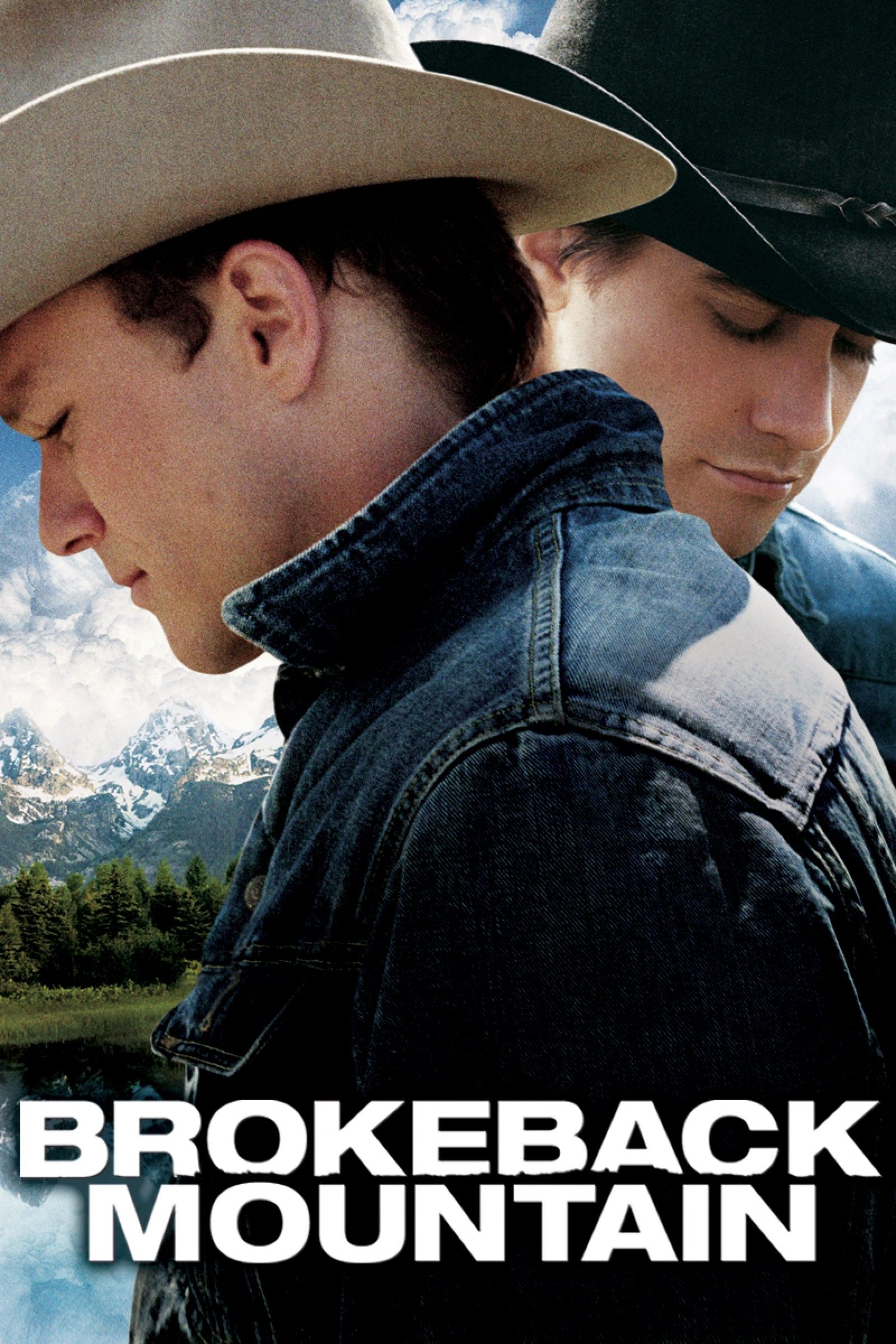
The Question of Truth Behind the Film
I remember the first time I watched Brokeback Mountain, I couldn’t help but wonder—was this story plucked from a real person’s life? That instinct to reach for the “truth” within a film like this one feels almost automatic. It seems to me that many viewers, myself included, approach such emotionally resonant narratives hoping to discover something beyond fiction—a tether to reality that anchors the story in lived experience. When I find myself deeply moved by a film, the urge to ask “Did this really happen?” is less about curiosity and more about wanting reassurance that the emotional impact I felt is justified by history. There’s an unspoken assumption that “based on a true story” lends credibility and even urgency to the emotions on screen, almost as if fiction requires validation from real life to hit as hard. For audiences, and certainly for me, the label of fact or fiction molds the framework through which the drama is interpreted. When I know a film is rooted in true events, I bring a different sort of attentiveness; I look for echoes, hints, or even outright statements of historical fact that lend the film authenticity and weight. On the other hand, if I’m told a film is entirely fictional, I grant it license for invention, maybe letting down my guard regarding plausibility, but also searching for truths of a more universal kind. With Brokeback Mountain, the ambiguity about its real-life inspiration shaped the way I approached everything I saw unfold between Ennis and Jack.
Historical Facts and Cinematic Interpretation
For me, the line between what actually happened and what the camera presents can be slippery, especially with narratives as intimate and emotionally precise as Brokeback Mountain. In considering how films handle real events—even when they’re only loosely tied to history—I’m reminded that adaptation always involves choices. From all I know about Brokeback Mountain, its factual origins rest not in specific historical incidents but rather in the broader context of rural social life and evolving attitudes toward sexuality in the American West. Annie Proulx, whose short story the film adapts, was reportedly influenced by stories she heard over many years in Wyoming, and yet she crafted characters and events that are not known to have direct, real-world counterparts. When I watch the film, I’m struck by how the narrative borrows from the world’s social truths—homophobia, geographic isolation, emotional codes of masculinity—but recombines them in ways that serve the structure and emotional arc of a screenplay.
It fascinates me how, in the hands of a filmmaker, even a wholly fictional narrative can feel more real than the sum of its manufactured parts. Scenes in Brokeback Mountain—like a furtive glance, or a decades-long love confessed in silence—are so closely observed that I sometimes forget I’m not witnessing actual biography. Yet when moments are condensed or reorganized for narrative clarity, as often happens in cinema, the story can depart drastically from whatever “facts” it was inspired by. In my experience, these choices reflect a pursuit less of journalistic rigor and more of expressive truth. For instance, compressing two decades of secret meetings into a handful of scenes doesn’t mimic reality, but it brings the emotional cost of secrecy into sharper focus. In films like Brokeback Mountain, I find the truth often lives somewhere between honest portraiture and carefully chosen fiction, constructing a kind of emotional reality through the reassembly of both the recognizable and the imaginary.
The confluence of actual history and creative interpretation is most evident for me when a film deliberately blurs boundaries—invoking real social issues, locations, or time periods without aiming to reenact a particular factual tale. The backdrop of 1960s and 70s Wyoming carries with it a tangible history of cultural attitudes and lived experience, which the film renders nearly palpable. Watching Brokeback Mountain, I’m aware this landscape and era are meticulously researched; the costuming, the language, the rhythms of ranch life all gesture toward a reality that, while not exact, resonates as credible. Yet I know these elements are only the scaffolding for a story constructed by the screenwriter, director, and actors—a narrative architecture that reimagines, rather than reproduces, lived events. This process, in my eyes, invites me to engage with history as something interpreted and filtered, not simply recorded and reported.
What Changes When Reality Is Shaped for Cinema
The process of translating social realities—or even half-remembered local myths—into cinematic storytelling has always posed a unique dilemma for me as an analyst. On one hand, I am drawn to films that pursue authenticity, regardless of whether they are tied to strict historical documentation. On the other, I recognize the necessity for cinema to distill, compress, and even reinterpret in order to create coherence and momentum. With Brokeback Mountain, I see a project that navigates these trade-offs in delicate fashion. The real rural West was and is a vast expanse of contradictory values and hidden lives; film, by its nature, can only sketch in the outlines, choosing some details and leaving out others for the sake of focus. When I think about what gets lost or gained in this process, I feel a tension between fidelity to real experience and the needs of narrative economy.
One practical change I see is the shaping of temporal experience. In life, years pass with little outward drama; few people experience their pivotal moments in increments so neatly arranged. Brokeback Mountain rearranges the chaos of real emotional life into set-pieces—meetings by the lake, arguments in a small kitchen, a postcard that signals a breaking point. These moments stand in for what might have been years of subtle change or wordless longing. Sometimes I ask myself if this telescoping of time flattens the texture of reality, or if, paradoxically, it intensifies the impact by letting us see the arc more clearly. Cinema’s need for arcs—rising action, climax, resolution—means that real ambiguities often must be resolved into something more legible for a viewing audience. I find that while this can produce clarity and focus, it can also mean that some of the messiness of lived experience is sacrificed on the altar of narrative structure.
Another tangible shift is in the realm of dialogue and gesture. In Brokeback Mountain, much of the communication is nonverbal—glances, physical awkwardness, things left unsaid. While this feels true to how uncomfortable conversations played out in midcentury Wyoming (at least as I envision it), there’s also an artifice to how film isolates and magnifies these silent exchanges. I notice a choreography to their pain and affection, one that serves the visual medium even as it may not mirror the granularity of real conversations. Characters become, in a sense, more than individuals; they stand in for types, for moods, for eras.
Thinking more broadly, I’m always conscious that any representation, even one striving for historical fidelity, must carve away complexities to make space for audience engagement. Watching Brokeback Mountain, each decision in set design, costume, and casting becomes a practical compromise: too much realism risks alienating viewers with unfamiliar dialects or now-archaic detail; not enough, and the sense of place dissolves. For me, this means that every film based on real or semi-real backgrounds asks the audience to participate in a contract—accepting some artifice in return for a clearer, if incomplete, emotional journey.
Audience Expectations and the “True Story” Label
I’ve often noticed that the explicit labeling of a film as “based on a true story” changes the way I, and others, prepare to watch. This is especially clear when I compare my reactions to a film whose roots are ambiguous, like Brokeback Mountain, with movies that explicitly base themselves in documented fact. There’s a subtle negotiation that happens in my mind: if the story happened to real people, I might approach the emotional events with greater gravity, imagining I am learning about neglected or buried histories. Knowing a film claims to be factual, I can’t help but watch it with the assumption that the emotions portrayed are not just dramatic necessities, but echoes of real-life suffering and longing.
In situations where a film, like Brokeback Mountain, feels incredibly specific but ultimately fictional, I find myself focusing less on who did what, when, and more on what the story reveals about its world. I stop looking for biographical accuracy and start paying attention to the plausibility of character behavior: does it feel true if not verifiable? Does it reflect the emotional landscape of that era, even if the events themselves are imagined? Watching Brokeback Mountain evokes a kind of historical empathy that is not dependent on fact-checking. Instead, it relies on the authenticity of feeling—something that often feels more “true” to me than surface-level realism.
Sometimes, I find the “true story” label can create a burden for both the film and the viewer. There’s an expectation of accuracy—down to dialogue, events, and social context—that can leave me disappointed when artistic license intervenes. But with openly fictional narratives, I’m more forgiving of sleights-of-hand, accepting symbolism and compression as necessary tools of the medium. Films that exist in the middle ground, like Brokeback Mountain, force me to reckon with my own need for certainty. I become keenly aware that the truth offered is less about court records or identifiable biographies, and more about evoking the emotional realities that bind fiction to our own lives.
I also reflect on how critical and audience reactions can shift when these boundaries blur. If audiences leave the theater believing Ennis and Jack were real men with their stories documented somewhere, their post-screening discussions might center on justice, representation, or even reparation. If, instead, they understand the film as inspired by atmosphere and social conditions, the conversations often broaden—shifting to what the narrative says about the times, the landscape, the hidden struggles of millions rather than two. For me, that difference matters; it shapes not only how I empathize with the characters, but also how I connect the film’s themes to real-world issues and ongoing social debates.
Final Perspective on Fact vs Fiction
When I assess how Brokeback Mountain lives in the space between fact and invention, I feel my own interpretive lens adjusting. Knowing that the characters are fictional—crafted from a synthesis of anecdote, observation, and attentive storytelling—frees me from the pressure of tracking historical fidelity. Instead, I hone in on what the film captures about longing, secrecy, and the passage of time. I realize the film’s power lies not in its fidelity to a specific set of events, but in its evocation of a context that, while not biographically precise, mirrors the emotional truths of many real lives. Oddly enough, this freedom from strict reality doesn’t lessen the impact for me. Sometimes, it even heightens my engagement by letting me imagine the countless untold stories that the film alludes to but does not claim as its own.
The question of what is “real” versus what is “fictional” changes the texture of my attention. I become aware of my own shifting criteria for authenticity. If the story is fact-based, I watch for documentary evidence of life in that time and region. If it’s wholly invented, I search for universals: fear, tenderness, resignation, hope. Brokeback Mountain, to my mind, sits in a third space—its specific love story fictional, but its emotional claims resonant with countless real histories. Each viewing, I notice how this awareness shapes—not the quality of my experience, but rather the meaning I extract. My takeaways become less about the details of plot, and more about what the narrative suggests regarding human possibility and limitation.
Ultimately, the interplay of fact and fiction in cinematic storytelling provides, for me, a way to re-examine how films engage audiences with both the specific and the general, the personal and the archetypal. Brokeback Mountain does not offer a diary or a court record; it offers the distillation of a thousand half-remembered anecdotes, recast into a story of longing and loss. The awareness of what is invented and what is borrowed from life nudges me to think about how little and how much a film must be “true” to feel resonant. Regardless of factual origin, I find myself returning to the film’s emotional realities—those elements that, while not strictly historical, open doors to empathy and reflection for me as a viewer and essayist.
For additional context, you may also explore the film’s overview and how it was received by audiences and critics.
🎬 Check out today's best-selling movies on Amazon!
View Deals on Amazon