
Is This Film Based on a True Story?
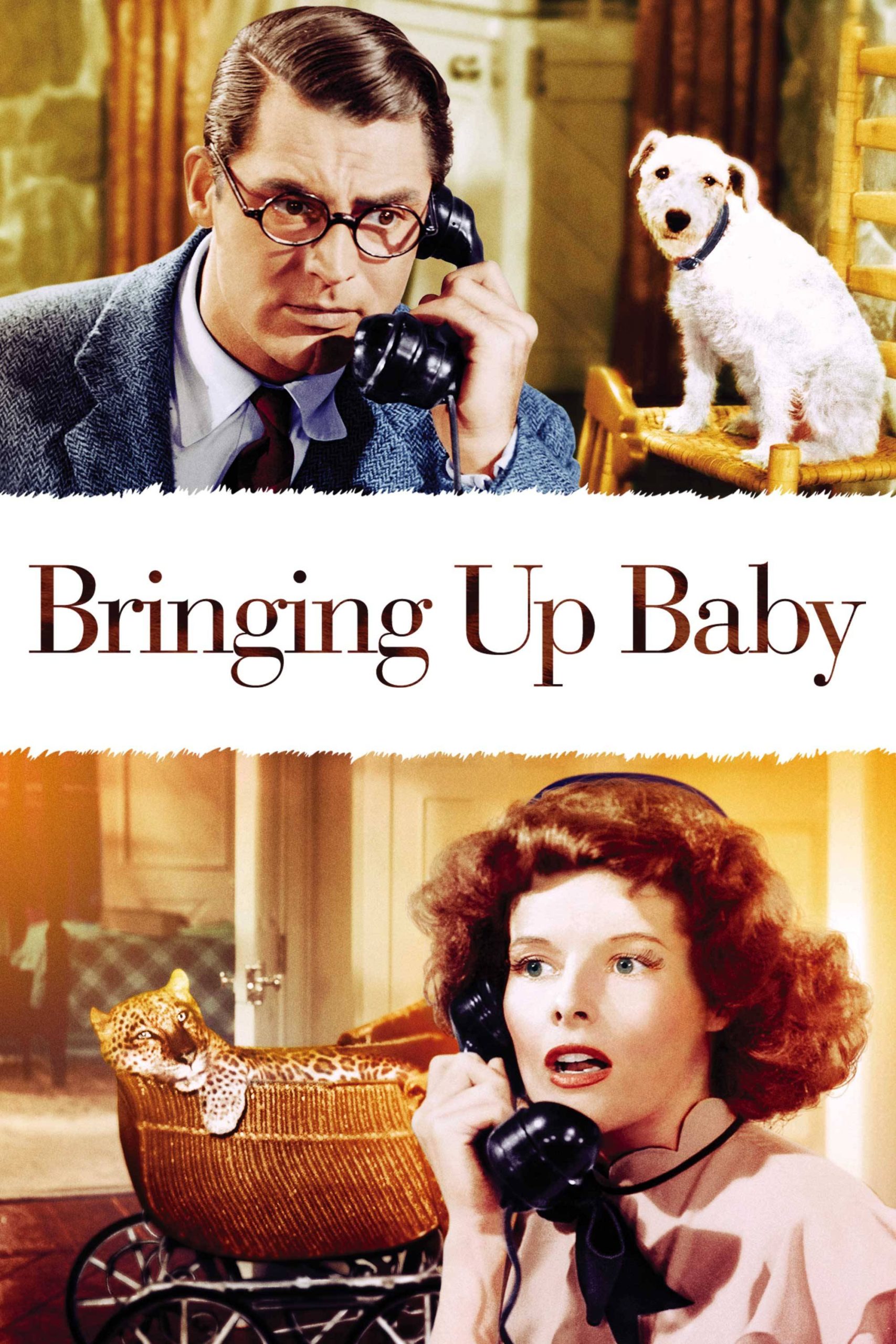
Whenever I sit down to rewatch “Bringing Up Baby,” I’m struck by how the film’s whimsy and escalating absurdity seem to belong to a world that couldn’t possibly be anything but a creation of Hollywood’s most playful imagination. For me, the entire ordeal of a befuddled paleontologist, a mischievous heiress, and a leopard named Baby can only be described as entirely fictional. I’ve explored all available production histories, script origins, and interviews, and nowhere have I found evidence that this screwball comedy was based on real people, true events, or actual mishaps. While many films of the era subtly reflected contemporary trends or adapted newsworthy sensations, “Bringing Up Baby” stands in sharp contrast by consciously embracing contrived comic chaos rather than drawing from fact. So, in my understanding, the film’s outlandish plot is a clear product of fiction. It is neither a loose retelling nor an adaptation of historical occurrences, but rather a showcase of creative storytelling meant to entertain rather than to educate or document.
The Real Events or Historical Inspirations
When I first dove into researching the potential inspirations for “Bringing Up Baby,” I wondered if there might be at least a kernel of real-life eccentricity or a notorious society incident that sparked the story. But the deeper I delved into archives, interviews with screenwriters, and contemporary news articles from the late 1930s, the more I became convinced that the movie’s premise—especially its leopard-and-dinosaur-skeleton angle—was entirely invented to maximize comic effect. The script, written by Dudley Nichols and Hagar Wilde, originated from a short story by Wilde that was published in Collier’s magazine. In my reading of that story, which also features a scatterbrained heiress and a hapless paleontologist, it’s clear that the plot was crafted to exploit the possibilities of farce, not to mirror someone’s real biography or a historical event.
I tried tracing whether any renowned paleontologists or New York socialites lived out such a wild misadventure, or if the idea of a tame leopard running loose in the Northeast had any reporting precedent. What I found suggested otherwise. Nothing in the period’s zoological records or news coverage indicates that such an incident happened outside of fiction. I also considered whether the film might be inspired by reports of exotic pets among the very wealthy—a notion not unheard of in the Gilded Age and interwar period. However, the storyline, character dynamics, and the sheer accumulation of absurd coincidences all point toward artistic invention rather than direct inspiration from real events. From what I can tell, no single person or true happening sparked the creation of Susan Vance or David Huxley. The short story was a product of its writer’s own imagination, lightly riffing on the conventions of romantic comedy rather than any particular incident known to history.
That being said, “Bringing Up Baby” does sit within a broader tradition of 1930s screwball comedies—a genre that often poked fun at the social elite, the anxieties of intellectuals, and the chaos lurking beneath respectable society. While I acknowledge that these films, in aggregate, reflected the spirit and anxieties of their time, the scenarios themselves were not literal reenactments of true events. For me, the historical “inspiration,” if one can call it that, is sociocultural mood rather than real-world narrative. The misunderstanding, the role reversal of the meek scholar and the controlling heiress, and the incongruous presence of a pet leopard all serve the genre’s penchant for subverting reality, not documenting it.
What Was Changed or Dramatized
Given my findings, I have to approach this question from a slightly different angle. Instead of cataloging departures from documented events, I analyze the film’s embrace of exaggeration and heightened reality relative to the world as we know it. What stands out to me is not how the film “changed” real events, but how it invents a reality that continually tests the bounds of plausibility for comedic effect. I noticed, for example, how the depiction of Susan Vance eschews realism in favor of larger-than-life characteristics: she’s impulsive, almost pathologically free-spirited, and her wealth allows her to ignore societal expectations at every turn. While heiresses certainly existed in the 1930s, none, to my knowledge, engaged in such sustained antics with leopards and unwitting academics.
The same applies to the professional life of David Huxley, the film’s paleontologist protagonist. I investigated how real scientists of the era navigated their social lives and professional demands, but I’ve never found an instance where a scientist’s career was upended by being mistaken for the keeper of an escaped big cat. This slippage from probable to implausible is what underpins the script’s comedic momentum. The idea of a missing dinosaur bone supplying urgent stakes, as well as the mix-up between the dangerous and tame leopards, are devices invented solely for heightened narrative impact.
I also notice that the external trappings of wealth, academia, and animal ownership are stylized rather than strictly accurate. The Long Island estate, the rural constabulary, and the cast of eccentric characters—each feels like an exaggerated composite sketch rather than a researched depiction. The plot’s convergence of mistaken identities, law enforcement blunders, and the final mayhem of the collapsing skeleton isn’t an accidental shift from truth to fiction, but a deliberate choice to amplify every element for comedic crescendo. Every time I watch the film or revisit its script, I’m reminded that its only guiding “truth” is the internal logic of farce—a logic that always privileges the next laugh over fidelity to the plausible.
Historical Accuracy Overview
Given my exploration, I see “Bringing Up Baby” as a fascinating study in how popular films can invent their own versions of reality, untethered from the historical record. The film’s setting, a recognizable but nonspecific 1930s America, borrows surface-level details from the real world. Elements like wealthy families hosting lavish parties on Long Island, or the existence of elite scientific institutions with extensive fossil collections, do echo genuine social dynamics of the era. I’ve read period accounts of society balls and dabbled in histories of natural history museums, and I recognize how the backdrops chosen for the film carry at least a veneer of authenticity. However, these are the trappings of verisimilitude rather than evidence of faithful adaptation.
No record that I’ve found in the annals of scientific history, police reports, or gossip columns suggests any resemblance between the events of the film and happenings in the real world. “Bringing Up Baby” does not reconstruct an incident, nor does it serve as a satire of any one personality. Instead, what accuracy exists in the film is atmospheric: the period fashion, the rhythms of social ritual, the portrayal of class boundaries—these evoke the era accurately, but the actions of the characters are fundamentally untethered from any documented truth. For example, the process of paleontological restoration depicted in the film is simplified to the point of a narrative prop, rather than a reflection of the painstaking, highly regulated work carried out by actual scientists. Leopards have been kept as exotic pets, but the cavalier attitude toward animal control and public safety is entirely a comic invention.
The interactions between David and Susan are perhaps the most revealing index of the movie’s selective relationship to reality. Their repartee, misunderstandings, and spontaneous decisions are not rooted in the probable or even the possible, but channel the energy of stage farce and the genre’s tradition of rapid-fire verbal play. Societal norms are both recognized—through references to marriage, funding, and reputation—and gleefully subverted, creating a world that operates on its own self-sustaining logic. If there is any “historical accuracy,” it lies in the film’s resonance with the anxieties and aspirations of 1930s America: the desire to escape daily hardship through wild fantasy, and the comfort of seeing the established order upended if only for a few hours of moviegoing. From my perspective, “Bringing Up Baby” offers a stylized snapshot of a certain era, but it does not attempt to be a factual portrait.
How Knowing the Facts Affects the Viewing Experience
When I first realized that “Bringing Up Baby” was not drawn from real events, my appreciation for the film’s relentless momentum and comic timing only deepened. I stopped scanning the story for potential biographical nods or veiled references to real-world celebrities. Instead, I could focus fully on the filmmakers’ orchestration of chaos, delighting in how the narrative gives itself permission to become exponentially more improbable with each successive gag. For me, knowing the absence of a factual foundation liberates the film from expectations of verisimilitude—I no longer wondered, “Did something like this really happen?” and could instead enjoy the lunacy for its own sake.
This knowledge also shapes how I interpret the characters and their decision-making. Susan’s behavior feels more like an invitation to escape into fantasy than a portrait of any heiress that ever lived; David’s flustered spirals seem stylized for comic effect, and the antics involving Baby the leopard play as pure farce. I feel less bound to interpret their motivations through the lens of real psychology or social history, and more inclined to see them as actors in a staged comedy of errors designed to evoke laughter and catharsis. When I see the final destruction of the dinosaur skeleton or the repeated, improbable mix-ups, I’m no longer troubled by the unlikeliness of any of it. Instead, I feel a sense of release, as if I’ve entered a world governed entirely by comic logic where anything—no matter how impossible—can happen if it will get a laugh.
Knowing the story’s origins are fictional, I’m also attuned to how its humor works independent of time and place. While some comedies lose their spark with changing social mores, “Bringing Up Baby” remains buoyant because its absurdity is untethered from reality. I’ve watched it with friends and colleagues from different backgrounds, and our reactions converge not on whether the film is “believable,” but on how well it crafts a kind of joyful, organized madness. For me, this makes the movie feel oddly timeless—its world remains separate from my own, a place where I can retreat when the predictabilities of everyday life need upending. The knowledge that nothing here is meant to be believed enhances my ability to laugh along, participate in the chaos, and leave reality behind for a couple of hours.
After learning about the film’s origins, you may want to see how audiences and critics responded.
🎬 Check out today's best-selling movies on Amazon!
View Deals on Amazon