
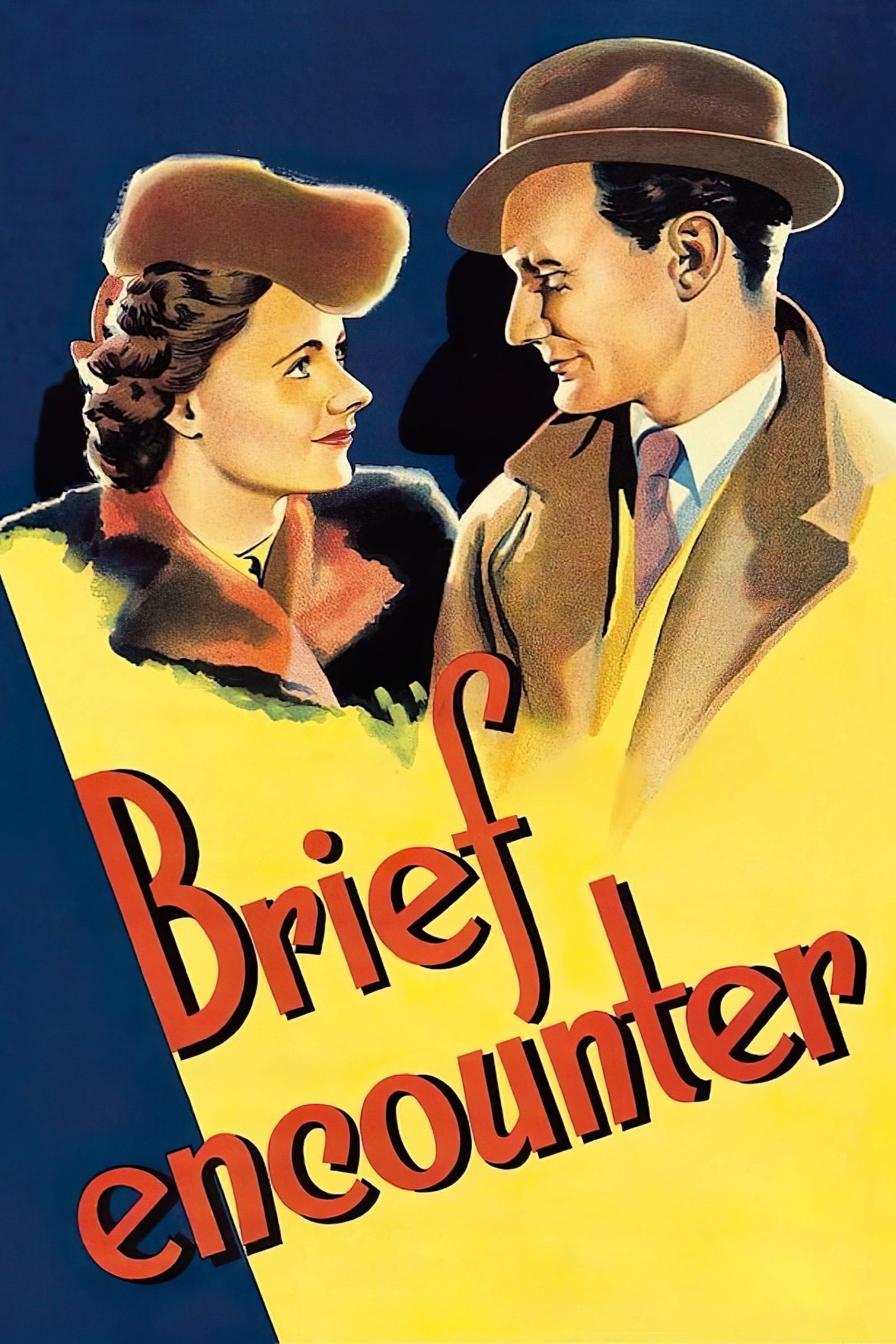
The Question of Truth Behind the Film
Something stirs in me each time I revisit “Brief Encounter.” I find myself gripped by the hushed yearnings of the characters, but an essential undercurrent to my viewing is always this unspoken question: did this actually happen? Whenever a film like “Brief Encounter” insinuates, overtly or through publicity, that it could be spun from real experience, I notice my own process of curious investigation. I see how the label “based on a true story” or, conversely, the lack of such a claim, shapes not just my anticipation but the quality of attention I give to each scene. There seems a peculiar intimacy that comes with believing one is privy to real secrets, shadowy truths, or ordinary pain plucked from history. For me, the inquiry into the film’s factual foundation is less about verifying accuracy and more about exploring my yearning for authenticity within fiction.
I notice a specific tension when cinema walks the thin line between transcription and invention. Audiences arrive with ingrained assumptions—sometimes expecting films set in the recognizable real world to faithfully reflect the events or societal conditions from which they sprung. This expectation colors everything: I find that when a movie wears a badge of authenticity, whether through overt marketing or subtle implication, there’s an instinct to watch the proceedings with a forensic eye. It is as though the movie has promised insight not just into narrative, but into the very fabric of the life it depicts. With “Brief Encounter,” I am aware of an aura of plausibility: the trappings of English suburbia, the finely drawn etiquette of the 1940s, the suppressed desires—all these feel true. Yet I also know, all the while, that what unspools on the screen is the alchemy of storytelling, mixing personal yearning, social constraint, and a kind of wishful emotional sincerity that may never have taken literal shape in the world.
I am always aware that audiences, myself included, crave stories that bridge the chasm between fiction and life. Sometimes, the question of reality is less about a desire for fact than about wanting connection—the hope that what I see on screen reflects, even obliquely, the hidden dramas playing out in the hearts and living rooms of others. That is the primal power of cinema: it can make invention feel inevitable and disguise exquisite fabrication as universal truth. In this, “Brief Encounter” sits at an interesting crossroads, and I continuously dwell on what it means for my personal understanding of the story when I approach it as dramatized fiction as opposed to lived experience.
Historical Facts and Cinematic Interpretation
From my vantage point, “Brief Encounter” presents a fascinating case study in how historical specificity and creative invention can coexist. I remember learning that the film’s narrative, adapted from Noël Coward’s one-act play “Still Life,” is not a direct dramatization of a documented affair, but it is steeped in the social realities and emotional constraints of pre-war and wartime Britain. For me, the layers of interpretation become clear: the setting, with its train stations and tea rooms, illustrates a recognizable world but serves as the scaffolding on which imagination builds. Instead of tracing a particular couple’s secret romance, I see the film distilling a broader ethos—a pervasive emotional timidity, the sense of duty, and the silent costs of repression that marked the era.
What stands out to me in “Brief Encounter” is the way it compresses experience for the sake of impact. Events that could unravel over months, even years, become concentrated into a few charged encounters. I always sense how the script omits digressions or dullness, leapfrogging over the minutiae of daily life to linger on moments of heightened emotion. In reshaping the texture of reality, the film makes choices: conversations are polished, gestures become fraught with meaning, and even the silences feel orchestrated. While the routine of a railway café might reflect genuine British suburban culture, the dialogue—elevated, introspective, gently poetic—belongs to Coward’s imagination. Every action and reaction is nuanced, pared down, infused with a kind of eloquence that feels too deliberate to be real, yet powerful in its universality.
I often reflect on how the broader historical situation, especially the social codes of marriage and propriety during the 1940s, is refracted through the lens of cinema. The choices Laura and Alec face—whether to yield to emotion or adhere to convention—echo dilemmas that countless individuals might have faced, but the film’s alchemy is to transform these possibilities into dramatic inevitability. I am aware that certain details—Laura’s precise interior monologue, the choreography of their meetings, the chance interventions—are sculpted to distill the emotional architecture of longing, not to provide fact upon fact. In this way, the film isn’t pretending to verify a real-world affair; it’s engaged in the artistic reorganization of possibility, arranging the furniture of actual British life to frame an imagined, universal experience.
For me, the interplay between fact and creative adaptation in “Brief Encounter” is continually illuminating. I sense the historical faithfulness in costume, manner, and mood. Yet, it is impossible to ignore how the narrative is shaped by the rhythms of theater, not the anarchy of life. Even the film’s famous restraint—the almost clinical avoidance of scandal or melodrama—feels like a calculated interpretation of what was thinkable and speakable in mid-century England, rather than a candid report of what actually happened. Through this process, the film becomes a crafted mirror, less concerned with literalism than with the emotional truths that might have haunted its original post-war audience.
What Changes When Reality Is Shaped for Cinema
There is an undeniable transformation that happens when real or imagined incidents are structured for film. I have always been struck by how “Brief Encounter” renders private conflict into collective drama—the intensely enclosed, almost claustrophobic world within Laura’s psyche, shared with viewers through narration, visual framing, and measured performances. While the facts of the film’s world may be modeled after genuine English routines, the dramaturgy shapes these elements into a narrative that is far neater, and perhaps more poignant, than lived experience usually allows.
As an analyst, I find the trade-offs between historical precision and storytelling flair to be particularly thought-provoking. On one hand, strict attention to period detail can root a movie in credibility, inviting me to trust what I see as representative of an era: the trains, the costuming, the nuances of speech. On the other, there is something gained—and something necessarily lost—when these details serve the requirements of narrative momentum. In “Brief Encounter,” I notice how chronology is manipulated to intensify suspense, compressing the timeline of Laura and Alec’s acquaintance and accentuating the sense of fatefulness. The selective emphasis on certain conversations or fleeting gestures means that the emotional trajectory is sharp, immediate, and staged to maximize empathy.
What I find particularly vital is how the adaptation process prioritizes internal truth over documentary accuracy. Coward’s script, beneath its surface decorum, foregrounds the unspoken—a flow of desire, regret, and moral negotiation. These are not data points harvested from a real couple’s diary; they are expressions distilled and refined to represent a type of inner life that might otherwise go unnoticed. This reshaping serves clarity and focus: scenes are streamlined, dialogue is concentrated, conflict arises with narrative logic. The result can sometimes feel more emotionally honest than literal truth, which often trails off into ambiguity or anticlimax.
There is an inevitable consequence to this: the edges of reality are softened, and the roughness of real emotional experience is set aside for symbolic resonance. In paring down the messiness of existence to a series of charged encounters, the film risks making heartbreak almost too graceful, too articulate. I find myself both appreciating the succinctness with which the story conveys longing—and remaining aware that such succinctness is itself a fiction. The aesthetic of restraint, the careful deployment of silence, the orchestration of minor events (the interruption of a friend, the accidental touch)—all create a world that feels true not as a record, but as a refined image of what interior struggle could resemble given the right circumstances. For me, this stylization is neither wholly a loss nor a gain; it is the nature of adaptation.
In considering these trade-offs, I recognize that my engagement is shaped less by whether the events are historically accurate and more by how the world of the film aligns with my sense of emotional plausibility. In the end, the metamorphosis from life to cinema is not an act of translation so much as transformation; what lives on the screen is not reality transferred, but reality imagined anew, in service of the film’s expressive aims.
Audience Expectations and the “True Story” Label
I am always aware of how dramatically my perspective—and the audience’s at large—shifts depending on whether a film claims the mantle of truth or frames itself as fiction. When I watch a movie told as a true story, I subconsciously raise my analytical shield, scanning for fidelity to what I believe or know about real people, real places, real epochs. The moment a film places its events within the realm of possibility, my empathy can become tinged with skepticism or, at the very least, curiosity about just how close the fiction hews to fact. With “Brief Encounter,” there is a curious absence of such claims. The movie feels so plausible, so within the realm of everyday heartbreak, that I am tempted to seek verification, yet I am also set free to engage with it as pure artistic construct.
This freedom to accept the film as fiction invites a different, perhaps more imaginative engagement. Instead of calibrating my response against a known history, I allow myself to be more fully immersed in the emotional stakes as they unfold. I experience the ache of Laura’s internal struggle as meaningful whether or not she had a real-life analog. The lack of a “true story” label moves the pole of my interpretation: I do not parse the plot for the biographical, but for the universal. I sense how this shapes the kind of judgment an audience may—or may not—bring to bear; the film becomes less a subject for verification and more a mirror for identification.
That being said, I think there is something uniquely powerful about audiences choosing, sometimes unconsciously, to read fiction as if it were fact. “Brief Encounter” leverages this instinct through its verisimilitude. The rituals, the habits, the atmosphere all create a convincing sense of reality. Even for those who know the scenario is pure invention, the emotional response can still be inflected by the suspicion—or hope—that such things might have happened, and likely did, behind closed doors in countless lives. There’s an interesting paradox here: the less a film insists on its truthfulness, the more I want to believe it could be true, driven by some underlying need for narrative to reflect life.
Moreover, I often wonder how “Brief Encounter” would play differently if it had been marketed or remembered as a direct adaptation of real events. I suspect it would change the audience’s relationship to the story, introducing elements of scrutiny, perhaps, or even moral discomfort. As it stands, the film occupies an ambiguous terrain, engaging viewers not as historians or jurors but as co-dreamers. The emotional stakes remain high, not because they are contested facts, but because the emotional territory feels so intimately mapped. In this, I see how the absence of a “true story” claim is not a limitation, but an open invitation: to believe not in the literal actuality, but in the truth of feeling.
Final Perspective on Fact vs Fiction
Each time I engage with “Brief Encounter,” I return to the question of what it means to know—or to think I know—where the boundaries lie between history and storytelling. I realize that, for me, the knowledge that the film is not cut from journalistic cloth does not diminish its force; rather, it locates the power of the experience elsewhere. The film’s beauty, its resonance, comes not from a promise of documentary truth, but from the clarity and intensity with which it expresses emotional reality. In this context, the distinction between “fact” and “invention” becomes less a matter of hierarchy and more a matter of texture. The emotional rhythms of the movie—its silences, gestures, and solitary confessions—feel no less real simply because they were imagined.
In my own critical practice, I am less concerned with tracing a direct genealogical link from real life to the screen than in understanding the logic by which fiction is made to feel authentic. With “Brief Encounter,” the knowledge that its world is a poetic construction, a selective distillation of love and regret, actually enhances my engagement with it. I find myself freed from the heavy tether of history, able to appreciate with greater agility the artistry that transforms individual longing into collective resonance.
At the same time, there is a subtle shift in my own identification: when I am made aware that what I see is not documentary, I am inclined to see the characters less as specific others and more as versions of myself, or echoes of all those who ever faced impossible desires. I am attentive to the universal, rather than the singular; to possibility, not precedent. Thus, knowing the line between truth and fiction shifts my reading from fact-finding to meaning-making, from evaluation to interpretation.
I am left with the conviction that factual knowledge is a lens, not a verdict. It frames my expectations, sharpens my awareness, and sets the parameters for how—and where—I look for meaning. Sometimes, as with “Brief Encounter,” this lens clarifies the artistry at work, allowing me to see not what once occurred, but what can be felt by anyone, anywhere, in the quietest corners of the human heart.
For additional context, you may also explore the film’s overview and how it was received by audiences and critics.
🎬 Check out today's best-selling movies on Amazon!
View Deals on Amazon