
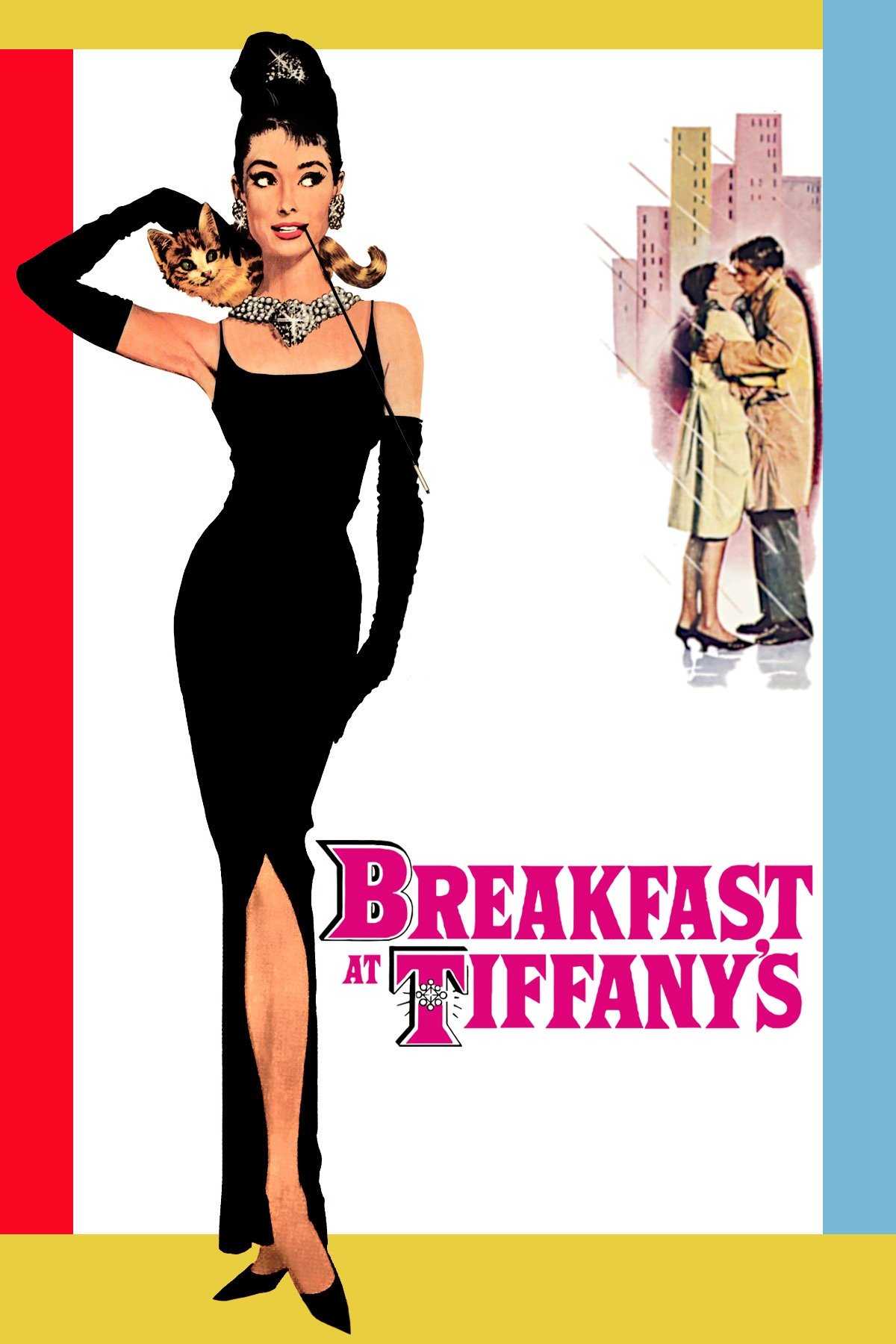
Is This Film Based on a True Story?
As someone who’s spent years tracing the lines between filmic imagination and lived experience, I’ve always been intrigued by the way “Breakfast at Tiffany’s” carries the scent of something authentic, even as it pirouettes in a realm of enchanting artifice. Yet when I look past the surface, I see that this 1961 film is not based on a true story. It does not depict real events or serve as a direct dramatization of any one individual’s actual life. Instead, what “Breakfast at Tiffany’s” offers is a cinematic adaptation rooted in a literary source—a novella penned by Truman Capote—where the boundaries between invention and reality become tantalizing and, at times, deliberately ambiguous. For me, this means that while the film feels grounded in a slice of a particular New York era, it remains essentially a work of fiction, embroidered from Capote’s own complex web of observation, memory, and imagination rather than verifiable history.
The Real Events or Historical Inspirations
Reflecting on the origins behind “Breakfast at Tiffany’s,” I find my curiosity drawn not to police blotters or archival records, but to the life and circle of its creator, Truman Capote. Capote’s novella, published in 1958, is the true ur-text of the film; it is in this slender book that I detect the fingerprints of real experience—although never in a way that allows me to equate fiction with fact. For years, Capote spun stories about the real people who may or may not have inspired his enigmatic protagonist, Holly Golightly. I’ve sifted through interviews, literary biographies, and critical essays that recount Capote’s claims of sculpting Holly from bits of women he knew in Manhattan’s café society: elegant, capricious partygoers and socialites who lit up the city’s nightclubs and bars in the 1940s. Names like Gloria Vanderbilt, Oona O’Neill, Carol Grace, and Dorian Leigh are frequently mentioned in the rumor mill surrounding Holly’s possible real-world muses. But each time I try to pin this character down, I find the borders dissolve—Holly seems more like an idealized composite rather than a portrait of a single real person.
Capote himself often described the novella as a reflection of his own youthful adventures and dreams in the city, with Holly as a kind of alter ego. In that sense, the “real inspiration” for the story appears to be more autobiographical than biographical—a distillation of the author’s own longings, observations, and literary tricks, spun into an original fiction. As I weighed Capote’s inconsistent and at times mischievous statements, it became clear to me that he deliberately stoked the myth of Holly’s real-life origins, perhaps as a way to deepen the novella’s allure. There are echoes, too, of a particular historical moment—the ambiance of Manhattan in the 1940s and 1950s, where postwar glamour, economic aspiration, and the shifting role of women gave rise to a new breed of urban independence that I see reflected in both the novella and the cinematic Holly Golightly. So while I recognize strong influences from Capote’s social milieu and the mood of his Manhattan, the events and characters remain the children of narrative invention rather than documentation.
What Was Changed or Dramatized
Watching the film adaptation, I’m always aware of the ways that cinematic storytelling shapes, softens, and sometimes sanitizes its source material. One of the most prominent adjustments, in my eyes, involves Holly Golightly herself. Capote wrote her as an ambiguous “café society girl,” whose means of supporting herself flirt heavily with the world of sexual commerce; she’s neither wholly a courtesan nor simply a high-class party girl, living in a delicate gray area. The film, constrained by the social mores and Hollywood production codes of the 1960s, portrays Holly with a different emphasis—her role as a “good-time girl” is artfully obscured, making her appear more like an innocent free spirit than a survivor of economic necessity. For me, this change reflects both the cultural taboos of the time and a desire to mold Holly into a figurefit for romantic comedy, rather than the more provocative character Capote conjured.
The film’s treatment of Paul Varjak (called “Fred” by Holly), the writer who becomes Holly’s love interest, is another aspect that’s been considerably reworked. In the novella, Paul is a more ambiguous figure, with suggestions of latent sexuality and unclear financial arrangements of his own. The film transforms him into a conventionally handsome, sensitive writer and grants him a clear-cut love story with Holly—a dynamic that, to my mind, makes the narrative significantly neater but also distances itself from Capote’s subtler ambiguities about desire and companionship. The addition of a “happy ending,” with the rain-soaked reunion between Holly and Paul, is something I recognize as a traditional Hollywood gesture that was absent in Capote’s more open-ended and bittersweet novella.
Some of the other changes are more superficial, but I find them equally revealing. The film’s depiction of important supporting characters, most notably Mr. Yunioshi (played by Mickey Rooney), introduces problematic caricatures and comic relief that diverge sharply from Capote’s understated descriptions. This element is unavoidably present to anyone viewing the film but feels to me less like a reflection of any real-life inspiration and more a result of the era’s comedic conventions and social blind spots. The transformation of narrative structure, including the addition of iconic moments like Holly’s musical performance of “Moon River,” highlights what I see as the filmmakers’ intent to charm and beguile rather than offer a documentary slice of life.
Historical Accuracy Overview
When I step back to assess the broader historical accuracy, I find myself weighing what the film gets right against what it reshapes for its own narrative and thematic goals. The film’s visual and atmospheric details—its lovingly recreated New York locations, the iconic shots of Holly gazing into Tiffany’s window, the chic costumes, and the sense of urban modernity—are, to my eye, quite evocative of the time and place they seek to evoke. Walking through the film, I truly feel the faint electric hum of postwar Manhattan, filtered through a cinematic lens that heightens the romance and mystique of city life. The background details—the cabs, the sidewalk bustle, the glimmering shopfronts—strike me as impressively authentic, even if compressed into a kind of heightened, dreamy shorthand.
When it comes to the narrative itself, though, I find much less historical fidelity. The characters’ backstories, relationships, and dilemmas are conjured out of Capote’s imagination, not any verified personal histories. Holly’s famed Southern roots and reinvention as a New York social butterfly are, in my understanding, narrative inventions rather than adaptations of a specific life story. Paul (or “Fred”) is a creation that owes as much to literary convention as to anecdotal truth. Scenes involving Holly’s parties, her shifting identity, and her interactions with the city’s men of wealth and power reflect a stylized version of social dynamics rather than an attempt to document or expose real-life events. Even Holly’s famous affinity for Tiffany & Co., and her morning rituals outside the jewelry store, feel more like visual metaphors than reports from Capote’s life or anyone else’s stated experiences.
I do notice, though, that elements of the story echo the general atmosphere of New York during Capote’s formative years—an era when the city was a magnet for dreamers, artists, and those hoping to redefine themselves. Holly’s quest for love and security, her longing for a place to belong, and her slightly melancholic detachment are qualities that, in my mind, could have been drawn from the lives of many young women in that era. But this is less a matter of documenting one person’s truth and more a capturing of a collective zeitgeist, filtered and stylized into a work of fiction. If accuracy is measured by faithfulness to verified events, “Breakfast at Tiffany’s” is unmistakably a fantasy. If it’s measured by the ability to evoke a particular social setting or mood, the film seems to me to ring truer than most.
How Knowing the Facts Affects the Viewing Experience
The more I’ve studied the origins of “Breakfast at Tiffany’s,” the more my perception of the film has shifted. Before I knew the facts, I felt tempted to read Holly Golightly’s adventures as either the quirks of a real person or a coded biography of some lost It Girl. Once I understood that Capote wove the character from fragments of real socialites and fantasy, my appreciation for the story became layered by a sense of creative play. There’s a distinct pleasure, for me, in knowing that the film is not a biopic or confession—every interaction, every iconic image is a careful construction, offering insight not into one particular woman but into a whole mosaic of postwar aspiration, loneliness, and reinvention. I approach Audrey Hepburn’s performance, and the chemistry between the leads, as interpretations of archetypes rather than reconstructions of real-life figures. This awareness tempers any impulse I might have to look for hidden “truth” or direct allegory in the script and instead allows me to focus on the emotional resonances and the cinematic craft.
Understanding the gaps between fiction and reality also makes me more attuned to the implications of cultural change—how the production codes of the early 1960s shaded the adaptation, and how certain aspects of Holly’s life and relationships had to be transmuted to fit a more palatable romantic comedy format. Knowing this, I don’t expect the film to clarify Holly’s motivations or offer transparent answers; rather, I see it as an elaborate invitation to speculation. For audiences who might hope to spot a portrait of a real New York or a real social circle, knowledge of the film’s roots redirects attention to the ways movies invent reality, transforming the ordinary into the indelibly iconic.
For me, the enduring power of “Breakfast at Tiffany’s” lies not in its faithfulness to particular facts, but in its ability to channel the mood, anxieties, and desires of a moment in American history. The gap between Capote’s literary ambiguity and the film’s sunburst glamour makes every viewing an act of interpretation. I find myself turning over the fantasy, aware that its truths are emotional and symbolic rather than literal. This heightened awareness doesn’t diminish my enjoyment; it actually enriches how I watch the film, prompting new questions about identity, invention, and the persistent appeal of myth in popular storytelling.
After learning about the film’s origins, you may want to see how audiences and critics responded.
🎬 Check out today's best-selling movies on Amazon!
View Deals on Amazon