
Is This Film Based on a True Story?
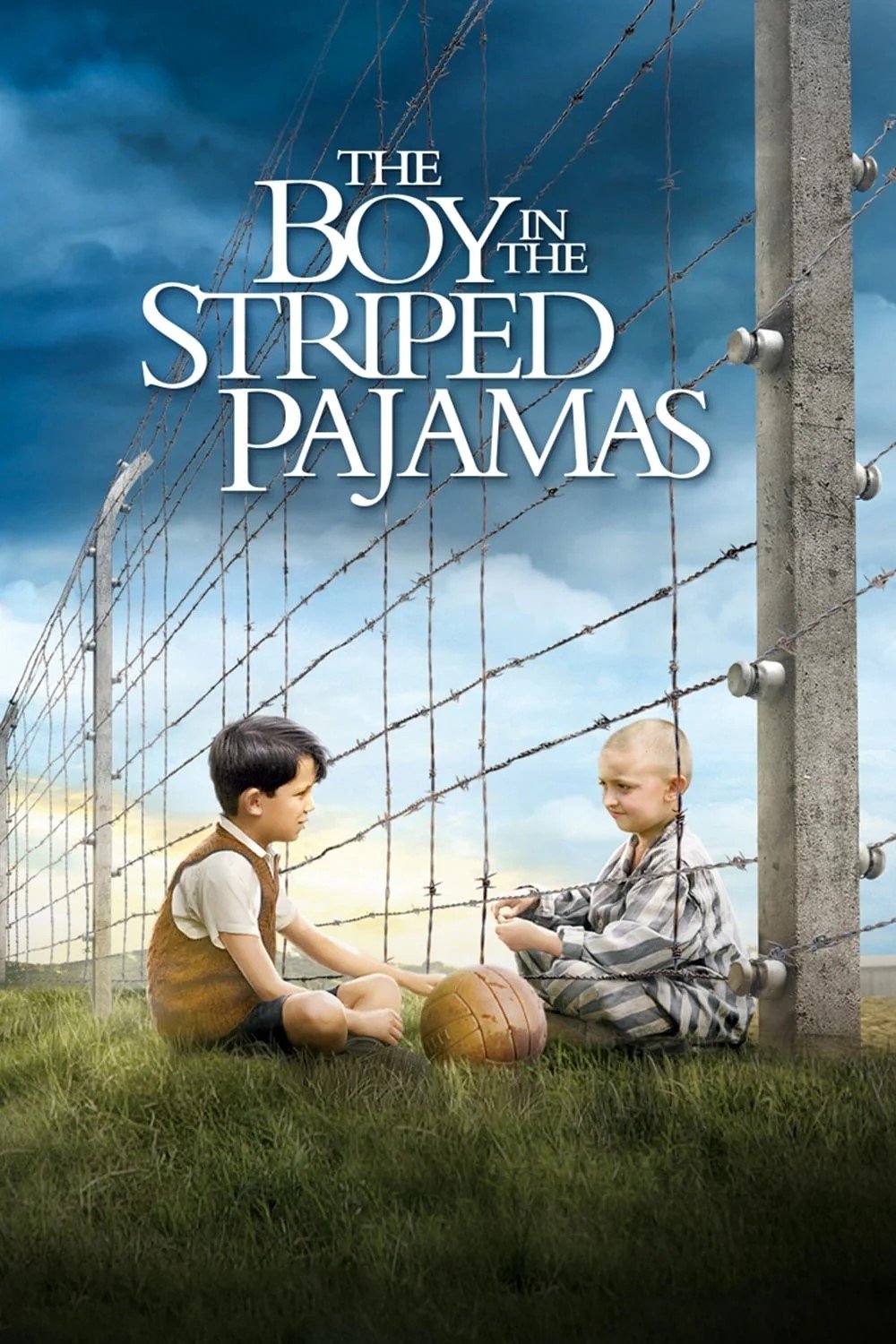
My very first impression watching “The Boy in the Striped Pyjamas” was shaped by its emotional power; as a film researcher, I had to stop and ask myself: did any of this actually happen? After looking deeper, I realized that, despite its realistic tone and the emotionally charged wartime setting, “The Boy in the Striped Pyjamas” is not directly based on a true story. It’s a work of historical fiction crafted from the imagination of novelist John Boyne, whose 2006 book forms the basis for the 2008 film. While it’s set against the backdrop of very real historical events—the Holocaust and the Nazi regime—the central narrative and its characters did not exist. I would describe it as a story inspired by the era’s horrors, but not recounting any actual events or individuals.
The Real Events or Historical Inspirations
What intrigued me most about the film’s origins was how much of its emotional weight came from genuine history, even without a specific true account behind it. As I researched, I uncovered that the broader setting—the Holocaust, Auschwitz-like concentration camps, the division between families of Nazi officers and Jewish prisoners—draws from a vast and heartbreaking catalog of real events. The film’s world is not fictional in the broad sense: Nazi death camps, such as Auschwitz-Birkenau, were horrifying realities. The separation of those deemed “undesirable” from the Aryan population, and the use of striped uniforms to dehumanize prisoners, are undeniable facts of history. For example, I learned that the cinematographer and set designers referenced real photographs from camps, giving the visuals a kind of documentary authenticity.
In my view, the driving force behind the story is Boyne’s intent to explore innocence in the midst of genocide. He openly admits the plot isn’t drawn from specific historical testimonies. Instead, the narrative is his original invention, set within the real context of Nazi Germany—a framework that amplifies its emotional resonance for viewers like me, who can’t help but connect the fictional story to actual history. There is no documented case of a child of a camp commandant befriending a Jewish boy across an electrified fence. Yet the story echoes broader truths about the loss of innocence and the moral blindness that pervaded many German families during the war.
Documentaries, trial records, and memoirs from Holocaust survivors and Nazi officials all support the background setting. Materials like Elie Wiesel’s “Night” or Primo Levi’s “If This Is a Man” catalog real suffering and daily life inside camps; while these survivors’ perspectives differ radically from the narrative arc of “The Boy in the Striped Pyjamas,” their testimony informed the social and historical textures that Boyne and, later, the filmmakers integrated into their work. I often think about how the film strives to evoke the period’s oppression, relying heavily on collective memory and preserved evidence while still being a fabrication rather than a dramatization of any one account.
What Was Changed or Dramatized
My research into “The Boy in the Striped Pyjamas” left me keenly aware of its many deviations from historical plausibility. Key elements are not just dramatized, but entirely fabricated for narrative impact. For example, I couldn’t find a single historical instance in the archives or in survivor accounts where the child of an SS officer formed a friendship with a boy inside a concentration camp through the perimeter fence. The heavily guarded and deadly boundaries of camps such as Auschwitz were designed specifically to prevent any such encounter; inmates lived under constant threat, and close communication was nearly impossible. Boyne’s story omits the likely security measures and the brutal consequences for escaping or even approaching the wire. To me, this creative liberty is one of the central tools the author uses to force audiences into a confrontation with innocence and complicity, but it remains purely fictional.
Another dramatized element is the portrayal of Bruno’s naiveté. In my opinion, the film’s perspective relies on Bruno’s complete ignorance of his father’s position and the realities of the camp. Historically, children living near concentration camps, especially those in the families of high-level Nazi officers, would have been exposed to propaganda, yes, but it is questionable whether their naivety could match Bruno’s depicted lack of awareness. Contemporary documents, such as letters written by children or accounts from those who grew up in Nazi-affiliated families, suggest a spectrum of understanding, but very few were shielded so absolutely from the truth of their parents’ jobs or the horrors of the camps so close at hand.
Perhaps the most significant dramatization, for me, is the physical and psychological accessibility between Bruno and Shmuel. Barbed wire in camps was patrolled and monitored. Food was scarce, and speaking through the fence was perilous for inmates. The opportunity for friendship, let alone repeated secret meetings and the passing of food, blatantly diverges from surviving eyewitness testimony. When I watch these interactions, I recognize them as allegorical rather than attempts at verisimilitude. The swap in the final act—where Bruno dons the striped prisoner uniform and enters the camp—defies the heavily codified, surveilled, and violent reality of Auschwitz. There’s no recorded parallel to such an event, nor to the tragic confusion of identities that the plot depends upon in its conclusion.
I also noted that the depiction of the Holocaust itself is intentionally softened for narrative purposes, focusing more on emotional tragedy and the perspective of an outsider looking in. Brutality is mostly implied, not shown; timelines and processes are compressed or streamlined; the bureaucratic and systemic nature of the Nazi genocide is left on the periphery. These choices create space for the narrative device of childhood friendship, but in my analysis, they also blur historical specificity in favor of symbolic storytelling.
Historical Accuracy Overview
Reflecting on my research, the question of historical accuracy becomes a negotiation between authentic backdrop and fictional center stage. The fundamental facts of the Holocaust—state-sponsored extermination, the infrastructure of death camps, the ideological indoctrination of German youth—are presented with broad accuracy. When the film displays striped uniforms, the grim architecture of the camp, or the division between those inside and outside the barbed wire, it is drawing visually and thematically from reality. I can readily point to photographs from Auschwitz and testimonies from survivors to support these depictions. The emotional distance between ordinary Germans and the atrocities committed under their noses is a factual part of the historical record, often described in post-war investigations and denazification hearings.
However, the film’s specifics are largely incompatible with documented history. I personally couldn’t find evidence of a scenario like Bruno and Shmuel’s ever having taken place. Most jarring for me is the fact that children in extermination camps, especially by the latter years of the war, did not survive for extended periods as Shmuel does in the story. Nazi policy regarding the youngest arrivals was swift and lethal. The chance that a child would remain alive—and near the perimeter fence—for weeks or months, as necessary for the plot, is not supported by survivor records. Similarly, the idea that an SS officer’s son could access a concentration camp in disguise without detection fails rigorous scrutiny. These are fabrications for emotional effect, not reconstructions of possible events.
On the other hand, the film captures the psychology of willful ignorance—how entire families, including children, could be shielded from or choose to ignore harsh truths about their environment. This has a firm foundation in the historical record, particularly in sociological studies of post-war German society. I find the lead character’s innocence both a storytelling device and a reflection of partial realities for some segments of the population. It’s this blending of fact and invention that allows the film to raise questions about complicity and moral blindness while remaining a work of clear fiction.
I am also mindful that the tone and focus of “The Boy in the Striped Pyjamas” lean toward allegory, using the surrounding facts as scaffolding. The setting is not intended as a historian’s case study, but as a lens for exploring guilt, loss, and the devastation of innocence. In that respect, I believe it uses historical accuracy selectively—true in its emotional registers and broad strokes, yet entirely invented when it comes to individual fates and relationships.
How Knowing the Facts Affects the Viewing Experience
Understanding the factual context of “The Boy in the Striped Pyjamas” has always shaped how I respond to its story. Knowing that the central plot is a fabrication, I find myself approaching the film more as a moral parable than as a depiction of actual events. For viewers seeking a literal window into World War II history, discovering the film’s fictional origins can recalibrate expectations, emphasizing the value of symbolism over strict adherence to documented truth.
I often reflect on how the emotional charge of the film, particularly the final act, draws on knowledge of real historical horrors. The tragedy is poignant because I know millions perished in ways nearly as arbitrary and unjust as the film portrays. However, learning that the story itself is invented doesn’t dull its impact for me; instead, it prompts me to scrutinize the different narrative purposes fiction can serve when set in real-world atrocities. Rather than asking, “did this happen?”, I find myself weighing, “what is this trying to tell me about how such horrors were possible?” The film’s focus on childhood ignorance and parental denial resonates more deeply when I measure it against authentic survivor reports of confusion, fear, and the longing for normalcy amid unimaginable contexts.
On the other hand, being aware of the film’s deviations from historical possibility—the implausibility of the friendship, the inaccuracies in camp security and procedures—gives me pause when I think about how it might be received by younger viewers or those only lightly acquainted with Holocaust history. I tend to watch with an analytical lens, ready to fill in context gaps for myself and others, worried that the powerful fiction could be mistaken for documented reality. For me, the value lies in using the film as a starting point for conversations about what really happened, highlighting the differences so that its artistic ambitions do not obscure the much starker truths that survivors and records convey.
In my estimation, approaching “The Boy in the Striped Pyjamas” with historical awareness does not diminish its emotional themes, but it reminds me of its intended use as an allegory or wake-up call. Not everything on screen can or should be taken as testimony. My most lasting takeaway is the importance of distinguishing between fiction set in a historical period and films based on actual accounts—an essential step in honoring the real stories, all the while allowing fiction to interrogate the boundaries of empathy and understanding.
After learning about the film’s origins, you may want to see how audiences and critics responded.
🎬 Check out today's best-selling movies on Amazon!
View Deals on Amazon