
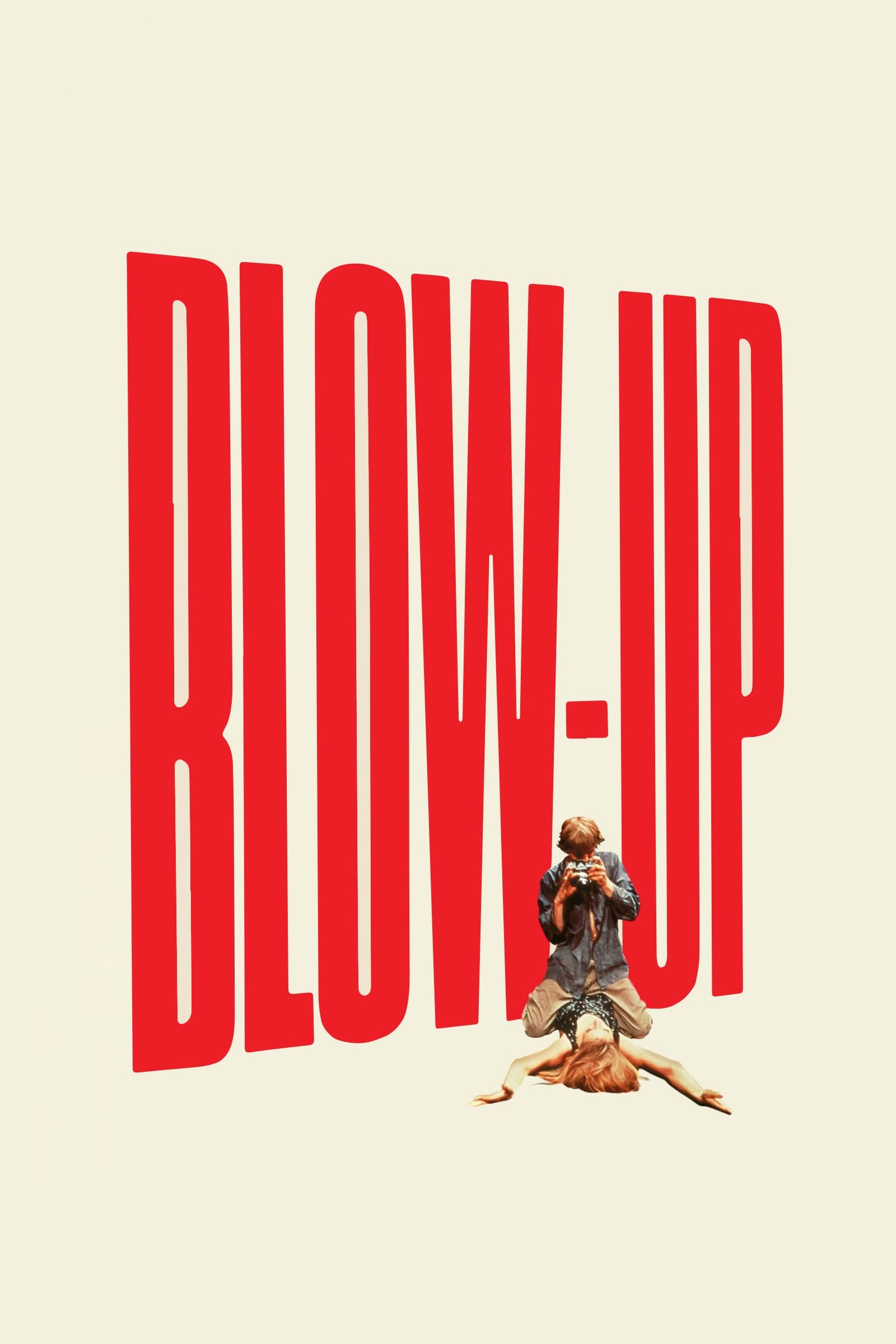
Is This Film Based on a True Story?
From the very first moment I sat with Michelangelo Antonioni’s “Blow-Up,” I was struck by how difficult it is to slot this film neatly into a category of truth or fiction. If someone were to ask me, I would have to say that “Blow-Up” is not based on a true story in the strict sense of the phrase. The world it constructs—the swinging, enigmatic 1960s London where perception and reality slip between the fingers—feels rooted in something real and tactile, but the plot itself emerges from a place of interpretation, philosophy, and artistic reinvention. The film doesn’t dramatize an actual crime, nor does it recreate a specific historical incident. Instead, it’s an adaptation—Antonioni found his inspiration in literature, specifically Julio Cortázar’s short story “Las babas del Diablo” (“The Devil’s Drool”), published in 1959. Cortázar’s literary fiction, while sometimes echoing urban ennui and existential confusion, is itself a work of imagination and contemplation, not reportage. For me, this places “Blow-Up” firmly in the realm of the fictional, even as it draws veins of influence from real-world textures and sensibilities.
The Real Events or Historical Inspirations
As I dug into the film’s background, what intrigued me most was the interplay between artistic sources and cultural context. While there isn’t an identifiable set of events or a real individual at the core of “Blow-Up,” I found that its roots dig deep into both literature and the vibrant epoch in which it was conceived. The direct literary precursor to the film, Cortázar’s “Las babas del Diablo,” tells a story of a photographer in Paris who, upon enlarging a photograph he took, senses ambiguous, possibly sinister details that he may have inadvertently captured. Although this short story isn’t based on a documented event, it’s steeped in the psychology of observation—a theme that echoes with anyone who’s ever second-guessed their own eyes or camera lens, and certainly with those of us fascinated by the elusive line between documentation and subjectivity.
Beyond the written word, what resonated with me is how “Blow-Up” draws palpably on the texture of 1960s London. Antonioni was fascinated by the city’s cultural revolution: its fashion, art, and sexual politics. He moved through the city, absorbing the ethos of rising counterculture, the buzz of clubs, and the creativity of London’s artistic set. Figures such as David Bailey, the working-class photographer who became synonymous with the city’s style explosion, often come up in discussions around the movie. While Antonioni never stated unequivocally that Bailey was the direct model for the protagonist Thomas, the parallels—glamorous photo shoots, lively parties, and relationships with models—suggest that Bailey’s public persona and perhaps those of fellow photographers Terence Donovan and Brian Duffy provided a sense of realism and location-specific flavor. These artists became emblematic of an era, embodying the charisma, look, and sometimes the restless detachment that Thomas exudes. Still, as I followed each thread, I consistently landed on the fact that Antonioni’s Thomas doesn’t document a real life verbatim; rather, he exists as a composite, a distillation of a cultural type observed during a particular moment in time.
On a broader level, I see “Blow-Up” reflecting the metaphysical concerns swirling through postwar European art—questions about perception and meaning, the nature of truth, and the unreliability of images. It’s as if reality itself, during this heady era of change, was up for grabs. The film is an artistic response to that atmosphere, not a case file or journalistic exposé.
What Was Changed or Dramatized
One of the reasons I’m continuously drawn back to “Blow-Up” is Antonioni’s willingness to diverge dramatically from his source material. When I contrast “Las babas del Diablo” with the film, the differences illuminate Antonioni’s artistic objectives. For instance, Cortázar’s story is told through the reflections of Michel, a translator and occasional photographer in Paris. The protagonist is more introspective and solitary than Antonioni’s Thomas. The setting, social context, and even the nature of the incident at the heart of the plot undergo significant transformation. The Paris of the story becomes the pulsing London of the film. A fleeting incident in a park, already ambiguous in the story, balloons into the film’s central enigma—a possible murder caught on camera.
I’ve noticed that Antonioni greatly expands on visual culture and fashion, incorporating elements absent from Cortázar’s work. By doing so, he brings in the world of 1960s London: the boutiques, model shoots, and abstract art that defined its creative landscape. Where Cortázar’s narrative is quiet and psychological, Antonioni dramatizes the communal, almost theatrical interplay of artists, models, and bohemians. Significantly, Thomas’s profession as a high-profile photographer puts him in constant motion—driving through streets, orchestrating shoots—offering Antonioni a canvas of swinging London’s moods, not just an interior monologue.
As I explore this further, the most striking dramatization comes in the transformation of the “incident.” In the original story, the possibility that something menacing has occurred is shrouded in ambiguity; no explicit violence is shown. Antonioni chooses to crystallize this tension visually—Thomas’s obsessive enlarging of his photographs (the “blow-up” sequence itself) suggests, but never proves, that a murder might have taken place. This act of photographic scrutiny takes on central dramatic weight, inviting viewers to question their own perceptions as Thomas does.
Another fictional device that stands out for me is the ending. Cortázar’s protagonist is left pondering the limitations of his actions and photographs, unsure if he intervened. In contrast, Antonioni creates a mystifying conclusion involving a group of miming tennis players—a moment that deliberately unmoors the audience from concrete answers. While the starting point of both works is a chance photograph that may hold a hidden truth, Antonioni’s cinematic reimagining spins this into a broader contemplation of illusion, interpretation, and the impossibility of certainty.
Historical Accuracy Overview
Looking at “Blow-Up” through the lens of historical accuracy, I find the duality fascinating. On one side, the particulars of the plot—Thomas stumbling upon a possible crime and unraveling reality through his photographs—don’t correspond to any documented incident. There’s no verifiable murder in a public park that matches the film’s scenario. The characters are either composites or complete inventions; there’s no one-to-one correlation between Thomas and any individual photographer in London at the time.
Yet, on the other side, the film’s representation of its era and subculture feels, to my eye, genuinely of the moment. I’ve compared photos, art, and firsthand accounts from the mid-1960s, and Antonioni’s recreation of the visual atmosphere—the colors, the fashion, the attitude of detachment—is remarkably on point. The rendition of studios, parties, and even the models’ behavior lines up with descriptions I’ve read in histories of London’s artistic scene. The sense of alienation among creative professionals, the intersection of art and commerce, and the search for meaning in a sea of images—these strike me as true to the lived experience of that cultural milieu.
Still, when I peel back the layers, I see that Antonioni is more interested in posing questions than delivering historical certainties. The camera’s capacity to reveal or distort the world is at the heart of the narrative. The technology is accurate for its day—large-format cameras, darkroom techniques, and the tactile experience of enlarging film projections all reflect photographic practice of the time. But the philosophical leaps Antonioni takes—the suggestion that multiple realities or truths can spring from a single image—take us away from straightforward factuality and into the realm of existential inquiry.
How Knowing the Facts Affects the Viewing Experience
For me, understanding that “Blow-Up” is not a straightforward retelling of real events but a creative meditation on observation and interpretation fundamentally changes how I approach it. Without the need to match what’s on screen to a factual account, I can become absorbed in the maze of implications Antonioni weaves. The knowledge that the narrative springs from psychological fiction rather than police records means that any lingering questions I have at the film’s end are intentional, an invitation to contemplate perception itself.
When I view “Blow-Up” after learning about its literary and cultural origins, I find myself less concerned with resolving the plot—a temptation that comes naturally when a film announces itself as “based on true events.” Instead, I feel set free to appreciate the way Antonioni plays with visual evidence, to wrestle with doubt and ambiguity, to step into the shoes of a protagonist for whom even the closest scrutiny cannot deliver clarity. I become acutely aware that the gorgeously composed images and cryptic characters are less about reconstructing a lost truth than about exposing the limits of certainty in the modern world.
It also becomes clear to me that the film’s authenticity is less about specific events than about capturing the spirit and confusion of its time. If I had approached “Blow-Up” expecting a docudrama or a biographical portrait of a London photographer, I think I would have been bewildered by its dreamlike structure and refusal to resolve its mysteries. But with the facts in hand, I find its questions—about the nature of evidence, the seduction and unreliability of images, and the fragile boundary between what we observe and what we interpret—are more resonant and thought-provoking. This, to me, is the true power of learning the background: it strips away any unfulfilled expectations of narrative tidiness and replaces them with a keen appreciation for the film’s philosophical pursuits.
This also impacts how I view the setting and characterizations. Knowing that Thomas is, perhaps, a blend of inspirations rather than a direct stand-in for David Bailey or another celebrity photographer, I can focus more on the universal aspects of his experience. His alienation, creative frustration, and the seductive pull of deciphering reality through a lens take on a broader significance. The stylized depiction of London’s fashion scene, the unpredictable behavior of the people he encounters, and even the abstract art that peppers the film all feel like echoes of a cultural moment refracted through an artist’s perspective, rather than a documentary snapshot.
What ultimately shapes my viewing is not whether the events are faithfully reconstructed, but how the film uses the ambiguity of its source to question whether we can ever truly observe the world as it is. Each time I return to “Blow-Up,” it’s not because I hope to unravel a crime, but because I am drawn to its endless play of surfaces—the possibility that, in blowing up an image or a story, we might only find more uncertainty.
After learning about the film’s origins, you may want to see how audiences and critics responded.
🎬 Check out today's best-selling movies on Amazon!
View Deals on Amazon