
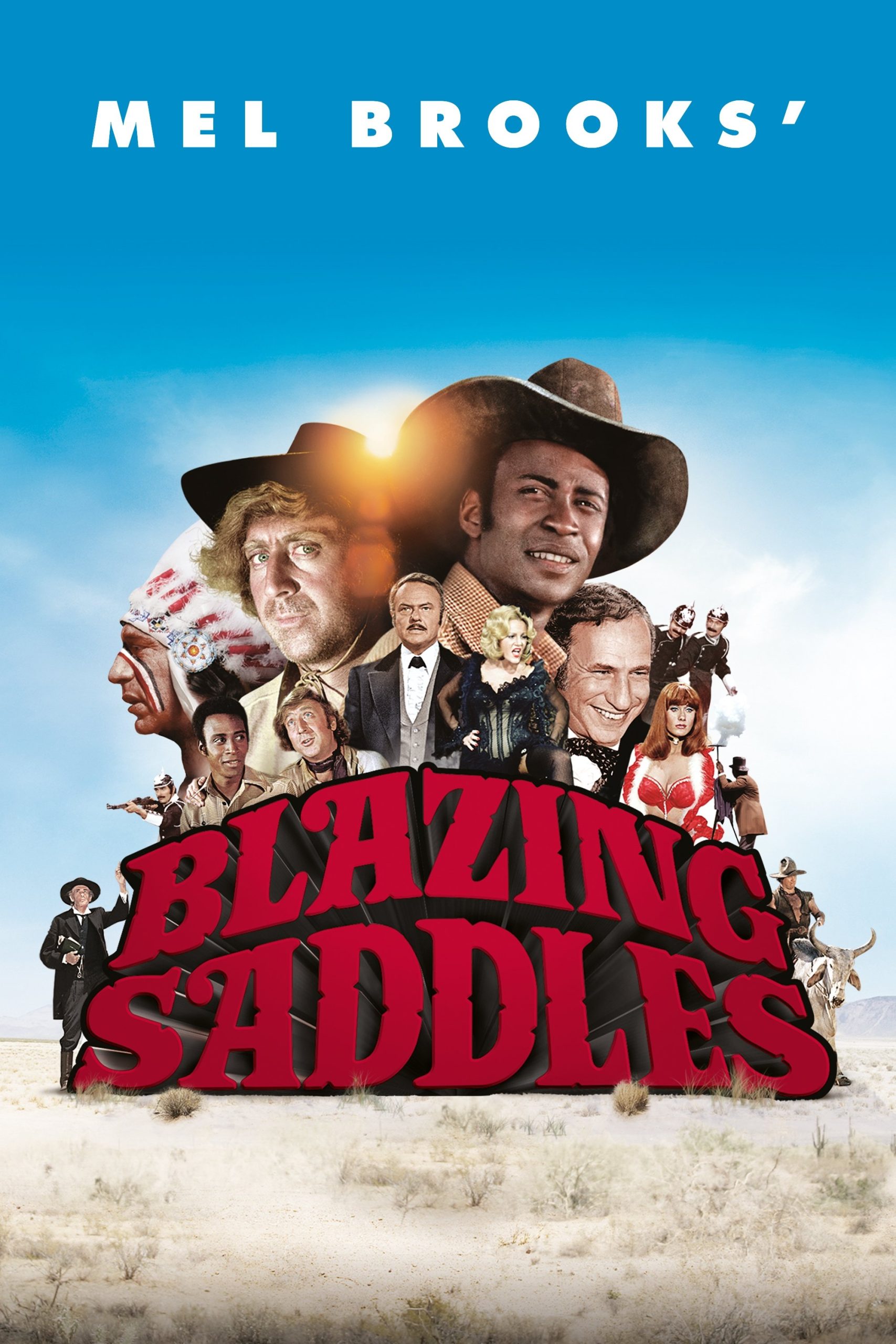
The Question of Truth Behind the Film
Whenever I revisit “Blazing Saddles,” I’m struck by how slippery the boundaries can be between history, legend, and outright invention—especially in a film that wears its irreverence on its sleeve. I notice that audiences, myself included, instinctively search for some anchor to reality: was the wild West ever quite like this, or are we watching pure invention? The question lingers in my mind: does it matter whether a film like this springs from documented fact, or can pure fiction carry equal weight? For me, the label “based on a true story” isn’t just a marketing tagline; it subtly calibrates my readiness to look for real-life references or hidden truths beneath the surface. When a film advertises its factual grounding, I admit that I expect a kind of fidelity to some underlying events, as if the camera might be offering a window onto reality, even if fogged by dramatic license. But if a film announces itself as fictional, those assumptions change. I become more attuned to metaphor, exaggeration, or deliberate subversion. With “Blazing Saddles,” all those initial expectations come into play, only to be upended at every turn. The film provokes me to reconsider why audiences—including myself—are so eager to trace a line between what is real and what is cinematically constructed, and whether that makes the laughter more or less meaningful.
Historical Facts and Cinematic Interpretation
Assessing the historical dimensions of “Blazing Saddles” is an exercise in tracing not accuracy, but adaptation, parody, and distortion for comic effect. When I explore the roots of this film, I see that it is not “based on a true story” in any literal sense—the town of Rock Ridge, the characters, and their predicament are all inventions. However, my knowledge of the American West, and of the Hollywood Westerns that mythologized it, shapes my viewing. I recognize that certain elements—railroad-building, territory disputes, corruption among officials—are loosely inspired by real events from 19th-century U.S. history. Yet, the film’s narrative reshapes these themes, condensing myriad incidents into singular moments or archetypal characters. Moments that nod at actual practices—such as town meetings or the construction of rail lines—are imbued with the absurd logic of satire. I sense that the writers and director are less interested in recreating an authentic West, and more in lampooning the cliches that earlier Westerns had long established. In my experience, this reshuffling and exaggeration do not erase historical reference points so much as reinterpret them; the lawless frontier, the outsider’s struggle, and the hypocrisy of power are all distilled into a farce that both alludes to and mocks the historical record. So, when cinematic storytelling takes precedence, actual facts are often structured to serve the unfolding of a particular comic or thematic argument. What is left is not a historical document, but a reconstructed reality that reflects—on a funhouse mirror scale—the motifs and anxieties of both the era depicted and the era of the film’s production in 1974.
What Changes When Reality Is Shaped for Cinema
When I try to tease out how historical reality is altered for cinematic purposes, I find myself considering the intricate negotiations between truth and entertainment. With “Blazing Saddles,” the creative team makes constant trade-offs, discarding exact chronology or documentary accuracy in favor of narrative punch and comic effect. I observe, for example, that the film compresses timelines ruthlessly—a town is founded, beset by crisis, nearly destroyed, and defended all in what seems like the span of a few days. Any reference to real Westward expansion is filtered through the necessities of rapid storytelling. Characters representing different racial, social, and professional roles are often compacted into exaggerated types. The sheriff, the villain, the railroad boss—all echo familiar tropes, not historical figures. To me, this shorthand betrays a deliberate choice: authenticity gives way to immediacy, allowing the film to move at a brisk pace and to maximize its satirical targets.
This approach also means that the social realities of the American West—particularly regarding issues of race, authority, and class—are not depicted as they might have unfolded, but are heightened to serve the film’s commentary on both history and its cinematic representations. The arrival of a Black sheriff in a predominantly white frontier town is a premise that bears little resemblance to recorded Western history, yet by distorting reality, the film opens a space for broader satire on American prejudices, past and present. I realize that such trade-offs are not unique to this film; they occur in most historical adaptations, but are especially visible here because the film so overtly parodies both its source material and the medium itself. I find myself thinking that these choices, while uprooting precision, inject a kind of clarity—parodoxical as that sounds—by distilling nuanced realities into bold, memorable symbols.
For me, every time the film cuts away to a scene that breaks the fourth wall or includes anachronistic references, the boundary between historical truth and cinematic storytelling becomes less rigid, and therefore more revealing. The practical result is that I don’t watch “Blazing Saddles” for information about the past. Instead, I notice the ways real ideas are reconstituted to serve a new narrative, shaped by the times the film was made as much as by its setting. I see the past become a tool, reshaped at will, simultaneously communicating, satirizing, and subverting the very facts it echoes.
Audience Expectations and the “True Story” Label
Whenever a film like “Blazing Saddles” signals its fictional nature, I sense an immediate shift in how I and other viewers engage with the material. If the opening titles had insisted this was “inspired by true events,” I suspect that every comedic exaggeration or satirical flourish would be measured against presumed reality. Audiences tend to approach films “based on a true story” with a complex set of expectations—some demand fidelity, others look for insight into the era, and many scan for points of connection between the cinematic and the actual. I often feel more scrutinous when a film invites me to believe in its authenticity; the details become sites of suspicion or assurance. In contrast, when a film is presented as self-aware fiction or parody, as in “Blazing Saddles,” my critical faculties are engaged in a different way. I’m on the lookout not for veracity, but for intelligence in subversion, for playful engagement with genre, and for what the film reveals about its own time through its distortion of the past.
This dynamic is especially apparent to me in comedic or satirical works. With “Blazing Saddles,” knowing it is not rooted in documented events liberates my understanding—it allows me to see humor not as a distraction, but as a clarifying lens, focusing on systems of belief and myth more than on biographies or timelines. I notice that this freedom from factual constraint encourages a kind of interpretive play. I end up asking, “What is the film trying to point out about how stories of the West are told, about the national narrative, about the myths we inherit?” rather than, “Did it really happen this way?” When no claim is made to being a “true story,” there is less risk of disappointment at historical liberties and more opportunity to enjoy, or critique, the inventiveness of the adaptation. I also find that audiences, myself included, are sometimes more forgiving of exaggeration, stereotype, and anachronism, since these are seen not as mistakes but as elements of style.
My sense is that the “true story” label doesn’t just reframe the relationship between viewer and film; it also subtly alters the thresholds of both skepticism and belief. In the case of “Blazing Saddles,” its openness about fiction almost dares me to disengage with the search for “what really happened” and instead explore the landscape of “what these stories mean to us now.” When I enter the viewing experience aware of this, I replace questions about factual detail with questions about meaning, resonance, and critique.
Final Perspective on Fact vs Fiction
After deep reflection, I’ve found that knowing what is real and what is fictional in “Blazing Saddles” changes not just how I understand the film, but how I relate to its layers of commentary. My interpretation—rather than my judgment—shifts significantly. When I approach the film as unmoored from historical events, I feel equipped to decipher its logic as one built upon exaggeration, inversion, and satire, conscious of both Western genre conventions and the social issues of the present moment. My awareness of its fictional nature lets me focus on how it dismantles and reconstructs cultural myths. I view each absurd scene as a meditation on the absurdities of American storytelling itself, rather than as a misrepresentation or distortion of real events. The film’s deliberate play with genre and its gleeful anachronisms act, for me, as signposts to look past literalness.
That said, I also recognize the value of knowing the faint threads of history that the film borrows from—railroad expansion, the mythology of the frontier, the idea of the outsider hero. These elements, though transformed almost beyond recognition, root the film’s fantasy in something recognizable. They give me entry points to ask not just “What might have happened?” but “Why do we tell such stories about ourselves?” My awareness of the film’s creative liberties heightens my appreciation for the questions it raises about representation, genre, and the construction of narrative authority. I notice that, for me, the factual or fictional status of a film like this acts less as a boundary and more as a lens—one that reframes not only the content but also the very act of watching and interpreting cinema.
In the end, “Blazing Saddles” does not hide its intentions. I don’t feel tricked or unsettled by its departures from reality, because those departures form the backbone of its insight. When I know what is real and what is imaginary, it does more than clarify context—it opens up the space to treat the Western, not as a static record of the past, but as a living conversation about how history, identity, and culture are performed. Ultimately, my understanding is shaped by that awareness, allowing the film to be an object not simply of laughter but of ongoing reflection—a place where the boundaries of fact and fiction interplay, echo, and persist.
For additional context, you may also explore the film’s overview and how it was received by audiences and critics.
🎬 Check out today's best-selling movies on Amazon!
View Deals on Amazon