
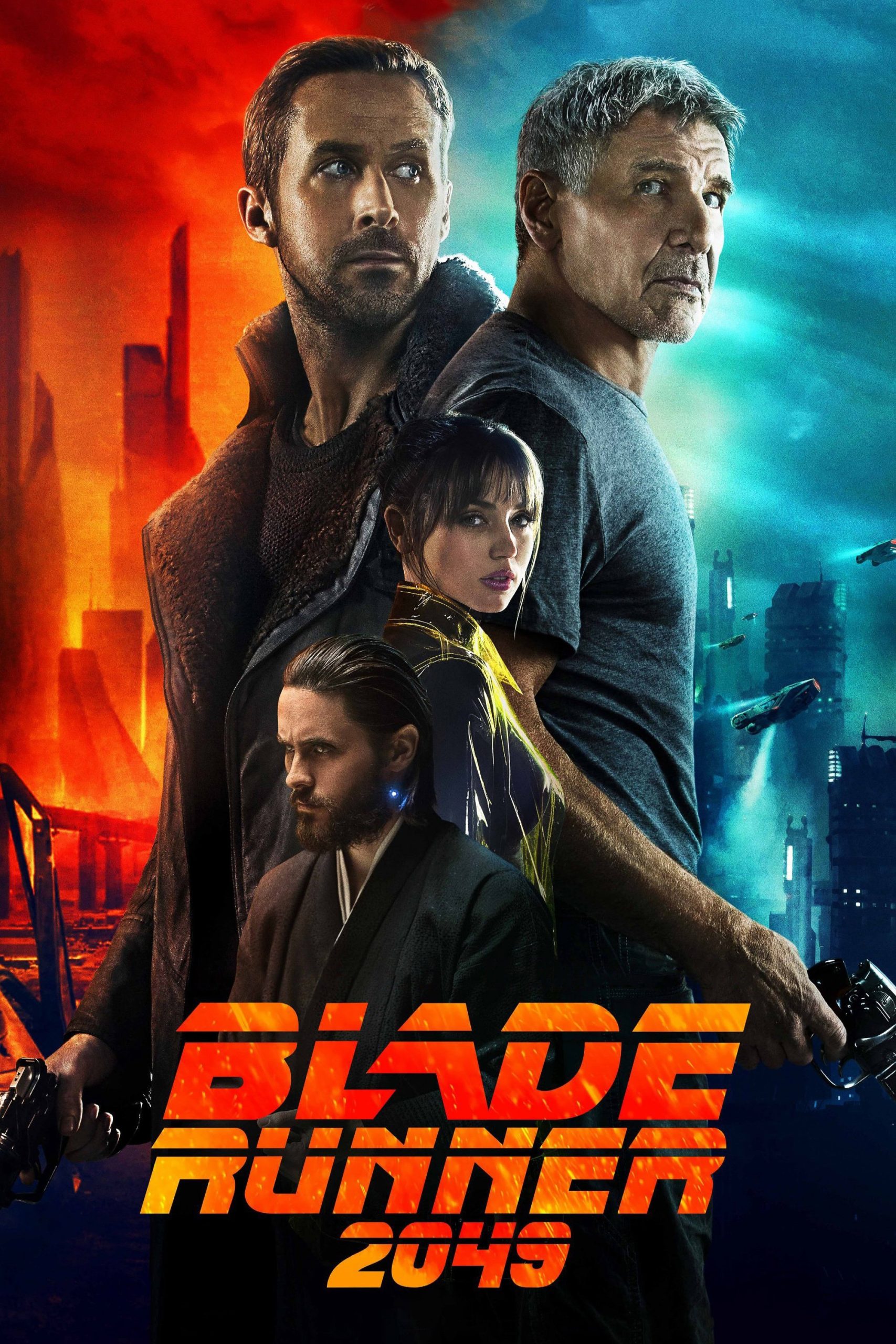
Is This Film Based on a True Story?
When I first watched Blade Runner 2049, I was struck by its breathtaking visual world and its provocative questioning of humanity, identity, and memory. From the outset, I knew I was not looking at something grounded in actual events. Blade Runner 2049 is, in every sense, a work of complete fiction. Nothing in the film stems from real events or actual historical occurrences, and there are no news headlines or primary sources cited for its portrayal of future Los Angeles or bioengineered replicants. Unlike some films that borrow partially from true stories or real people, this movie sits firmly and unequivocally in the realm of speculative science fiction. What lends Blade Runner 2049 its remarkable power, as I see it, is not closeness to literal history but its imagined future spun from the anxieties, aspirations, and philosophical debates of our present lives. To put it plainly: Blade Runner 2049 is not based on a true story, nor does it claim to be even partially true.
The Real Events or Historical Inspirations
Even though Blade Runner 2049 isn’t tied to a specific event or real-world figure, I have always been fascinated by how its creative DNA originates unmistakably from literature. The original Blade Runner drew primary inspiration from Philip K. Dick’s 1968 novel, “Do Androids Dream of Electric Sheep?” That book was not documenting any reality either—it was a wildly creative and often unsettling meditation on empathy, artificial beings, and what it means to be alive, all envisioned in a future devastated by nuclear war. The 2017 sequel, Blade Runner 2049, extends the imaginative lineage of Dick’s ideas and explores a possible evolution of the world depicted in the first film, rather than adapting or referencing true events directly.
I’ve found it illuminating that while these films are not historic in the traditional sense, they tap deeply into the technological, philosophical, and environmental questions that marked the late 20th and early 21st centuries. The anxieties about artificial intelligence, genetic engineering, and ecological collapse are all real—as are debates about the definition of personhood and the rights of synthetic beings. However, none of these are rendered as literal history in the world of Blade Runner 2049. The film creates an alternate, imagined future extrapolated from contemporary concerns but unmoored from actual events, places, or technologies. For me, that’s what sets it apart from so-called “based on true story” narratives—it’s a thought experiment, not a hidden history.
What I find particularly engaging is that while Blade Runner 2049’s world feels emotionally and philosophically relevant, every element is filtered through a speculative lens. Los Angeles as portrayed in the film is a composite of dystopian imagination, inspired in part by contemporary urban decay, climate crises, and advanced surveillance societies, but it’s not a footnoted projection. I do see traces of Japanese and post-industrial cityscapes in its neon-lit streets, and I have noticed the echoes of 20th-century science fiction thinking about corporate power, yet none of this directly roots the movie in our real-world timeline.
What Was Changed or Dramatized
As someone who’s explored the histories behind many films, I’m used to parsing out what’s fact and what’s artistic license. In the case of Blade Runner 2049, the entire film is an exercise in dramatization—there’s no factual skeleton to embellish or alter. But what stands out to me is how the movie adapts the tone, world, and characters shaped by the original source material and the 1982 film rather than reshaping any historical reality.
The creators of Blade Runner 2049 construct a world that feels grounded thanks to careful design and extensive world-building, but everything—down to the smallest detail—is fabricated for dramatic impact. The cities, the replicant technology, the memory implants, and the structures of social division, all serve as crafted elements in a speculative narrative about technology and oppression. I find the very concept of replicants a fundamental dramatization: synthetic humans indistinguishable from real humans, designed for labor and servitude, pose questions not yet resolved or realized in real science or society. That being said, there are obvious thematic nods toward scientific and ethical debates that surround advances in artificial intelligence and synthetic biology in our world, yet they remain rooted in speculation rather than documentary truth.
In terms of storytelling, character arcs are heightened for dramatic effect. If I draw comparisons with our own world, figures like K (Ryan Gosling) represent the existential search for belonging and selfhood—yet in the context of the story, he’s a future being whose experiences are unique to this invented world. Likewise, the monumental environmental disasters that have reshaped the planet in the film speak to very real fears about ecological collapse, but they are translated into an extreme, visually stunning dystopia that is far beyond our present reality. Even the specifics of corporate tyranny, societal breakdown, and rebellion draw upon a patchwork of dystopian fiction and theoretical outcomes, not lived experience.
The dramatization extends into the visual construction of Los Angeles—perpetually overcast, saturated in neon, and blanketed in pollution. This isn’t simply an artistic exaggeration; it’s a deliberate reimagining of urban sprawl and technological overload. The transformation of familiar urban elements into a nightmarish cityscape is, for me, the ultimate dramatization—one that makes the film’s world mesmerizing but wholly alien from anything outside the imagination.
Historical Accuracy Overview
Since Blade Runner 2049 does not seek to depict any real events or figures, my approach to assessing historical accuracy has been more about analyzing metaphor and allusion rather than verifying events or people. The narrative and setting are not beholden to factual historical records. Instead, I found myself contemplating how the film’s themes and aesthetics parallel real-world issues without replicating them exactly.
In terms of technological plausibility, everything from the replicants’ biology to the memory implant system is pure conjecture. The science on display is inspired by long-standing dreams and fears about artificial intelligence and biotechnology, but as I understand it, we’re nowhere near creating sentient or humanoid AIs like those shown in the film. The social structures—such as the strict hierarchy between replicants and natural humans, and the dystopian governance by powerful corporations—do echo elements studied in history and explored in political science, but only in the most abstract sense. I see references to issues like exploitation, identity politics, and postcolonial displacement, but filtered through a heavily fictionalized lens.
Visually, while Los Angeles in 2049 bears traces of today’s urban landscape, it is so thoroughly transformed as to be unrecognizable. The film draws on architectural influences from various global cities—Tokyo’s neon, Hong Kong’s density, the ghostly ruins of post-industrial America—but it is not a direct prediction or representation of any real place. Similarly, the environmental disasters depicted, such as the desolate farmlands or radioactive ruins, render concerns about pollution and climate change as artful hyperbole.
I have noticed some viewers look for “accuracy” in the interplay between technology and human relationships, yet those too are dramatizations intended to stir debate rather than mirror existing dynamics. The world of Blade Runner 2049 is, in the end, a meticulously constructed fantasy that borrows themes and questions from our reality without tying itself to historical fact or documentation. For me, any “accuracy” is therefore metaphorical—deeply felt, but not chronologically or factually real.
How Knowing the Facts Affects the Viewing Experience
When I considered the film’s origins and lack of factual underpinning, it liberated me as a viewer to appreciate Blade Runner 2049 on its intended terms. Knowing that the story is a product of imaginative speculation and literary lineage, rather than a chronicle of past events, allowed me to focus on what it’s probing: the changing definitions of humanity, the pitfalls of technology, and the nature of consciousness.
For me, this awareness shifts the emphasis from “Did this happen?” to “Could this happen?” or “What does this mean for us?” I find it enriching to recognize the film as an exploration of possible futures, extrapolating from today’s dilemmas rather than serving as a mirror to our past. Instead of trying to spot historical inaccuracies or clues about real events, I immerse in the philosophical dilemmas the film presents—ones that ring true emotionally even though they are not grounded in fact.
Knowing the origins also reframes my expectations regarding realism. I don’t question why Los Angeles looks the way it does in 2049 or whether a consciousness like Joi’s could exist today or even in any foreseeable timeline. Rather, I ponder what these inventions say about longing, connection, and alienation. Even the moments that might seem implausible or fantastical feel justified, once I accept the film’s premise as a laboratory for exploring the boundaries of identity, memory, and autonomy.
Another impact of this understanding is how I interpret the film’s social commentary. Since Blade Runner 2049 is unconnected to actual historical events, I can engage with its critique of power, oppression, and technology on symbolic terms. The parallels to real-world debates about artificial intelligence and ethics become prompts for discussion, not points to be measured against a factual record. The movie becomes a tool for reflecting on things that preoccupy us today—the status of personhood, the role of memory in shaping character, the unending quest for meaning—even as its story and setting remain resolutely unreal.
This approach to viewing makes me less caught up in searching for documentary truth and more inclined to value the film’s capacity for empathy, curiosity, and provocation. When I look at the film with full awareness of its fictional nature, the world becomes a canvas for my own thoughts, questions, and interpretations, not a cipher of real events waiting to be decoded.
After learning about the film’s origins, you may want to see how audiences and critics responded.
🎬 Check out today's best-selling movies on Amazon!
View Deals on Amazon