
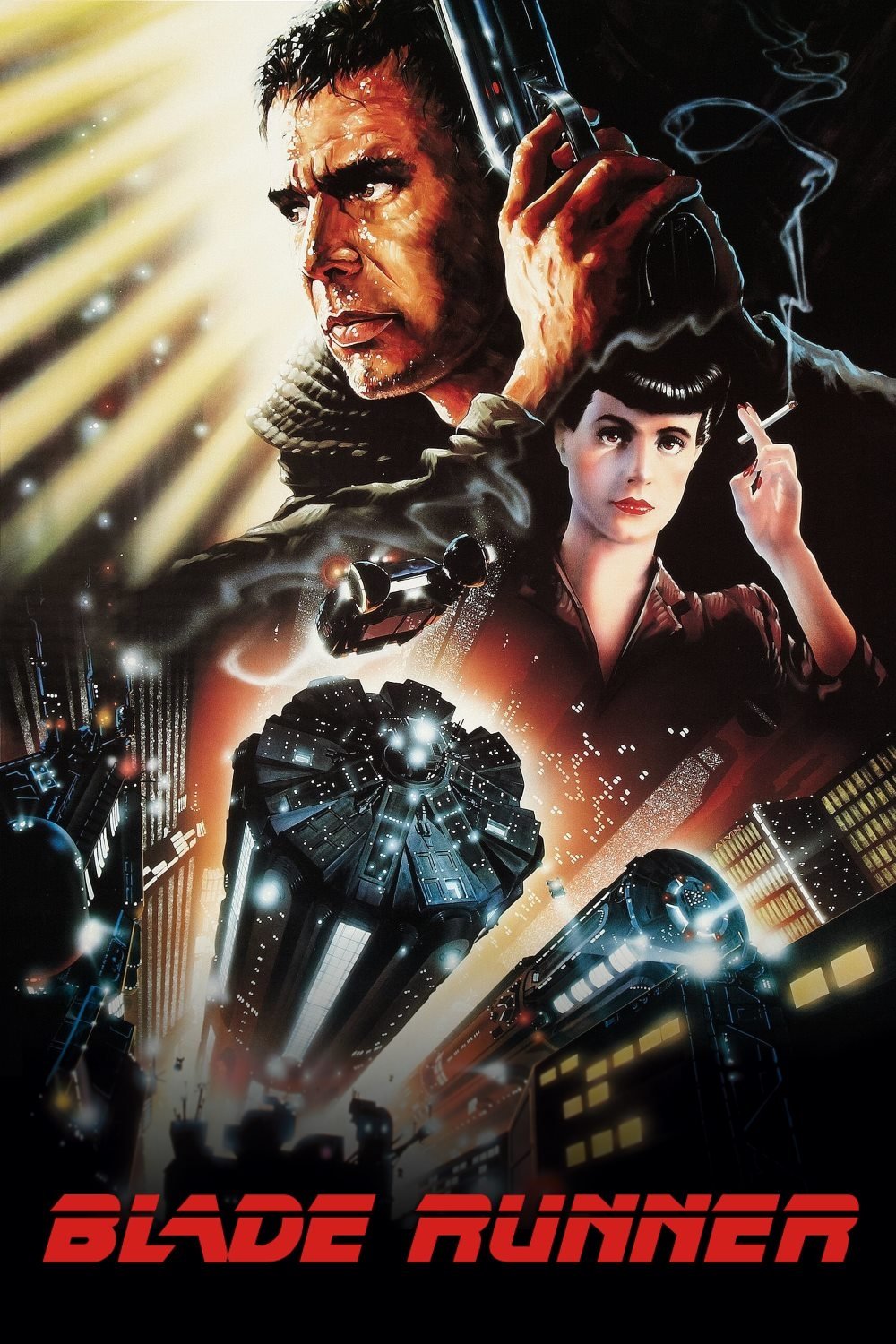
The Question of Truth Behind the Film
Every time I sink into the shadowy, rain-soaked world of Blade Runner, I ask myself why so many people are compelled to search for the reality behind its mesmerizing imagery. What is it about the evocative architecture, the mournful music, or the haunted eyes of its characters that leads viewers to wonder if Deckard’s future Los Angeles or the dilemmas facing replicants have roots in our current world? I see this instinct as something deeply intertwined with how we make sense of stories. When I watch a film, there’s a part of me hungry to establish whether the narrative draws from actual events or is spun entirely from the fabric of imagination. If I discover a “based on a true story” title card, it primes me to parse every scene for echoes of something that may have played out beyond the screen. Embedded in this urge is an assumption that reality confers a special authority—a subtle way of suggesting that what I’m seeing matters more if it mirrors something verifiable, or that fiction somehow holds less relevance for my understanding of the world. However, when I reflect on Blade Runner, a film often incorrectly assumed by some to have a prophetic or documentary aspect, I become acutely aware of how audiences can be both lured and misled by the subtle hints of authenticity embedded in its speculative design. The boundary between fact and invention becomes a point of fascination, profoundly shaping what I bring into the theater and, in turn, what I take away.
Historical Facts and Cinematic Interpretation
While Blade Runner is not a direct dramatization of true events, my experience with the film leads me to see it as a striking example of how filmmakers often build on the scaffolding of reality even within imagined futures. What’s fascinating, as I watch, is noticing just how much of Ridley Scott’s dystopian Los Angeles feels grounded in very real anxieties and cultural crosscurrents. The film adapts Philip K. Dick’s novel, Do Androids Dream of Electric Sheep?, but it does not claim direct historical truth. Instead, the creators seem to weave together visible, lived influences: the simmering fear of 1980s urban decay, the uncertainty of rapid technological shifts, and the globalized marketplace—all woven into the film’s textured mise-en-scène. As I look more closely, I pick up echoes of environmental anxieties and post-industrial malaise crowding in on the edges. What the screenplay does is condense these sprawling, complex societal developments into a world that is exaggeration yet feels plausible at its core. This isn’t so much history retold as it is history refracted.
When filmmakers borrow from the mood or the logic of real events—even loosely—they inevitably make choices about what to prune, what to amplify, and what to obscure. My view is that Blade Runner distills many recognizable realities from late 20th-century Western civilization but reconfigures them through a lens of science fiction, allowing the creative team to speak to converging trends without pinning themselves to any particular incident or verifiable record. There are, for example, visual cues hinting at urban overcrowding, wealth inequality, and corporate overreach that feel eerily prescient. None are literal transpositions from headlines or archives, but the resonance remains strong because the film’s stylized depiction of a crumbling metropolis channels concerns that felt urgent at the time—and, as I see it now, still strike a chord today. To me, this process demonstrates that cinematic interpretation is always an act of filtration, distillation, and invention, whether or not the base material is factual.
What Changes When Reality Is Shaped for Cinema
As I watch Blade Runner and disentangle what is plucked from real life or imagined entirely, I’m often preoccupied by how much the act of adaptation or synthesis shapes my emotional and intellectual response. When a movie tweaks or recasts actual phenomena for narrative coherence or visual cohesion, something critical shifts. For instance, in Blade Runner, the setting is clearly engineered to evoke a sense of discomfort and wonder—a Los Angeles simultaneously recognizable and utterly foreign. The aesthetic is unmistakably inspired by existing Asian metropolises, neon-lit advertising excess, and mid-century American urban design, all remixed into a futuristic pastiche. These choices strip away historical specificity in favor of a kind of archetypal urban nightmare, clarifying themes about identity and alienation that, in real life, would be muddier and more nuanced.
I’m particularly struck by how the film collapses timelines and fuses disparate cultural markers to produce an environment where anxiety about automation and displacement is palpable. Rather than a faithful chronicle, it’s a mosaic formed from genuine concerns about the encroachment of artificial intelligence and the potential erosion of empathy. Here, reshaping reality isn’t about deception but about focusing the lens, letting certain concerns crystallize for maximum effect. What gets lost in this process, I observe, are the messy ambiguities and contradictions that muddy real-life change. What’s gained, perhaps, is a sharper expression of the questions that keep recurring in our civilization—questions around what it means to be human, to love, to be replaced, to remember. Whenever I notice the liberties taken with chronology, architecture, or social arrangement, I see them less as omissions and more as an invitation to engage with the core of the film’s imaginative speculation.
There are always trade-offs at play. Precise representation of historical trends can anchor a film to a particular era, perhaps at the expense of universality, while an allusive, restless approach—like that seen in Blade Runner—opens up a more flexible space for audiences to bring their own experiences and anxieties into the frame. The absence of historical minutiae means that, as a viewer, I am nudged to look less at surface accuracy and more at symbolic resonance. In this way, Blade Runner’s relationship to what actually happened outside the frame is less about accuracy and more about the echoes it stirs within me, reframing real-world possibilities and fears through the logic of dream and nightmare.
Audience Expectations and the “True Story” Label
When a film is introduced as “based on actual events” or “inspired by a true story,” I always notice an immediate recalibration of how I watch. There’s a part of me that becomes more analytical, assessing every dramatic beat for plausibility, and another part that looks to be moved by the knowledge that these characters, or something like them, once walked the earth. Blade Runner never offers this anchor. It stakes its identity firmly in the realm of speculative fiction, which, for me, fundamentally changes the contract between storyteller and audience. I don’t enter expecting documentary realism or historical critique—I’m invited instead to inhabit a space where allegory and experience collide, where the artificial and the authentic are up for constant re-negotiation.
I find it particularly interesting that, even lacking a “true story” scaffold, Blade Runner has generated a persistent discourse about its predictive accuracy and the extent to which its imagined world mirrors or forecasts our own. I’ve seen viewers and critics alike scrutinize the film for how it anticipates environmental catastrophe, technological overreach, and social fragmentation. That hunger for correspondence with reality seems to me to reflect a widespread urge to draw lessons or find warnings in fiction, especially in an era suffused with anxiety about the accelerating pace of change. For some, the absence of a factual basis frees the imagination, whereas for others, it can create a subtle sense of disconnection—an uncertainty about how seriously to take the ideas and dilemmas the film sets down.
My own response has always been shaped by the knowledge that everything in Blade Runner is, at least formally, a construction. This doesn’t distance me, but rather provokes a kind of double consciousness. I can be both absorbed in the world on its own terms and alert to the layers of allusion and invention. Films that are explicitly factual often ask me to accept their version of events with a different sort of trust—a trust bound up with historical documentation and lived recollection. Here, I’m prompted to reflect more abstractly: which elements in the film project genuine possibility, and which are poetic license? This tension, for me, invigorates the act of viewing, as I toggle between immersion in narrative and awareness of the artistic liberties that have shaped it. The power of the film becomes tied to my willingness to confront the ambiguous dialogue between the world as it is, or was, and the world as it might be.
Final Perspective on Fact vs Fiction
I find myself returning to Blade Runner with the awareness that its stark beauty and unsettling questions are achieved not through fidelity to historical event, but through an embrace of the creative freedom that fiction allows. Yet, for me, the boundary between fact and invention is far from irrelevant. Knowing that the film is not a “true story” in the conventional sense, I experience a different form of engagement—one that is less about parsing accuracy and more about contemplating meaning. My appreciation for the film’s ethical and philosophical questions—the nature of memory, the definition of personhood, the blurred line between creator and creation—feels more expansive when I am untethered from trying to map every detail onto a historical referent.
The paradox, as I see it, is that an awareness of fictionality does not diminish my capacity to reflect on the real world. If anything, it frees me to probe the subtext, to recognize how stories structured from invention can surface hidden dimensions of our actual experience. On the other hand, if Blade Runner were presented as a documentary or even a period piece, I suspect I would engage more critically with its choices—measuring fidelity instead of pondering metaphor. The very uncertainty about what is real within the film becomes, for me, an essential part of its long-lasting appeal. The ambiguity is not a deficiency to be rectified, but a resource I return to, a way to gauge my own changing fears, hopes, and interpretations across time.
Ultimately, recognizing where Blade Runner parts ways with historical fact doesn’t lead me to a value judgment, but urges me to reflect on the special insights that fiction can yield. When I revisit the film’s glittering, rain-streaked cityscapes, I’m reminded of how the interplay of fact and fiction can reshape what I notice and how I feel. A film does not need to be “real” to say something true. Sometimes, knowing where history ends and invention begins simply opens up a new route into understanding—one that runs through imagination rather than chronology.
For additional context, you may also explore the film’s overview and how it was received by audiences and critics.
🎬 Check out today's best-selling movies on Amazon!
View Deals on Amazon