
Is This Film Based on a True Story?
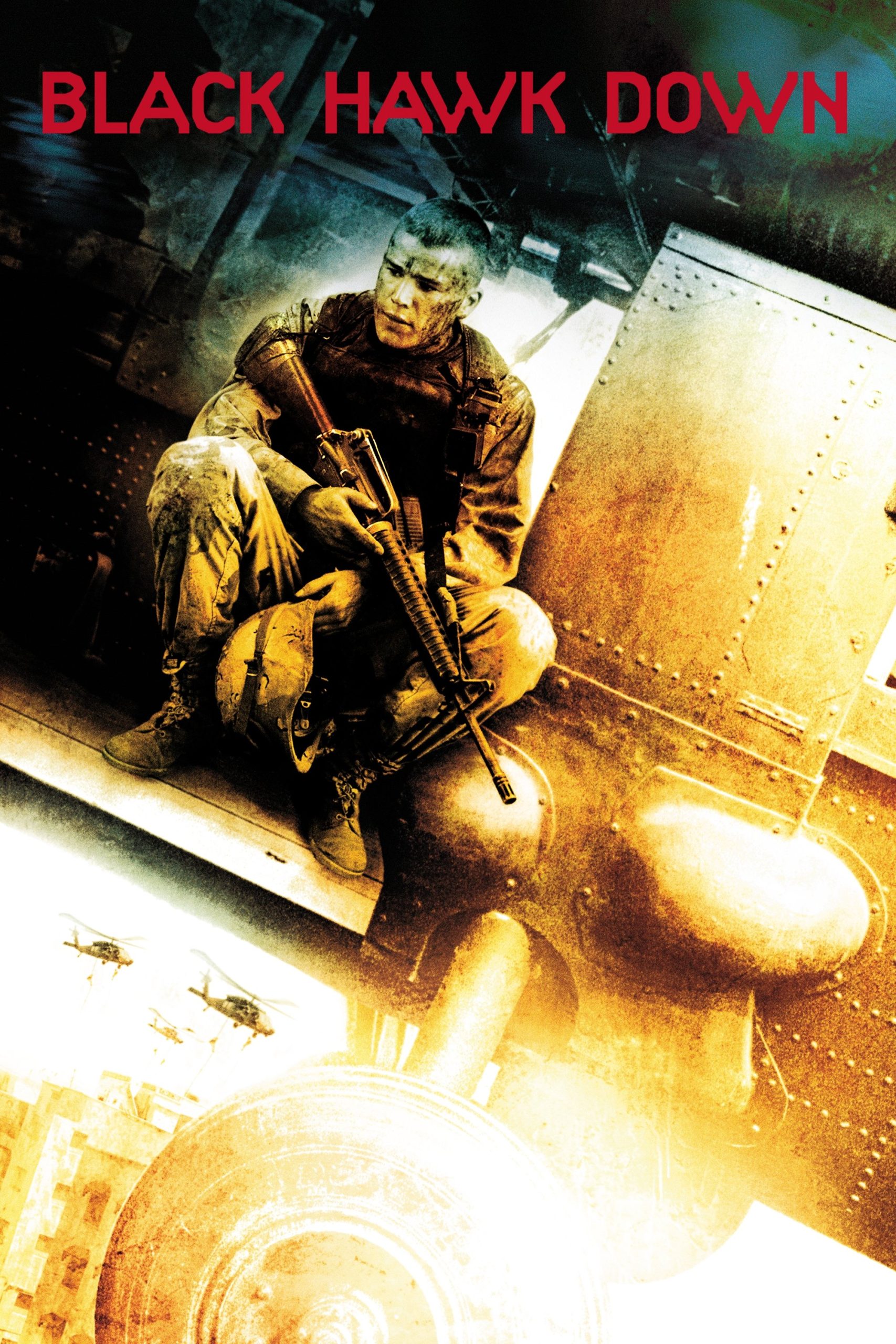
The first time I watched “Black Hawk Down,” I remember feeling an immediate gut-punch sense of realism that stuck with me long after the credits rolled. I had heard people say that the movie was based on true events, but sitting there, I wanted to know just how closely it hugged the contours of actual history. From my research and reflections, I can say unequivocally that “Black Hawk Down” is not a wholly fictional narrative nor a work merely inspired by loose events; it is very much a film based on a real, identifiable military engagement. Although the filmmakers took certain cinematic liberties, the central action and broader context are rooted in verifiable historical events—the Battle of Mogadishu, which took place on October 3-4, 1993.
The Real Events or Historical Inspirations
For me, the origin of “Black Hawk Down” as a story is inseparable from journalist Mark Bowden’s detailed non-fiction book, which itself was constructed from extensive interviews, military records, recorded communications, and firsthand accounts of those who fought in Mogadishu. After reading Bowden’s book, I realized just how much the movie tries to capture the lived experience of those U.S. Army Rangers, Delta Force operators, and other service members who were dispatched into the Somali capital as part of Operation Gothic Serpent. The operation’s public goal was to capture top aides to the Somali warlord Mohamed Farrah Aidid; this was a United Nations effort designed to stabilize a country in the midst of civil war and famine. However, this mission quickly escalated into a protracted urban firefight, leading to two Black Hawk helicopters being shot down—hence the movie’s title—and a dramatic rescue operation that left 18 American soldiers dead and dozens wounded.
It’s crucial to me that “Black Hawk Down” isn’t just drawing on broad strokes or general wartime themes. The filmmakers based much of what happens—down to various radio exchanges, tactics, and sequences of events—on specific historical documents and testimonies. The characters are often based directly on real individuals, with many of their actions, conversations, and decisions lifted from after-action reports or oral histories collected in Bowden’s book and in other accounts from veterans. That said, I noticed that the film compresses some events and sometimes assigns significant episodes to composite or renamed characters, but this doesn’t diminish its direct foundation in documented history. Even the military hardware, tactics, and environment received considerable attention from consultants who were there, so the authenticity extends beyond the script to the visual and technical representation.
What Was Changed or Dramatized
As I dug deeper into the film’s construction, I became increasingly aware that—in the push and pull between fact and fiction—Hollywood often bends reality to fit two-hour storytelling constraints. In “Black Hawk Down,” several noticeable changes and dramatizations emerge, not necessarily to distort, but to streamline or intensify the narrative impact. For instance, while the movie portrays many real individuals, the identities of some characters were changed or merged. Some composite characters were created to combine experiences of multiple soldiers into a single figure, a common choice when managing such a large ensemble cast.
I also noticed that the timeline of events is significantly compressed. The real battle lasted around 15 hours, spanning through the night and into the early morning, but the film presents it in a way that can be interpreted as occurring mostly within daylight, probably to avoid narrative sprawl and maintain cinematic momentum. Visual effects and action choreography, too, ramp up the chaos in certain scenes for dramatic intensity. While the core action—rescuing trapped crew and fighting through hostile streets—remains, it’s edited to maximize suspense and cohesion rather than serve as a minute-for-minute reenactment.
Some criticisms have been voiced about the film’s depiction of Somali combatants and civilians, who are rendered in the film’s frenetic perspective largely as faceless antagonists. In reading both American and Somali accounts, I found that the local context was far more complicated on the ground, with civilians, militia members, and aid workers all mixed into the battlefield’s geography. The filmmakers largely focus on the American point of view; this creative decision means certain political or personal perspectives—including deeper context about Somalia’s internal dynamics or the roles of the United Nations and humanitarian organizations—are pared down or omitted entirely.
Another choice that stood out to me was the simplification of military chain of command. Some leadership decisions and conversations in the film reflect composite viewpoints or streamline complex chains of communication. For example, command staff roles may be adjusted for clarity, with dialogue and briefings usually serving the needs of exposition rather than replicating the exact exchanges that took place. This approach helps the audience follow rapidly-unfolding events, but it occasionally detaches from the granular reality found in historical documents.
I also observed that the representation of casualties and the aftermath of the battle removes certain graphic or controversial elements. Some real-life consequences, such as the treatment of fallen American soldiers and the scale of Somali civilian casualties, are toned down or shifted to background exposition rather than direct depiction. This doesn’t necessarily erase the facts but it affects how the events are emotionally and ethically interpreted by viewers.
Historical Accuracy Overview
When I sat down to evaluate the film against what is known from military records, personal testimonies, and journalistic investigation, I found that “Black Hawk Down” remains, on the whole, remarkably faithful to the brutal reality of the 1993 battle. The film’s technical advisors—including real-life veterans of the engagement—ensured that the dialogue, weaponry, tactics, and visual design mirror what participants actually experienced. Many military historians and the soldiers themselves have noted the careful construction of battle scenes, which, in my view, lend the movie much of its visceral authenticity. Weapon malfunctions, hasty medical care, confusion under fire, and the desperate attempts to coordinate an extraction ring true to the oral histories I’ve studied.
That said, my analysis points to several ways in which the film simplifies or selectively focuses its narrative. The scope of the humanitarian mission, the complex reasons for U.S. involvement, and the international aspects of the operation—including crucial support from Malaysian and Pakistani UN soldiers—receive minimal screen time. In reality, these multinational forces played pivotal roles in the rescue; the film offers only brief acknowledgement of their contributions. The aftermath of the battle, and the diplomatic shockwaves it sent through Washington and the United Nations, are also compressed into a brief text epilogue rather than dramatized in the main storyline.
A further, subtler distinction lies in how individuals are depicted. Some soldiers’ internal dilemmas or personal lives are shaded with fictional embellishments to heighten drama or quicken emotional investment. I noticed in the film that dialogue often distills complex motivations into single lines or gestures, whereas the historical record suggests more ambiguity and debate within the ranks. Despite this, the overarching experience—the sense of chaos, camaraderie, exhaustion, and sudden violence—reflects what real combatants have described.
I came away believing that while not every moment in “Black Hawk Down” is a literal transcription of history, its foundational elements are substantially accurate. It stands as one of those rare films where the events depicted are both fundamentally true and dramatized for cinematic effect, existing in the nuanced territory between absolute documentary and constructed narrative.
How Knowing the Facts Affects the Viewing Experience
Knowing the actual circumstances behind “Black Hawk Down” profoundly reshaped how I interpreted and responded to the film’s intensity. The knowledge that real individuals faced such harrowing situations, and that much of what is seen on screen springs from interviews and after-action reports, lends the movie a gravity that fictional war films sometimes lack. Recognizing familiar names in the credits—those of participants and fallen soldiers—underscored for me the real human cost and collective memory bound up in these two days of fighting.
This factual grounding also influenced my expectations around the film’s message. Rather than viewing it simply as a generic action spectacle, I approached the on-screen violence and chaos as an attempt to grapple with the lived terror and confusion of urban warfare. It made me more sensitive to subtleties—the frantic teamwork, the language used over the radio, the rapid shifts between panic and discipline. Knowing which scenes aligned with the historical record also made certain omissions or dramatizations more noticeable. Occasionally, I found myself distracted by questions about why certain elements were streamlined, or how a greater focus on Somali perspectives might have changed the narrative’s balance.
At the same time, understanding the depth of research and firsthand consultation that went into the production allowed me to appreciate the difficult choices filmmakers face when adapting complex real events for a popular audience. The tension between accuracy and accessibility is palpable; with so many moving parts, it would be nearly impossible to include every nuance of the situation without sacrificing viewer engagement. This awareness gave me a greater respect for the way “Black Hawk Down” tries, within its limits, to honor the memory of those involved while still offering a narrative arc that resonates at a cinematic level.
In a way, learning the backstory of “Black Hawk Down” ultimately magnified the film’s themes for me. It became less a tale of anonymous soldiers and more a window onto the unpredictable reality of modern military intervention—where even expertly planned missions can veer into chaos and where heroism and tragedy coexist in the space of a few city blocks. That knowledge changed how I saw each set piece and character interaction. Instead of seeing them as mere dramatic beats, I recognized echoes of lived experience, of lessons learned the hard way, and of the ripple effects that such battles have on everyone caught in their path—American and Somali alike.
After learning about the film’s origins, you may want to see how audiences and critics responded.
🎬 Check out today's best-selling movies on Amazon!
View Deals on Amazon