
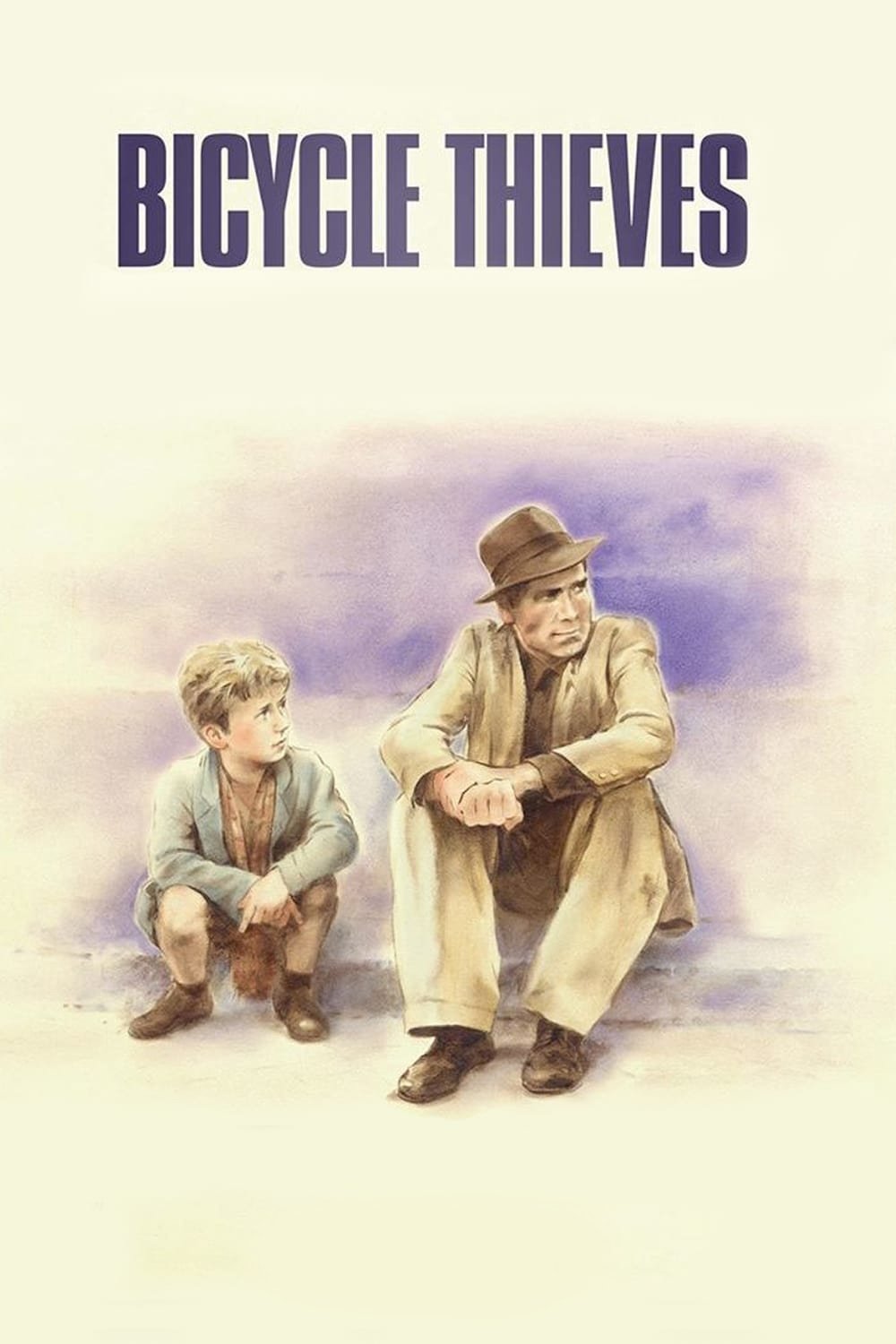
Is This Film Based on a True Story?
When I first encountered “Bicycle Thieves,” the burning question at the back of my mind was whether this cinematic touchstone was rooted in actual events or was a product of artistic imagination. After examining its origins closely, I discovered that the film is not directly based on a specific true story or on the life of any real individual. Instead, “Bicycle Thieves” is an adaptation of a novel by Luigi Bartolini, which itself doesn’t chronicle a single factual incident but is inspired by the pulse of Italian society as it struggled in the aftermath of World War II. For me, this places the film in the category of fiction that draws heavily from genuine social realities, rather than being a faithful retelling of documented events or a direct adaptation of real-life figures. The story stands as a work of imagination, albeit one deeply infused with the authentic textures and hardships of post-war Italy, rather than being factually true in a biographical or historical sense. It’s a fictional narrative that feels unmistakably real because it is so closely informed by the everyday struggles faced by countless Italians during that era.
The Real Events or Historical Inspirations
When I delve into the foundations of “Bicycle Thieves,” I find that its realism is anchored more in atmosphere and collective experience than in a single verifiable event. The source material, Bartolini’s 1946 novel “Ladri di biciclette,” is a literary work set against the same backdrop of social instability but differs in many narrative details from the film. What stands out to me is that the true “real story” here is the lived reality of Italians in the late 1940s, especially the urban poor struggling to survive amid war-torn cities, rampant unemployment, and the collapse of social safety nets. The widespread reliance on bicycles for work and subsistence was no mere plot device but a clear reflection of how crucial such possessions were to ordinary citizens. As I explored historical records, I learned that thousands depended on their bicycles for livelihoods—delivering goods, traveling to distant job sites, or running errands crucial for survival. The creators of the film explicitly sought to capture these economic and social conditions, drawing from the aesthetics and practices of Italian neorealism, which emphasized non-professional actors, on-location shooting, and stories based on real societal concerns.
The pain, hope, and day-to-day struggle portrayed resonated with those who had personally experienced deprivation and loss after World War II. While there was no “Antonio Ricci” in the news headlines or official reports, for me, what makes the film feel so authentic is the way it essentially distills and dramatizes collective memory—representing millions of unnamed stories much like Antonio’s that unfolded in the ruins of Rome and elsewhere. The economic desperation and search for dignity were all too real to the original audience, who would have recognized many aspects of their own lives in the characters’ journeys. What struck me most is how the film’s director, Vittorio De Sica, and screenwriter, Cesare Zavattini, deliberately tried to reflect these everyday realities, constructing their narrative style to echo the truth of the era’s social environment, even if the events themselves were invented for the screen.
What Was Changed or Dramatized
What fascinates me about “Bicycle Thieves” is how it takes the broad, unspecific social suffering of post-war Italy and distills it through a single, powerful story. The novel by Bartolini that inspired the film is, perhaps to some viewers’ surprise, quite different in style and purpose. Bartolini’s book, which I examined to understand this evolution, is more bitter, more satirical, and even incorporates elements of the author’s personal grievances and political commentary. The central event—having a bicycle stolen—is retained, but many other incidents, characters, and scenes were invented or shaped by the filmmakers for emotional effect and narrative clarity.
For instance, I noticed that the film’s protagonist, Antonio, was created with a certain everyman quality that’s missing from the more idiosyncratic voice of Bartolini’s literary protagonist. Zavattini’s screenplay opts for simplicity and directness, with the storyline unfolding over a single weekend, while the source novel stretches over a longer period and delves into philosophical ruminations. The film dramatizes the protagonist’s relationship with his son, Bruno, sharpening their bond for the screen and placing it at the emotional heart of the story—a relationship that is not depicted in detail in the novel. This narrative decision amplifies the personal stakes and introduces a compelling layer of innocence and generational tension, which I find shifts the audience’s focus from a commentary on post-war bureaucracy and corruption to a more heart-wrenching exploration of human dignity and familial love.
The drama is heightened in several sequences that were constructed specifically for filmic tension. For example, the scenes involving religious charity and the memorable visit to the fortune teller were written for impact and thematic resonance, rather than being transposed directly from the book or reality. Many supporting characters became composites or archetypes—a technique the filmmakers employed to highlight broader social issues within a tight storyline. Perhaps most vividly, the film’s famous use of non-professional actors was both a stylistic and practical choice; these performers didn’t have the lived experience of their fictional roles, yet their unpolished presence grounded the film in a sense of realism I find hard to separate from truth itself. And yet, the major events themselves—the theft, the fruitless search, the fleeting moments of hope—were dramatized to communicate universal rather than specifically documented truths.
Historical Accuracy Overview
My research into the period and its cinematic representation suggests that “Bicycle Thieves” is best described as historically evocative rather than thoroughly factual. Its portrait of Rome and post-war Italian society is, to a large degree, accurate in its broad strokes. I learned that unemployment figures in late 1940s Italy were dramatic, with much of the workforce struggling to secure even the most menial jobs. Widespread poverty, street-level crime, and the importance of affordable personal transportation formed the reality of lower-class Roman day-to-day existence. I am particularly moved by how the film authentically captures the atmosphere of the era—the bombed-out streets, the lines at employment offices, the hand-to-mouth existence of so many of its citizens. These elements align closely with journalistic accounts and government records from the time.
However, the specific life of Antonio Ricci does not appear anywhere in history books. His journey—while believable and grounded in social realism—is an assemblage of typical experiences rather than a transcription of real events. The details, such as his attempts to search the city, the fleeting charity, and the unique interaction with religious and social institutions, arise from the filmmakers’ desire to crystallize the economic and emotional struggles of ordinary people. Every time I revisit the film, I’m struck by the feeling that, while I cannot trace each plot point to an actual event, almost everything depicted is plausible and in keeping with documented realities from that time and place. The dialogue, mannerisms, and interactions between characters are informed by the era’s sociopolitical climate, though tailored for narrative efficiency.
I also recognize that the stark, lingering sense of hopelessness and fleeting kindness shown were true to life for many families. Yet, the narrative arc, moment-to-moment exchanges, and specific plot structure were inventions, carefully sculpted for dramatic effect and emotional resonance. The authenticity of the visuals—made possible by shooting on location amid real neighborhoods and crowds—is about as accurate as cinema can aspire to be, short of documentary footage. Still, what actually takes place in the story is a constructed fiction, meticulously crafted to serve the artistic goals of neorealist cinema rather than provide a literal history.
How Knowing the Facts Affects the Viewing Experience
Understanding that “Bicycle Thieves” is not directly based on a factual, individual true story changed my relationship to the film and deepened my respect for its artistry. Knowing that the events did not happen to any single person, but could have happened to anyone in those circumstances, gives the film’s emotional core a universal, archetypal power. I stopped searching for specific historical references and instead found myself absorbing the larger social truths the film communicates—how it shines a spotlight on societal breakdowns and the delicate thread of dignity holding communities together. Every detail seems selected to resonate as emblematic rather than anecdotal.
For me, this awareness also placed the story into the broader context of neorealism’s goals: to hold a mirror up to ordinary existence and invite empathy, even when recounting invented tales. I felt that the emotional realism of Antonio’s struggles and disappointments became more poignant when I realized just how many real families faced similar fates, even if the names and details varied. The line between fiction and reality blurs in my mind because the film is honest about its purpose: not to reconstruct one man’s biography, but to evoke the truth of a generation’s hardship and search for justice in a world turned upside down by war.
Viewing the film with this background, I find myself more attuned to the nuances of its storytelling choices. I’m attentive to the way certain scenes are constructed for dramatic effect but never stray far from what might plausibly happen in such dire circumstances. Recognizing the liberties taken in adapting Bartolini’s novel helps me appreciate both what was emphasized and what was left unsaid. The focus on Antonio’s bond with Bruno, for example, takes on extra dimension when I recognize it as a storytelling invention designed to draw the audience into the intimate cost of social crisis.
I also found my expectations shifted: not to look for historical accuracy in the chronology of events, but for authenticity in emotional tone, atmosphere, and social critique. The film’s value lies, for me, in its nuanced depiction of hope and despair as experienced not by one family or one person, but by many at the fringes of post-war recovery. The knowledge that non-professional actors portrayed roles inspired by ubiquitous realities further erases the border between acted fiction and social documentation. I appreciate how the constructed narrative doesn’t diminish but rather amplifies the universal aspects of the film. In this sense, “Bicycle Thieves” is sociological truth rather than journalistic truth—a dramatic fiction that achieves something documentary cannot always provide: the distillation of a broad, painful reality into an intimate, unforgettable story.
Overall, my understanding of the film’s origins means I approach each viewing as a historical immersion, not into the literal fate of Antonio Ricci, but into the broader fate of millions for whom the loss of a bicycle could set off a chain of existential consequences. It’s a cinematic lens focused not on the particulars of one man’s life, but on the entire tapestry of hardship, resilience, and fleeting grace that characterized a pivotal moment in history. For me, that’s where the film’s lasting power—and its most truthful adherence to history—truly resides.
After learning about the film’s origins, you may want to see how audiences and critics responded.
🎬 Check out today's best-selling movies on Amazon!
View Deals on Amazon