
Is This Film Based on a True Story?
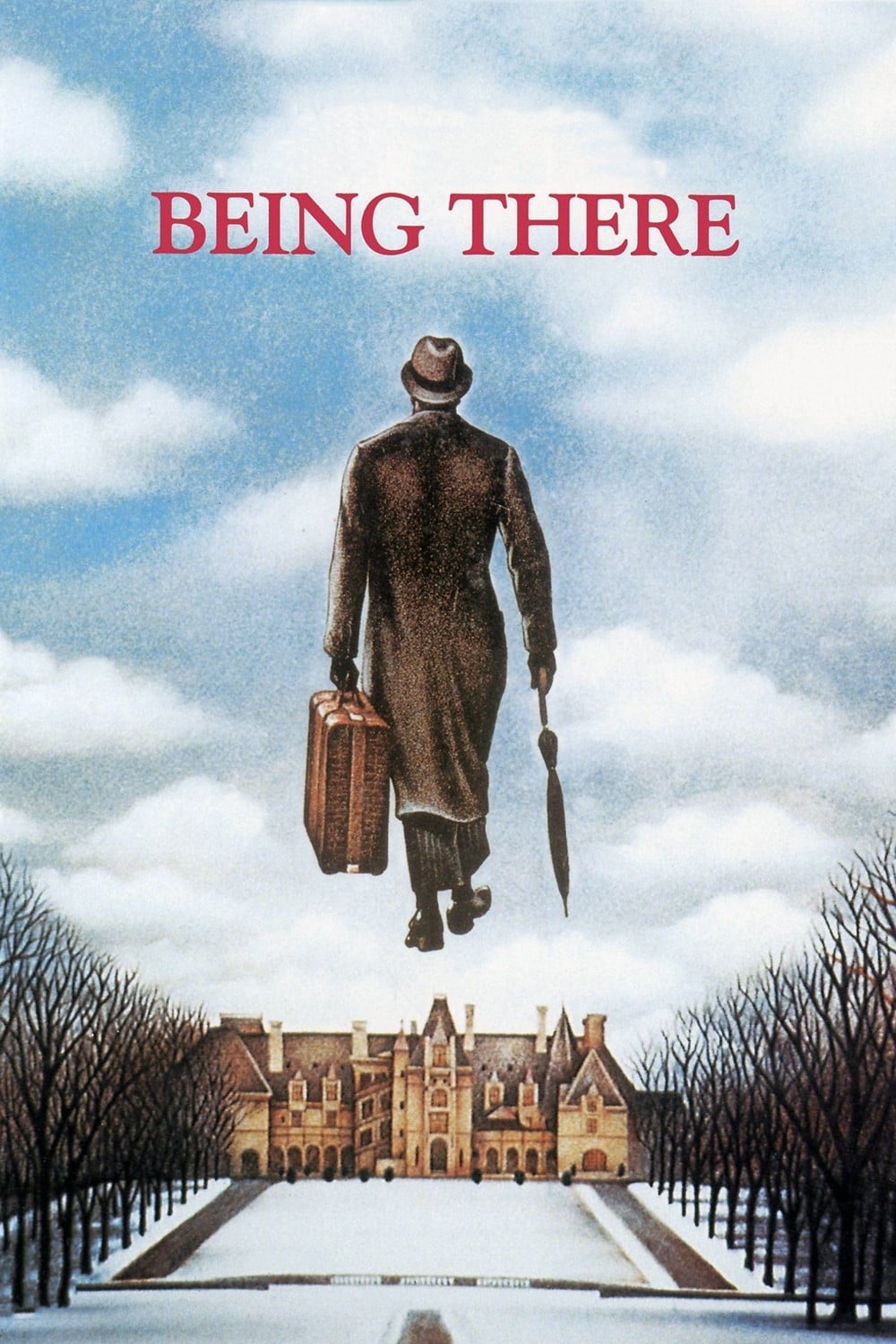
From the very first time I watched Being There, I found myself wondering if someone as enigmatic and strangely influential as Chance the gardener ever really existed outside the realm of fiction. After looking into its origin, I can say with certainty that Being There is not based on a true story, nor does it derive from real events in the way that some historical dramas do. The movie, released in 1979 and starring Peter Sellers as the innocent and enigmatic Chance, is entirely fictional. Its narrative, although filled with biting social commentary and distinctly satirical situations, springs from an original novel by Jerzy Kosinski. Kosinski crafted the entire world and character dynamics from his imagination, not as a retelling or dramatization of specific real-life events or figures.
While I sometimes spot movies that blur the lines between fact and fiction, Being There keeps its footing firmly in the creative realm. There are no records or credible accounts suggesting that the film’s plot or its characters were inspired by any actual people in political or media history. The events depicted are, to my understanding, purely the product of Kosinski’s literary creativity, adapted closely for the screen. So for anyone hoping to unearth a historical counterpart to Chance, the film offers an intriguing meditation on power and perception rather than a faithful reimagining of specific real-world happenings.
The Real Events or Historical Inspirations
Whenever I look for the seeds of truth in films like Being There, I find myself combing through biographies, interviews, and any public records that could tie the film’s bizarre journey to reality. In this case, my research led me time and again to Jerzy Kosinski’s 1970 satirical novel of the same name—the undisputed source material. What struck me most is that Kosinski’s own life didn’t mirror that of Chance. Instead, Kosinski, a Polish-American writer known for his often controversial and semi-autobiographical novels, conceived Being There as a vehicle for critiquing modern media’s influence on politics and the ease with which people can be misunderstood or misrepresented.
I’ve read interviews where Kosinski describes his fascination with the American media landscape and its sometimes haphazard elevation of individuals to positions of influence. This, it seems to me, is the closest the story comes to reality: not a retelling of specific historical occurrences, but a reflection of broad social phenomena and the peculiarities of celebrity worship, especially in 1970s America. While some writers have speculated about indirect inspirations—a few comparing Chance to public figures known for their “blank slate” approach or political naiveté—I found no evidence that Kosinski chose a real person as a template for Chance. Rather, he created an allegorical figure designed to invite conversation about the empty vessel onto which society projects its own hopes and ideals.
For me, this is an important distinction. Being There doesn’t dramatize a single event, but instead, it distills the era’s sweeping themes of media manipulation, political expediency, and cultural naivety into a character who is himself almost a cipher. It’s tempting to try to draw parallels to certain leaders or public figures from recent history, but I’ve found that these are more in the spirit of metaphorical resonance than direct historical translation.
What Was Changed or Dramatized
Exploring what was changed or dramatized, I realized that since Being There arises from fiction rather than reportage, the discussion is less about alteration of facts, and more about how Kosinski’s original text was adapted for the screen. When watching the film and reading the source novel, I picked up on subtle changes—moments designed to heighten the surrealism or intensify the satire. One major difference, for me, is in the cinematic presentation of Chance’s naiveté; the film amplifies his quiet innocence, making his misunderstandings even more mesmerizing and, in some ways, more conspicuous than in the novel. The visual medium lets viewers see how passively charismatic Sellers’ character is, leaning on his physical presence and childlike delivery of lines.
I noticed that certain supporting characters in the film are given expanded or slightly altered roles compared to their literary counterparts. For example, Shirley MacLaine’s Eve Rand occupies a more nuanced emotional space in the movie, serving as a counterbalance to Chance’s implacable neutrality. Some settings are updated or stylized to convey the sterile opulence of Washington high society, a touch that draws a sharper contrast between Chance’s simplicity and the elaborate world he stumbles into.
Importantly, the film’s most famous creative liberty—its enigmatic final image of Chance literally walking on water—does not appear in the book. This choice has long fascinated me, as it elevates the story from wry social satire into the realm of myth or absurdist parable. Here, the adaptation goes well beyond Kosinski’s textual boundaries, using visual metaphor to deepen the character’s symbolic impact. These are not modifications to historical details, but rather, enhancements that push the story further into a space of surreal, allegorical absurdity.
Historical Accuracy Overview
When I set out to consider the historical veracity of Being There, I realize I’m exploring a portrait not of real history, but of a mood and moment in American culture. If I were watching the film for literal accuracy—verifying political events, specific administration policies, or real-life personalities—I’d come away empty-handed. There are no hidden citations for specific news items or incidents. Instead, I find that the film is accurate insofar as it depicts prevailing cultural undercurrents and attitudes of its time.
For instance, the 1970s in the United States were marked by anxiety over political image-making, especially following the Watergate scandal and the advent of mass television coverage. I feel the film captures this climate keenly: the idea that a man with no real past, no identity, and no agenda could become a media darling simply by parroting the language people want to hear is rooted in the period’s actual media skepticism and fascination with public relations. It’s not a stretch for me to recognize echoes of real Washington, D.C. power brokers or social elites in the film’s supporting characters, though their traits remain composite and archetypal rather than specific.
So, if I had to parse the line between truth and invention, my takeaway is that the film is historically accurate in its atmospheric and thematic undercurrents but wholly fictional in its events and cast. There’s authenticity in its skewering of media credulity and elite echo chambers, but no direct historical blueprint. Rather, the film sits squarely in the tradition of allegory—much like works by Kafka or Voltaire—using the surface of a plausible political satire to comment on broader societal truths. In this way, I see Being There as a kind of time capsule for the cultural anxieties of its era, rather than a recreation of events or a study of real people.
How Knowing the Facts Affects the Viewing Experience
Coming to Being There with an understanding of its fictional roots, I find my expectations as a viewer are set differently than when I approach a historical drama or biopic. Knowing that Chance the gardener is not drawn from a real-life figure—or even loosely inspired by one—frees me to engage with the film on a more conceptual level. Instead of searching for “the truth behind the story,” I’m drawn to contemplate what the film’s gentle absurdity says about the human condition, societal structures, and the persistent hunger for meaning even in meaninglessness.
For me, this awareness transforms the film from a puzzle to be decoded—who is Chance really, what’s his secret?—into a parable for our times, inviting open-ended interpretation. The knowledge that Kosinski constructed this story as pure fiction, yet anchored it in very real-seeming environments, forces me to confront the uneasy ease with which surfaces can fool us. It prompts me to consider not “did this really happen?” but “why do I find it so plausible that it could?” That, I think, is the peculiar genius of allegory: it addresses truths that are felt, if not exactly lived.
On subsequent viewings, the satire strikes me as even sharper. Because I know there are no identities or details reverse-engineered from the headlines, I can focus on moments like Chance’s literal-mindedness or the way powerful people fall over themselves to anoint a total unknown. These are not exposures of a particular administration, but broad lampooning of groupthink and image obsession—dynamics that continue to ripple through contemporary politics and media.
If someone were to approach Being There expecting a dramatized biography or a roman à clef about Washington’s power brokers, the facts of its origins might alter their appreciation significantly. Realizing that the narrative stands on its own, untethered from actual events or figures, I’m invited to think about its larger messages: about the machinery of celebrity, the construction of public narratives, and the incredible appetite societies have for projecting wisdom where there may be only silence. The ambiguity that surrounds Chance—his non-history, his blankness—is itself a commentary, and my understanding of that device is deepened by knowing that history was never the template.
Ultimately, my takeaway is that the film’s power has little to do with factual accuracy and much to do with emotional and cultural resonance. Viewing it in light of its wholly fictional origins, I read Being There as a meditation not on what happened, but on what perpetually happens: the mysterious ways people find—and often invent—meaning in the spaces between words and in the faces of strangers. This creative choice, to me, is what gives the film its enduring relevance.
After learning about the film’s origins, you may want to see how audiences and critics responded.
🎬 Check out today's best-selling movies on Amazon!
View Deals on Amazon