
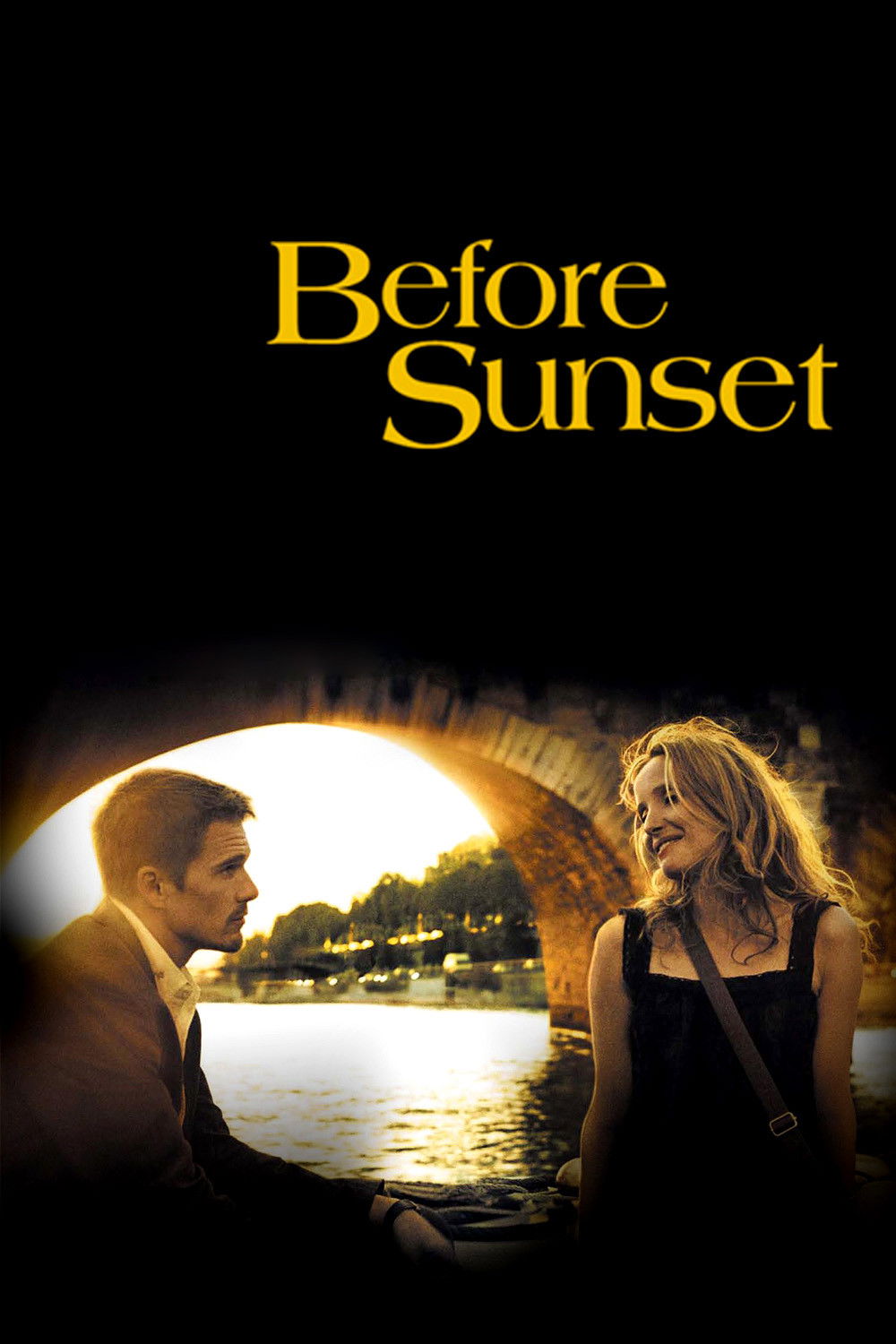
The Question of Truth Behind the Film
What first draws me into a film like Before Sunset isn’t the thrill of a factual chronicle, but the uncanny way its conversations sometimes feel truer than reality itself. I catch myself wondering: did anyone really live these experiences, or was it all conjured up between script pages? That curiosity quickly spirals into bigger questions. Audiences, myself included, seem to crave an answer about whether a film’s heartbeat is borrowed from real life or purely the stuff of cinema. There’s a widespread assumption that the “true story” label adds weight, urgency, or emotional legitimacy. I sense that, for many viewers, such authenticity means a narrative is somehow more trustworthy, or at least more meaningful—a quality measured against the mysterious yardstick of actual events. When a film leans into the ambiguity of fact versus fiction, I find my own engagement shifts: am I a detective, sifting for clues about what really happened, or am I a willing participant in artistic invention?
The compulsion to ask, “Is this based on a true story?” rarely leaves me while watching films as grounded as Before Sunset. The lines blur when characters speak as if they exist beyond a script, and their pains and hopes feel uncannily familiar. I notice that for an audience, the hint of personal experience—maybe the whiff of something lifted from life—can be enough to alter the entire act of watching. A collective desire for artistic honesty becomes tangled up with the wish to witness reality re-enacted, scene by scene, even if I acknowledge that no camera could ever truly reproduce the messiness of life. At times, the mere possibility that something onscreen might have happened in the director’s or writer’s own past can color my emotional investment. It is as if the hope is not simply for a story, but for a privileged look through a keyhole into another person’s memory. And yet, I realize, that longing for “truth” is already shaped by how films teach us to care about authenticity, purposefully or not. So I find myself grappling with a paradox: the more real something feels, the more I want its origins to be verifiable—though, ironically, some of the most resonant moments are pure invention, designed specifically to evoke that longing for genuine connection.
Historical Facts and Cinematic Interpretation
Reflecting on Before Sunset, I realize that its narrative leans deeply into the territory between authentic recollection and artistic manufacture. Unlike historical dramas adapted from textbooks or personal memoirs, this film’s connection to “real events” is more elusive. There is no public record of a Paris encounter or a documented eight-year separation between lovers; instead, what I feel is an overwhelming sense of authenticity driven by lived observation. I am drawn to accounts from collaborators and public interviews, where Richard Linklater and Kim Krizan have described the roots of the original characters in personal moments and conversations, although not in strict autobiography. Even so, every retelling—from Linklater to Ethan Hawke and Julie Delpy, who co-wrote this sequel—reshapes slivers of their own experience into something universally resonant.
Whenever I study films that dabble with realism—especially those tracking intimate dialogue rather than sweeping historical events—I notice a fascinating pattern. Any fact taken from life is almost always subjected to narrative condensation, transformed for clarity, pace, or emotional arc. I am always struck by how much is reshaped, not just what is included or omitted. For example, I have read that Linklater drew inspiration, in part, from a night spent talking with a woman in Philadelphia, yet he has asserted that the film’s events are not straightforwardly “his story.” Everything from the locales to dialogue is sifted, repurposed, and reorganized. I see Before Sunset less as a diary entry, more as a collage in which raw experience is continually filtered—where genuine bits of romantic longing are organized into uninterrupted conversation, and hesitations from real-life phone calls or miscommunications are exchanged for crisp, meaningful dialogue. In doing so, the film resists being pinned to literal fact, but simultaneously asserts its connection to the recognizable and believable. As a viewer and essayist, I find that adaptation process itself is both creative and clarifying, challenging the idea that there is any such thing as a simple act of cinematic transcription.
What Changes When Reality Is Shaped for Cinema
I’m always fascinated by the inevitable trade-offs that occur when film attempts to model itself on true events—or at least evoke their feeling. With Before Sunset, the line between reality and artifice is remarkably thin, and yet, I am acutely aware of the choices that shape this liminality. When real stories make the leap to the screen, the demands of cinematic time force a kind of temporal compression; meaningful moments are crowded into a brisk afternoon in Paris, yet no real-life reunion would unfold so cleanly or so poetically. In order to make the film emotionally nimble, the messiness and ambiguity of reunion are refined into a structure that privileges certain beats: near misses, confessions, unresolved longing. If I look closely, the careful choreography of walking through sunlit Parisian streets isn’t simply a backdrop, but a deliberate organizing principle. The flow of conversation seems improvised, but on repeated viewings, it’s clear to me that every meandering detour ultimately serves the film’s coherent emotional shape.
I encounter a similar exchange when considering how films draw from “what really happened.” I see that faithful representation often sits at odds with narrative efficiency. If the movie documented a real conversation word for word, or even attempted to reconstruct hours of real-time chat, most audience members—including myself—would likely lose interest. So the film makes its choices, pruning digressions and layering subtext, transforming hesitancy or half-remembered anecdotes into dialogue that’s teasingly unresolved yet always just a little more eloquent than genuine speech. The result is a heightened dialogue that I find both credible and unmistakably cinematic. What’s interesting to me is that the actors’ visible comfort and the seamless oscillation between playfulness and regret seem to invite speculation about how much is improvised from life, even as editing, camera movement, and sound design betray the film’s highly orchestrated nature. The film achieves verisimilitude not through perfect accuracy, but by translating the feel of a lived moment—a particular tone, a posture, an overlapping phrase—into the more pointed rhythms of screenwriting. I can’t help but recognize how all these decisions draw me in, even as they smooth out the rough, unpredictable edges of experience.
I also reflect on how these adaptations let filmmakers probe their own memories and those of their collaborators, crafting not just a story, but a kind of shared mythology. The creative process behind Before Sunset turned the trio of Linklater, Hawke, and Delpy into accidental historians—not of actual events, but of emotional states and fleeting possibilities. I am always amazed by how their dialogue, which seems unscripted at first blush, has in fact been meticulously structured to evoke a sense of spontaneity while adhering to the requirements of payoff and closure. The effect is seductive, creating a world that feels lived-in, even as it is engineered to achieve resonance. I’m no stranger to the tension between representing fact and creating meaning, and watching this film sharpens my awareness of how cinema’s foremost task is not to duplicate life but to intensify and distill it.
Audience Expectations and the “True Story” Label
The way audiences, myself included, approach a film often pivots on its relationship to truth. I notice a marked difference in my own expectations depending on whether a film openly declares itself inspired by true events, or resolutely maintains its status as fiction. When a film like Before Sunset carries no explicit “based on a true story” preamble, I find myself searching more actively for the fingerprints of actual experience. I wonder which lines were sparked by someone’s confession, which glances draw from heartbreak, which Parisian detours mirror reality. That search can heighten the sense of intimacy, as if I’m eavesdropping on private experience, but it also leaves the door open to mythologizing. When authenticity is ambiguous, I become more sensitive to the interplay of honesty and invention, aware of both being manipulated and welcomed into the illusion.
On the other hand, when a film claims the “true story” label, I recognize a distinct shift in my posture as a viewer. There’s a certain gravity that descends—an expectation that the narrative will deliver not just entertainment, but insight or revelation. If Before Sunset began with a title card anchoring it to a specific real-life couple, I suspect that my focus would drift toward documentation: scrutinizing the plausibility of each turn, perhaps even questioning what was added or embellished. But when the claim of truth remains hazy, the film invites a different kind of investment. I’m encouraged to regard the story as emblematic rather than journalistic, and in doing so, I often end up responding more to the sensations and emotional textures than to any checklist of events. The ambiguity cultivates a special trust, or at least a willingness to accept poetic license, and I find myself forgiving inventions for the sake of resonance.
When it comes to films inspired by multiple sources, the terrain gets even more interesting for me. Across interviews and behind-the-scenes commentary, I’ve noticed that Before Sunset exists at the crossroads of collective invention and personal memory. Each time a creator cites a real conversation, there’s a temptation to turn it into a parable; yet each time a plot point identifies as “made up,” the story becomes a new kind of mythology. The “true story” label, I realize, is less about empirical events than about emotional truth—how fully a film reflects the recognizable contours of real longing, missed chances, or self-discovery. This understanding makes me receptive to stretching the boundaries of veracity, especially in works like Before Sunset that rely more on the truth of recognition than strict fidelity to a timeline. I come away thinking that what most viewers truly crave is not a chronicle of facts, but the vicarious thrill of believing that such encounters could be real, somewhere, if not precisely as shown on screen.
Final Perspective on Fact vs Fiction
Stepping back from the tangle of origins and adaptation, I realize that being privy to what is real and what is invented in Before Sunset quietly but profoundly shapes my reading of the film. There’s a unique pleasure in tracing the intellectual genealogy of moments that feel real, only to discover that they are the result of collective authorship, or sometimes, outright invention. Knowing the boundaries between factual inspiration and scripted artistry doesn’t undercut my engagement with the film. Instead, it acts as a lens—one that clarifies my understanding of its intentions. I start to see the film not as a failed documentary or as an idealized fantasy, but as a deliberate exercise in fusing the recognizable intimacies of lived experience with the precision and focus of crafted storytelling.
The relationship between fact and fiction in cinema is, for me, never stable. It is always negotiation, rarely resolution. In the case of Before Sunset, understanding that the film is neither a confession nor an outright fabrication lets me inhabit the space between the two, appreciating how carefully constructed conversations can evoke real emotions. There is a paradoxical honesty in this, a willingness to admit that faithful reproduction is less important than affective truth. My own sense of authenticity shifts: I don’t require every element to align with someone’s actual past, yet I demand that the film evoke the emotional perplexity and bittersweet possibility of true reunion. The knowledge of how scenes grew from collaboration—melding the insights, disappointments, and hopes of its makers—adds depth to my response without closing off interpretation. I find that the richest films, like this one, are those that acknowledge the poetic inaccuracy at the heart of all storytelling, where the question of “what really happened” gives way to a deeper consideration: what does it feel like to lose and find love, even in a form sculpted for cinema?
For additional context, you may also explore the film’s overview and how it was received by audiences and critics.
🎬 Check out today's best-selling movies on Amazon!
View Deals on Amazon