
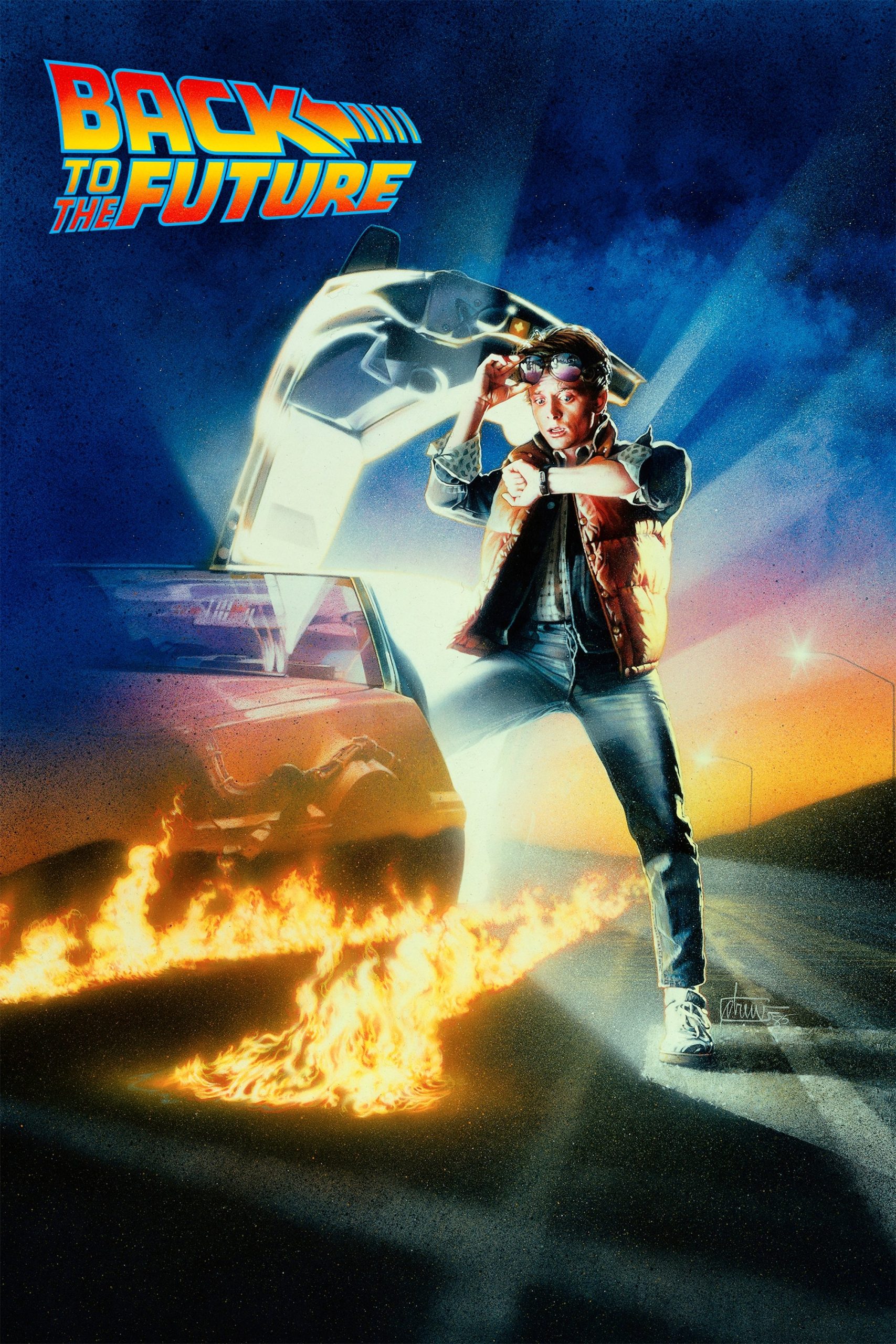
Is This Film Based on a True Story?
When I first encountered “Back to the Future,” I was swept up in its playful yet intricate time-travel premise, never imagining it to be anything other than pure fantasy. So, after taking a closer look, I can say unequivocally: “Back to the Future” is a wholly fictional tale. There are no real-life events, scientific breakthroughs, or historical documents that directly inspired its central plot. The adventures of Marty McFly and Doc Brown spring entirely from the minds of its creative team. While the film explores themes related to history, family, and personal choices—concepts that exist in every era—it is not based on, nor intended to reflect, any actual events or individuals. For me, knowing this frees the story from the burden of representation, letting it operate in the realm of pure speculative fiction rather than reenactment or reinterpretation of reality.
The Real Events or Historical Inspirations
Digging into the background of “Back to the Future,” I was curious if any thread of true history wove through the script. What I discovered is that while the film’s plot—time-travel facilitated by a DeLorean—is an invention, there are subtle traces of real-world influence embedded in its DNA. The genesis of the story, as recounted by co-writer Bob Gale, stemmed from his own musings after paging through his father’s high school yearbook. He wondered what it would be like to meet his own father at the same age and whether they might have been friends. This small moment of personal curiosity acted as the launchpad for the screenplay, but to me, this is not history but a question rooted in universal experiences: intergenerational understanding and the pathways of relationships across time.
I also see that the filmmakers evoke genuine moments from the 1950s, using meticulously researched period details—from the styles of cars to the social atmosphere and the popular music—to ground their fictional world in a recognizable reality. The clock tower, the “Enchantment Under the Sea” dance, and the skating diner all echo elements from real American small-town life in mid-century, but they are artistic composites rather than direct depictions of documented events. While the historical ambiance gives the narrative a sense of time and place, I can’t trace any sequences or characters to actual counterparts in American history. The result: historical flavor imbued into a purely invented plotline.
What Was Changed or Dramatized
Thinking through the film’s structure and lore, I’m struck by how the creators took creative freedom to the next level. To begin, the science of time travel as shown in “Back to the Future” is devised for dramatic effect and humor. The flux capacitor, the vital mechanism enabling temporal jumps in a DeLorean car, is a complete fabrication. No scientific breakthrough—either in 1985 when the film was made, or today—has presented even a theoretical basis for a technology like this. Einstein’s theories of special and general relativity do introduce the concept of time dilation, but nothing resembling a hand-built, automobile-based time machine.
For me, the most notable narrative liberties are found in the depiction of American suburbia across two pivotal decades. The depiction of Hill Valley in 1955 draws from the imagery of ‘50s Americana—greasers, sock hops, malt shops—but these are filtered through a pop culture lens rather than illustrated from systematically researched records. The film’s 1985 is less a documentary snapshot and more a reflection of the anxieties and aesthetics of its era as seen through Hollywood’s eyes. In reality, the continuity (or discontinuity) of neighborhood, family, and self-image over a span of 30 years would be far more complex than what’s presented on screen. However, in my experience, these choices don’t detract from the film; instead, they offer a playful, heightened version of time gone by.
The portrayal of historical events—such as the electrification of the clock tower or the depiction of a high school dance as a formative moment with lasting ramifications—serves the needs of the script rather than historical truth. Relationships are streamlined: tensions, resolutions, and mistaken identities are all constructed for maximum narrative payoff. I’ve noticed that while the film alludes to larger cultural themes, such as the rise of rock ‘n’ roll and changing gender norms, these are represented in broad strokes rather than nuanced engagement with the history of the period. “Johnny B. Goode” becoming a dance hit before its release is a clear, playful anachronism that speaks to the movie’s tongue-in-cheek tone more than any attempt at credibility.
Historical Accuracy Overview
Reflecting on the movie as a whole, I find it helpful to separate its two main spheres: the era-specific setting and the core premise of time travel. On the first point, the film does an impressive job of capturing the essence and iconography of both 1955 and 1985. Props, vehicles, and costumes are lovingly recreated with an eye for detail; I genuinely feel immersed in each decade when watching. The background music, diner menus, and even the town square architecture correspond to how those years are remembered collectively. Still, I remind myself these touches are more pastiche than precise chronicles. They evoke nostalgia rather than documentary accuracy.
When it comes to individual and community behaviors, the film’s universe bends reality toward narrative convenience. Social norms, high school dynamics, and family interactions are compressed into easy-to-follow arcs. For example, Marty’s parents’ transformative experiences at the dance or the neatly contained bullying subplot would not typically unfold in such direct or theatrical ways in real life. The changes that ripple into Marty’s “present” at the film’s end—like the sudden reversal of his parents’ fortunes—are not tethered to any real psychological or socioeconomic models of progress. To me, these elements illustrate how the film prioritizes wish fulfillment and rapid cause-and-effect over a more ambiguous or challenging version of history.
Turning to the crux of the story, I see no scientific basis or precedent for the kind of time travel depicted here. The mechanics are creative, but firmly in the camp of science fiction. There are, of course, academic debates and speculative articles about whether time travel could ever be plausible, but every device and principle in “Back to the Future” is purposely exaggerated or outright invented to serve the adventure rather than illuminate any real scientific principle.
In summary, while I recognize echoes of genuine mid-century and late-20th-century Americana, “Back to the Future” operates almost entirely outside the boundaries of historical or scientific accuracy. The film uses history as backdrop and springboard, not as a strict template or record.
How Knowing the Facts Affects the Viewing Experience
For me, understanding where “Back to the Future” stands in relation to the truth actually makes the film more enjoyable. I approach it not as a lesson in history or science, but as a story about possibility, identity, and the unpredictability of human relationships. Realizing that its timeline and inventions are imaginary, I am free to invest in Marty’s journey on a symbolic level rather than getting caught up in fact-checking or questioning realism. There’s a certain charm in seeing how the film uses familiar historical backdrops, though I know these are stylized and meant to spark recognition rather than accurately reconstruct the past.
The awareness that characters and events are not rooted in real-life individuals or situations brings a playful energy to Marty’s interventions in his parents’ younger selves. I feel comfortable embracing the film’s “what if?” scenarios rather than holding them to any standard of likelihood. Even the film’s wildest propositions—lightning striking at the precise time needed to power a DeLorean, for example—are easier to accept when I view the story through the lens of fantasy and narrative invention rather than rigorous cause and effect.
For those interested in American nostalgia, I notice how the meticulously recreated sets and costumes invite audiences to fantasize about living in—or revisiting—the 1950s. The film’s version of history isn’t instructional, but evocative. It condenses a spectrum of social concerns and visual memories into a shorthand that is both immediately accessible and packed with emotion. I find this technique effective for engaging viewers at an emotional level, even if it sometimes risks flattening the realities of the periods it portrays.
Additionally, by being transparent about the narrative’s origins as purely invented, the film gives viewers room to explore their own relationships with the past, unencumbered by expectations of accuracy. I imagine this is why so many people, myself included, return to watch “Back to the Future” again and again—not for documentary insight, but for a captivating adventure that plays with the idea of rewriting one’s personal history. My sense is that if the film attempted to align more closely with actual events or scientific concepts, it would lose some of that buoyant energy that helps it resonate as a cultural landmark.
As someone fascinated by the intersection of fiction and history, I relish the opportunity to use this film as a jumping-off point for further exploration. Rather than answering questions about what actually happened in 1955, it inspires debates about causality, destiny, and the elasticity of memory. This, for me, is the true value of knowing the facts behind “Back to the Future”: not to expose inaccuracies, but to clarify its role as a jubilant, inventive fiction—one that invites curiosity about both our personal and collective timelines.
After learning about the film’s origins, you may want to see how audiences and critics responded.