
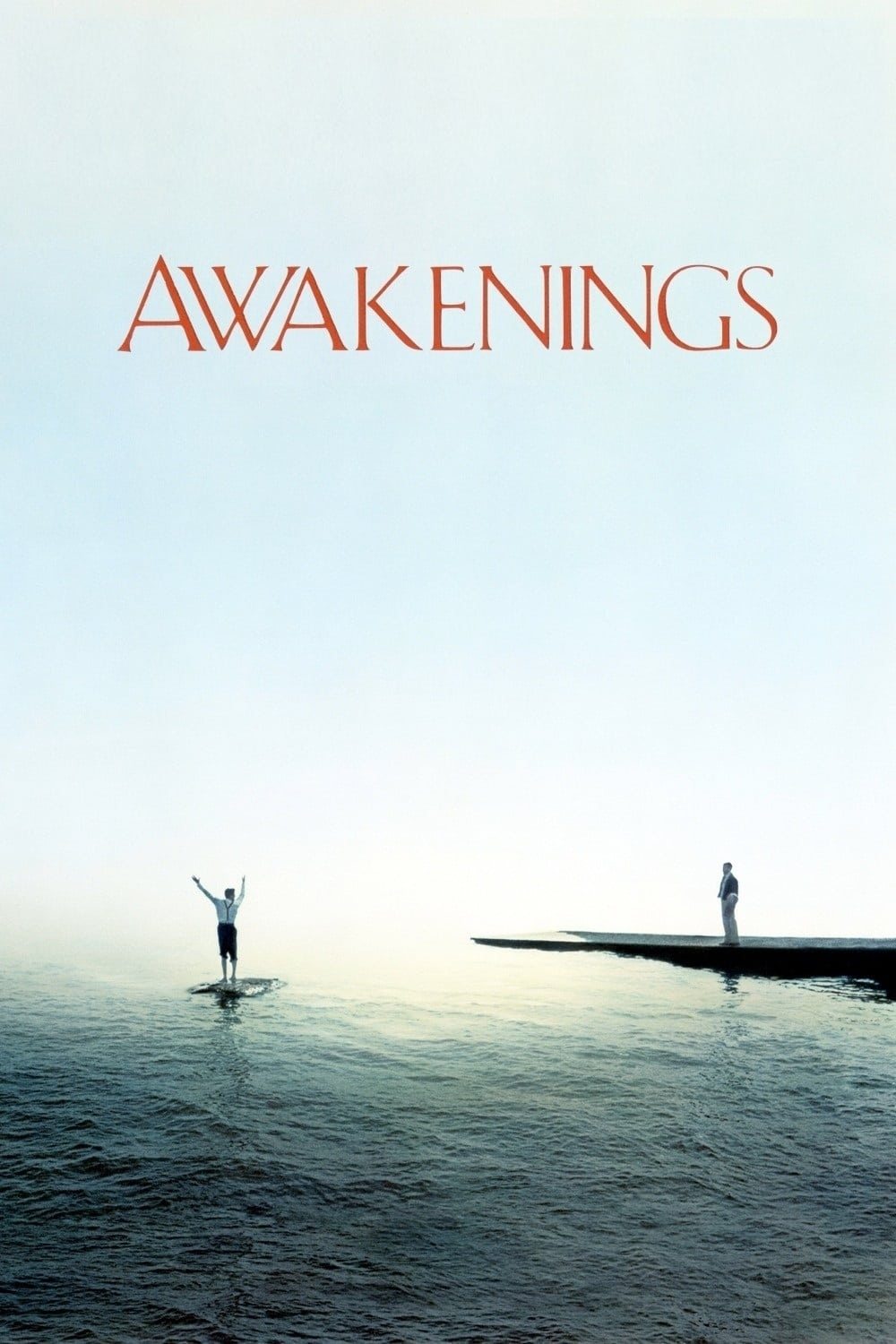
The Question of Truth Behind the Film
There’s something that draws me irresistibly to films that bill themselves as “based on a true story.” When I first watched “Awakenings,” I remember pausing a quarter into the film, not because of the performances or its dramatic arc, but because I found myself wondering just how closely this story hewed to real events. This kind of curiosity isn’t unique to me—over years of writing about cinema, I’ve noticed that the notion of truthfulness operates like a gravitational force in audience discussions. Whenever a film even hints at factual inspiration, expectations shift. There’s an implicit hope, maybe even a demand, that the spectacle on the screen is tethered to something that genuinely happened in the world, as though that premise confers a special kind of authority to the film’s narrative.
To me, the question—“Did this actually happen?”—carries more than idle curiosity. It sets up a whole apparatus of trust between film and viewer. I find that people lean in a different way, sometimes granting a film extra emotional weight, or being scrutinously skeptical, precisely because it claims some connection to reality. That label, “based on true events,” comes freighted with assumptions: that the depiction is at least truthful enough to respect the historical record, or that the makers felt a sense of responsibility to the real people whose experiences are being dramatized. Personally, I think there’s a fascinating tension here. Does knowing what’s real empower a more profound emotional response, or does it limit the audience’s imagination by anchoring them too heavily in factual detail? I catch myself oscillating between those poles every time I watch a historical drama like “Awakenings.”
What’s interesting to me is that the phrase “based on a true story” is rarely as straightforward as it appears. It’s an invitation, but also a kind of challenge: am I supposed to admire the artistry or audit the accuracy? When I’m told something is true, I approach it with a certain reverence—yet I also find myself peering deeper, wondering what has been omitted, altered, or invented entirely for dramatic effect. The history of cinema is full of tales turned upside down—sometimes even inside out—in the transition from life to film. As an essayist, I’m always aware of this slippery boundary, conscious that every so-called “true story” has already passed through a filter long before filming even begins. I see viewers drawn to the idea of “truth” in cinema not because it promises perfect accuracy, but because it promises a kind of connection—a tether to meaning that pure invention sometimes lacks.
Historical Facts and Cinematic Interpretation
When I examine “Awakenings,” the layers of adaptation become immediately apparent to me. The film takes its inspiration from the real-life experiences of Dr. Oliver Sacks, whose 1973 book of the same name chronicles his work with patients who had survived an encephalitis epidemic and lapsed into rare states of “sleeping sickness.” What fascinates me isn’t just how the events were interpreted for the screen, but how the act of adaptation itself reshuffles the pieces in order to serve a narrative structure. While Sacks recounts clinical episodes and reflections in his memoir, the film weaves these medical case histories into a more conventionally unified, dramatized storyline.
One thing I notice immediately is how names and details have been changed or streamlined. Robin Williams’ character, Dr. Malcolm Sayer, is a thinly veiled stand-in for Dr. Sacks, and the iconic patient Leonard Lowe (played by Robert De Niro) is a composite figure inspired by several of Sacks’ real patients, most notably Leonard L. These changes are not decisions made lightly, in my view—they are strategies to render a complicated, sprawling reality into something audiences can follow and invest in emotionally. For example, Sacks’ memoir details numerous patients with differing journeys, but the film condenses this into focal points with Leonard and Dr. Sayer’s evolving partnership. In my analysis, such condensation is less about hiding truth and more about yielding to the rhythms and demands of cinematic time, which rarely affords the luxury of sprawling, episodic storytelling.
What I find particularly intriguing is the way character arcs and key events are often reshaped. The triumphant moments in the film—the brief “awakenings” brought on by L-DOPA, the subsequent heartbreak as the drug’s efficacy wanes—are drawn from life, yet the film intensifies the emotional stakes and interweaves romantic and interpersonal subplots that aren’t present in the original text. I perceive this as a form of translation: taking medical documentation that is, at times, almost clinical and infusing it with the human drama that screen storytelling demands. The book is episodic, sometimes abrupt, while the film searches for seamless transitions and emotional coherence. In compressing weeks, months, or even years of hospital life into a two-hour span, the story gains urgency yet inevitably loses some of its original ambiguity and complexity.
As I reflect, I realize that these choices come down to the unique narrative circuitry of the cinema. Events must be reorganized for clarity and momentum; supporting characters may be omitted, combined, or wholly invented. Dialogue is crafted to externalize internal thought, and metaphor gives way to action. At its heart, I see “Awakenings” as a vivid illustration of how fact is rarely transferred literally to film; instead, it is interpreted, reframed, and sometimes upended, all for the sake of crafting a form that audiences recognize as “story.” For me, this is not a flaw but an inescapable feature of adaptation, one that constantly moves between staying true to what happened and articulating what it meant.
What Changes When Reality Is Shaped for Cinema
I’ve spent countless hours contemplating the trade-offs that are inherent in translating reality into cinematic terms. With “Awakenings,” I’m confronted by the necessity of choice: by what must be shown, simplified, or merely hinted at. When the boundaries of a two-hour runtime force compression, creators select certain episodes and moments that best represent larger truths, even if it means eliding the nuances of individual cases. I recognize the process as one of distillation rather than deception. The resulting story, then, is always already an act of interpretation. While the memoir allows for digression and for Sacks’ idiosyncratic voice to ruminate without hurry, the film is all about immediacy, dramatic contrast, and a throughline the audience can follow from beginning to end.
In watching the film, I notice how certain experiences are generalized to speak for an entire cohort of patients. In Sacks’ book, some patients respond temporarily to the drug, while others have varying, far less dramatic recoveries. The movie, in seeking a central emotional trajectory, amplifies certain awakenings to symbolic status. There’s an evident compression of time here as well: what occurred over months or maybe years is experienced in a matter of scenes or, at most, a few on-screen weeks. For me, this has the effect of focusing attention on universal themes—hope, disappointment, resilience—rather than specific medical outcomes.
I’ve always found the way cinema externalizes internal processes particularly striking. Where Sacks explains thought processes, doubts, and emotional responses in prose, the film must find visual equivalents—long looks, fractured prayers, music rising as Leonard struggles against relapse. I see this as both gain and loss: on the one hand, it creates images that linger and provoke empathy. On the other, it almost inevitably results in selectivity, even at the expense of subtler psychological shades. Supporting characters—a composite nurse, a patient’s family member—may be invented or expanded to create dramatic oppositions, heighten emotional stakes, or facilitate exposition that would otherwise be hopelessly complex to introduce within a film’s running time.
For me, this process of fictionalization does not have to undermine a story’s resonance or its factual grounding. Rather, it reflects the practical demands of the medium. Were the filmmakers to shun interpretive liberties and hew narrowly to the memoir’s particularities, I suspect the end result might have felt more like a filmed case study than a living, breathing story. So many historical dramas, not just “Awakenings,” must constantly weigh which details are essential, which are poetic, and which might be pruned to allow the emotional truth to shine without the encumbrance of exhaustive accuracy. It’s a delicate calculus, one that I find both admirable in its ambition and fascinating in its inevitable imperfection.
I’m reminded, in a way, of how a portraitist isn’t required to make an exact photographic reproduction of their sitter’s face. Sometimes, I think cinema, in shaping and sometimes reinventing reality, becomes more like a symbolic painting—aiming less for literal veracity and more for an expressive impact that stirs something inside the viewer. The balance between fact and cinematic storytelling, as I see it, is never fixed; it’s a negotiation, shifting from film to film, even from scene to scene, always subject to the limitations and possibilities of the art form itself.
Audience Expectations and the “True Story” Label
Every time I attend a screening billed as factual, I notice how the room seems to be charged with a different kind of anticipation. There’s an implicit contract—an understanding that we’re about to witness something “real.” That label, whether explicit or subtly implied, colors everything: from how much latitude an audience grants to moments of implausibility, to how they later discuss and remember the film. For “Awakenings,” this quality is especially pronounced. When I first encountered the film, the knowledge that it was drawn from the medical experience of a renowned figure like Sacks changed the register in which I interpreted the characters’ struggles. Emotional moments gained a certain heft precisely because they seemed to have happened somewhere, to someone, before being projected on the screen.
I have often seen people, myself included, become invested in searching for the degree to which a film aligns with history. Did Leonard really say those words? Was that moment pure invention or taken from Sacks’ journals? Sometimes the act of watching turns into a kind of detective work, a search for seams where invention meets documentation. Part of me relishes this—there’s a satisfaction in connecting dots between fact and fiction. At the same time, I’m struck by how easily the “true story” label can mislead, suggesting a documentary degree of accuracy where, in reality, cinema is always bent toward artful compression and dramatic license.
What fascinates me about this audience dynamic is the way it amplifies both empathy and skepticism. When a film claims truthfulness, I feel temped to let down my critical guard—maybe to open myself to the story’s emotional plea more readily. Yet there’s also a contrary pull: a desire to check facts, to compare dramatization against primary sources. Not long after watching “Awakenings,” I found myself scouring articles, biographies, and interviews, coming to realize that what I had seen was as much a work of interpretive imagination as a dry recitation of history. This doesn’t diminish my engagement; rather, it sharpens it, prompting me to consider not just what happened, but how the retelling reframes the past for contemporary sensibilities.
I also realize how easily the distinction between “based on a true story,” “inspired by real events,” and outright fiction gets blurred in casual conversation. Each phrase primes me to look for different things—greater fidelity to fact, or more overt invention. In the case of “Awakenings,” knowing that the film is rooted in real case studies encourages me to empathize with the characters less as dramatic constructs than as possible analogues for actual individuals. At the same time, I find it liberating to accept the story’s imaginative elements as part of its interpretive work, rather than as betrayals of the source material.
Ultimately, it’s not just about whether an event “really happened”; it’s about how the claim of truthfulness structures the entire experience of viewing. I find myself caring more about the questions the film raises, the challenges faced by the characters, and the implications of their choices precisely because I know the story is not pure invention. This doesn’t necessarily make the film more valuable, but it does make my engagement with it richer, more fraught, and, in some ways, more meaningful.
Final Perspective on Fact vs Fiction
Reflecting on “Awakenings,” I’m left with a multifaceted appreciation for the way factual awareness shapes interpretation. Knowing the film’s roots in medical history and empathetic memoir colors my understanding of its events, but does not entirely dictate my response to them. The interplay between documented reality and cinematic interpretation renders the story more than a simple recounting of what happened: it becomes a meditation on how meaning is extracted, refashioned, and delivered through the lens of narrative art.
I’ve come to see these thresholds between fact and fiction as invitations rather than barriers. Rather than searching for cinematic stories to mirror real life with perfect accuracy, I’m drawn to examine what the adaptation illuminates about its source. Does it reveal overlooked struggles, illuminate hidden triumphs, or bring new emotional clarity? In “Awakenings,” I sense a conscientious effort to respect the truth of the experience, even as the details—timelines, relationships, dialogue—undergo necessary modification. The result is not a document, but a layered encounter, where my awareness of fact deepens my engagement with the film’s themes of hope, resilience, and impermanence.
The process feels less like a betrayal of fact, more like an extension—a form of creative dialogue between two kinds of storytelling. As an audience member aware of these dynamics, my experience is, if anything, made more vibrant by knowing the limits of literal accuracy. It propels me to ask where interpretation cuts close to reality, and where it sets off on its own. Sometimes that tension sharpens my sense of loss or triumph; at other times, it prompts me to reflect more deeply on the ambiguities inherent in all attempts to capture true human experience on screen.
To me, understanding what is real versus what has been fictionalized doesn’t reduce a film’s affective power. Instead, it broadens my critical lens, allowing me to meet the film both as a worked-over retelling and as an imaginative creation. Acknowledging that both truth and invention coexist renders the film more, not less, complex—inviting me to inhabit that space between fact and story where most of cinema’s greatest questions reside.
For additional context, you may also explore the film’s overview and how it was received by audiences and critics.